
From Théâtre de la Mode to Bode: Dolls as Mannequins, Muses, and Couture Statements
A doll has never been merely a toy in the world of fashion. It serves as a model for a new silhouette, a miniature ambassador for haute couture, a first dress form for a young designer, or a vehicle for expressing identity, memory, and ideas of femininity.
The exhibition Doll Dressing at The Museum at FIT in New York (September 16, 2026 – January 3, 2027) explores this reciprocal relationship: fashion has created dolls, but dolls have also continuously shaped fashion. Featuring more than 170 objects, the show highlights an ongoing dialogue between postwar French couture, historic dress, and contemporary design. Here, the doll is an independent fashion body, a canvas to test silhouette, technique, fantasy, and cultural memory.
Postwar Paris: Théâtre de la Mode & The Merci Train
Following the Second World War, French fashion needed to reclaim its symbolic authority. That assertion came through the celebrated Théâtre de la Mode (1945), a project of miniature dolls dressed by leading Paris couturiers to demonstrate that France retained its extraordinary craftsmanship and creative spirit.
Artist Éliane Bonabel designed these dolls with flexible wire-framed bodies, ideal for displaying complex miniature drapery, embroidery, tailoring, and jewelry. Although the surviving 172 original dolls are preserved at the Maryhill Museum of Art in Goldendale, Washington, and are too fragile to travel, their influence on designers and the popular imagination persists.
Historical Dress Reimagined
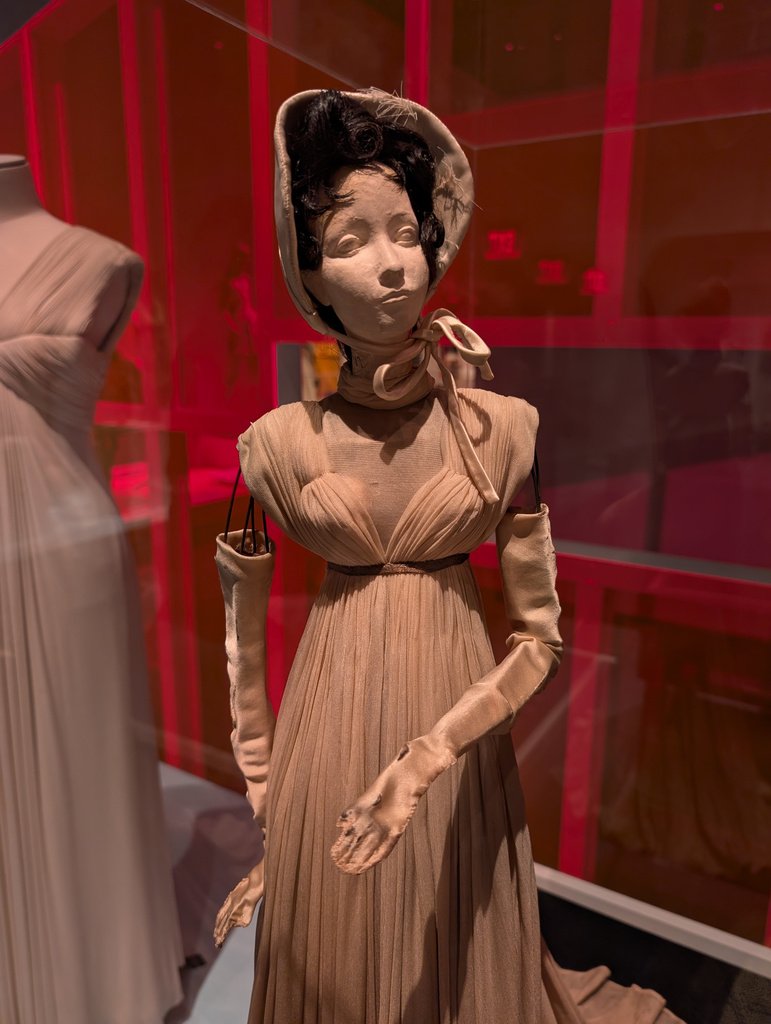
Bonabel’s wire-frame design was used again in 1949 for the Merci Train (“Gratitude Train”), a gift sent by French artisans to the United States expressing appreciation for wartime liberation. Displayed across multiple locations in New York, the gift included 49 couturier-dressed dolls representing French fashion history from 1715 to 1905.
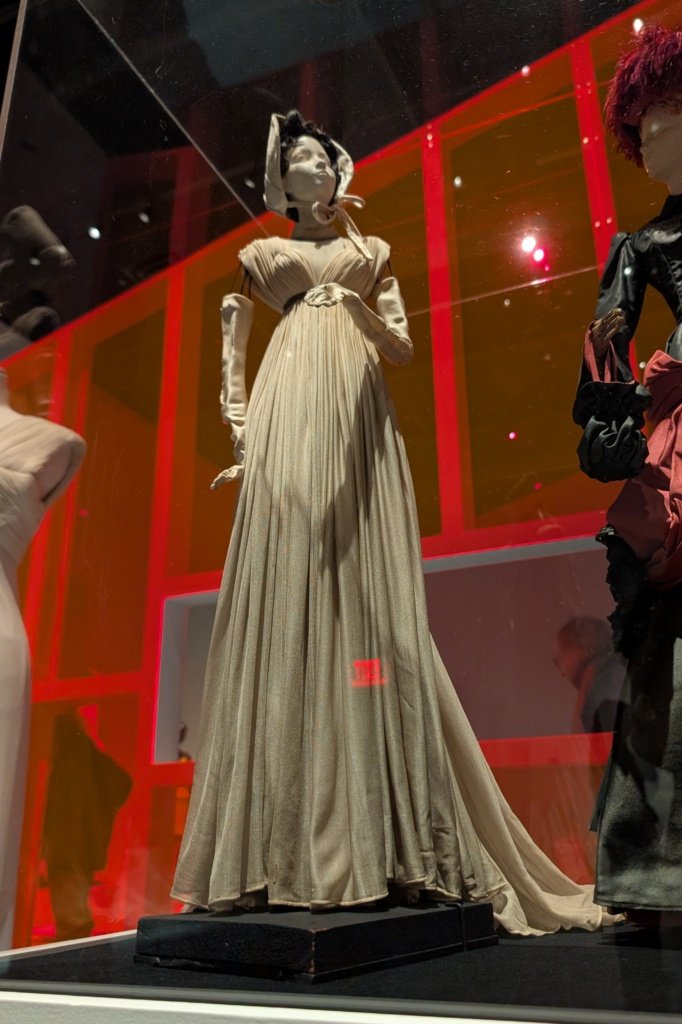
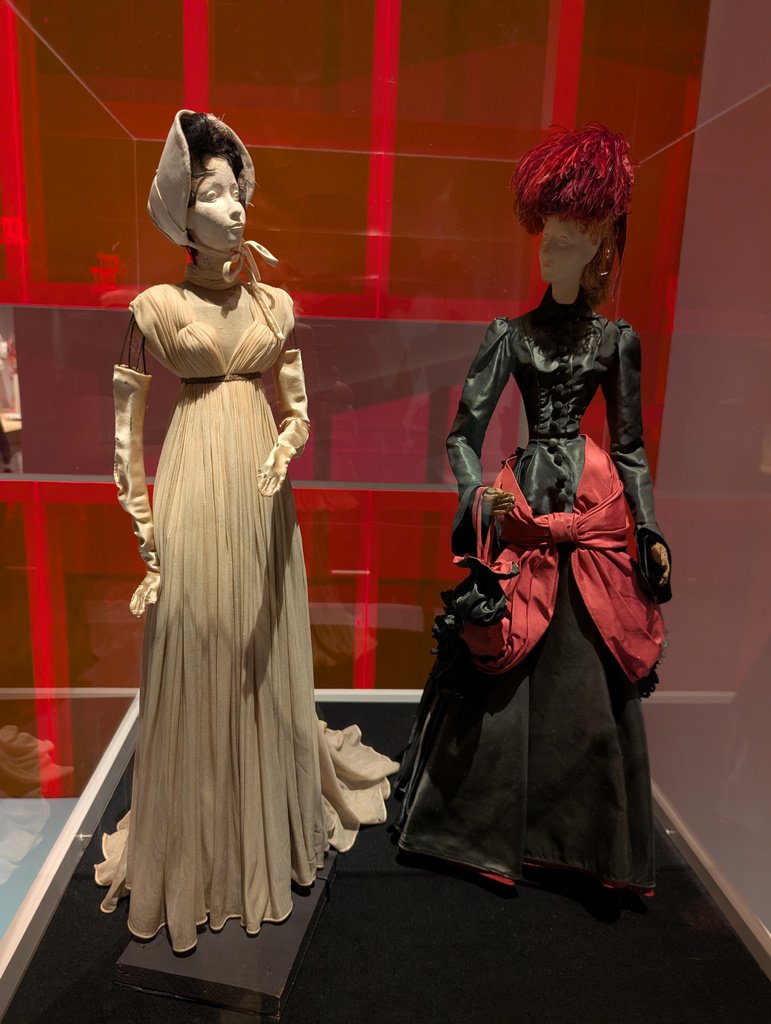
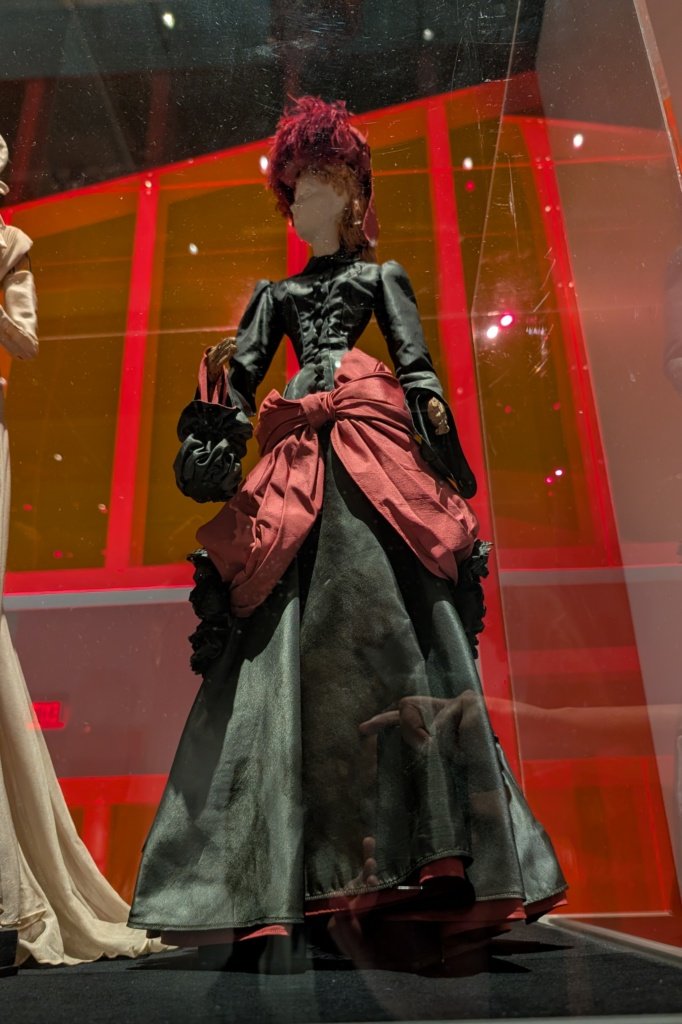
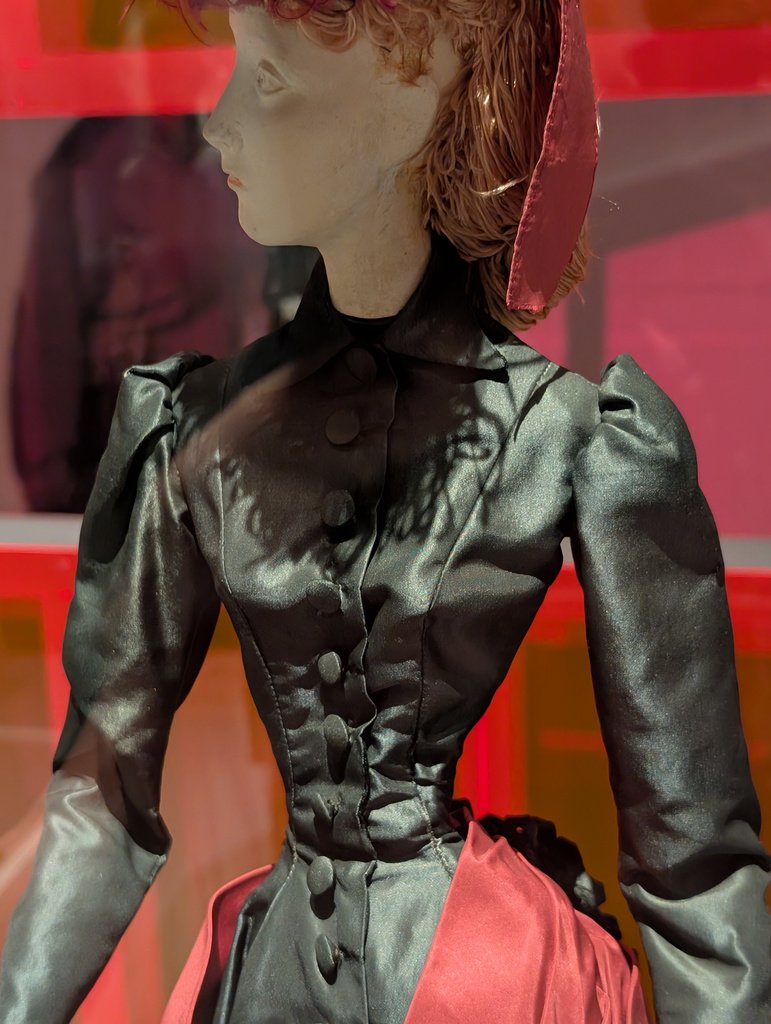
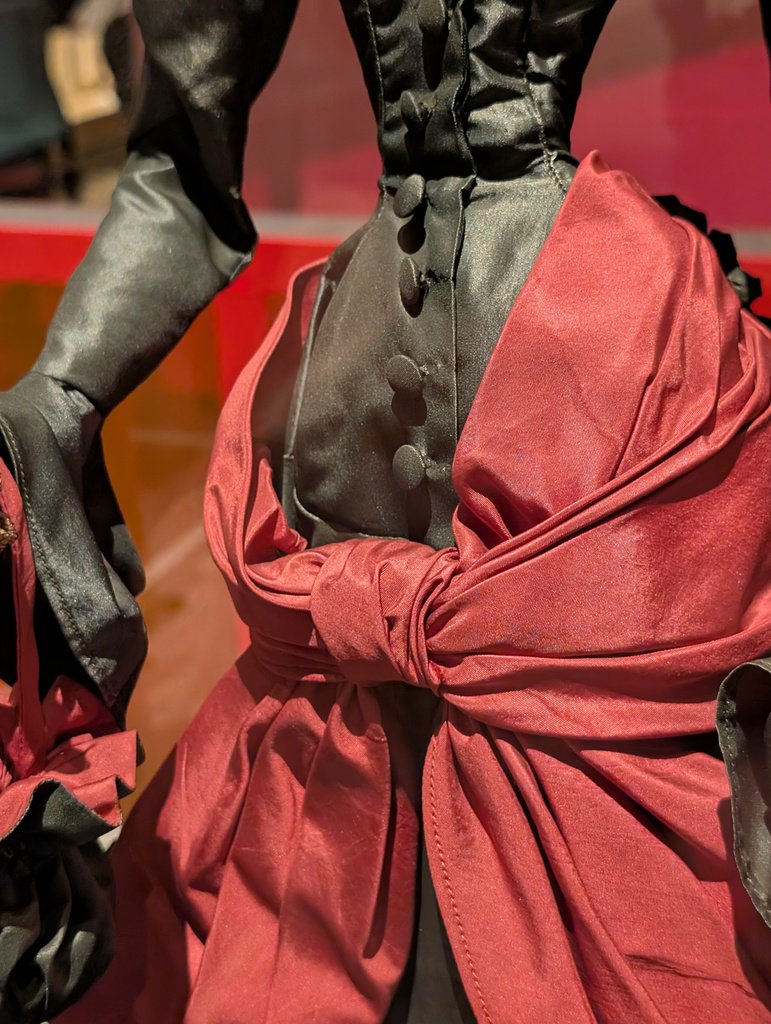
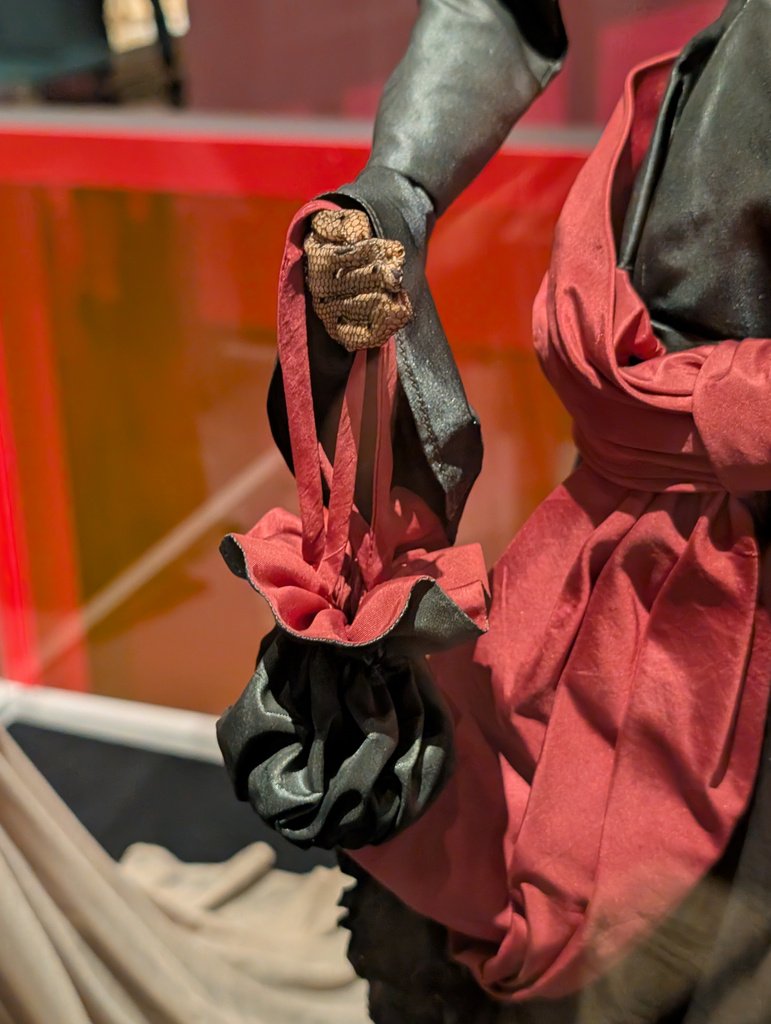
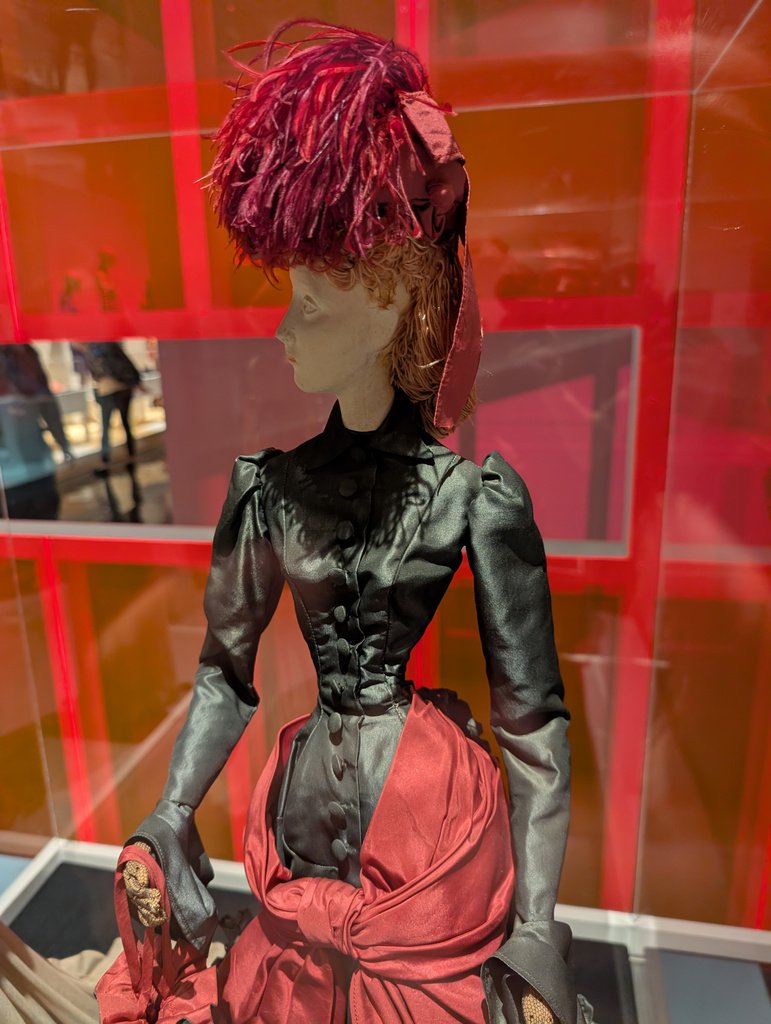
Lanvin: Late-Victorian dinner ensemble in the style of 1878.
(On loan from Brooklyn Museum)
Visitors marveled at these historical interpretations by leading haute couturiers. Madame Grès’s 1949 doll representing 1808 Empire fashion featured a high-waisted gown of silk, metallic threads, feathers, and human hair. While evoking the early 19th century, it prophetically foreshadowed the signature classical drapery and sculptural Grecian pleating that defined her 1960s couture. Meanwhile, Lanvin’s 1878-style ensemble captured late-Victorian theatrical richness, demonstrating how these historic dolls collectively presented a resilient, elegant portrait of French culture.
Contemporary Designers and the Miniature Scale
In contemporary fashion, the doll evolves from a static display mannequin into a co-creator, a personal symbol, and a technical testbed.
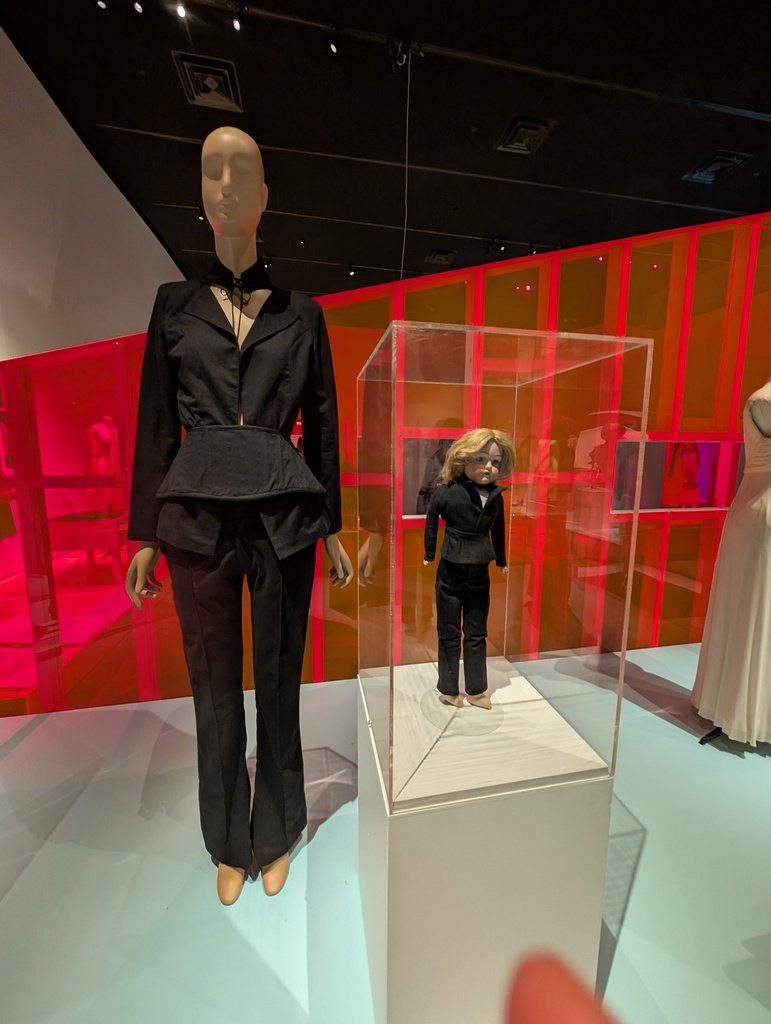
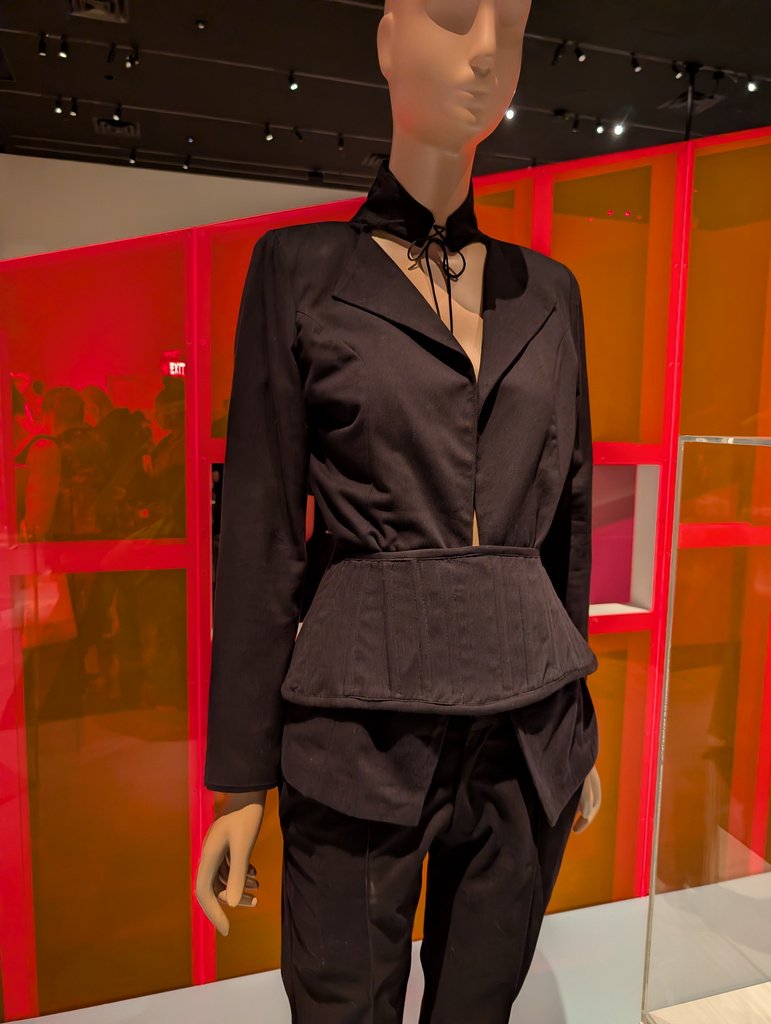
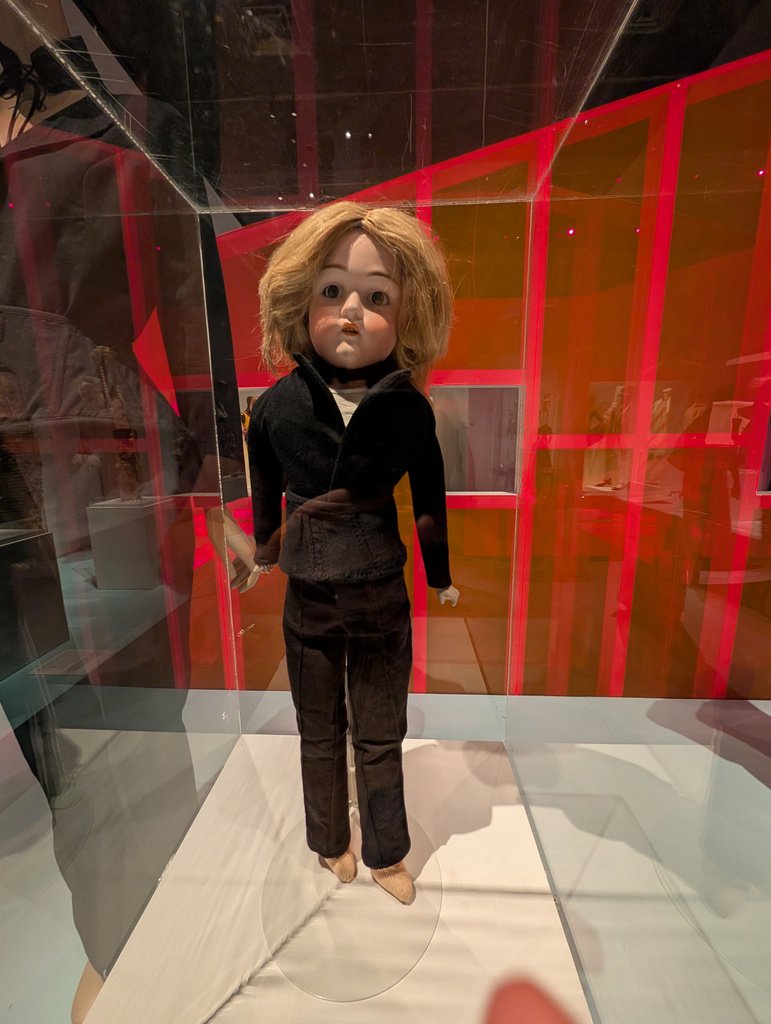
Designer Kari Vettese, for instance, pondered ideas of fragility, innocence, and impermanence for her Spring 2026 collection, which was inspired by the tragedy of the Titanic. Exploring the thematic loss of girlhood, her designs alternated between delicate antique lace and structured tailoring. To anchor this storytelling, the runway presentation featured two models clutching porcelain dolls dressed in matching miniature ensembles.
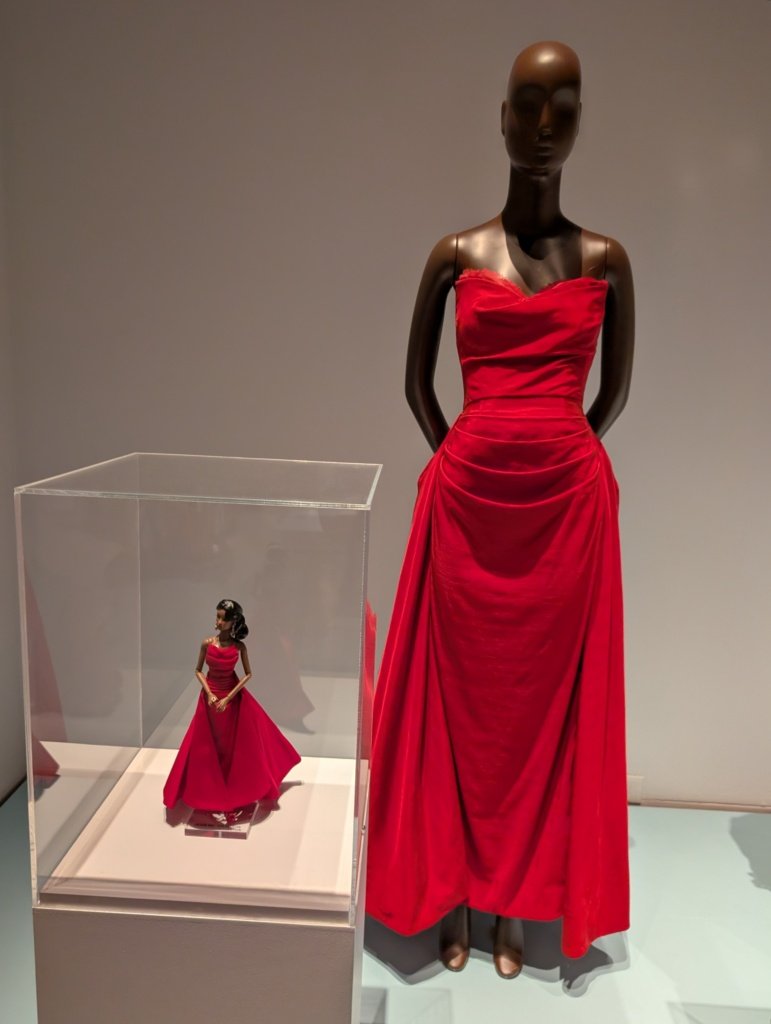
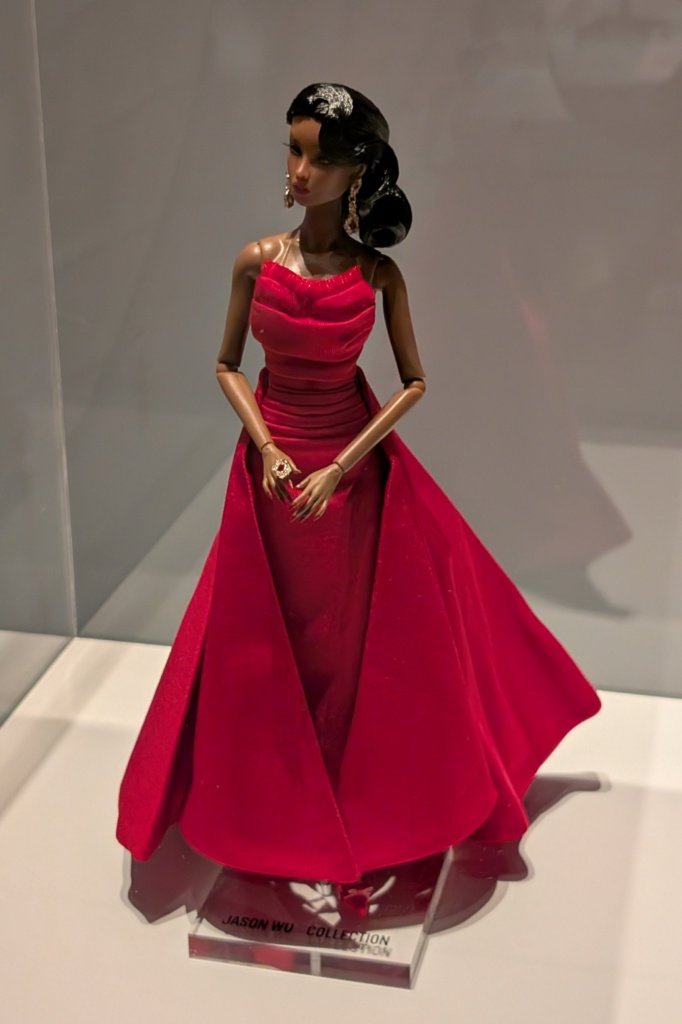
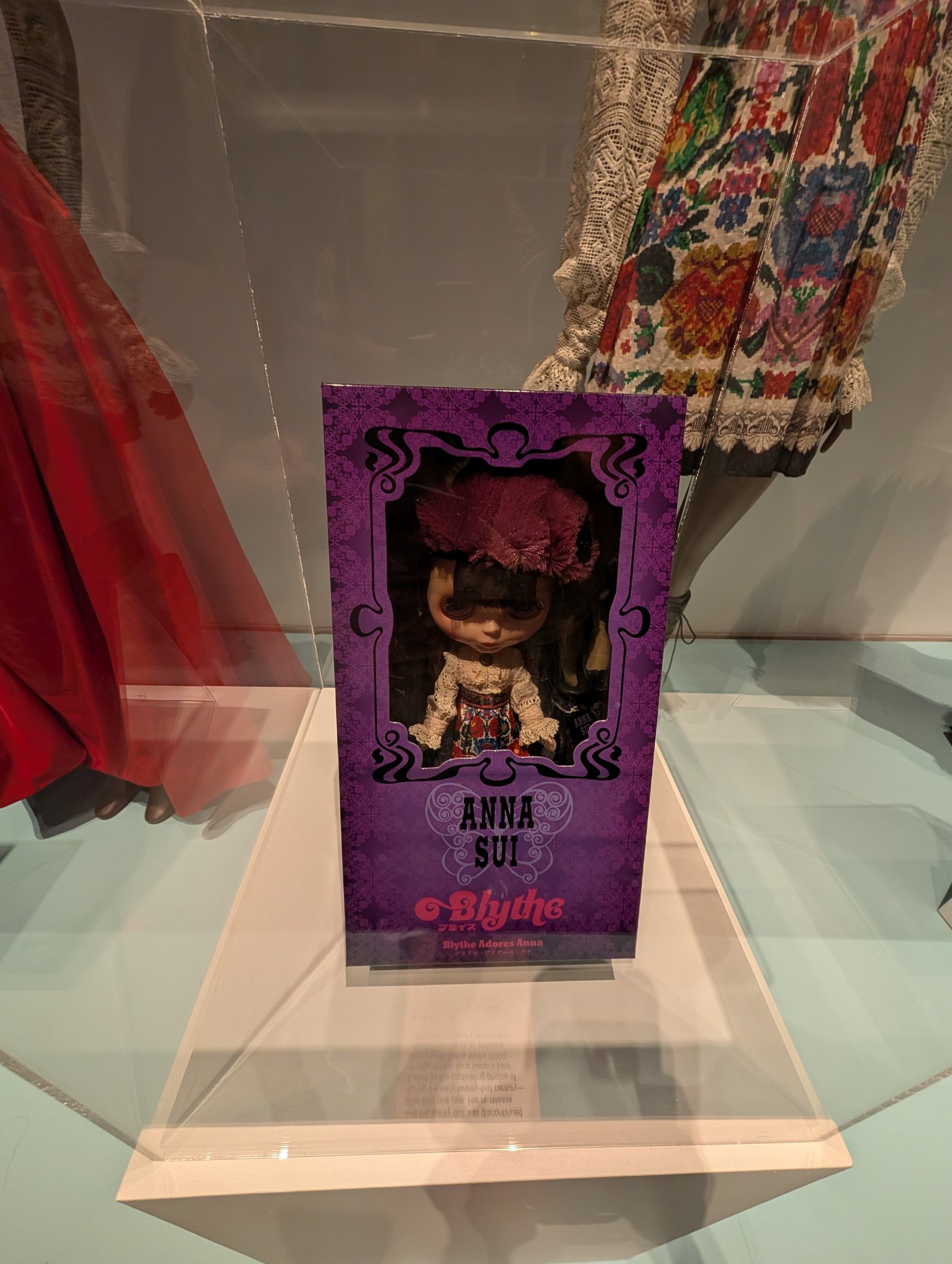
For designers like Jason Wu, Anna Sui, and Martin Margiela, dolls served as their very first dress forms, a small body, a scrap of fabric, and a needle were enough to master drape, proportion, and line. Wu explicitly honors dolls as the origin of his career; as a teenager, he worked as a freelance designer for Integrity Toys, refining his eye for detail on a miniature scale long before launching his high-fashion label.
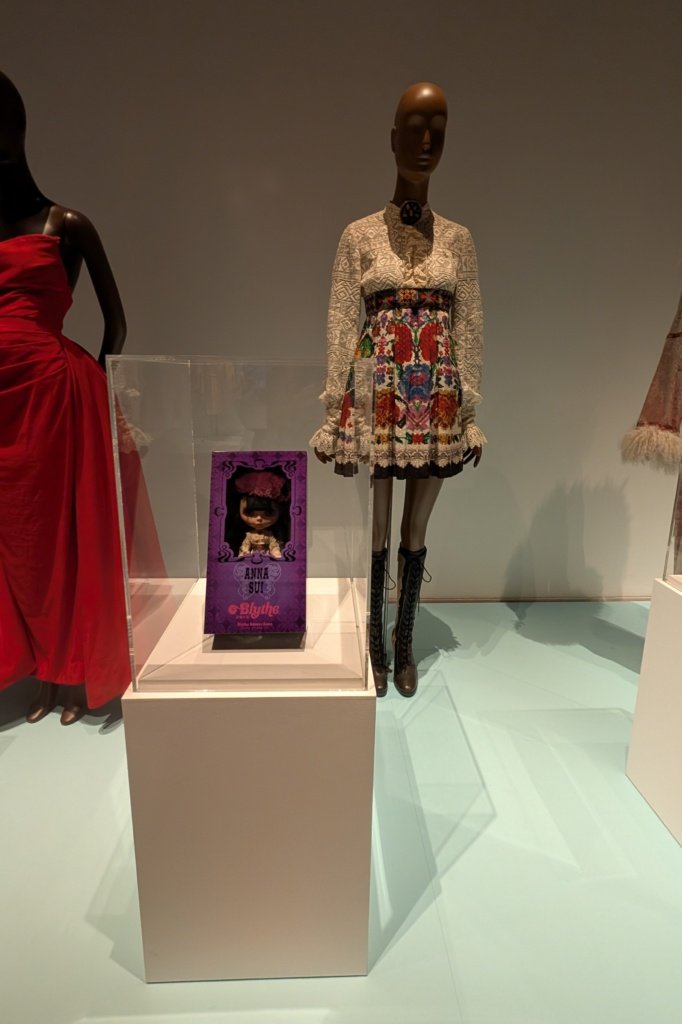
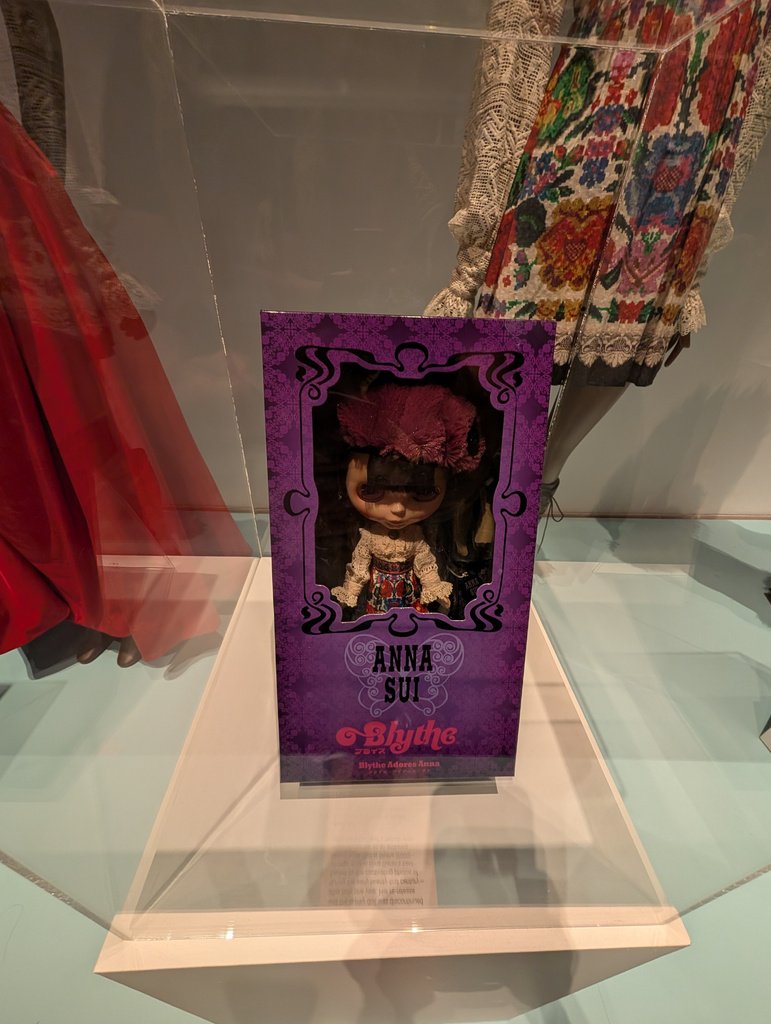
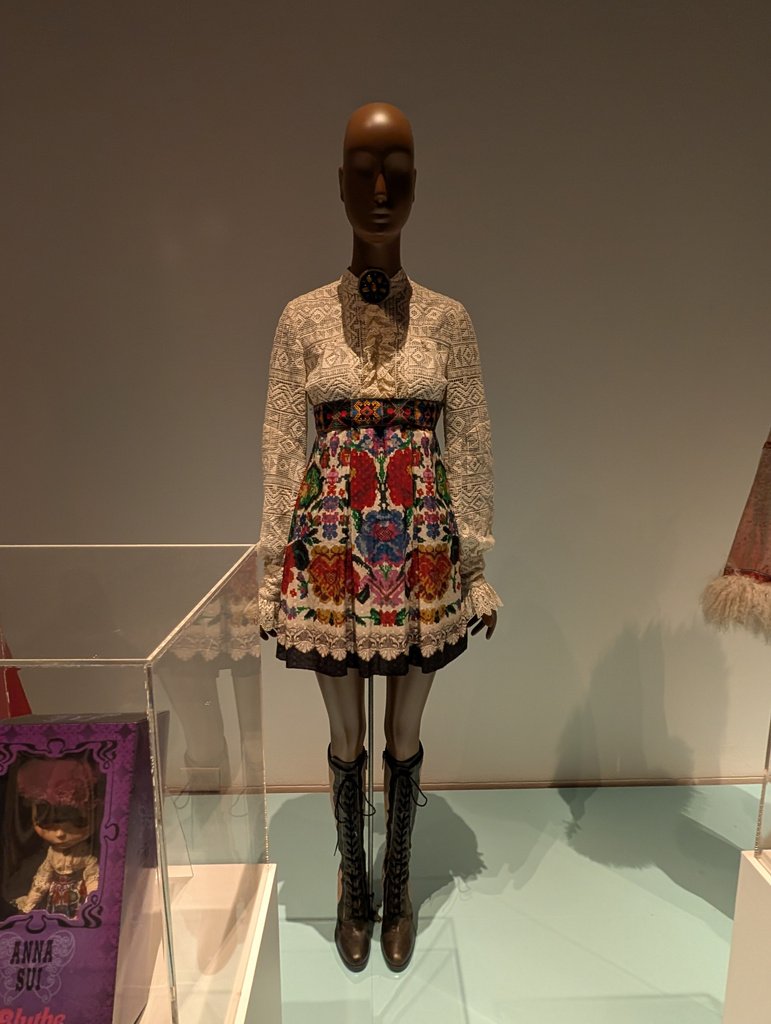
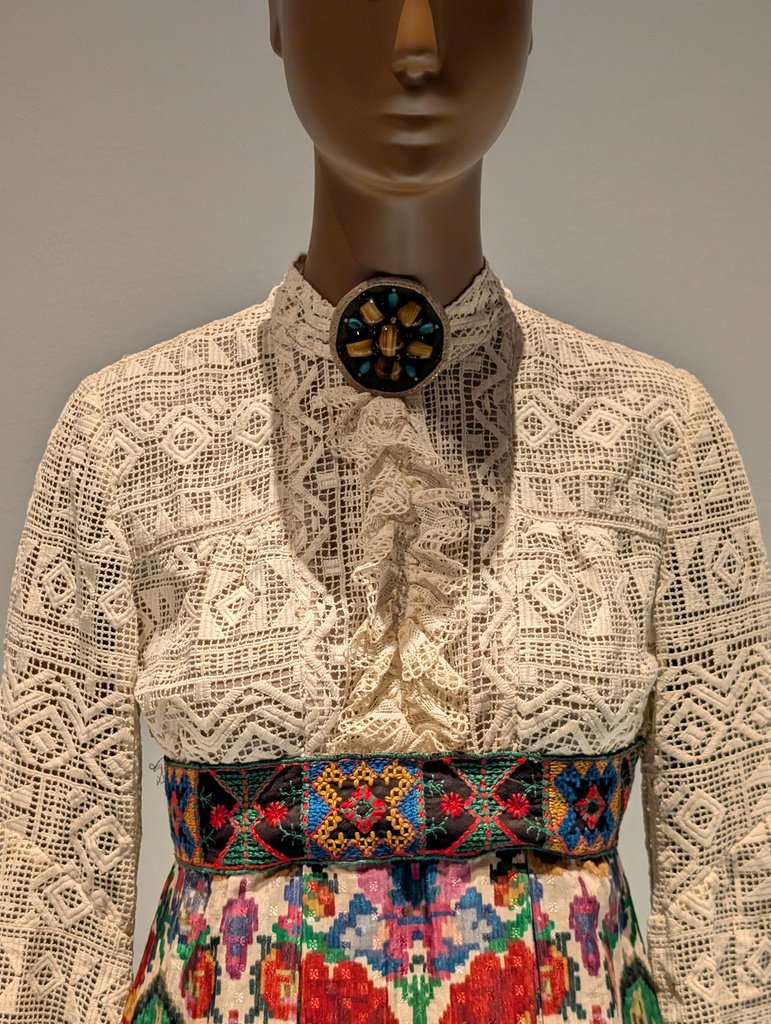
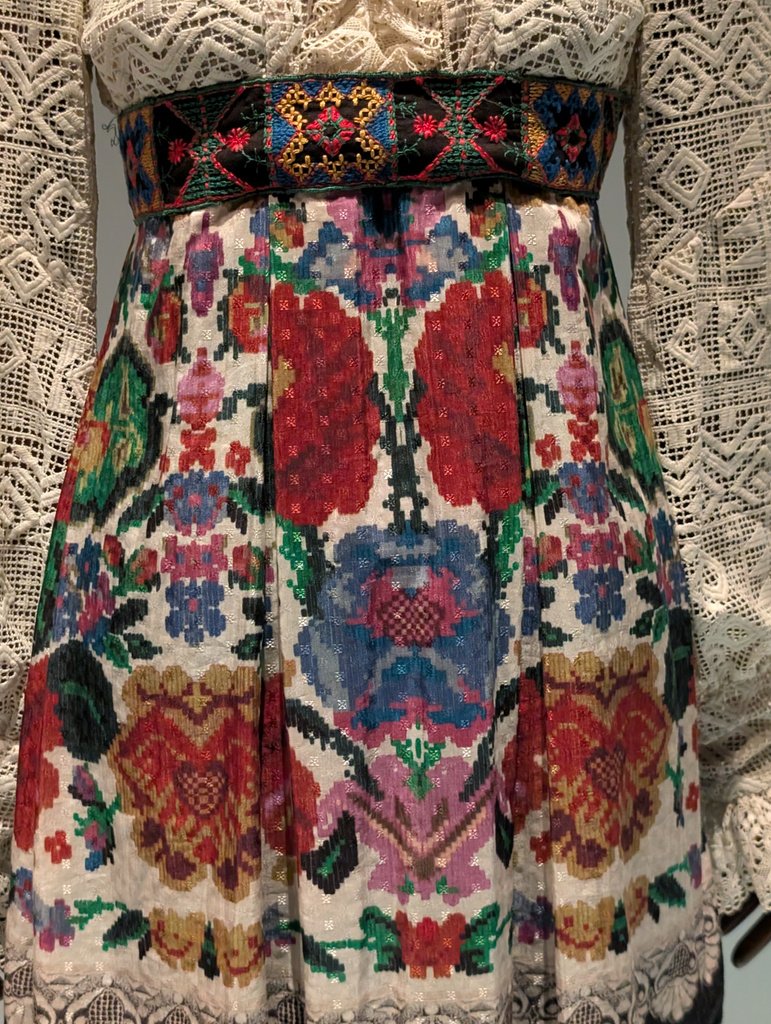
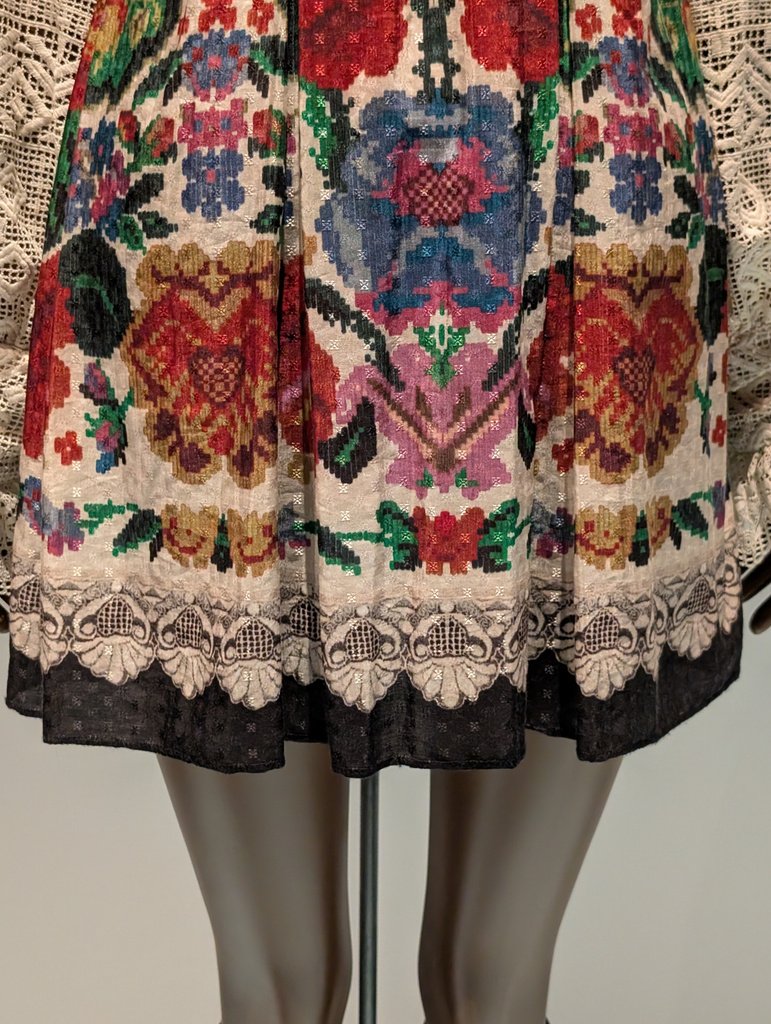
Anna Sui has lent her signature style to numerous dolls, including several styles of Barbie and Japan’s popular Licca-chan. In 1999, Sui was one of twenty designers to provide a makeover for Madame Alexander’s “Cissy” doll, originally produced from 1955 to 1959. The updated dolls were sold to raise funds for the charity Fashion Targets Breast Cancer.
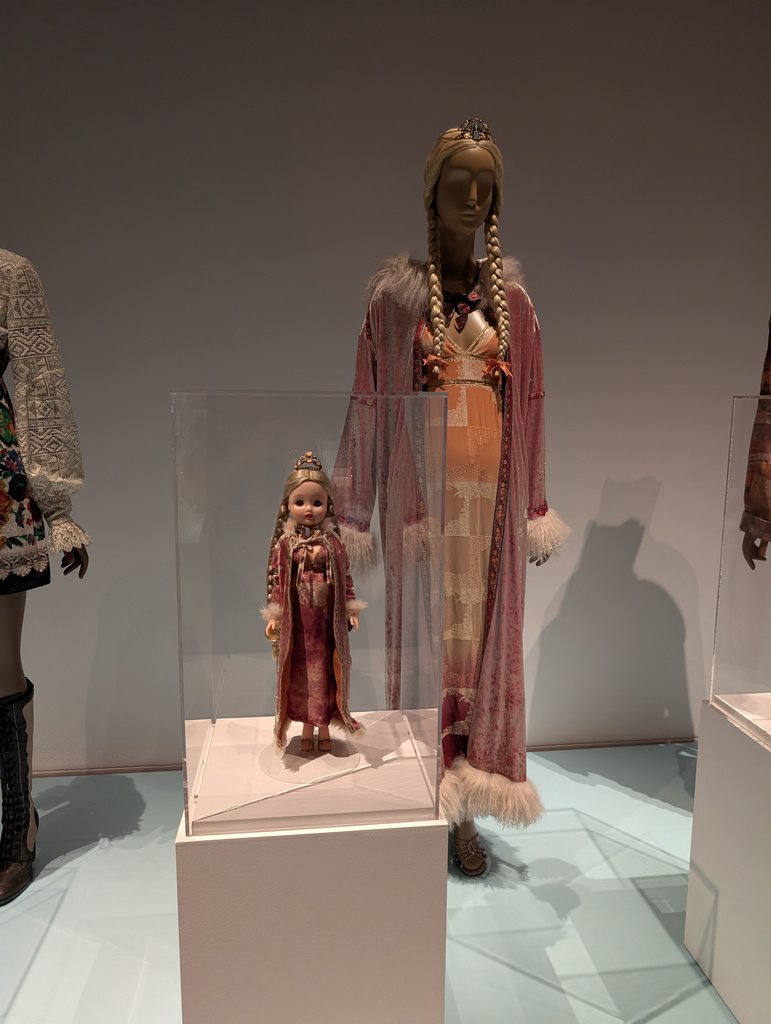
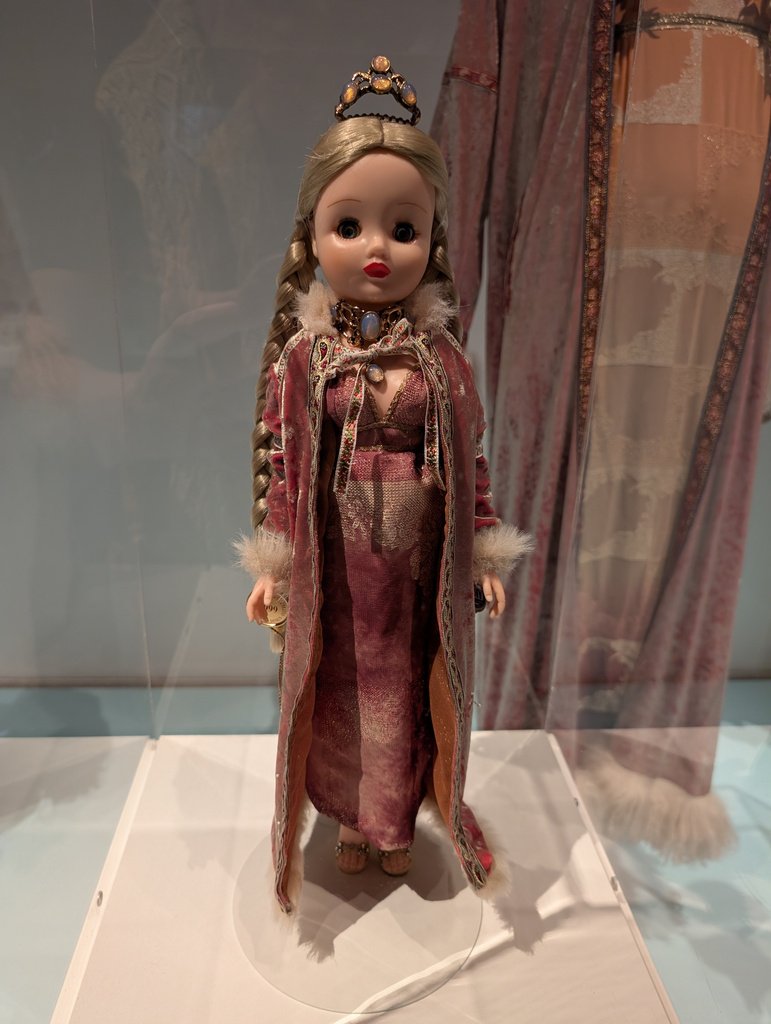
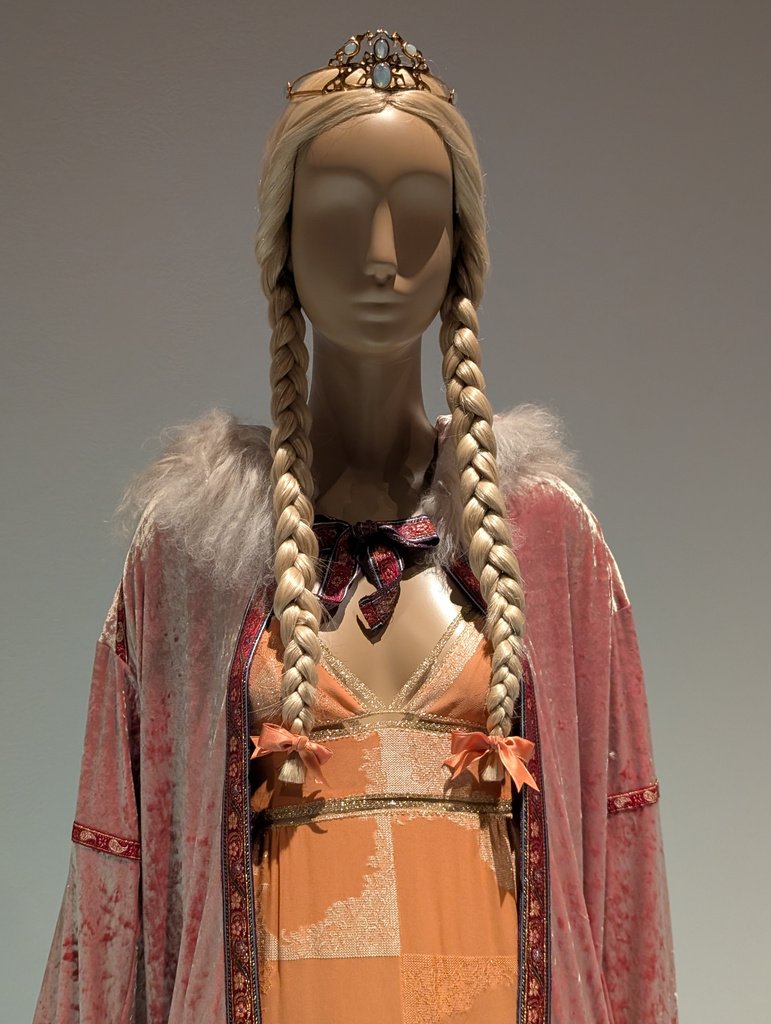
For Anna Sui, small-scale design offers a way to mirror runway vision in miniature. In the exhibition section “Modes in Miniature,” her full-size runway looks are paired directly with their doll counterparts. This side-by-side display demonstrates how Sui scales down her whimsical, eclectic aesthetic, proving that proportion and intricate layering lose none of their impact when translated into 1:6 scale.
Scale 1:6, Craft, and Identity
Rather than functioning as passive display mannequins, miniature bodies serve as dynamic testbeds where extreme craftsmanship converges with profound personal and cultural storytelling.
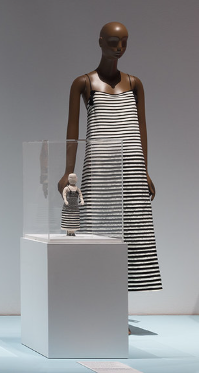
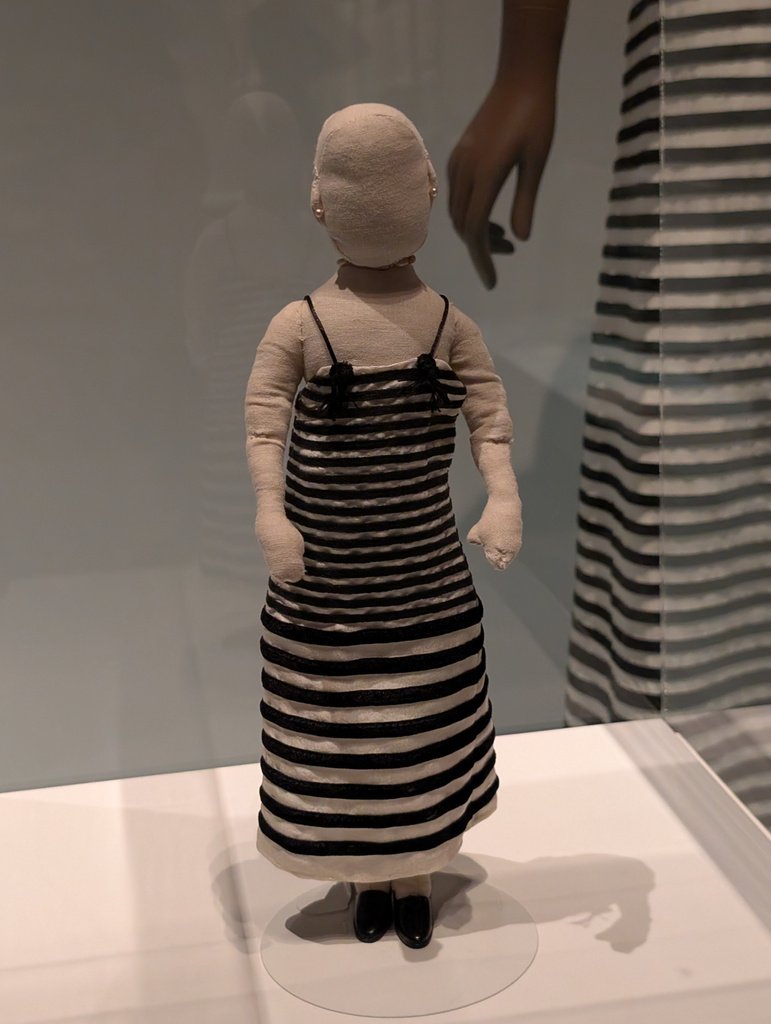
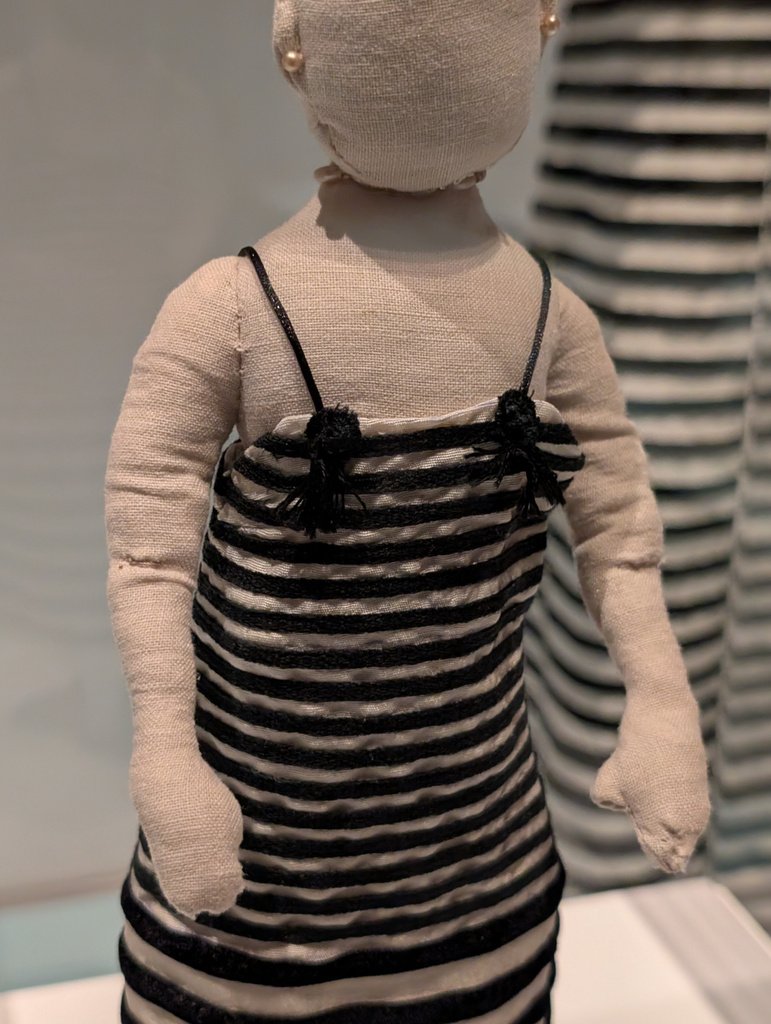
Black and white hand-appliqued velvet ribbon “Velvet Bannister” dress and coordinating handmade doll, fall 2025 Lent by Bode
Executing garments on a 1:6 scale requires reengineering every material: yarn must be ultra-fine, beads perfectly proportioned, and hand-painted details kept lightweight. When Bode (Emily Adams Bode Aujla) presented her Fall 2025 collection on 1:6-scale cloth dolls, it immediately generated viral awe online. Viewers questioned whether the tiny, immaculate clothes and corresponding sets were AI-generated. In reality, they were meticulously hand-crafted – utilizing single-ply yarns, microbeads, and hand-painted textiles that underscore the brand’s commitment to historic artisanship.
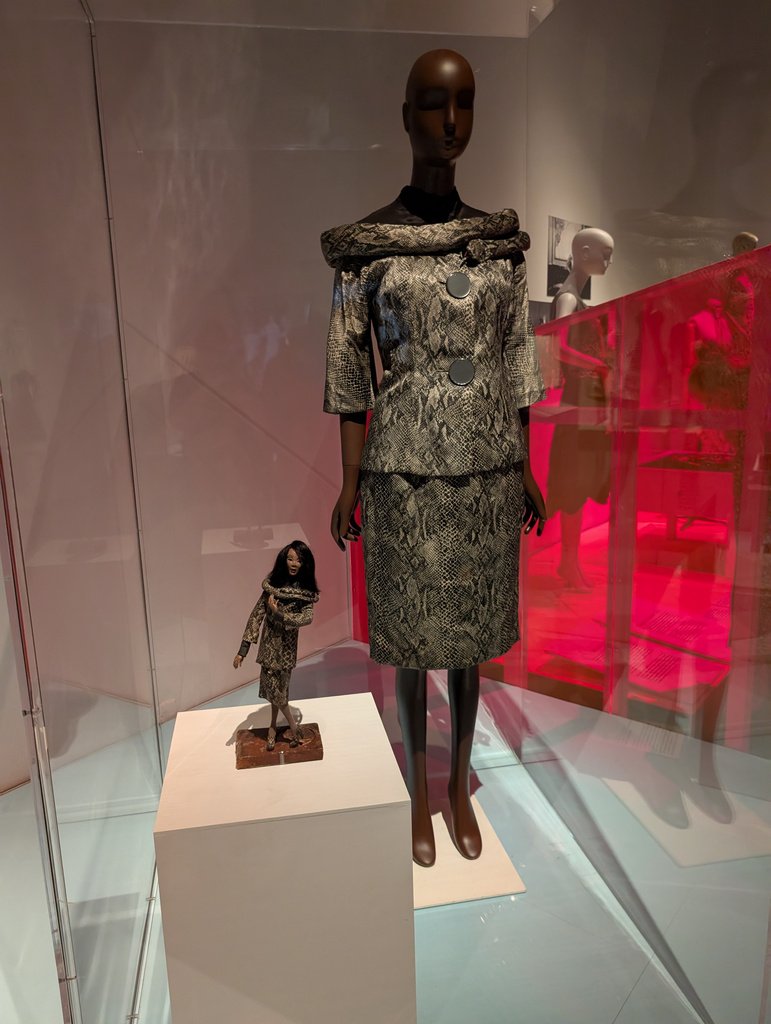
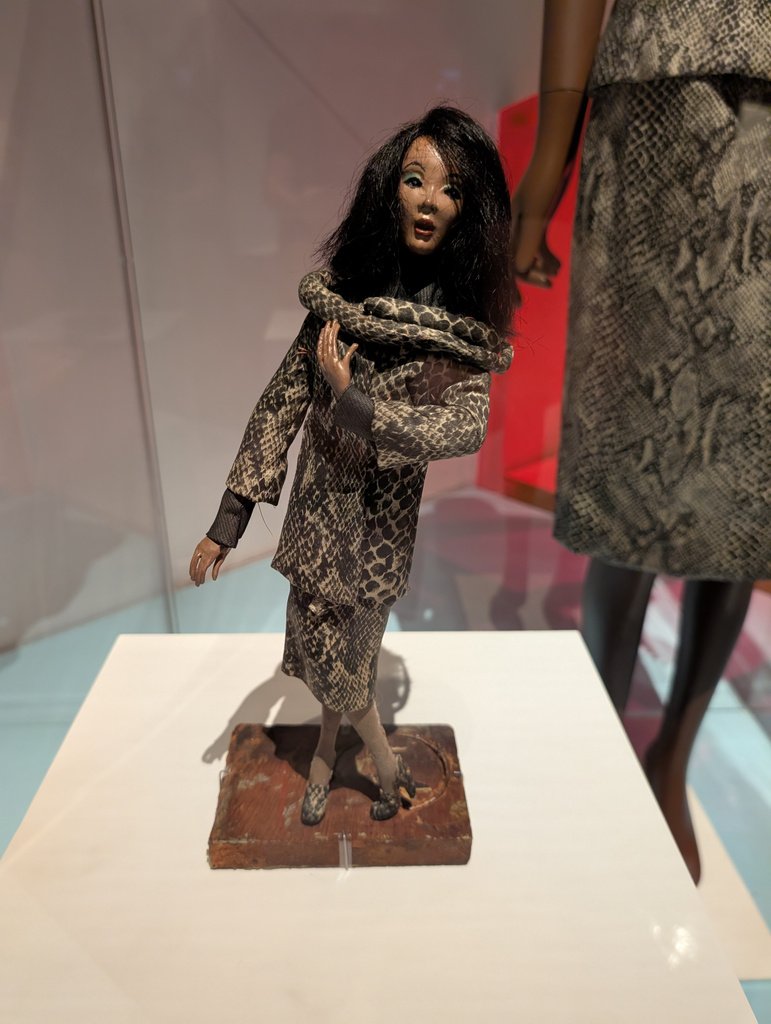
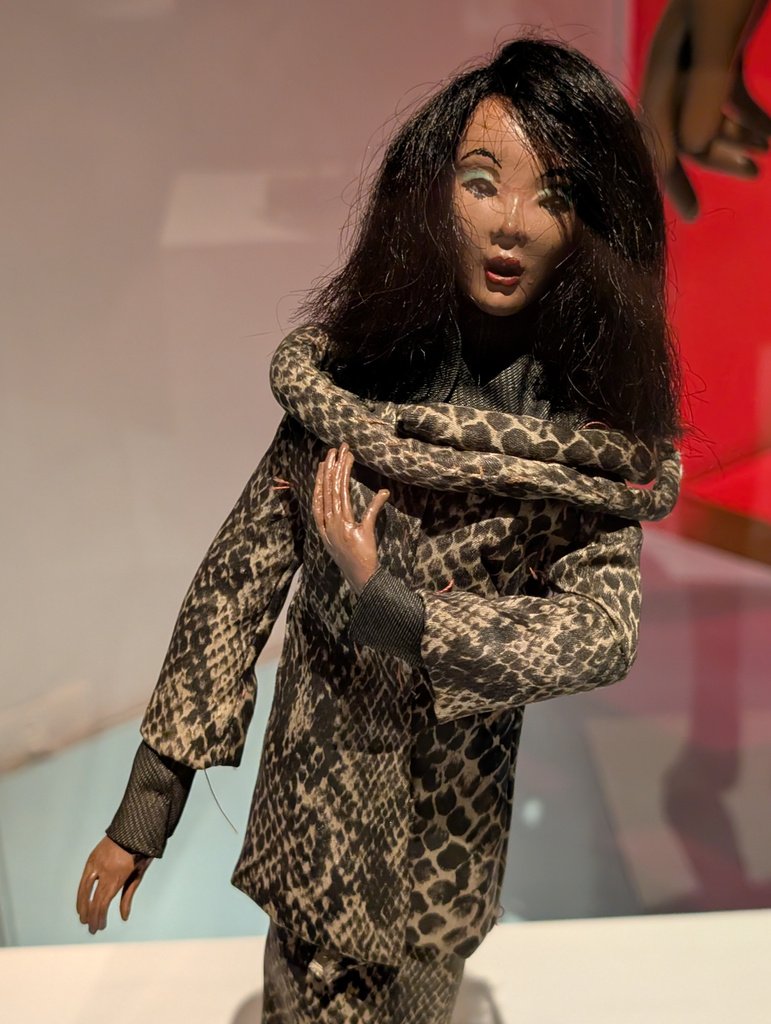
Brown and off-white snakeskin printed satin “Boa” dinner ensemble, 1950/1952
Handmade cotton sculpture doll with human hair, 1960s
Lent by The Museum of the City of New York
Beyond technical mastery, dolls offer contemporary designers a powerful canvas for cultural and personal identity. For Harlem-based fashion designer Ruby Hyacinth Bailey, dolls served as a political statement against mass-market homogeneity. Challenging standardized beauty, Bailey began by customizing Barbies – painting their skin in darker tones, adding posable limbs, and incorporating natural hair as an expression of Black pride. She later transitioned to creating fully original doll sculptures, such as her 1960s figures crafted from hardened cotton.
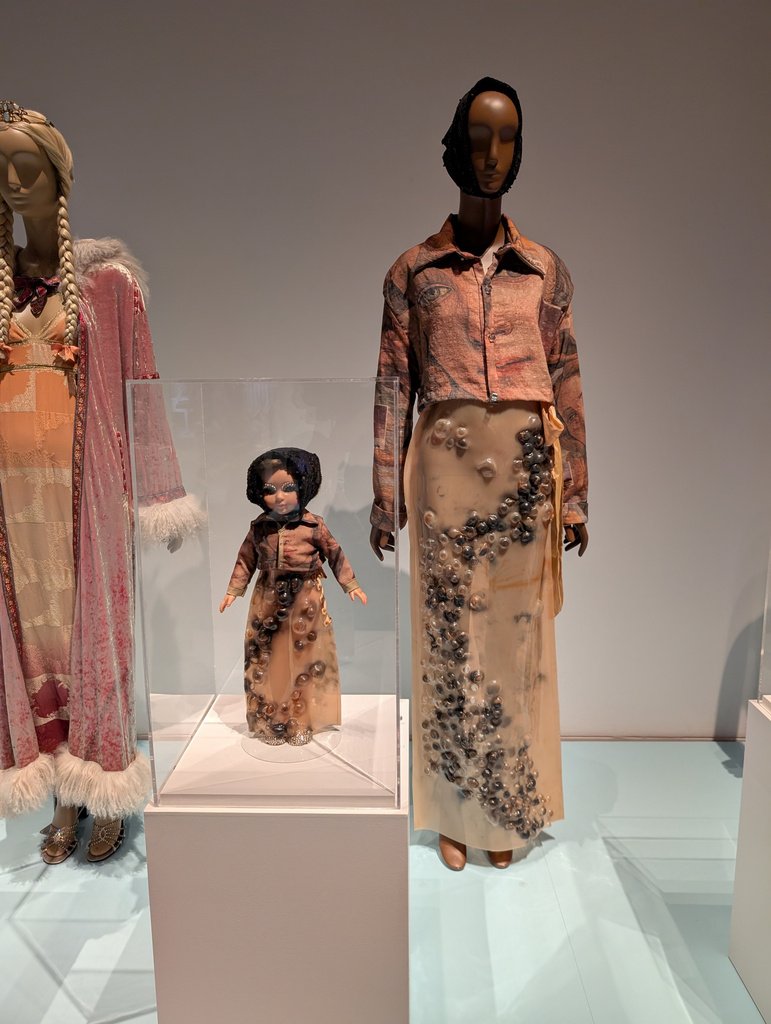
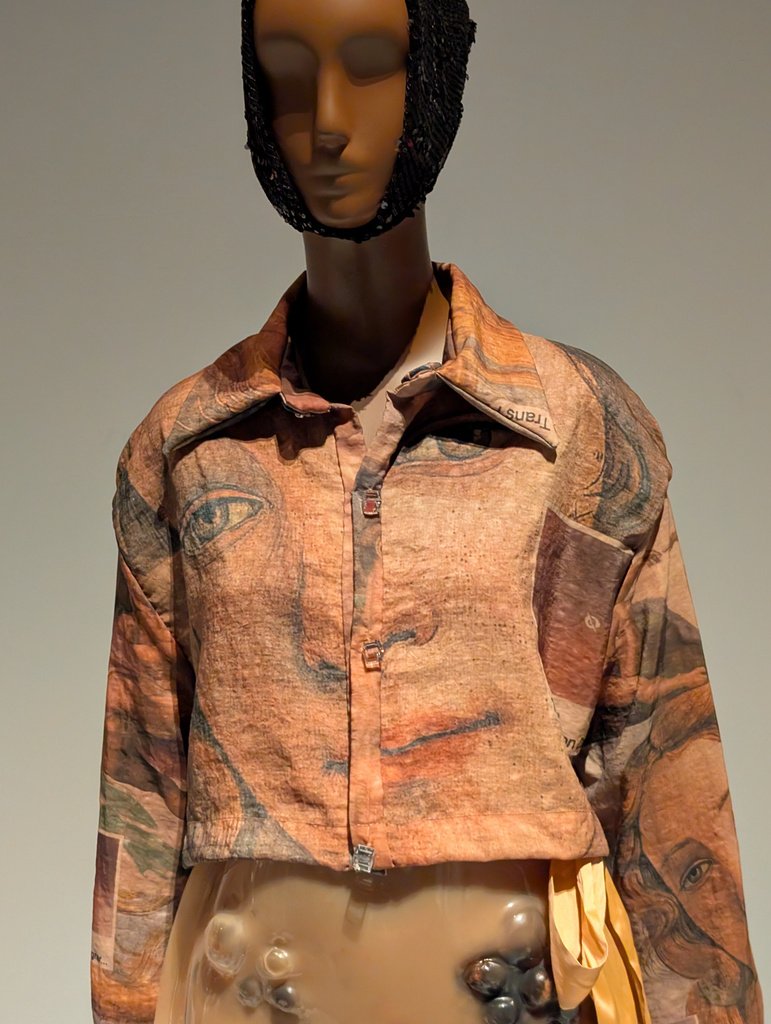
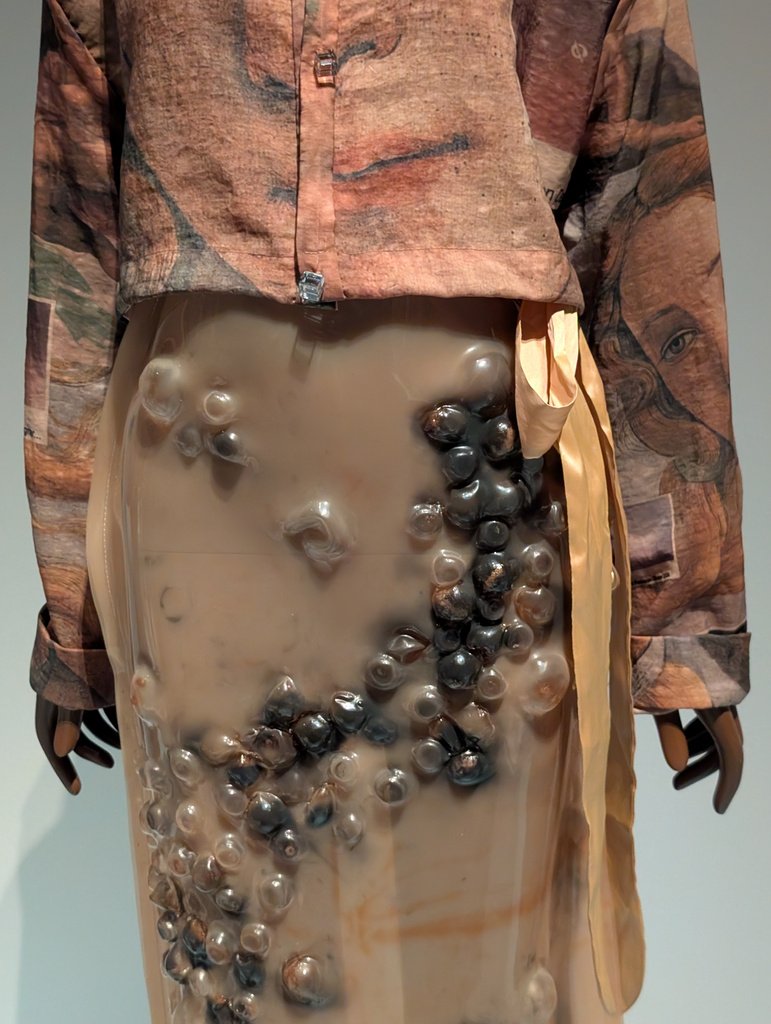
Multicolor printed polyester shirt, plastic skirt, and coordinating doll Childhood is Destiny collection, 2025
Lent by María Ponce
For María Ponce, playing with paper dolls in childhood evolved into a deeper exploration of self-construction. Childhood play allowed her to explore clothing to its fullest extent at an early age. “Now,” Ponce explains, “my approach is linked to the term ‘doll’ from my perspective as a transgender woman” – reclaiming the concept to examine who gets to be called a “doll” and how dress helps construct one’s true identity.
Why Dolls Still Matter
From the postwar resilience of the Théâtre de la Mode to the meticulous 1:6 craftsmanship of Bode, the doll has continuously redefined its role in high fashion, evolving from a miniature mannequin and technical dress form into a muse and powerful statement of identity. Working at a small scale does not diminish fashion’s impact; instead, it brings tailoring, line, proportion, and artistic intention into sharp focus. Ultimately, these miniature figures remain living archives of style and creative testbeds, proving that small bodies can carry profound stories of culture, memory, craftsmanship, and self-expression.
From Éliane Bonabel’s historic wire frames to Bode’s hand-crafted miniature textiles, dolls repeatedly prove that small scale does not mean small significance. Working in miniature brings tailoring, line, proportion, and artistic intention into sharp focus.
Dolls remain living archives of style, flexible dress forms, and canvas for fantasy. More importantly, as the exhibition demonstrates, they are critical cultural tools used to address childhood, race, gender, vulnerability, and the transformative right to self-creation through dress.
Sources & Further Reading
- Hill, Colleen. Doll Dressing. New York: Rizzoli Electa, 2026. (Official exhibition catalogue published in conjunction with The Museum at FIT).
- Charles-Roux, Edmonde, Herbert R. Lottman, Stanley Garfinkel, and Nadine Gasc. Théâtre de la Mode: Fashion Dolls: The Survival of Haute Couture. Washington: Maryhill Museum of Art / Palmer/Pletsch Publications, 2002. (Essential reference detailing Éliane Bonabel’s wire-frame design and the 1945 postwar French couturier miniatures).
- Mears, Patricia. Madame Grès: Sculptor in Fabric. New York: Rizzoli, 2008. (Monograph analyzing Madame Grès’s mastery of classical drapery, sculptural pleating, and historicism).
- Mercier, Pierre, and Jacqueline Demornex. The Merci Train Dolls: French Fashion and American Gratitude. Paris: Éditions du Regard, 1999. (Historical analysis of the 1949 Gratitude Train dolls and their role in diplomatic fashion history).
- Bode, Emily Adams. Miniature Craftsmanship and Scale 1:6 in Contemporary Fashion. New York: Bode Studio Publications, 2025. (Technical documentation on single-ply yarns, microbeading, and hand-painted textiles at miniature scale).
- Peers, Juliette. The Fashion Doll: From Lenci to Princess Diana. Berg Publishers, 2004. (Exploration of the fashion doll as a prototype, dress form, and canvas for race, gender, and identity).
- The Museum at FIT. “Dolls as Mannequins and Muses” Gallery Notes & Objects Registry, Fall 2026. (Curatorial gallery documentation and object records).