Pink Panther Plush Restoration: Repairing, Not Replacing
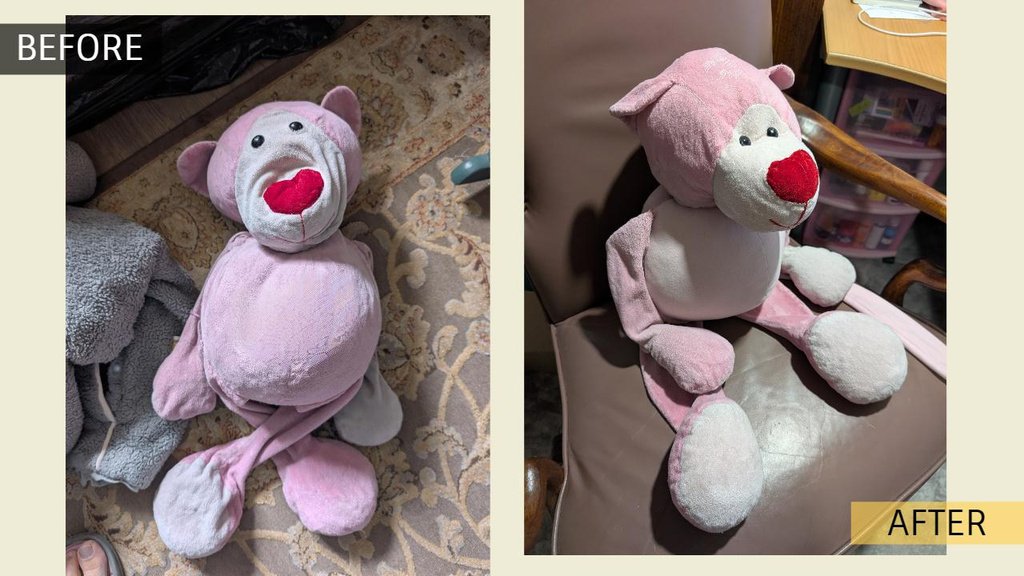
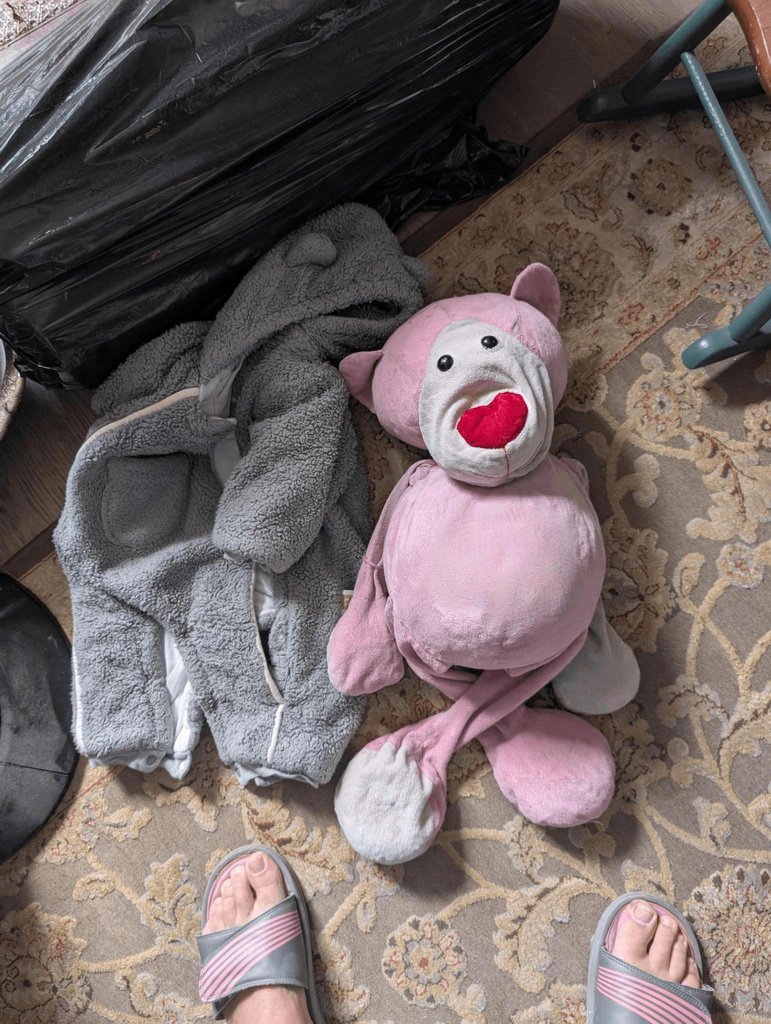
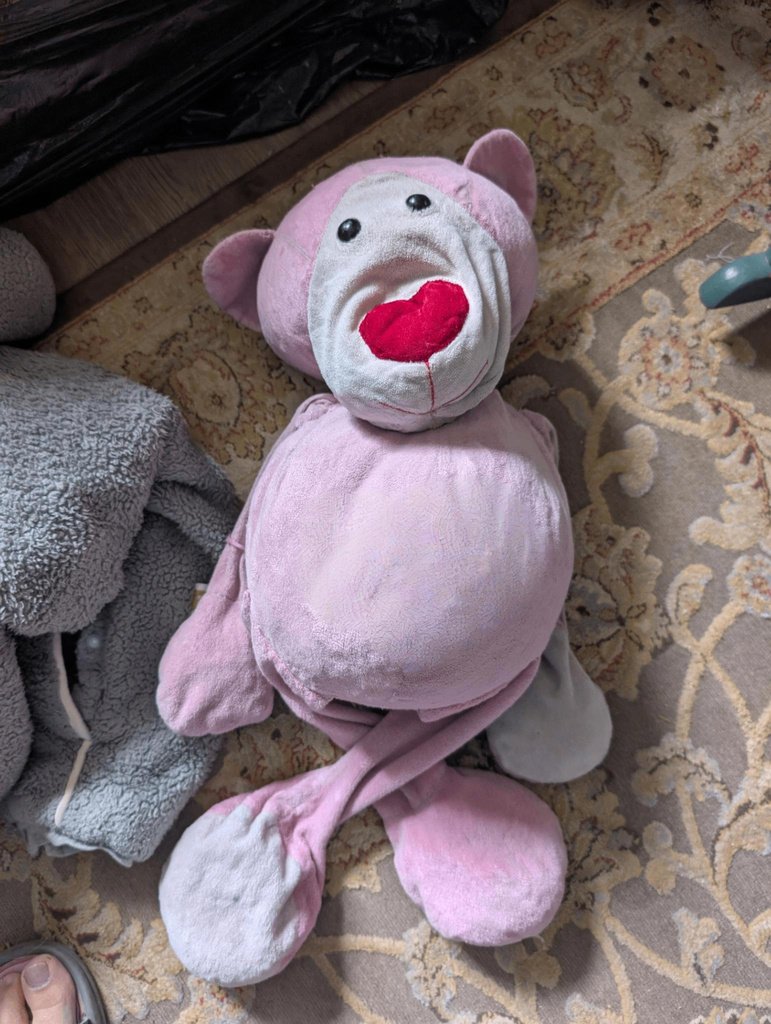
This Pink Panther arrived at the Doll Hospital still looking very much like himself, but his pink plush had seen a great deal of wear. In places, even the backing fabric had worn through, leaving holes.
At first, I considered replacing all the pink plush. But that would have meant making an almost new toy, and that was not the point. The challenge was to repair this Panther while keeping as much of his original fabric as possible.
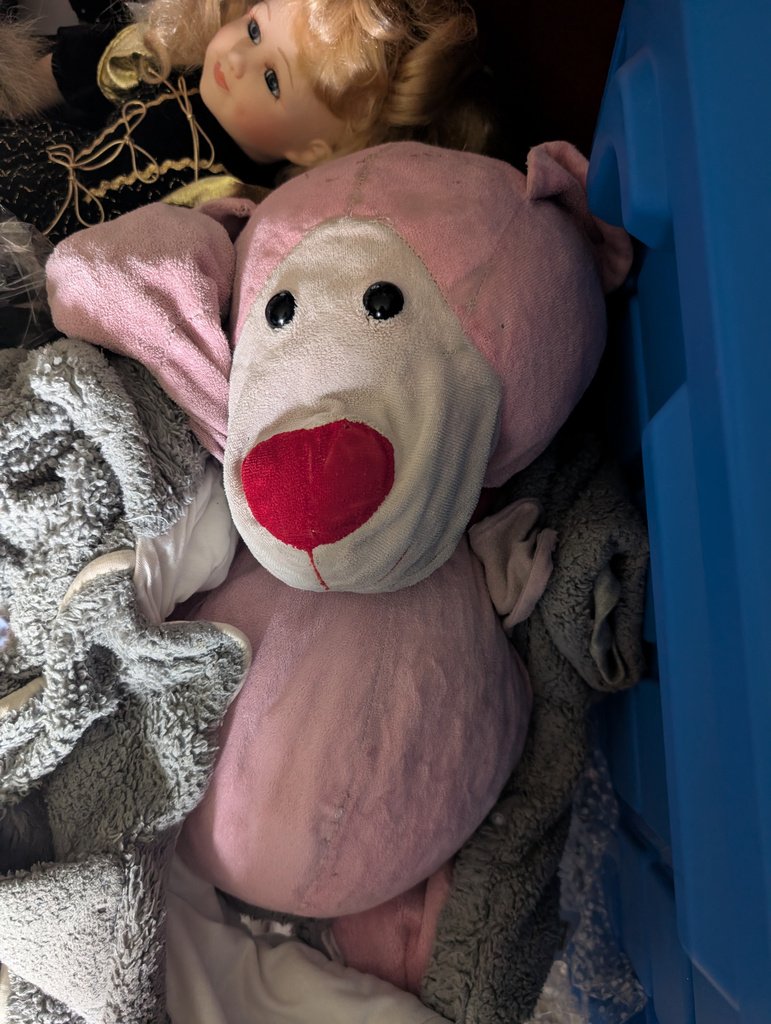
Taking Him Apart
I began by taking the toy apart completely, separating the arms, legs, and head from the body and removing the remaining stuffing.
The old filling was no longer suitable for reuse. All of it would need replacing, including the stuffing inside his muzzle and nose.
With the pieces laid out, I could see how much material could be saved, and where I would need another solution.
A New Tummy, an Original-Fabric Arm
I spent a long time considering different fabrics, but none solved the real problem: how to repair the Panther without replacing his familiar coat.
Then I looked again at pictures of the cartoon character. His tummy is a lighter colour than the rest of his body. That gave me somewhere to introduce a new fabric without changing the idea of his appearance.
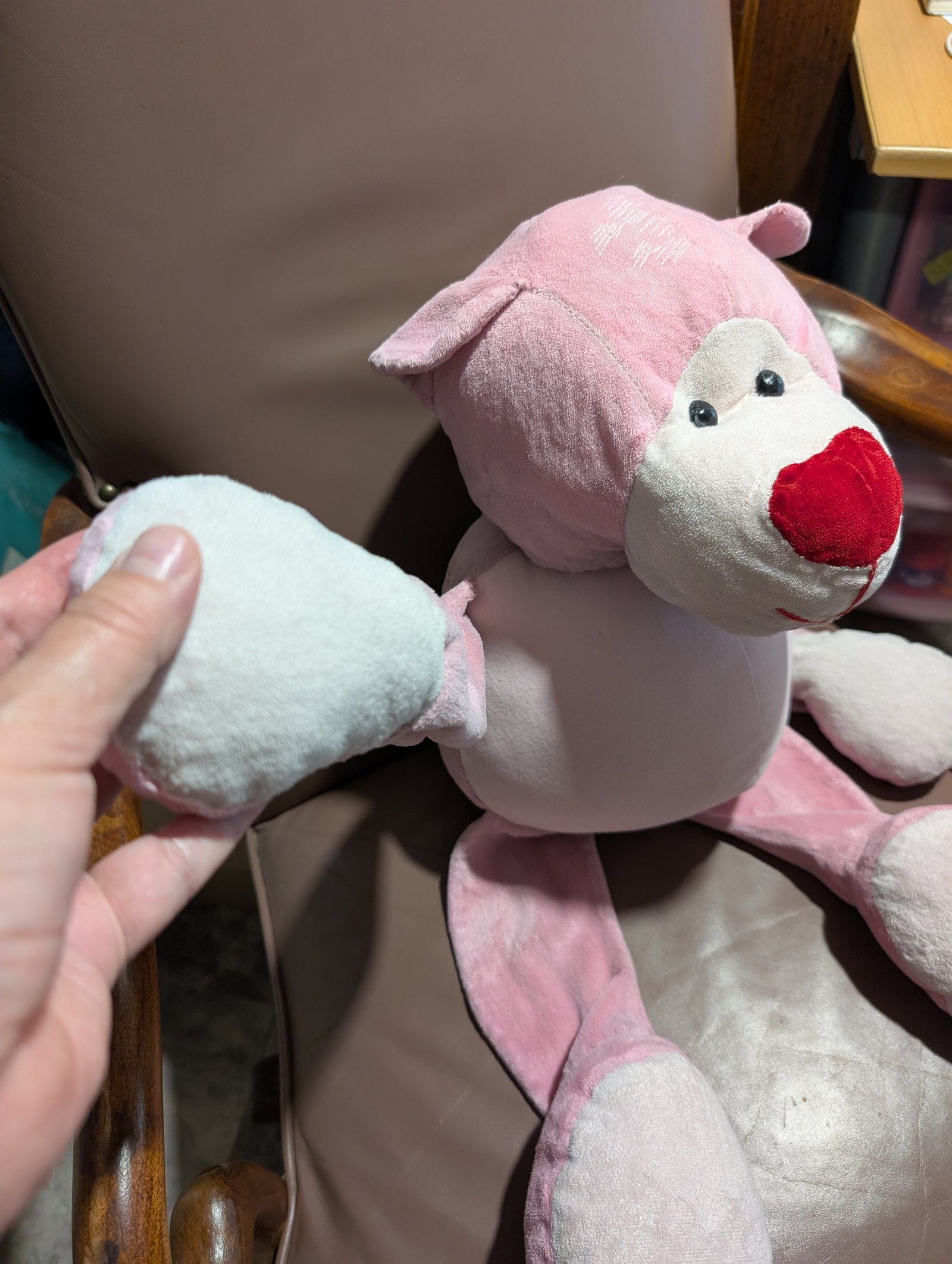
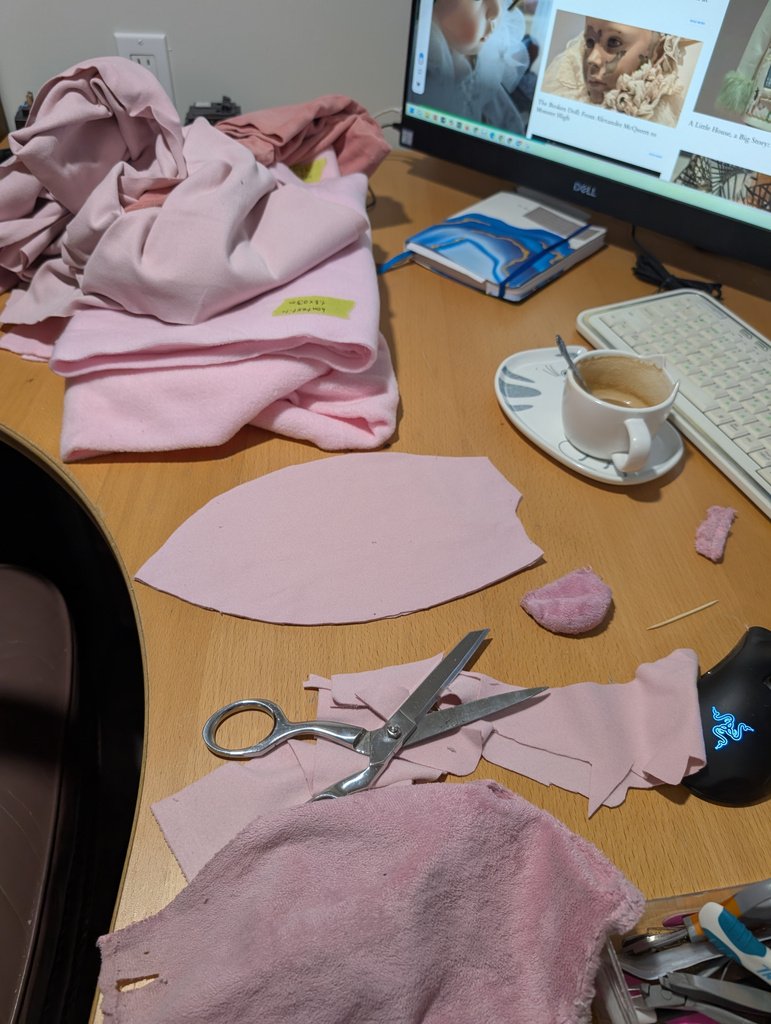
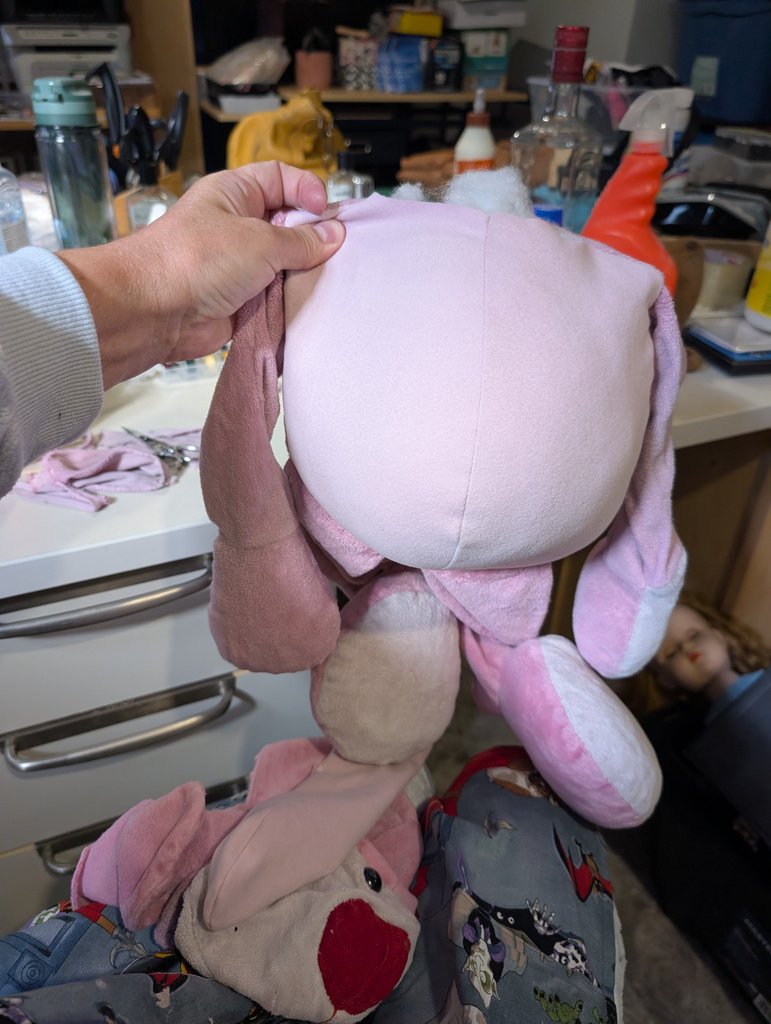
I chose a pale pink knit fabric for the front of his body. The original pink plush removed from that section could then be used elsewhere: I cut replacement arm pieces from it.
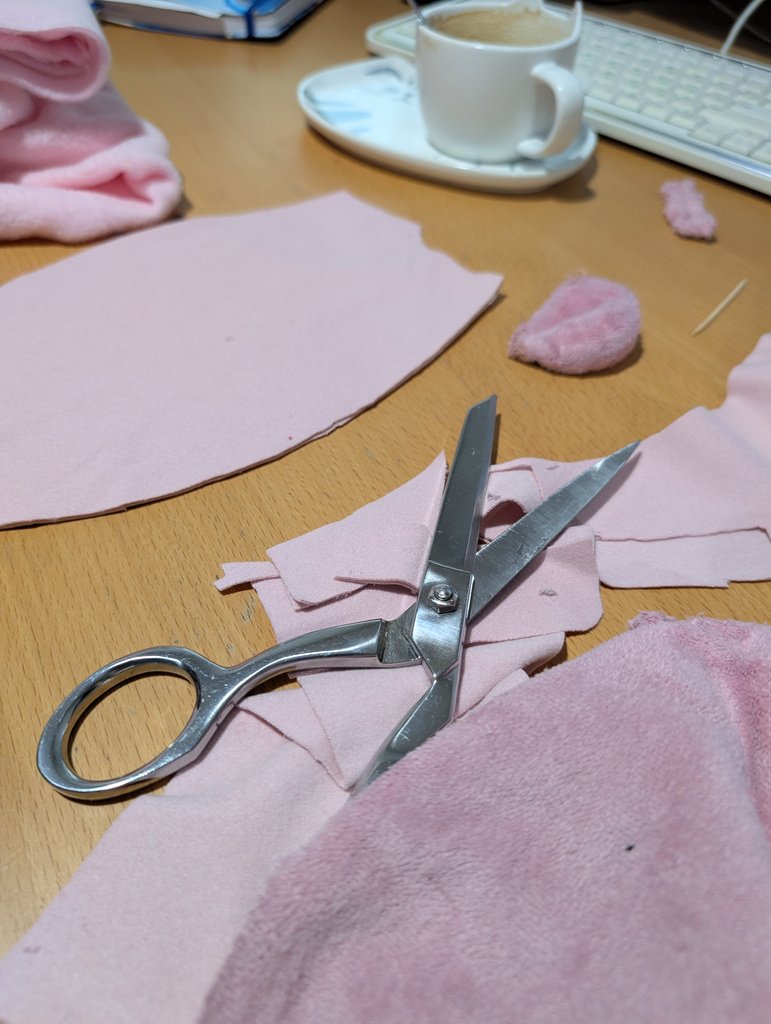
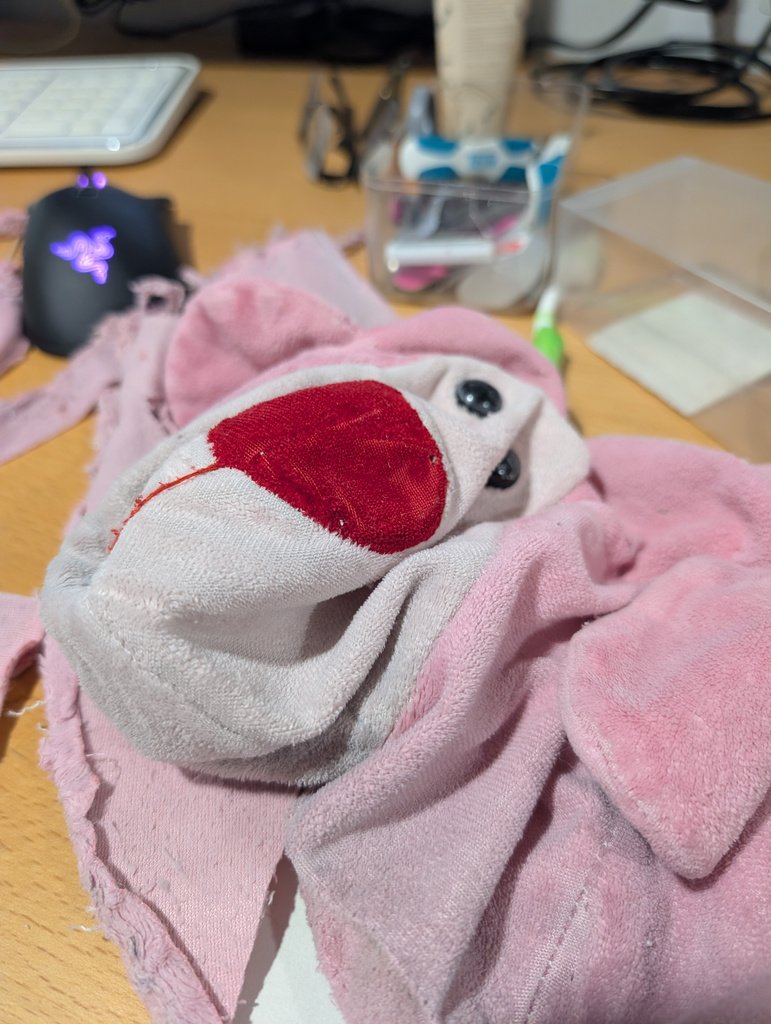
This way, one new panel gave me enough original material to repair another part of the toy.
I sewed the body and limbs back together and filled them with fresh polyester stuffing.
The Head Needed a Different Approach
The head was more complicated. There were many worn areas, and the remaining fabric needed support.
First, I tried fusible backing, but it would not hold. Next, I tried a specialist fabric adhesive. That did not hold either.
So I turned to stitching: the kind of machine darning often used to repair worn denim.
I placed scraps of the old fabric beneath the damaged areas and worked rows of stitches over them from the outside. The repairs remained visible, but they allowed me to keep the original plush rather than replace it.
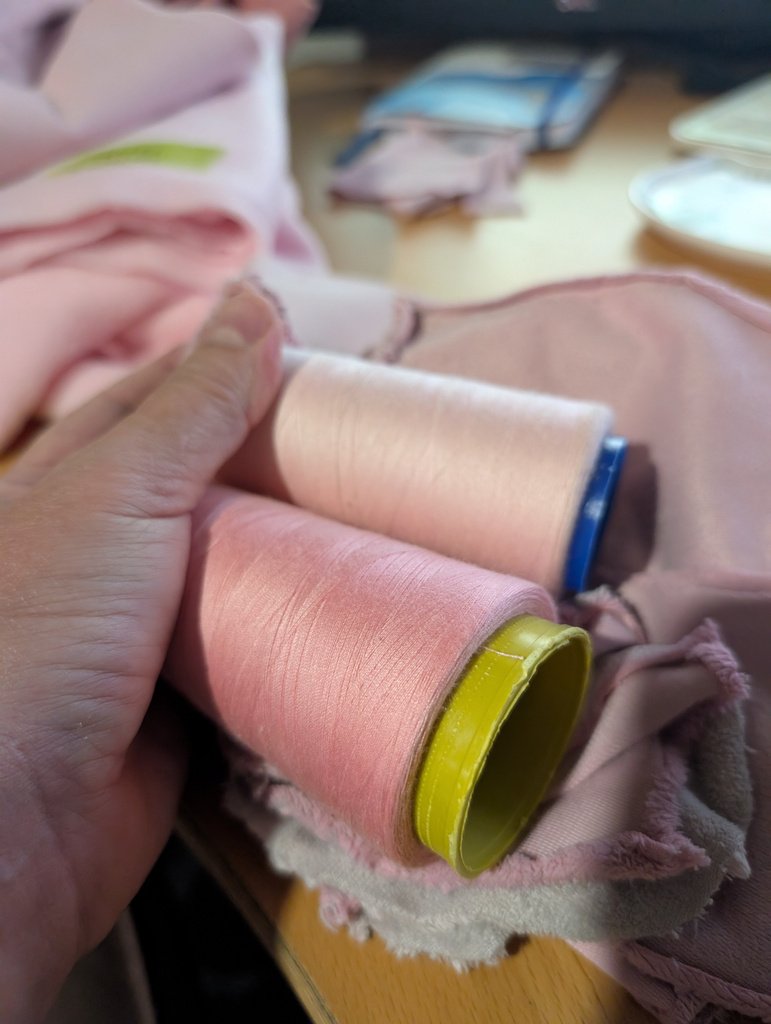
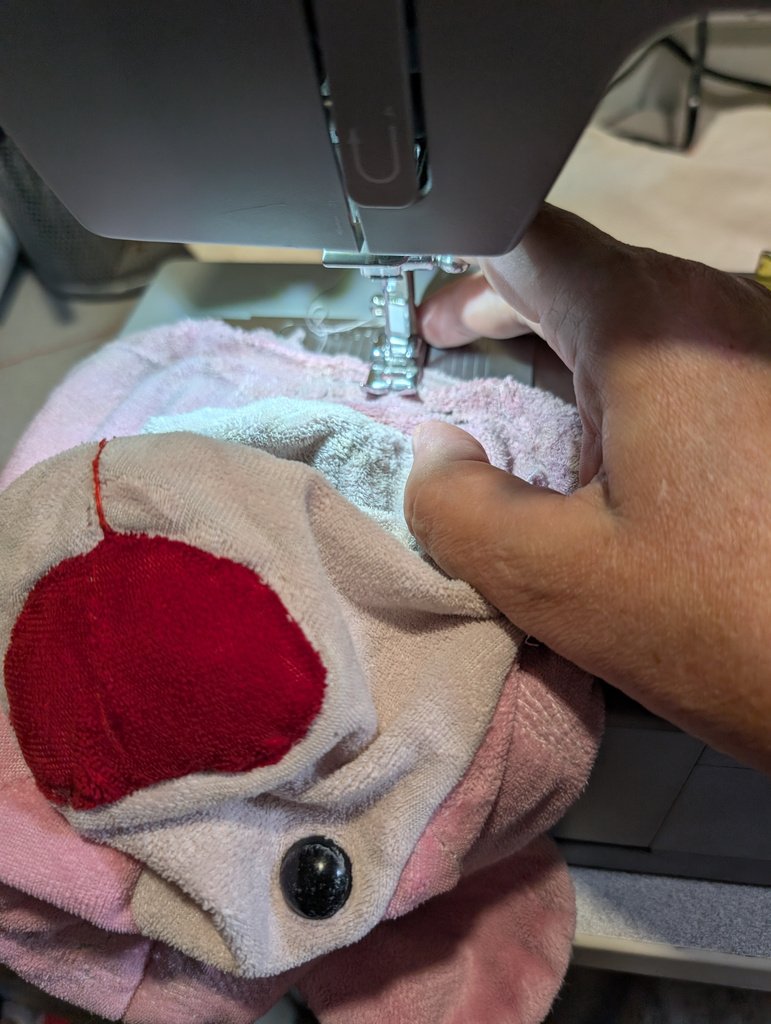
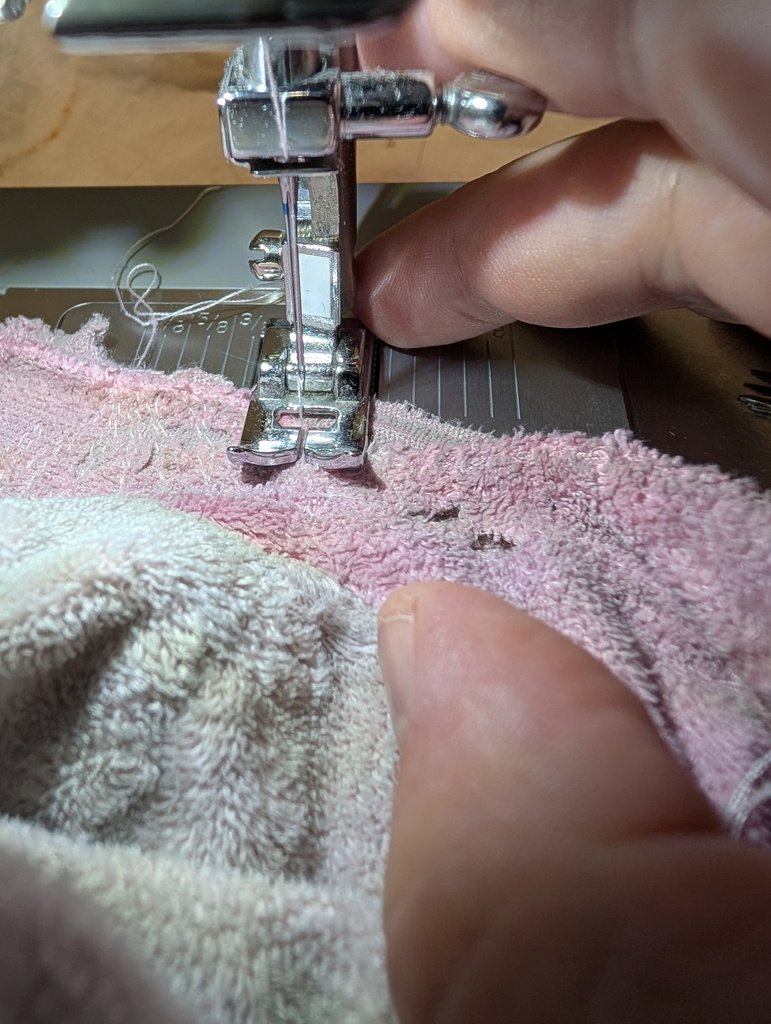
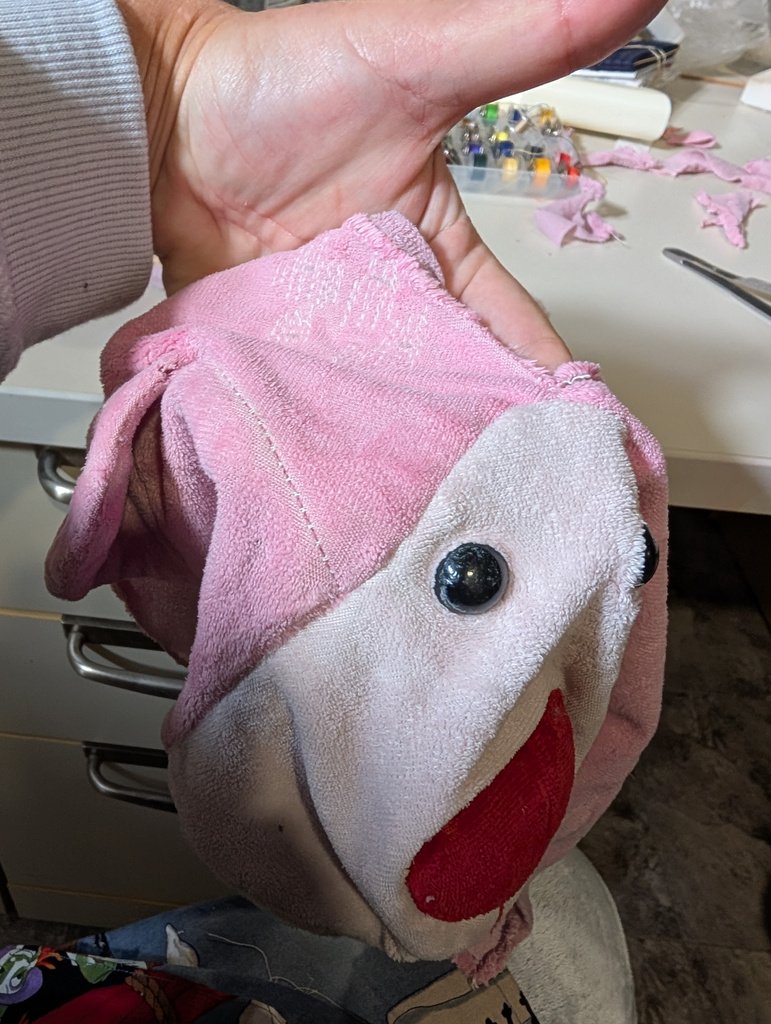
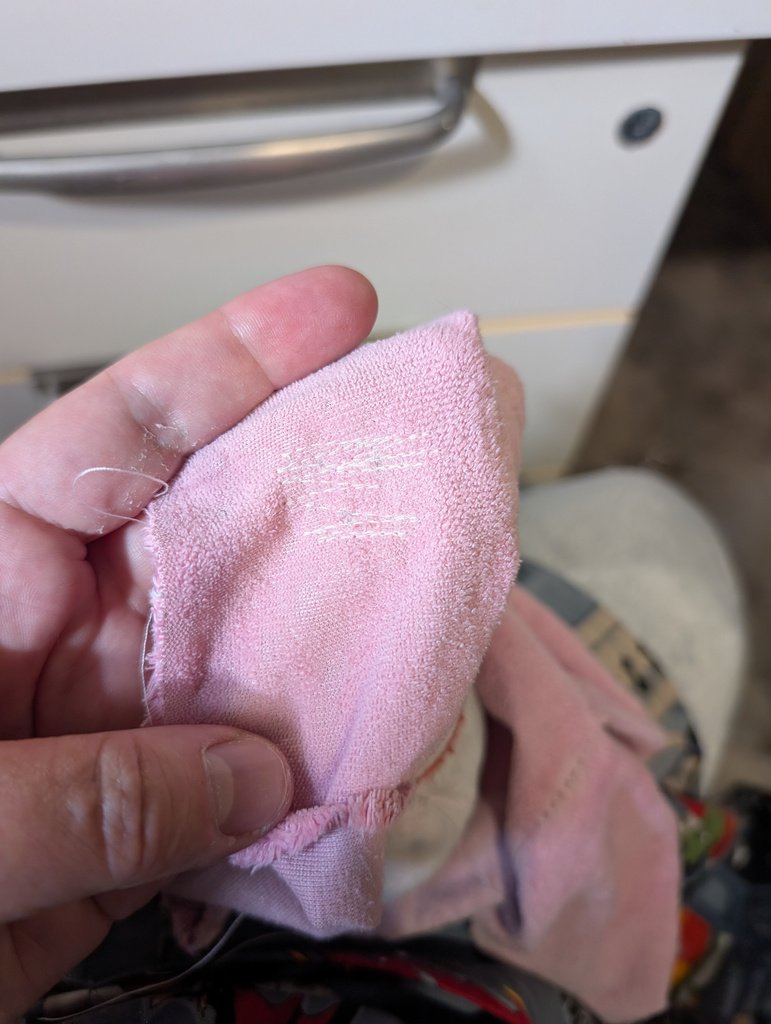
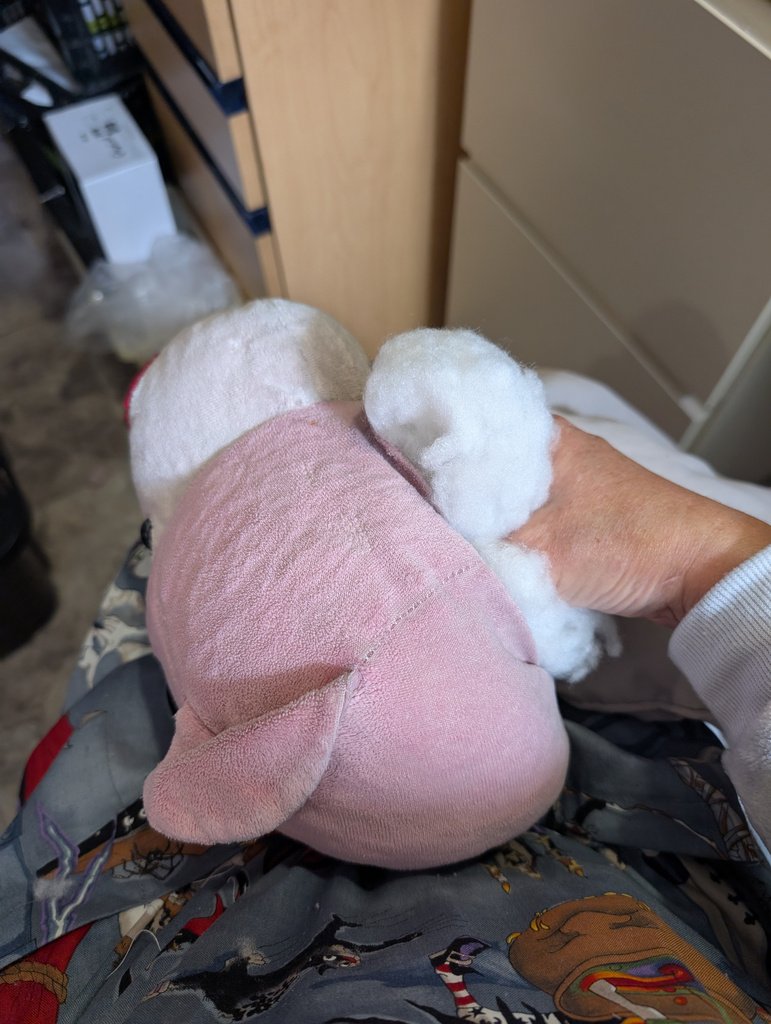
Once the weakened sections were reinforced, I reassembled the head, filled it with fresh polyester stuffing, and sewed it back onto the body.
A Smile, and a Proper Tail
The final details brought his expression back into focus. I renewed the stitched lines on his muzzle and darned his red nose.
And there was one more thing: his tail.
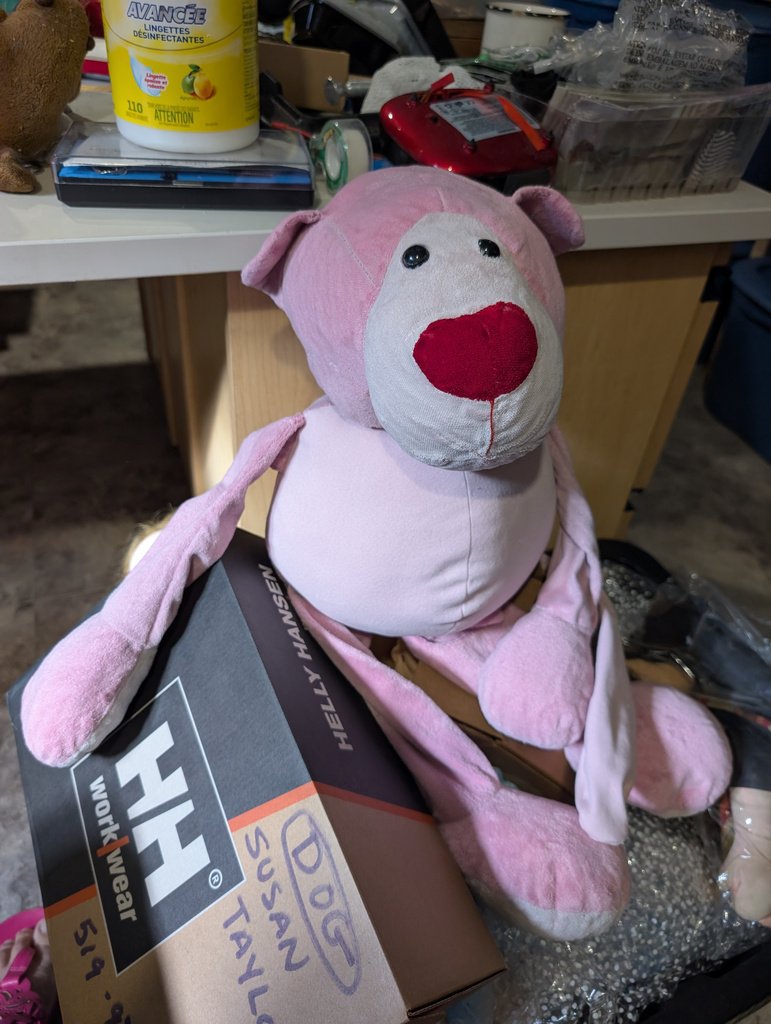
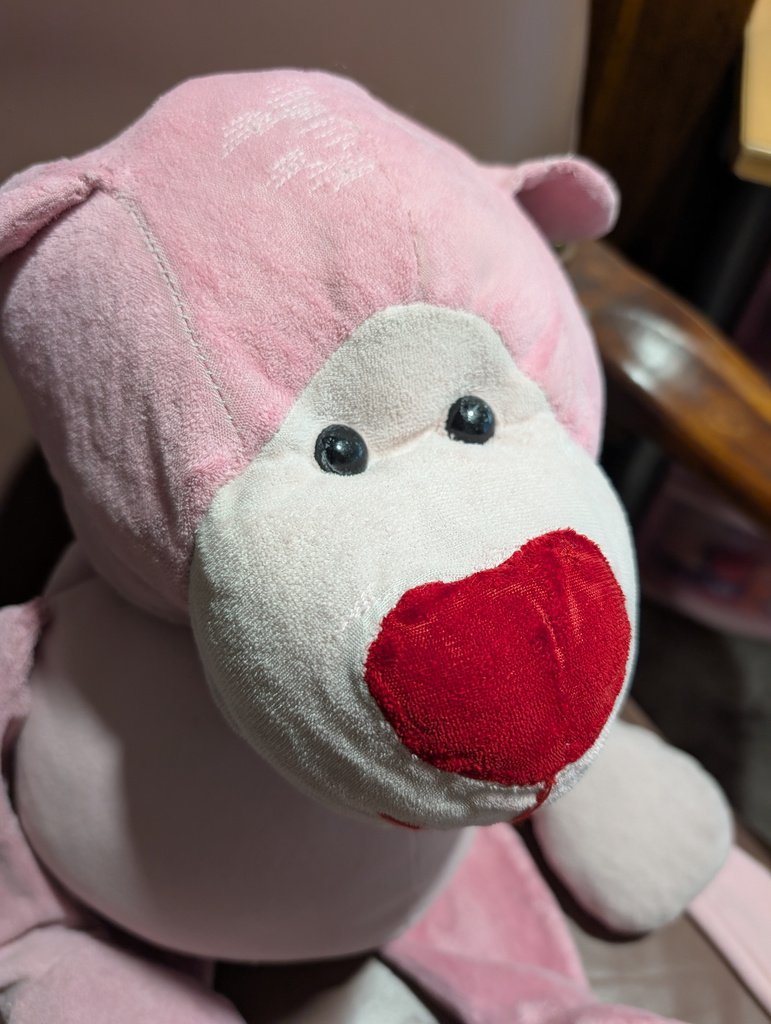
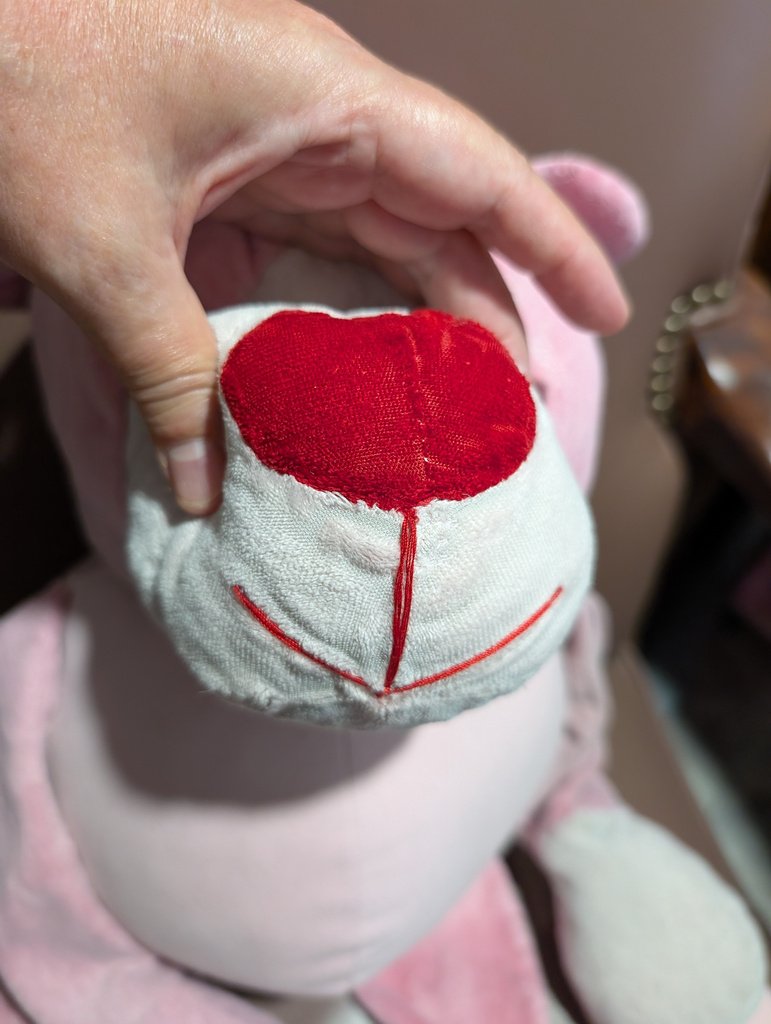
The old one was shorter than his ear. That simply would not do for a Panther! I made him a longer tail in the same pale pink fabric as his new tummy.
Still the Same Panther
The finished Panther has fresh stuffing, a new tummy panel, a repaired head, and a tail with a little more presence. But much of the pink plush is still his own, including the fabric given a second job as part of his arm.
He does not look brand new. His coat still carries signs of wear, and some repairs can be seen. Keeping those familiar materials was more important than making every surface look untouched.
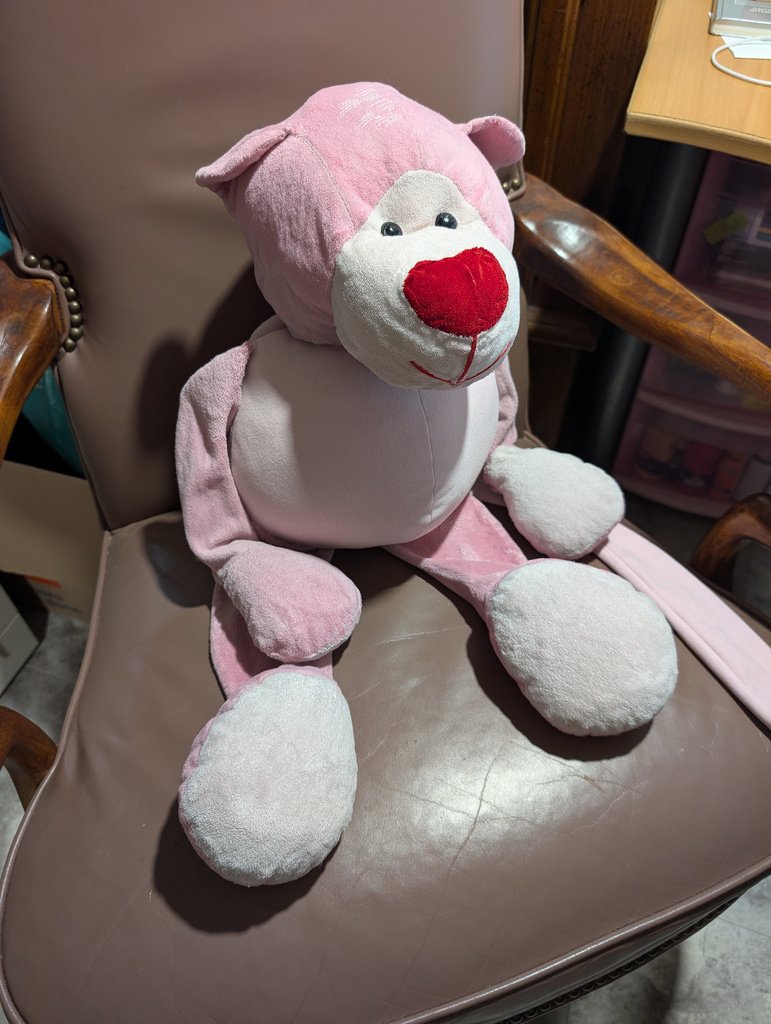
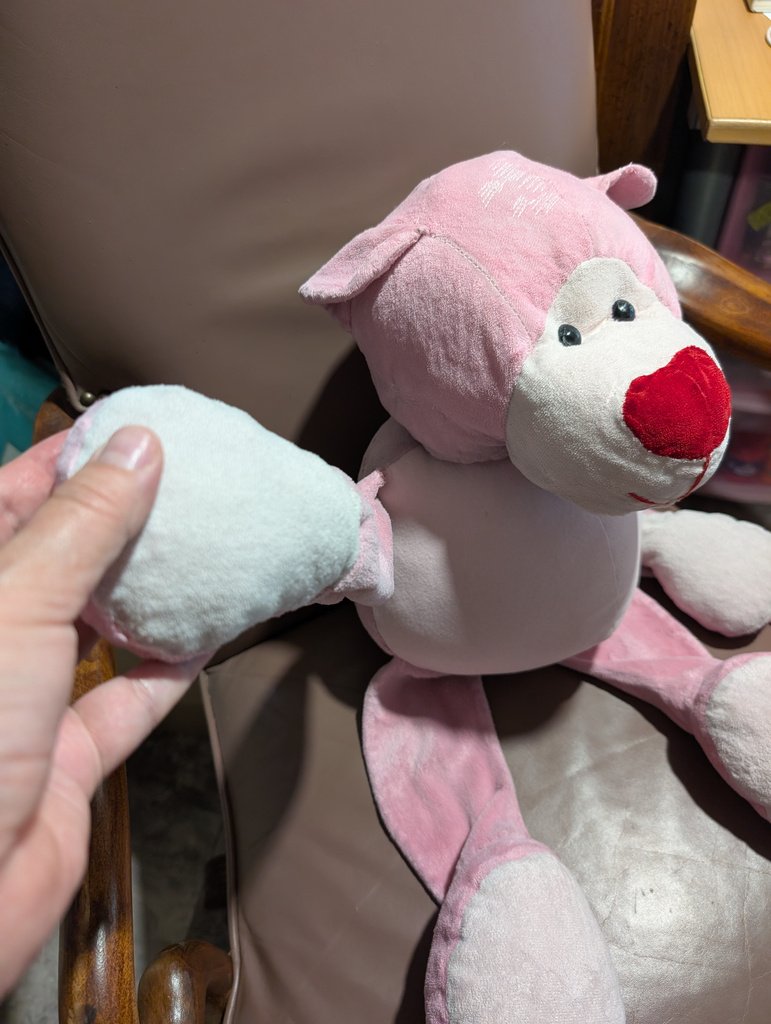
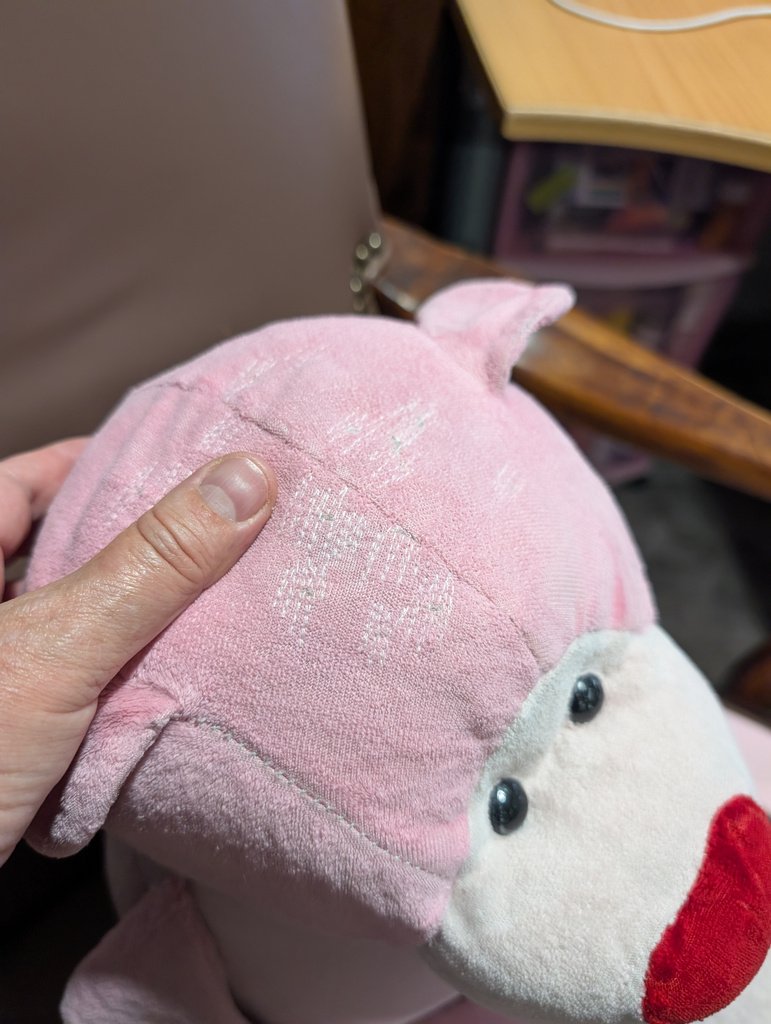
All done. The same Pink Panther, with a little more support, and a proper tail.