
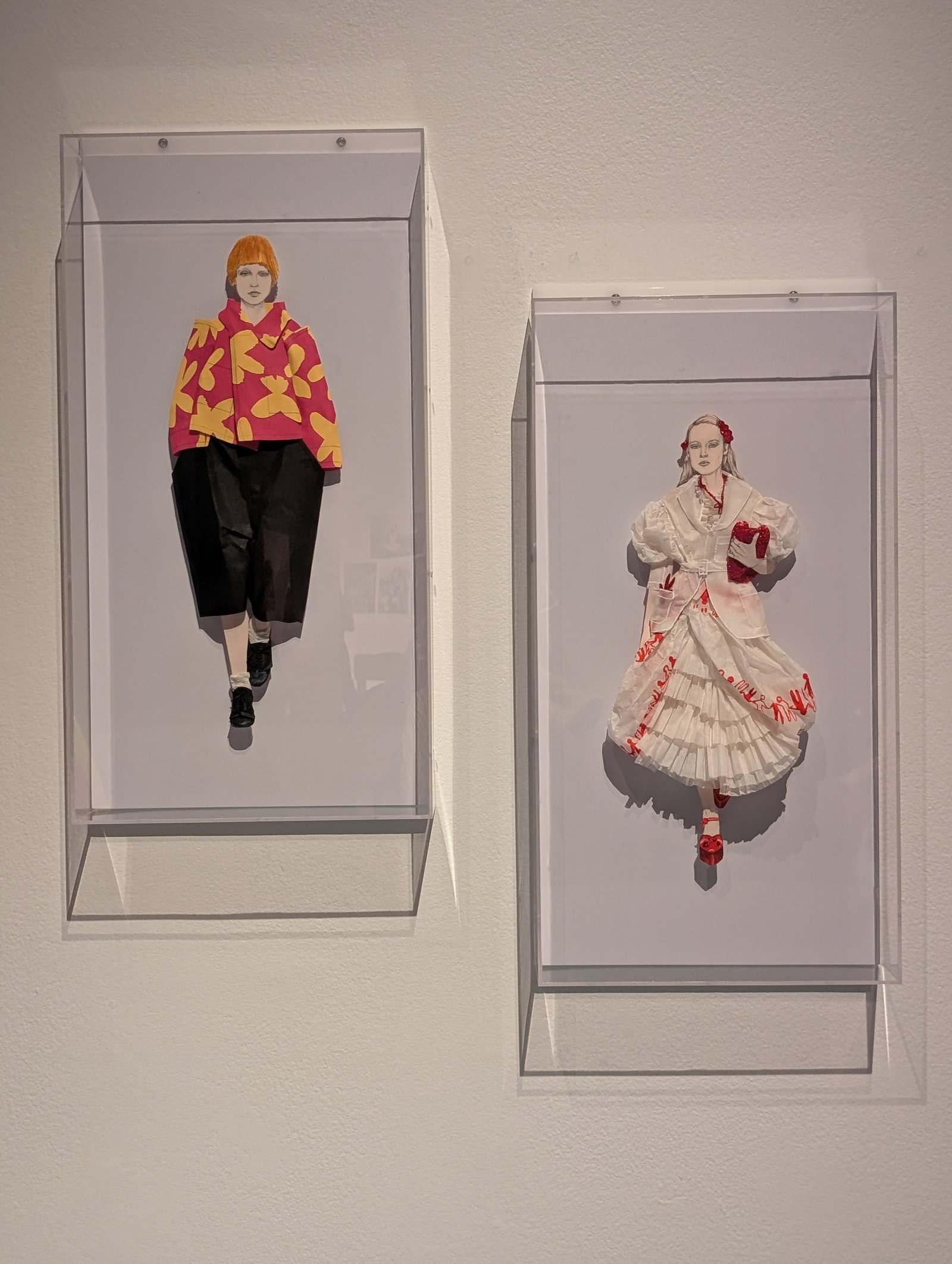
The Paper Doll as a Fashion Metaphor: From Child’s Play to Conceptual Runway
The paper doll, a simple children’s pastime, has unexpectedly become a remarkably expressive metaphor for fashion. It speaks to dress-up and playing with one’s image, but also to the flatness of photography, the fleeting nature of trends, and our desire to try on different roles.
The paper doll reminds us: fashion exists as more than just an image. Behind every silhouette lie imagination, material, construction, and a living person who brings movement and meaning to the garment.
Comme des Garçons (Fall 2012): Two-Dimensional Criticism
The vivid felt looks from Rei Kawakubo’s Comme des Garçons Fall 2012 collection did not follow the contours of the body. Their flat, graphic silhouettes created the impression that the garments had been cutout from thick, colorful paper.
The designer named the collection “2D” as an ironic commentary on overly simplified, “two-dimensional” fashion criticism. Press and reviewers, however, instantly recognized the clear allusion to paper doll clothes.
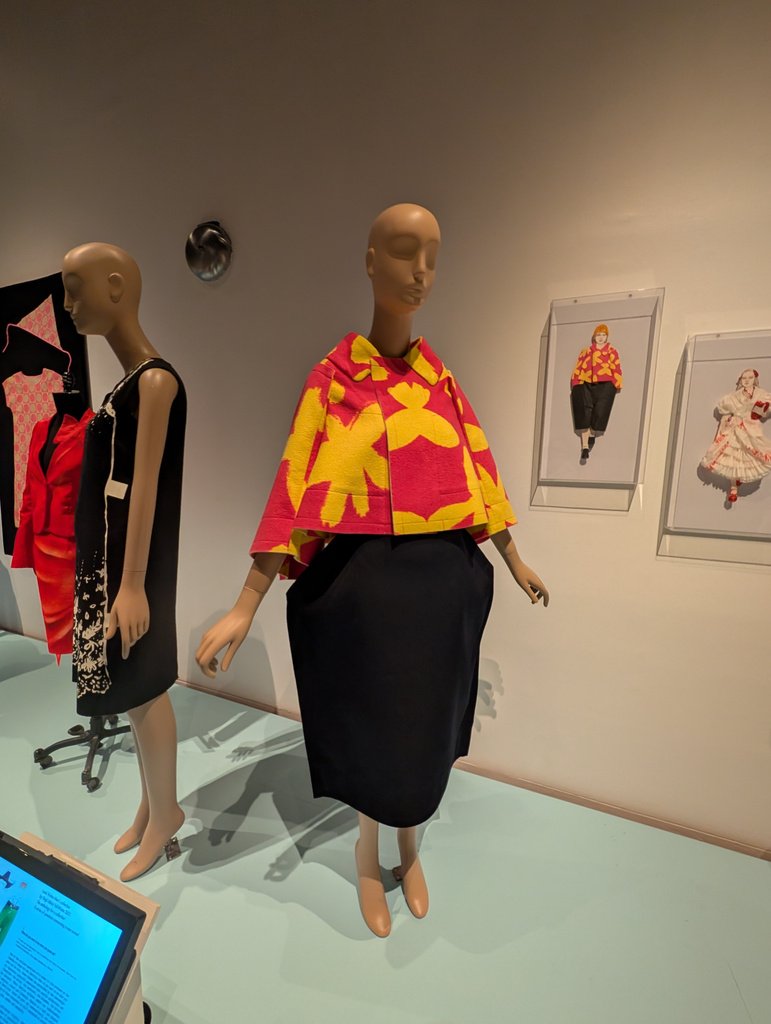
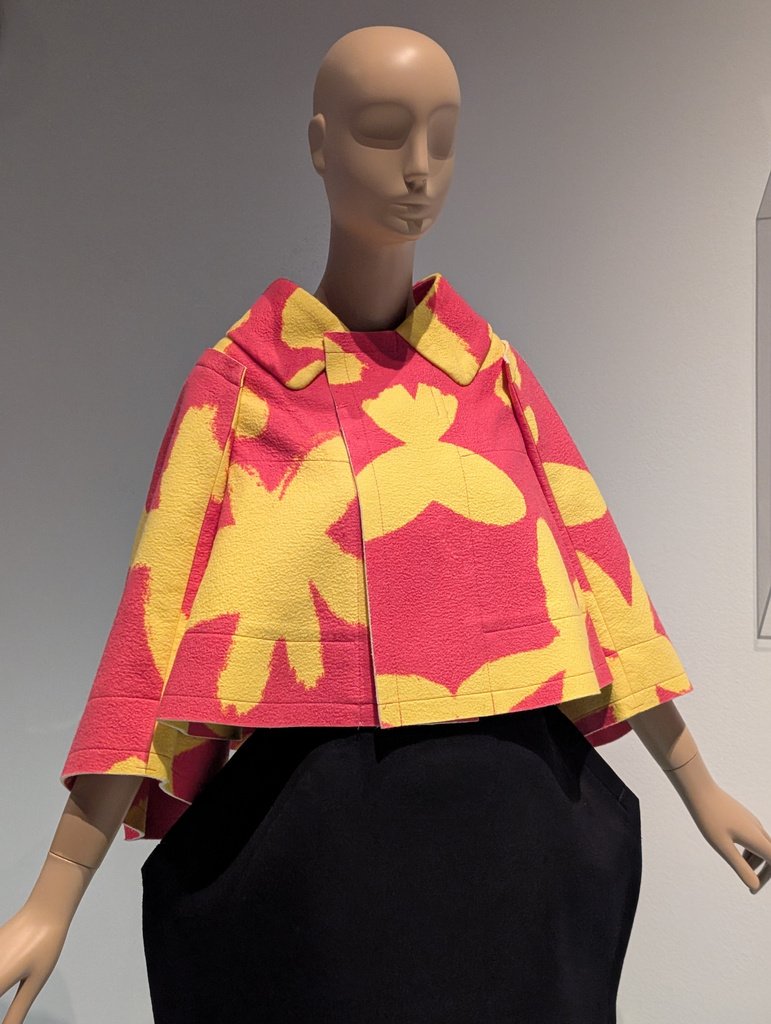
Pink and yellow felt jacket and black
wool gabardine skirt, fall 2012
2D collection
MFIT, museum purchase
Eloise Corr Danch: Paper Fashion Illusionism
British artist Eloise Corr Danch continues this narrative by creating 3D paper dolls inspired by contemporary runway collections:
- Technique: She starts with a flat silhouette, layering textures and intricate details.
- Outcome: A paper figurine transforms into a miniature piece of high fashion.
- Philosophy: Her work serves as a reminder that behind the rapid stream of digital fashion imagery stands real craftsmanship, design, patternmaking, decoration, and execution.
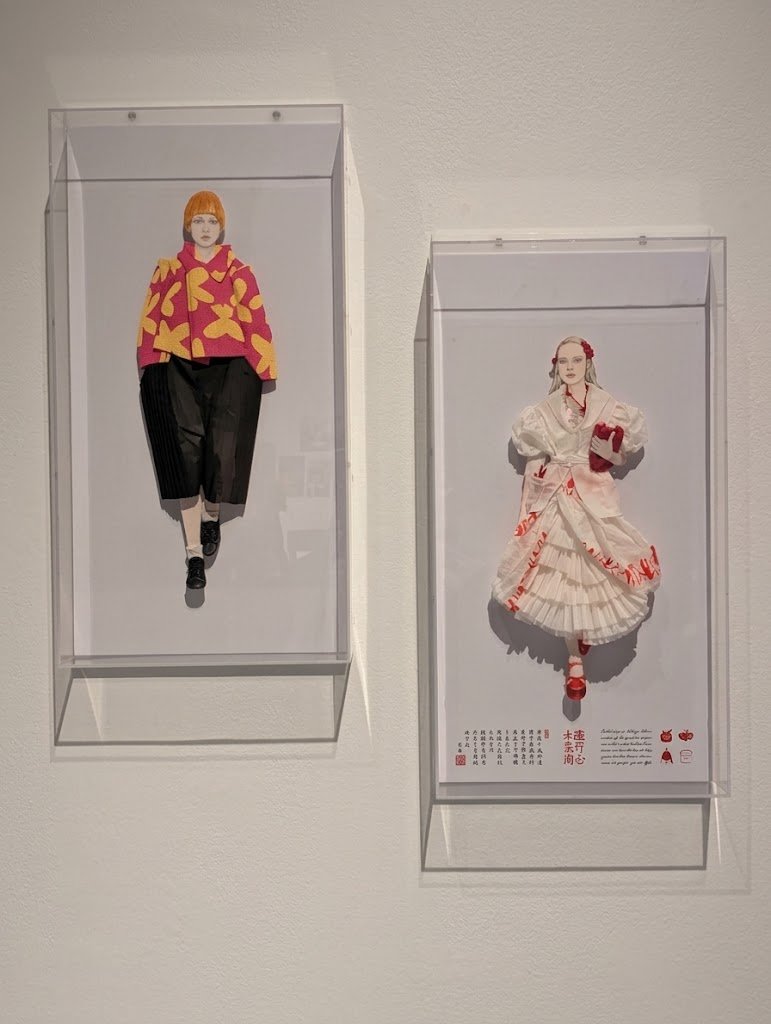
Paper doll illustrations of Comme des Garçons, fall 2012, and Simone Rocha, fall 2018
Paper and mixed media, 2026 Lent by Eloise Corr Danch
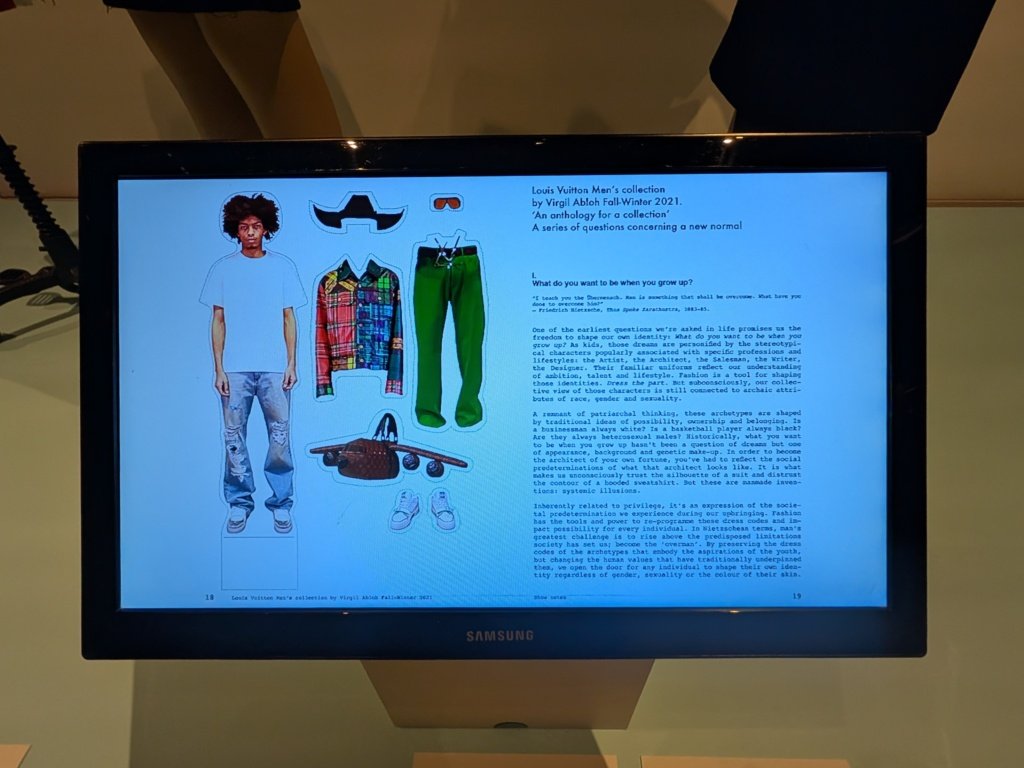
Virgil Abloh for Louis Vuitton (Fall 2021): Paper Dolls and the Illusion of Social Roles
One of the most profound conceptual uses of the trope came from Virgil Abloh in his Louis Vuitton Fall/Winter 2021 menswear collection. Abloh turned to the imagery of paper dolls to reflect on how fashion dictates self-presentation and assigns archetypal roles, such as the “Architect,” the “Art Dealer,” or the “Pilot.”
While our childhood selves may have believed that simply “dressing the part” allows us to achieve any aspiration, Abloh used these paper-doll figures to offer a poignant critique. He cautioned that society remains bound to archaic conventions of gender, race, and sexuality, systemic barriers that require far more than a simple change of wardrobe to overcome.
Moschino and Undercover: Interactivity and Surrealism
The paper doll theme has frequently surfaced across other experimental concepts:
- Moschino (Spring 2017): Jeremy Scott utilized trompe-l’oeil prints simulating folds, pleats, and appliqués. These “drawn-on” garments commented on the flatness of fashion—increasingly consumed through smartphone screens—and its fragility, as delicate as paper itself.
- Undercover (Fall 2003): Jun Takahashi turned the runway into a game inspired by playing with his young daughter. Models attached flat garment pieces and velcro accessories directly over the clothes they were already wearing.
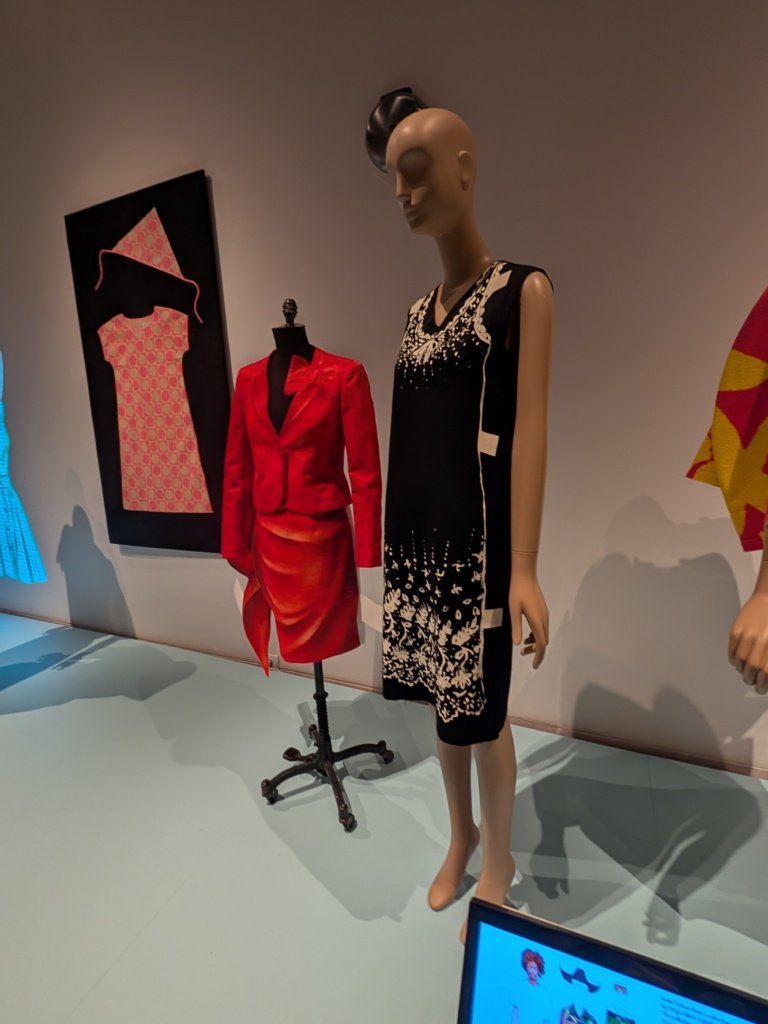
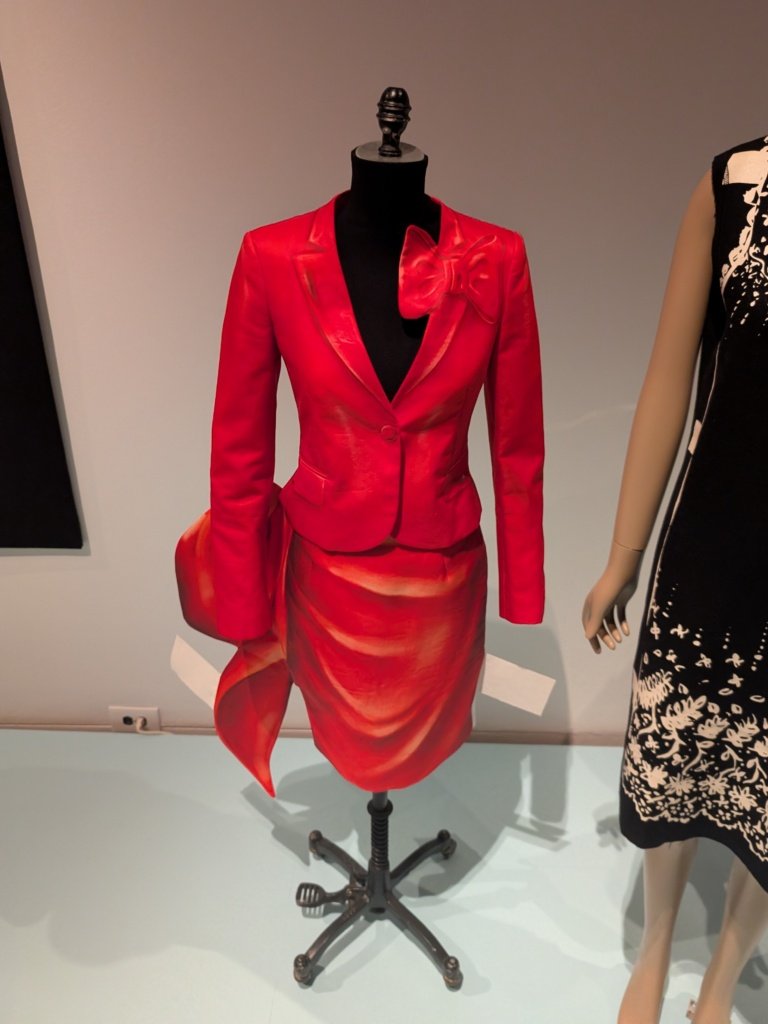
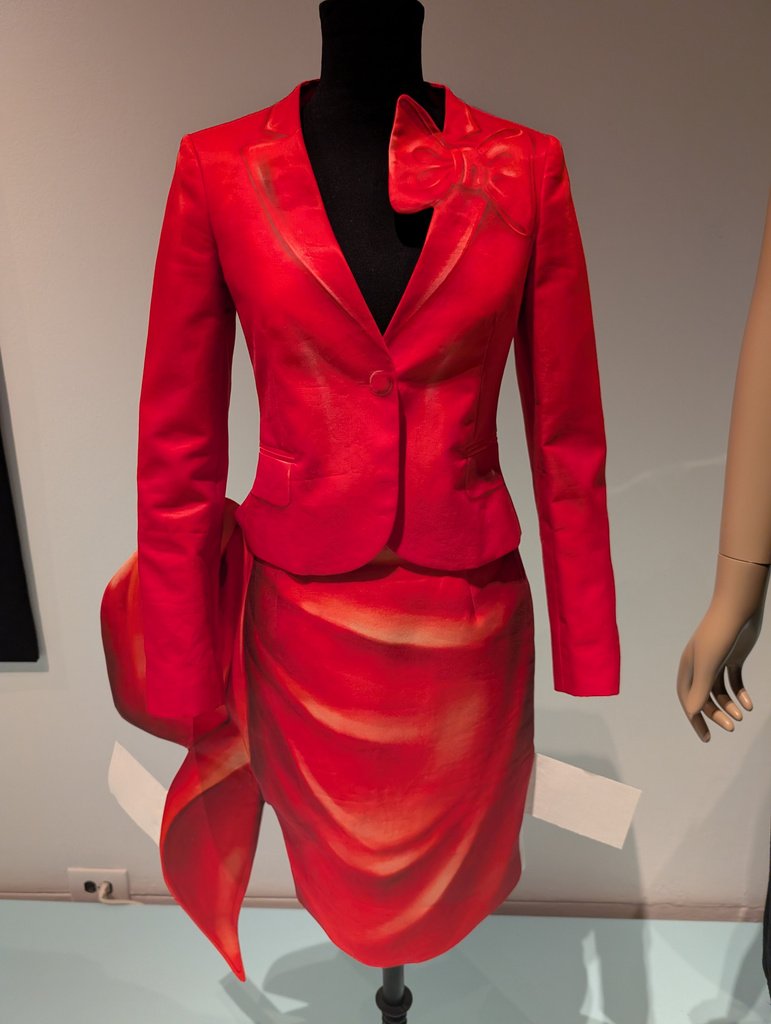
Red trompe l’oeil printed jacket and skirt, spring 2017 MFIT, museum purchase
Undercover (Jun Takahashi)
Black printed wool dress, fall 2003 Paper Doll/No Gods No Masters collection
MFIT, gift of Patricia Pastor
Simone Rocha (Spring 2018): Porcelain Romanticism and Heritage
For Simone Rocha’s Spring 2018 collection, the source of inspiration came from the designer’s childhood porcelain dolls, which she had rediscovered for her own daughter.
Victorian doll dresses featuring ruffles and delicate trimmings received a modern interpretation through sheer tulle, embroidery, and romantic silhouettes. Particularly telling was the paper chain motif—a nod to the antique “Dancing Dolls” pattern popular in 19th-century toy-making manuals.
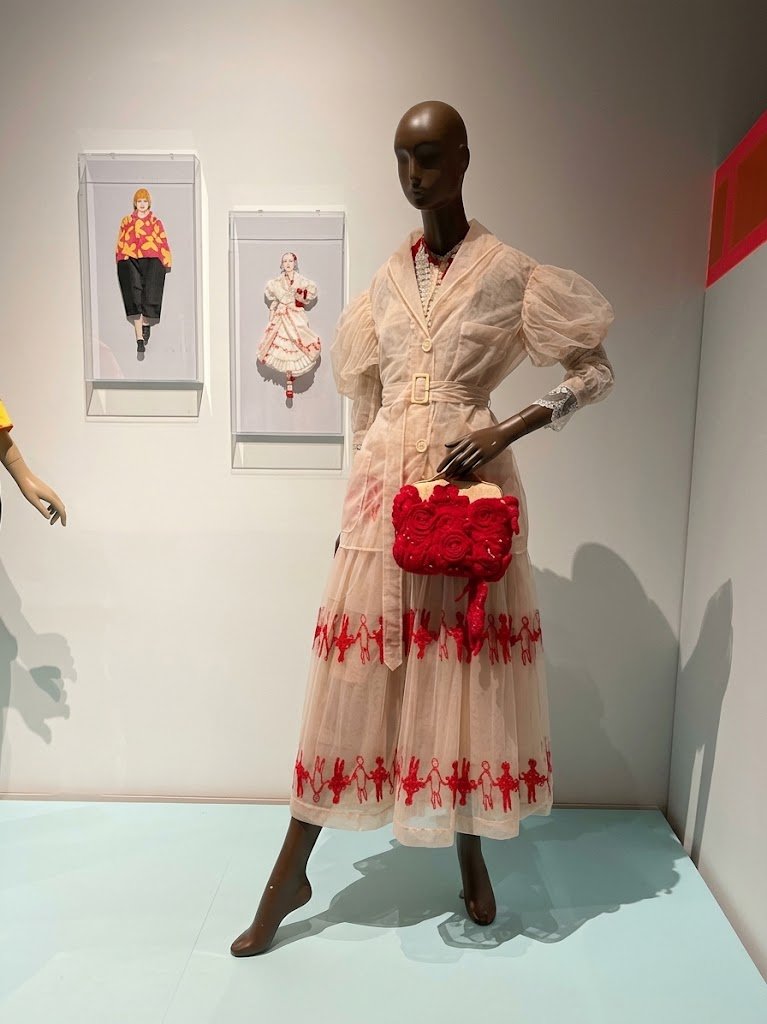
Ivory embroidered nylon and tulle dress and coordinating bag, fall 2 Lent by Simone Rocha
Silhouette and Construction: 1960s Optics vs. Tailoring Mastery
During the 1960s, interest in classic paper dolls waned as dresses made from paper-like synthetic materials came into vogue. Often stiff and straightforward in cut, they intentionally “flattened” the figure.
Yet designers like Claire McCardell had proven the opposite much earlier: a piece that appears completely flat on a hanger can prove to be strikingly well-tailored and expressive once worn on a human body.
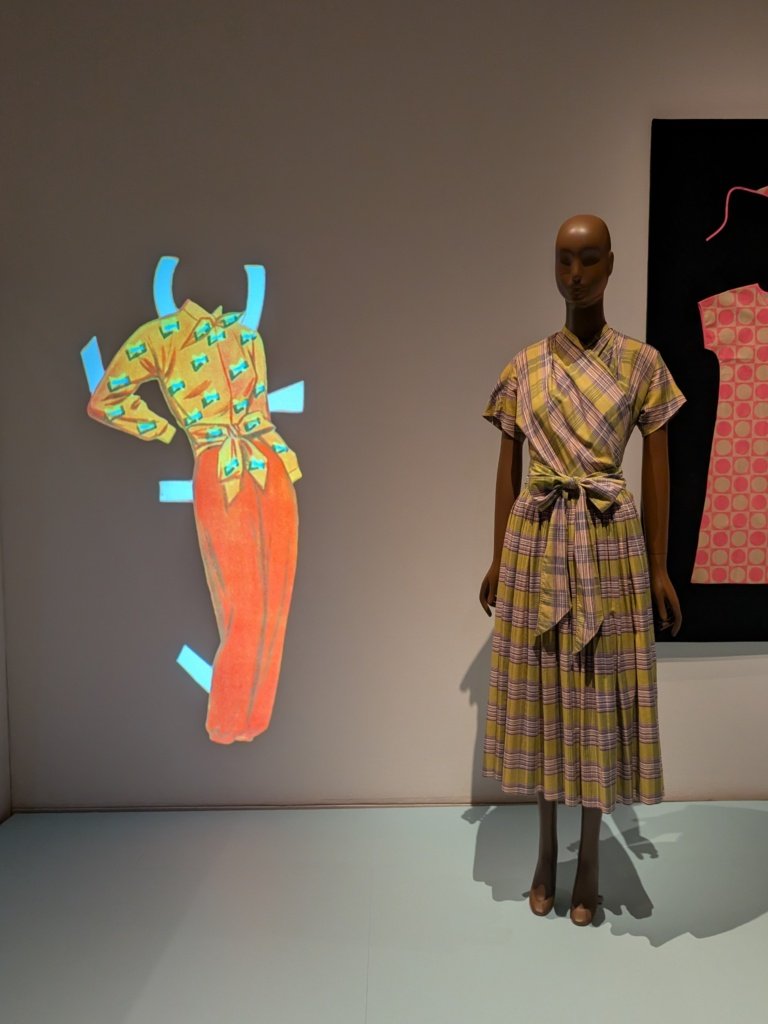
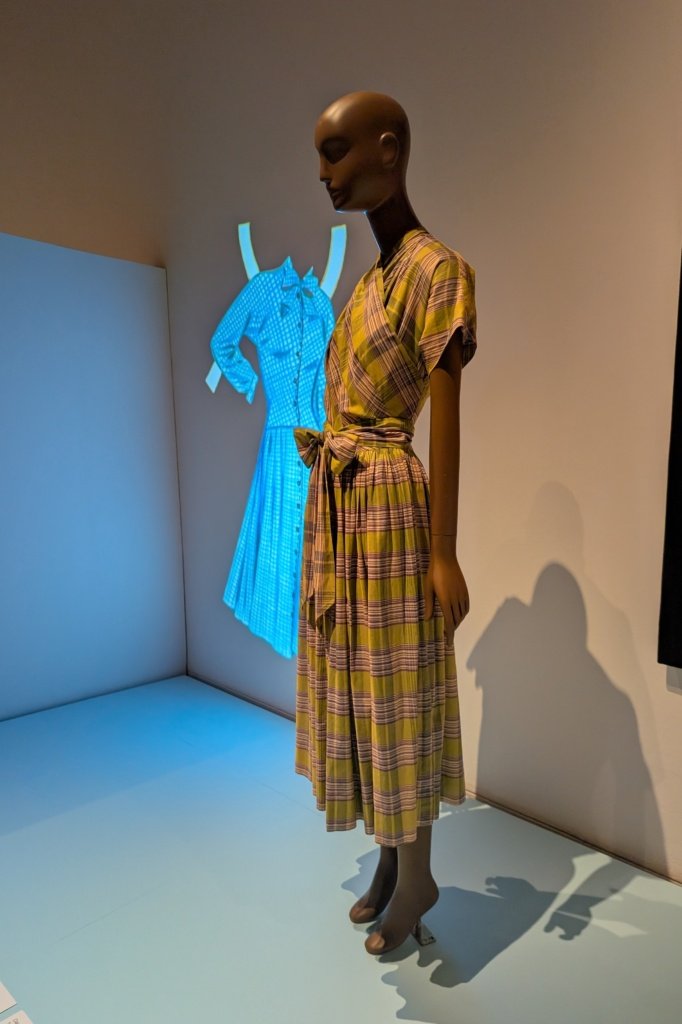
Contemporary reproduction of Claire McCardell paper dolls, 1956
Claire McCardell
Green and lavender plaid cotton shirtdress, 1952
MFIT, gift of Jacqueline Weinman
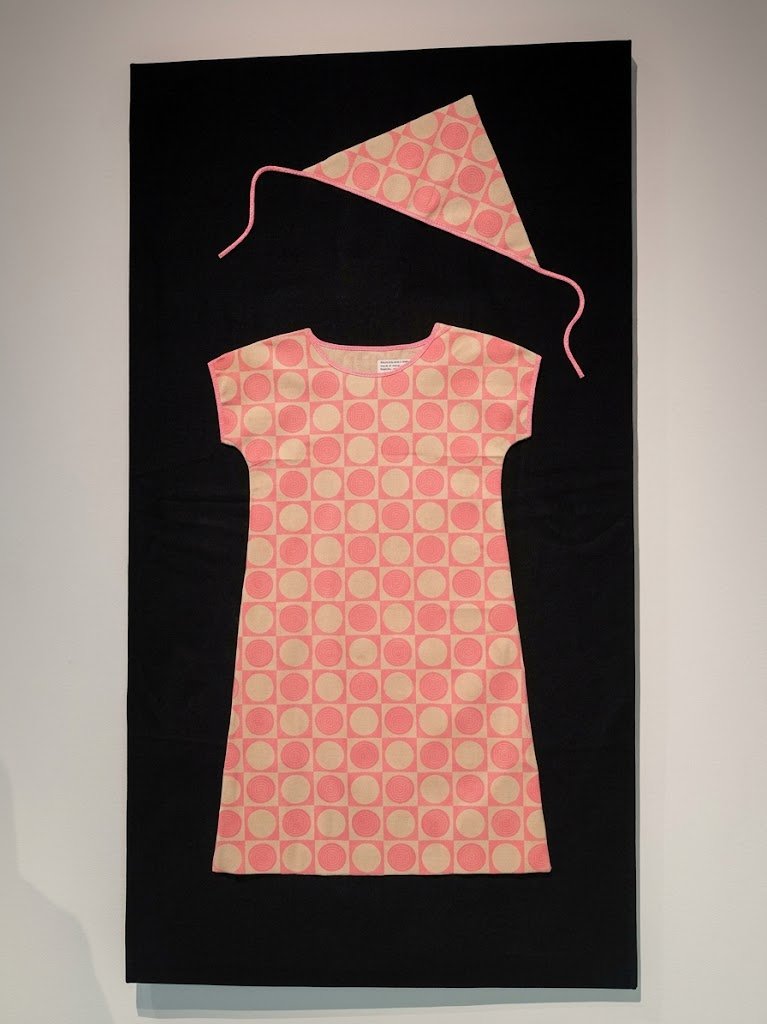
Pink and white bonded fiber “paper” dress and scarf, 1967
MFIT, museum purchase
From childhood albums with cut-out dresses to experimental runways in Paris and Milan, the paper doll has lost none of its power. It remains a poignant reminder that fashion is, at its heart, an ongoing game of identity brought to life through material.
Sources & Further Reading
Primary Collections & Runway Reviews
- Comme des Garçons — Fall 2012 Ready-to-Wear (“2D”)
- Vogue Runway Review: Tim Blanks, “Comme des Garçons Fall 2012 Ready-to-Wear Collection” — Covers Rei Kawakubo’s oversized felt cut-out silhouettes and the “2D” concept.
- Moschino — Spring 2017 Ready-to-Wear
- Vogue Runway Review: Sarah Mower, “Moschino Spring 2017 Ready-to-Wear Collection” — Details Jeremy Scott’s use of trompe-l’oeil paper doll tabs, painted folds, and smartphone-screen aesthetics.
- Simone Rocha — Spring 2018 Ready-to-Wear
- Vogue Runway Review: Sarah Mower, “Simone Rocha Spring 2018 Ready-to-Wear Collection” — Explores the influence of Victorian porcelain dolls, 19th-century toy manuals, and paper-chain motifs.
- Undercover — Fall 2003 Ready-to-Wear (“Paper Doll”)
- The Business of Fashion / Vogue Archives: Jun Takahashi’s Fall 2003 presentation featuring velcro-attached flat garment layers inspired by play with his daughter.
Artists & Historical Context
- Eloise Corr Danch (Paper Artist & Set Designer)
- Official Portfolio: Eloise Corr Danch Studio — Exhibits 3D paper sculptures, couture reinterpretations, and commercial set design work.
- 1960s Paper Dresses & Claire McCardell
- The Metropolitan Museum of Art (The Met Costume Institute): “The Paper Dress” — Historical overview of disposable paper-fashion trends in the late 1960s (e.g., Scott Paper Company’s “Paper Caper” dress).
- Met Museum Archives: “Claire McCardell: American Fashion Design” — Examines McCardell’s revolutionary flat patternmaking and functional mid-century sportswear.