
The Broken Doll: From Alexander McQueen to Monster High
A doll does not always smile. Sometimes her wig is dishevelled, her dress is torn, and her face is covered in cracks. It was precisely this doll, unsettling, vulnerable, and remarkably expressive, that became the protagonist of the next part of Doll Dressing at The Museum at FIT.
After pink gingham, romantic sundresses, and virtuoso miniature dressmaking, we return to the darker side of the doll world. Here, Alexander McQueen, Rodarte, Dilara Fındıkoğlu, Gothic Lolita, and Monster High meet. What connects them is not simply a taste for dark decoration, but an interest in the doll who is no longer perfect.
For me, as someone who works with old dolls, this section was particularly compelling. A crack, a missing limb, or worn fabric usually means there is work to be done. Here, however, damage itself becomes a language of design. What we are accustomed to repairing, a designer deliberately preserves—or even creates.
Alexander McQueen: Disrupting Proportion
Hans Bellmer returns to this narrative through Alexander McQueen’s Spring 1997 collection, La Poupée.
Bellmer’s unsettling dolls inspired McQueen to manipulate body proportions. Models wore disheveled doll-like wigs while garments distorted familiar rules of length, width, and volume.
“This is the way I view fashion, chopping the proportions up to make it look longer, fatter, smaller, thinner,” McQueen explained.
Anyone making doll clothes knows this challenge firsthand: miniature proportions cannot be scaled down mathematically. Yet McQueen used that flexibility not for harmony, but to disrupt it. His doll emerges from unnatural contortions, here, clothing does not merely decorate the body, but redefines how we see it.
Fragments, Lace, and Tenderness
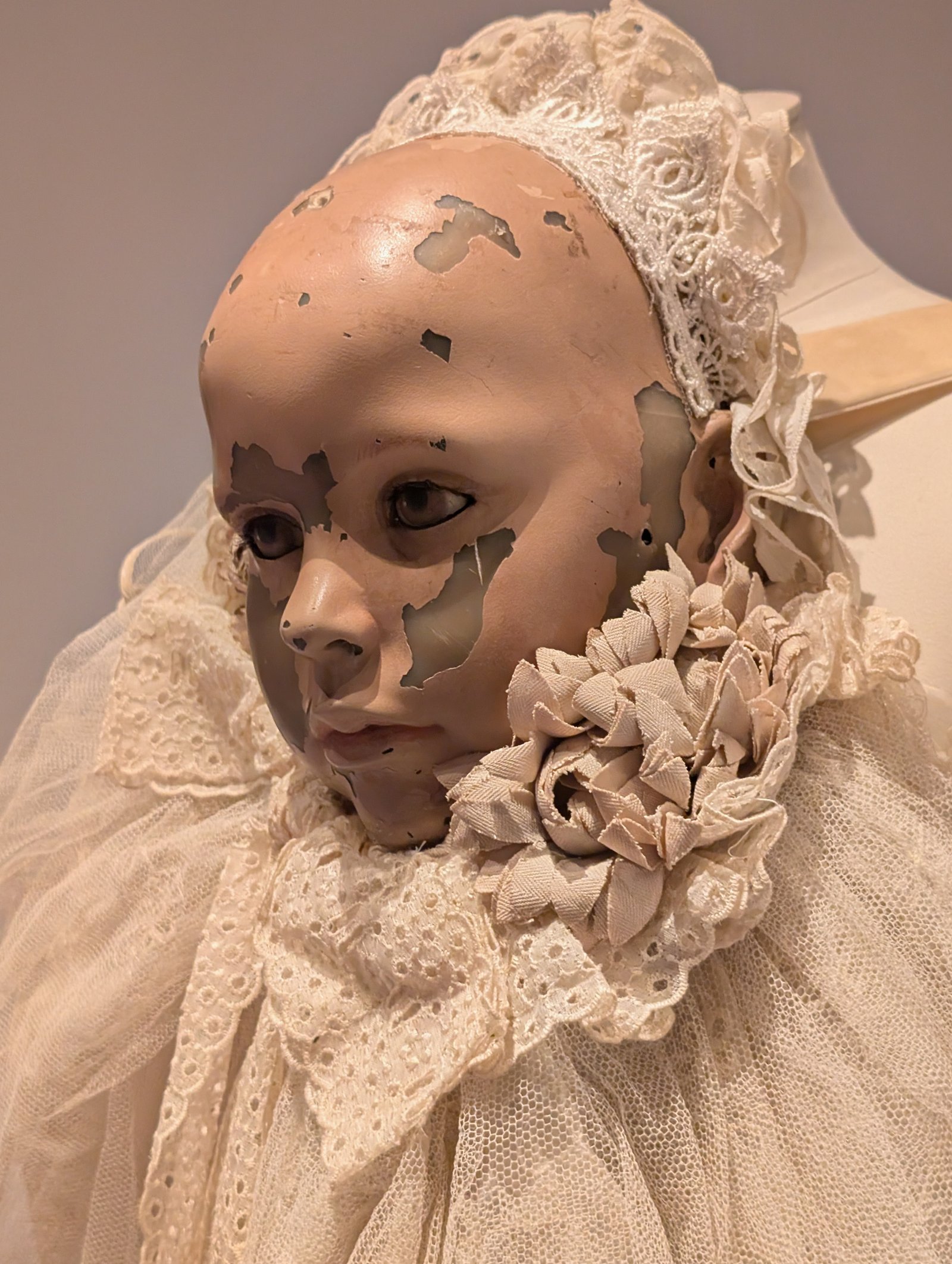
Another interpretation of the broken doll comes from Wren Britton, the designer behind Purevile. He creates one-of-a-kind accessories from bones, keys, scraps of lace, and found objects. Among the most striking materials in his work are doll heads and limbs.
The exhibition featured his 2019 Doll Head Harness, combining doll heads with lace, tulle, velvet, and artificial flowers.
The list of materials almost sounds like the contents of a doll restorer’s box. But Britton does not attempt to return these dolls to their original appearance. He gives them another role.
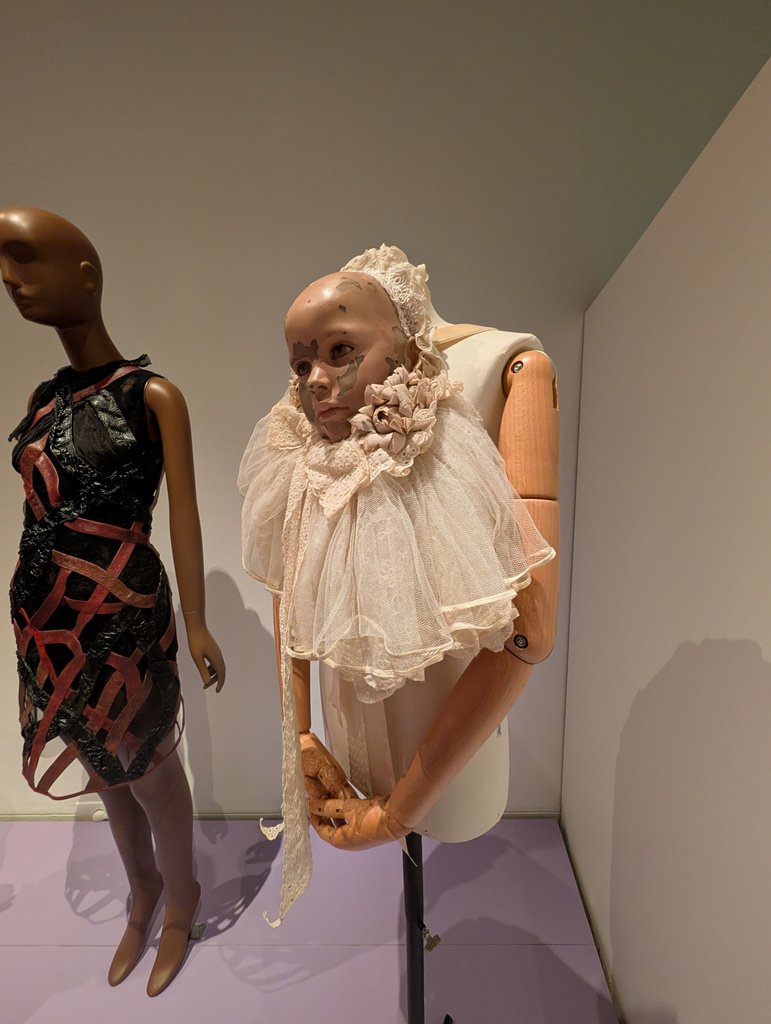
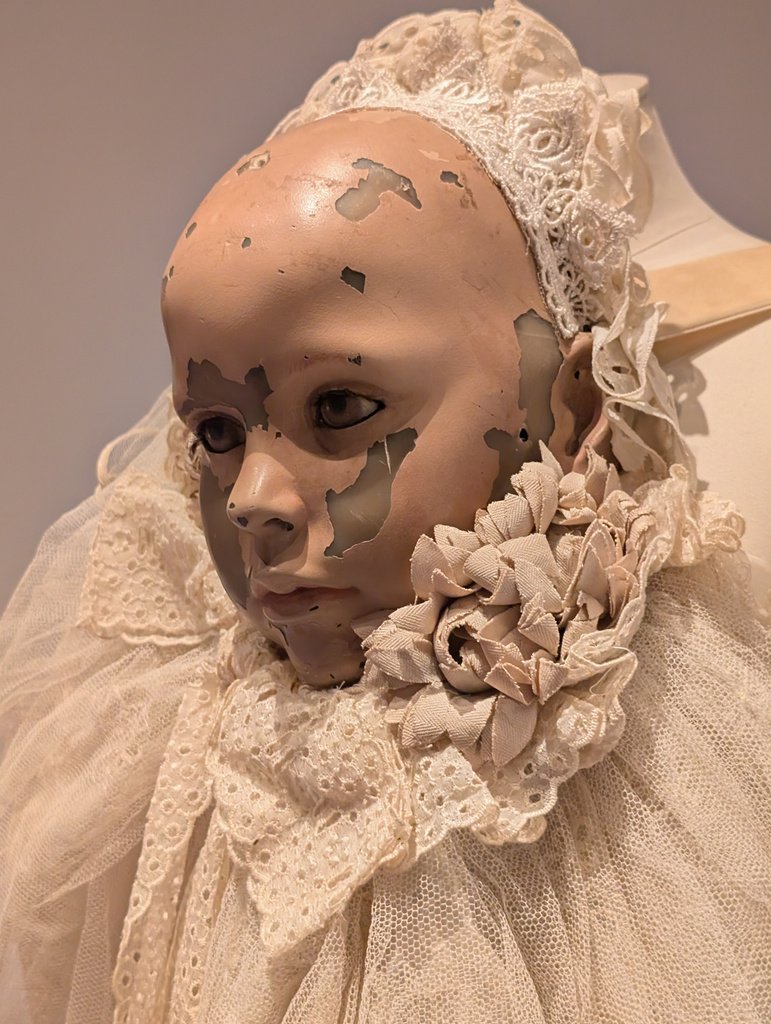
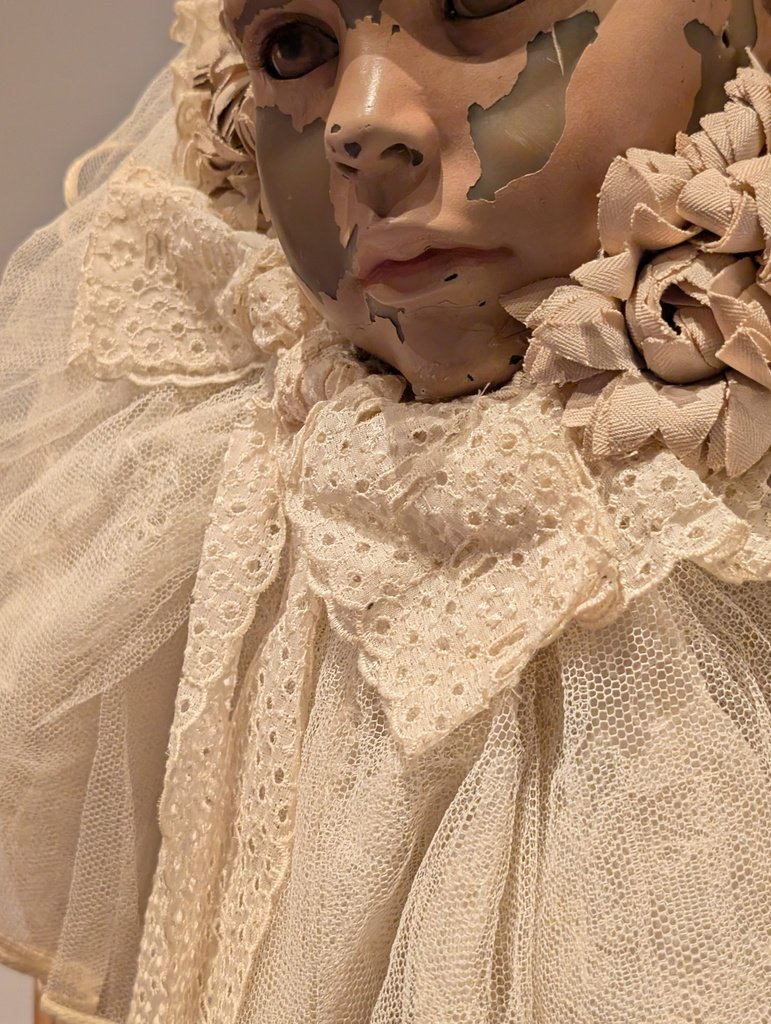
Doll head harness with lace, tulle, velvet, and artificial flowers, 2019 Lent by Johanna Constantine
Cracked faces and detached body parts could easily look merely frightening. Yet soft fabrics, flowers, and attentive craftsmanship lend the composition a strange tenderness. These objects suggest not so much disregard for an old toy as care for something others have already dismissed as worthless.
A particularly powerful companion to this theme was Dilara Fındıkoğlu’s Dissolved Doll dress from spring 2023. The designer associated it with a period in her life when she felt like a “trapped child.”
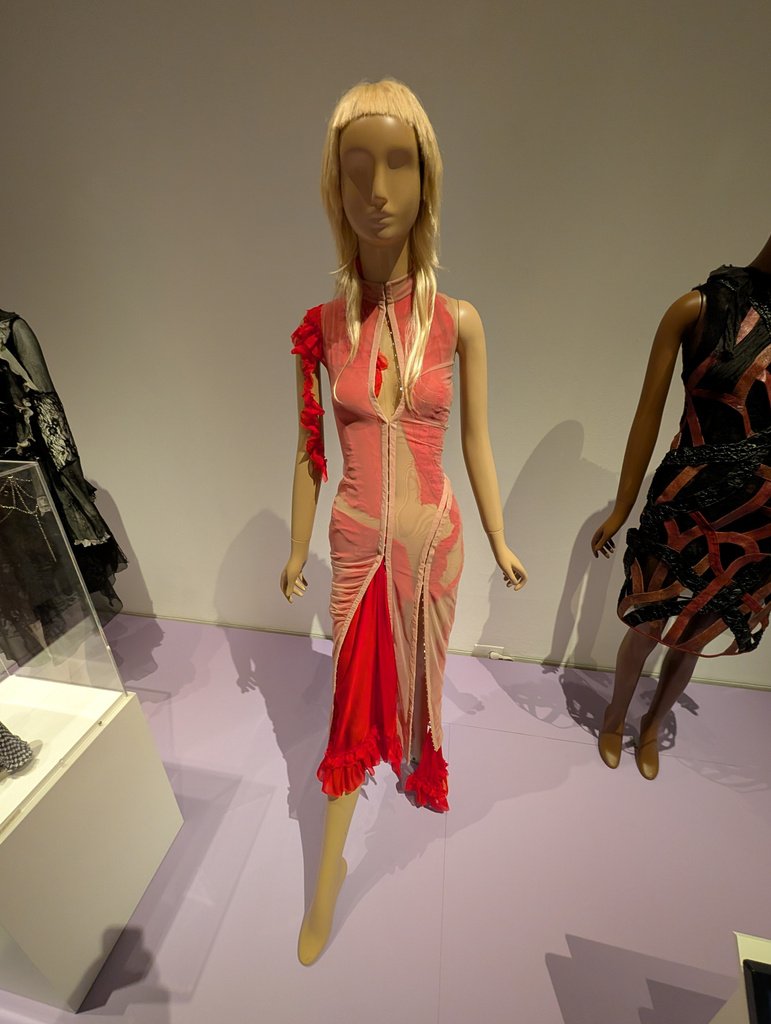
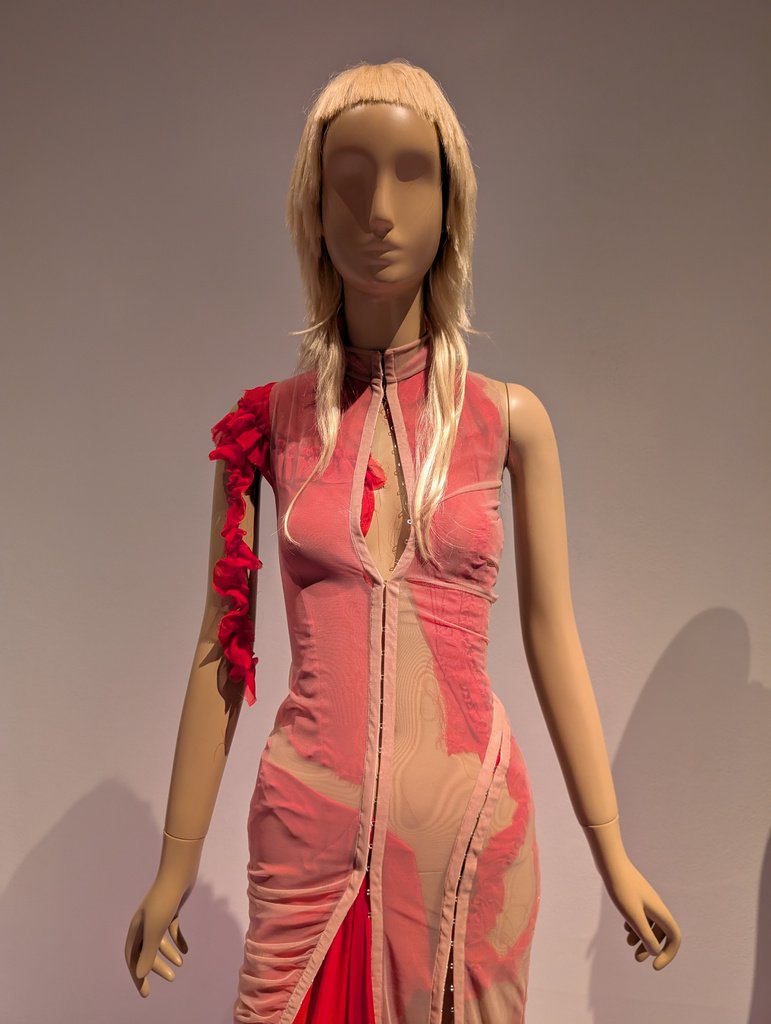
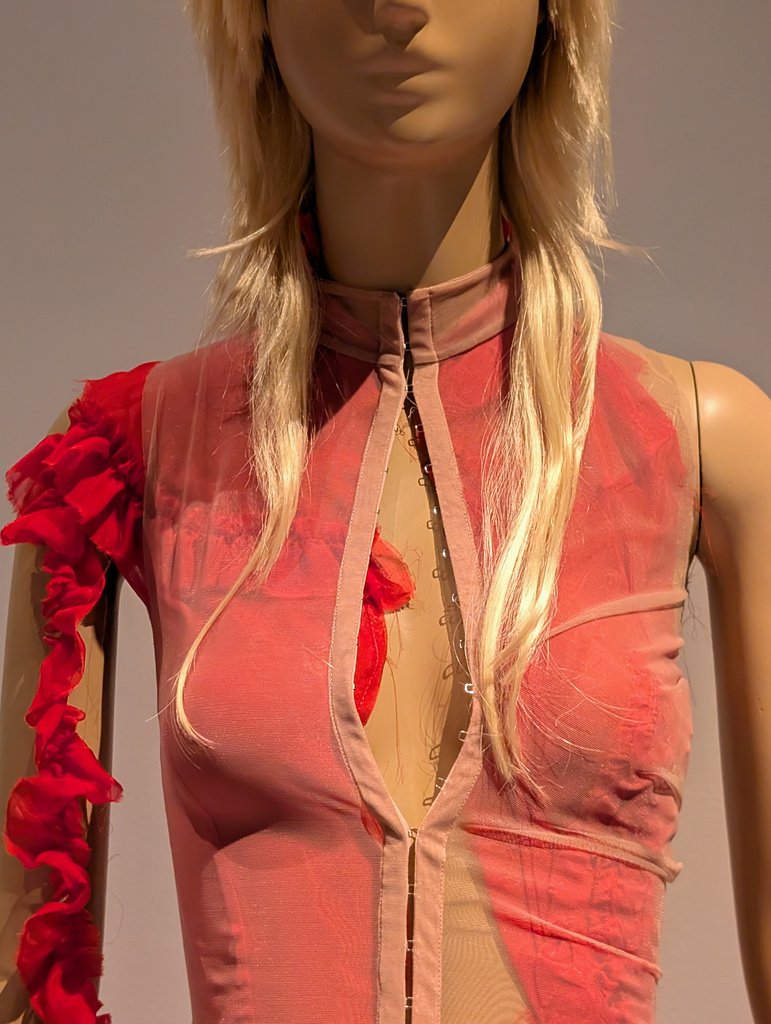
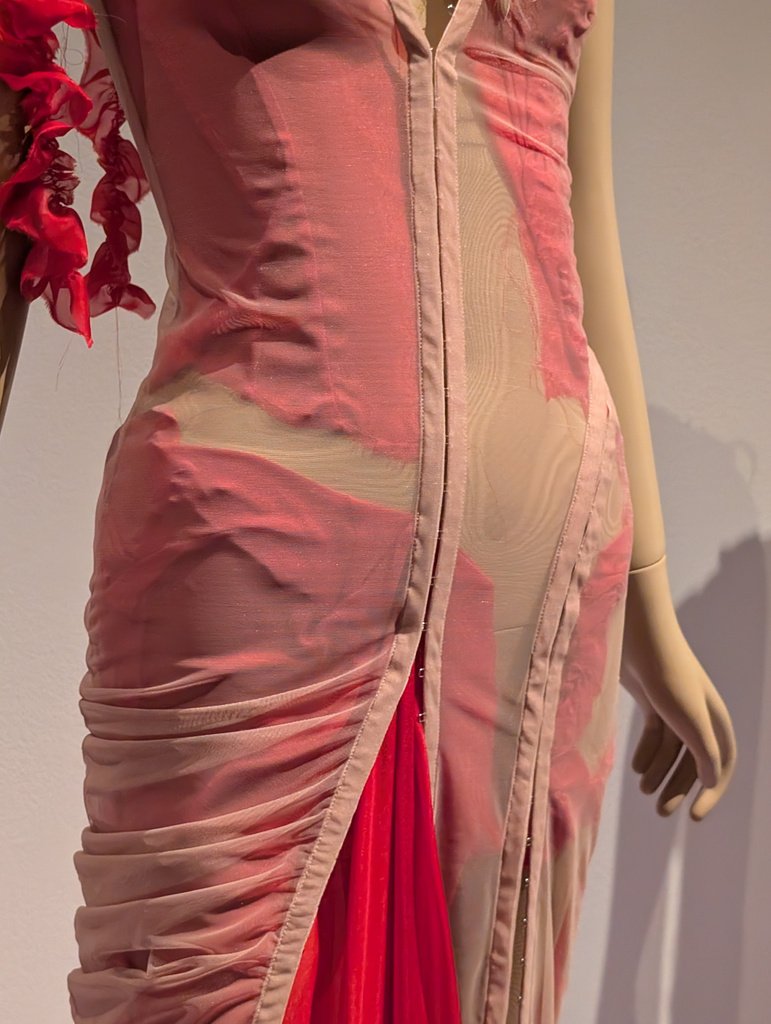
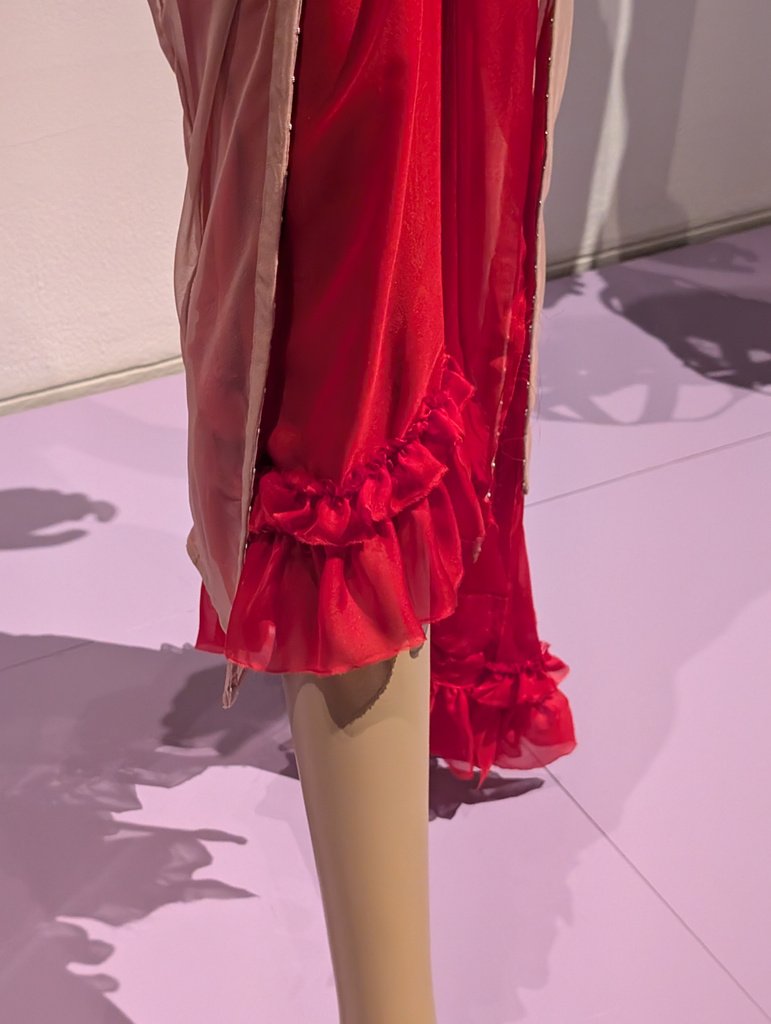
Beige nylon mesh and red silk voile “Dissolved Doll” dress, spring 2023 MFIT, museum purchase
Beige nylon mesh and red silk voile create the impression of a once-beautiful gown slowly falling apart. Or, viewed through a more macabre lens, a body whose internal structures seem to dissolve beneath a thin layer of skin.
On the runway, smeared lipstick and a crudely cut blonde wig intensified the effect. This was no longer simply a model wearing a distressed dress, but a living, adult-sized version of a broken doll. Here, imperfection speaks not of an object’s age, but of a person’s emotional state.
When the Doll Fights Back
One of the section’s most unexpected exhibits was Cecil M. Hepworth’s 1907 short film The Doll’s Revenge.
It begins with childhood cruelty: a boy cuts his sister’s cloth doll apart. Instead of remaining helpless, the doll reassembles herself, grows to human size, creates a double, and together they tear the boy apart and devour him. This early screen example reveals how quickly a familiar toy becomes a threat once it gains a will of its own.
A contemporary blend of baby-doll cuteness and horror appears in Living Dead Dolls, launched by Damien Glonek and Ed Long in 1998 and produced commercially by Mezco Toyz since 2000. Featured in the 2014 video Grave Danger, these dolls contrast rounded childhood appeal with dark, macabre narratives, they remain cute, but far from innocent.
This sinister aesthetic also inspired Rodarte’s Spring 2010 collection. The exhibited dress by Kate and Laura Mulleavy features irregularly cut strips of black and oxblood leather layered over lace and stretch fabric.
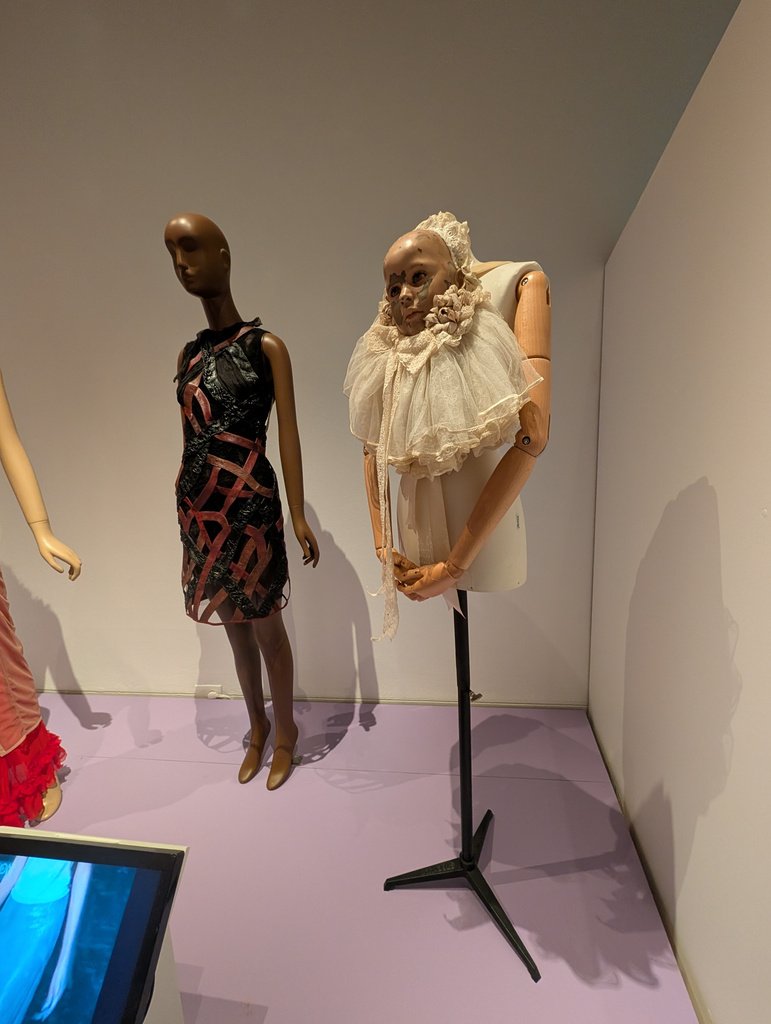
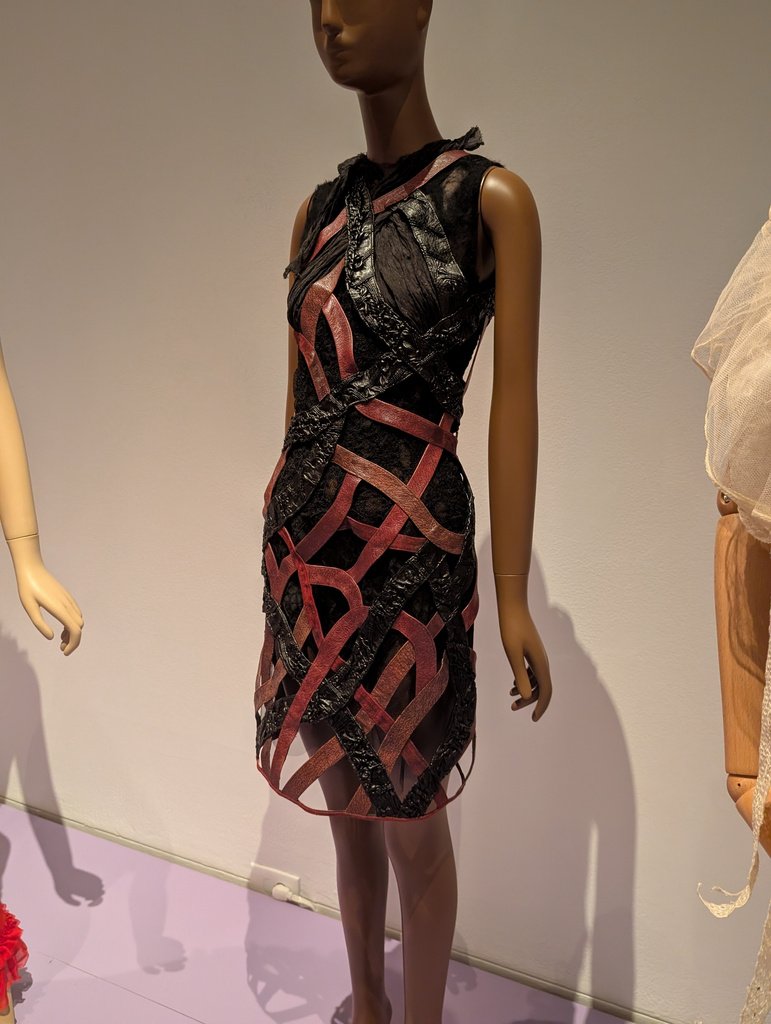
This is not simply a black “Gothic dress.” Its surface looks assembled from fragments, as though the clothing, like the doll, had first been taken apart and then reconstructed.
Gothic Lolita and Monster High
In the h.NAOTO ensemble from fall 2008, the broken-doll image takes on another mood: simultaneously old-fashioned, cute, and unsettling.
A black-and-white palette, layers, and deliberately distressed surfaces replace pastel perfection. In this interpretation of Gothic Lolita, the doll remains elaborately dressed, but her clothing seems to carry a dark history of its own. Hirooka Naoto, the founder of h.NAOTO, has been an influential designer within this style.
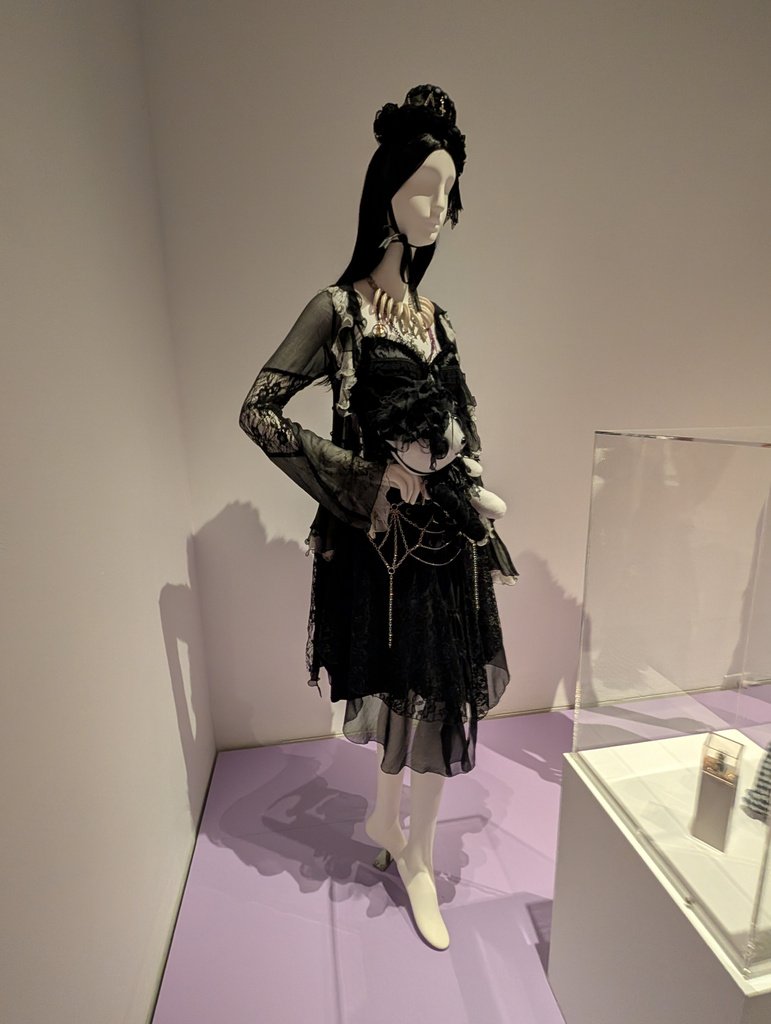
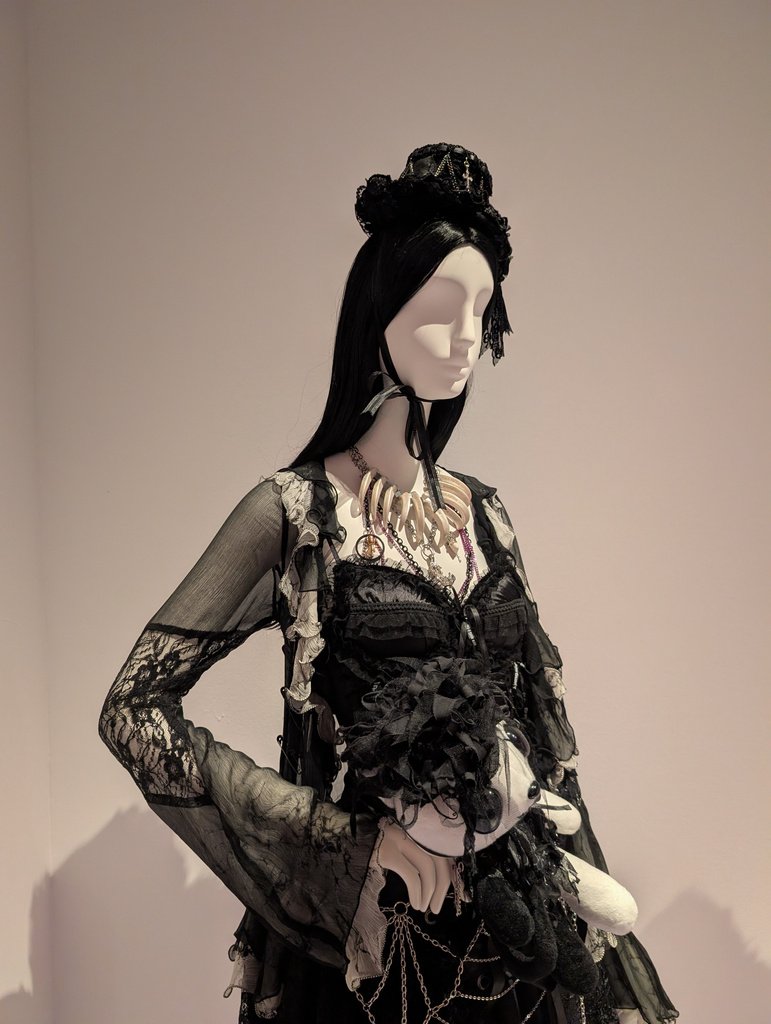
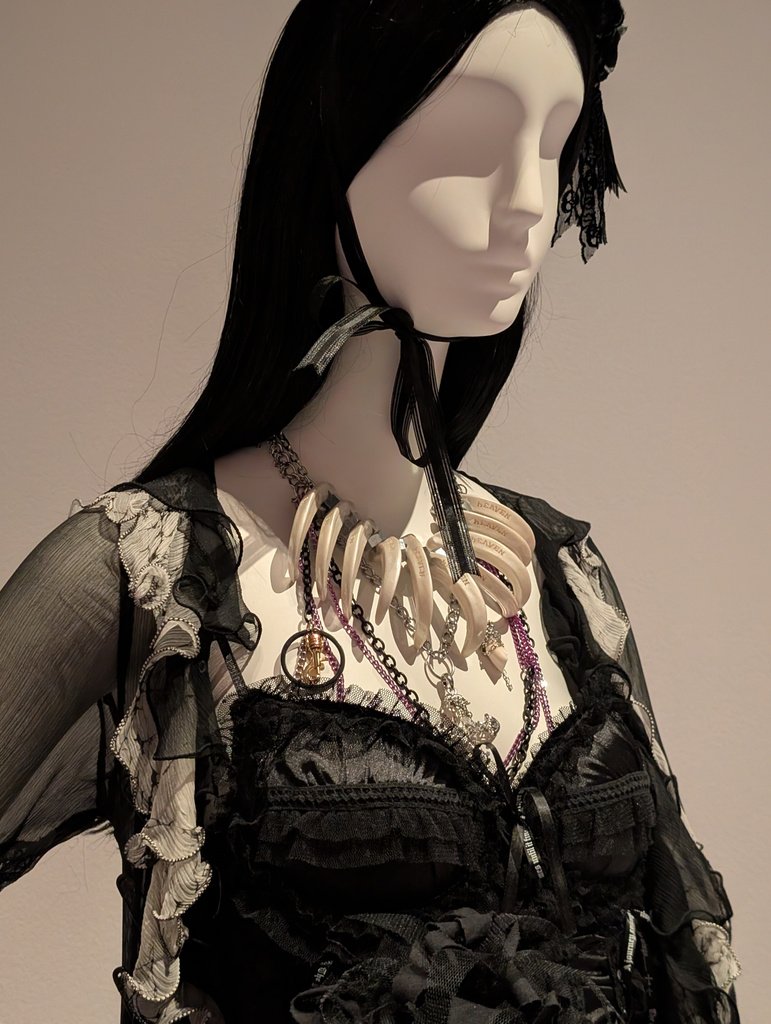
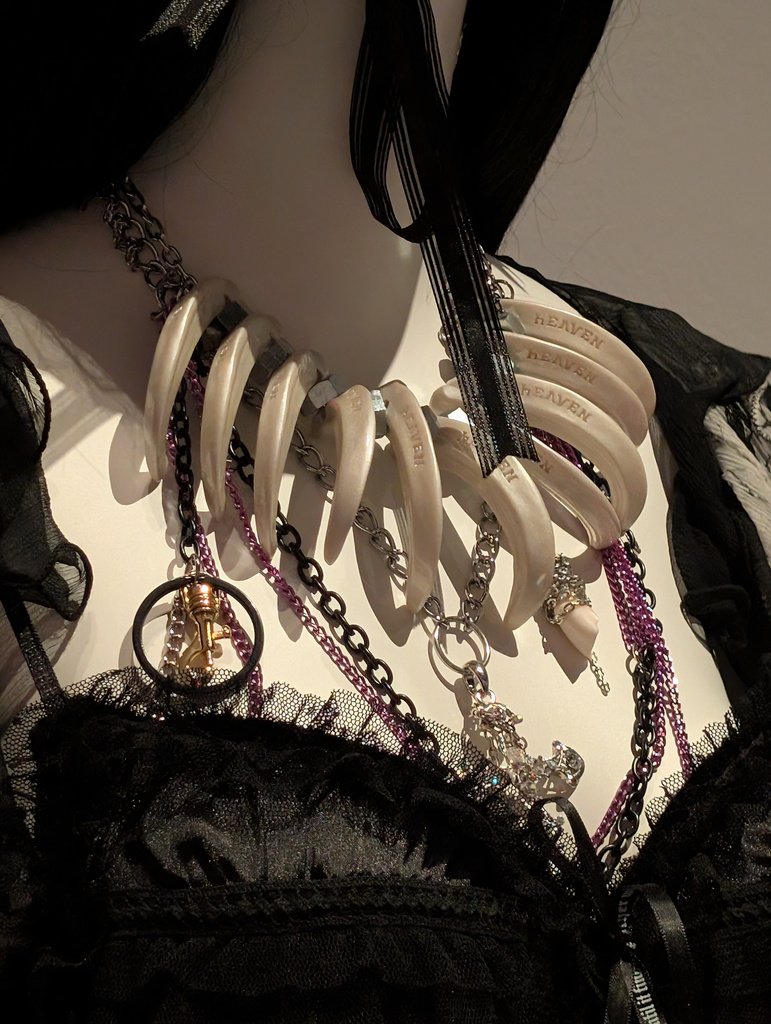
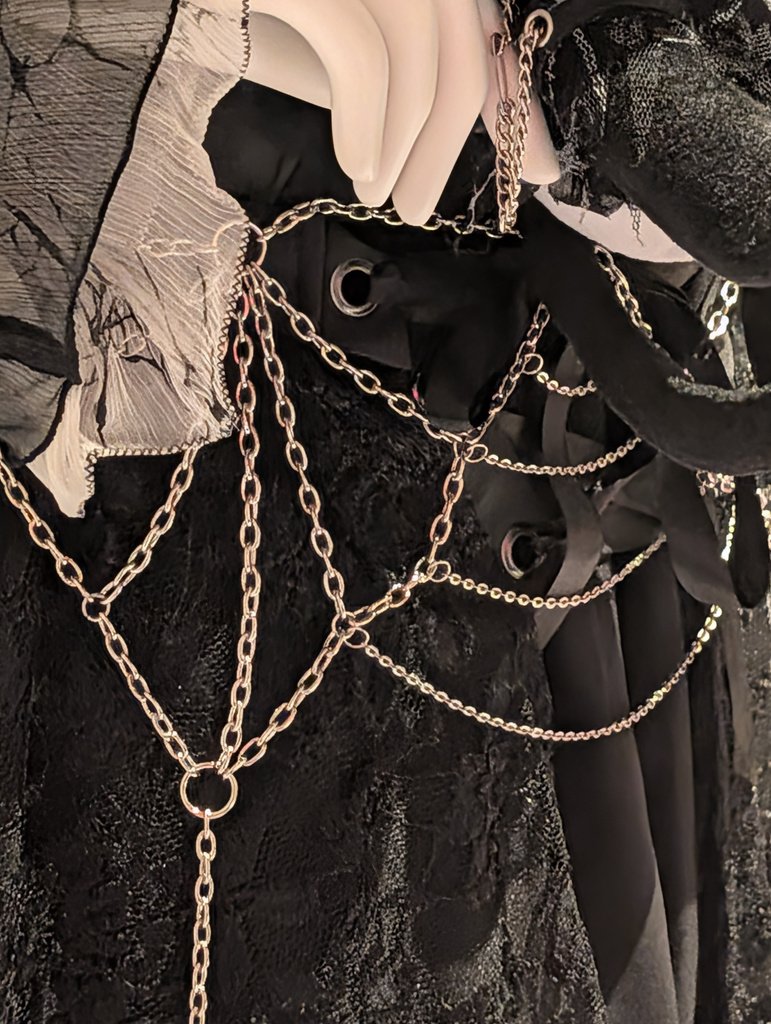
Black and white Gothic Lolita ensemble, fall 2008 MFIT, museum purchase
And finally, there is Monster High, whose dolls are sometimes affectionately described as “Goth Barbies.” Imagined as the teenage offspring of famous monsters, they nevertheless have a very down-to-earth passion for fashion.
The exhibition featured Harmonie Ghoul from the 2023 Monster High x Off-White collaboration. Virgil Abloh conceived the project as an expression of love for his children; it was among his final works before his death in 2021.
After Bellmer, McQueen, and cinematic revenge, this doll feels almost like a relief. She does not need to conceal her strangeness to be fashionable. She can remain a monster, and still have an excellent wardrobe.
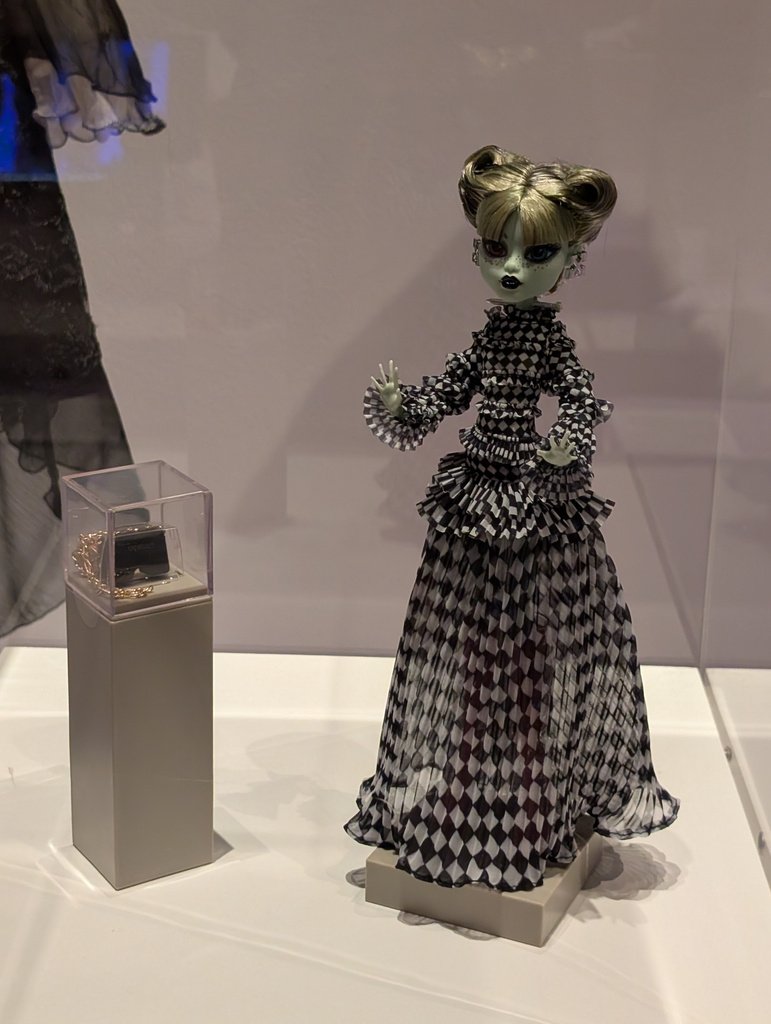
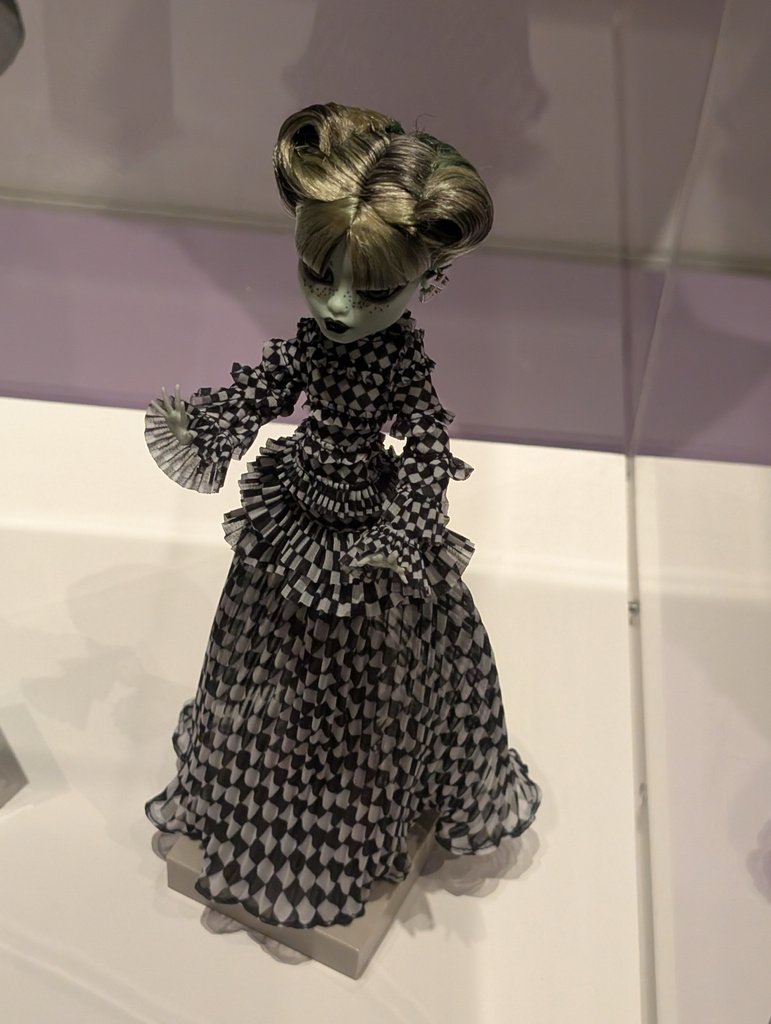
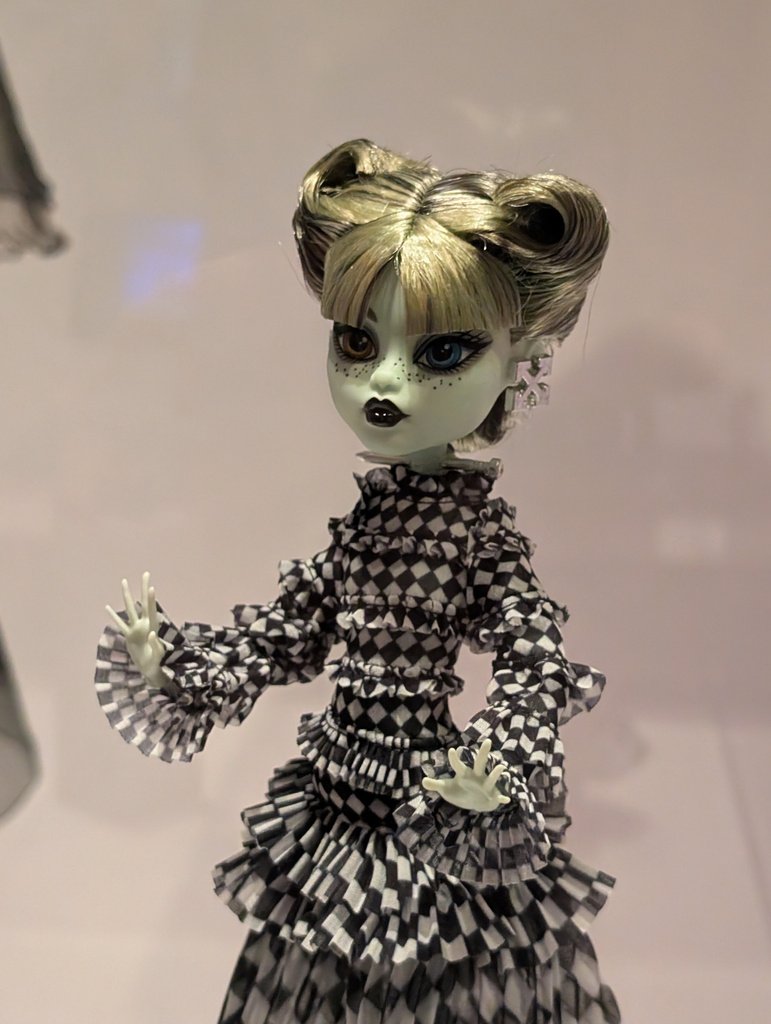
Monster High x Off-White “Harmonie Ghoul” doll, 2023 MFIT, museum purchase
That is what I appreciated most about this section: a broken or unsettling doll does not necessarily represent fear alone. She can speak of vulnerability, rebellion, care for forgotten objects, or the right not to conform to someone else’s ideal.
Back in the workshop, we will probably continue repairing cracks and reattaching missing arms. But after this exhibition, I feel inclined to look a little more closely at a doll before restoration begins. Sometimes, she already has something to say.
Sources & Further Reading
Museum Exhibitions & Curatorial Works
- The Museum at FIT (Fashion Institute of Technology): Doll Dressing exhibition, curated by Dr. Colleen Hill (exploring the subversion of doll tropes, dark aesthetics, and bodily subversion in fashion).
High Fashion Collections & Designers
- Alexander McQueen: La Poupée (Spring/Summer 1997 runway collection), inspired by the surrealist work of artist Hans Bellmer.
- Dilara Fındıkoğlu: Dissolved Doll dress (Spring/Summer 2023 collection), examining themes of trapped childhood, emotional states, and bodily vulnerability.
- Rodarte (Kate and Laura Mulleavy): Spring/Summer 2010 collection, featuring leather-and-lace pieced garments inspired by Living Dead Dolls.
- h.NAOTO (Hirooka Naoto): Fall/Winter 2008 collection, showcasing Gothic Lolita aesthetics, distressed layering, and dark romanticism.
- Purevile (Wren Britton): Doll Head Harness (2019), artisan accessories constructed from repurposed doll parts, lace, velvet, and found objects.
Surrealism, Film & Early Cinema
- Hans Bellmer: Die Puppe (The Doll, 1930s) — Surrealist photography and sculpture series focusing on reassembled, contorted, and fragmented doll torsos and limbs.
- Cecil M. Hepworth: The Doll’s Revenge (1907) — Early British silent comedy/horror short film about a destroyed doll seeking vengeance.
Commercial Toys, Collaborations & Pop Culture
- Living Dead Dolls: Created by Damien Glonek and Ed Long (1998), commercially produced by Mezco Toyz (since 2000), including the short video Grave Danger (2014).
- Monster High x Off-White: Harmonie Ghoul doll (2023), designed under the creative direction of Virgil Abloh as a blend of high fashion couture and monster toy design.