
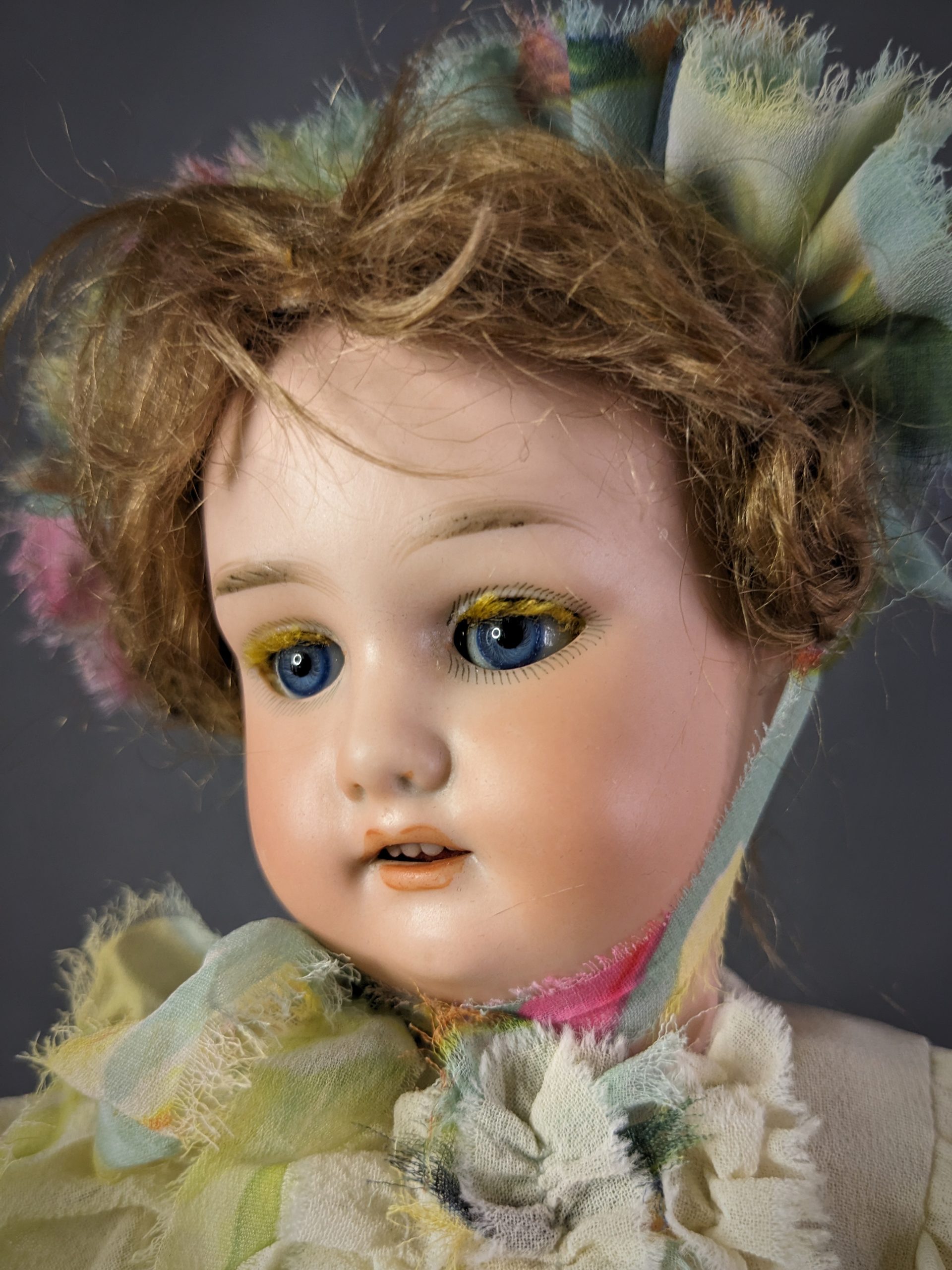
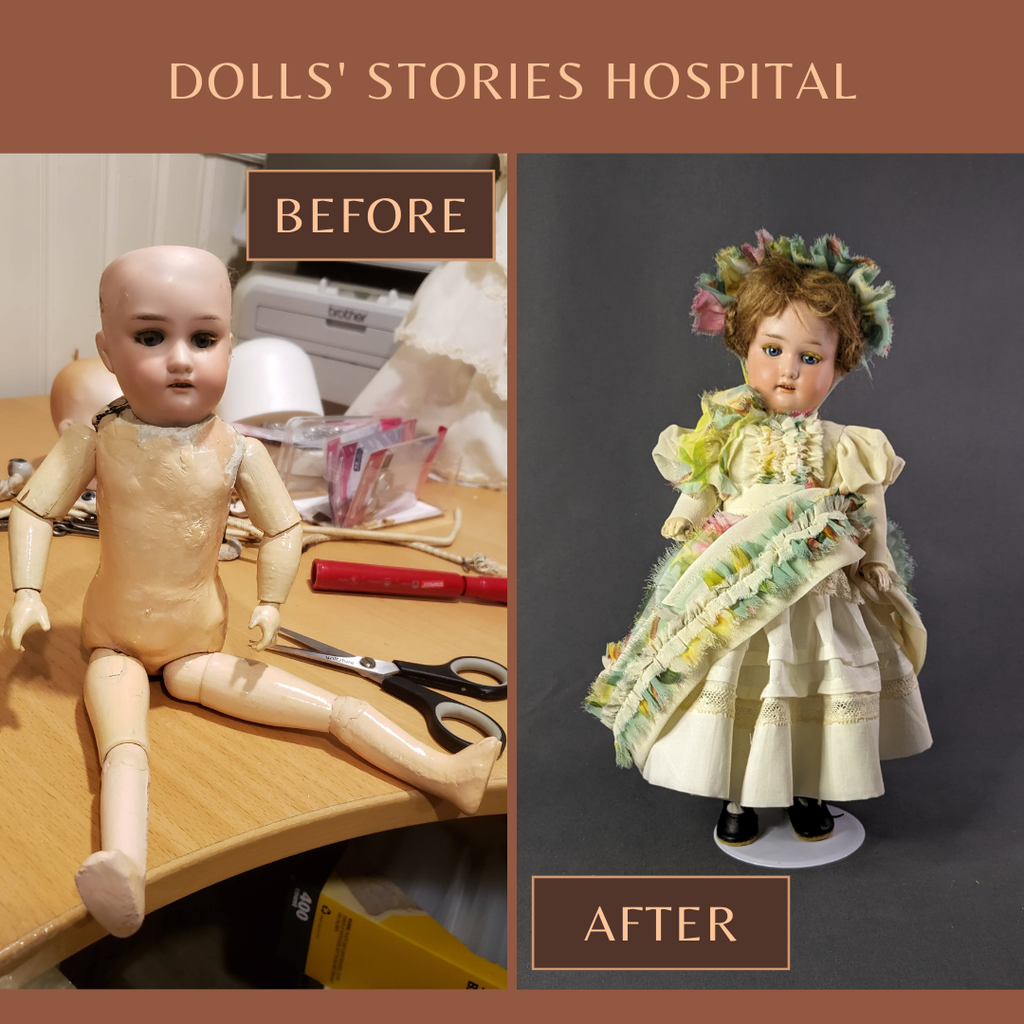
Restoration of a 13-Inch Antique Armand Marseille Bisque Head Doll: Before & After
From a Fragile Little Patient to an Early-20th-Century Lady
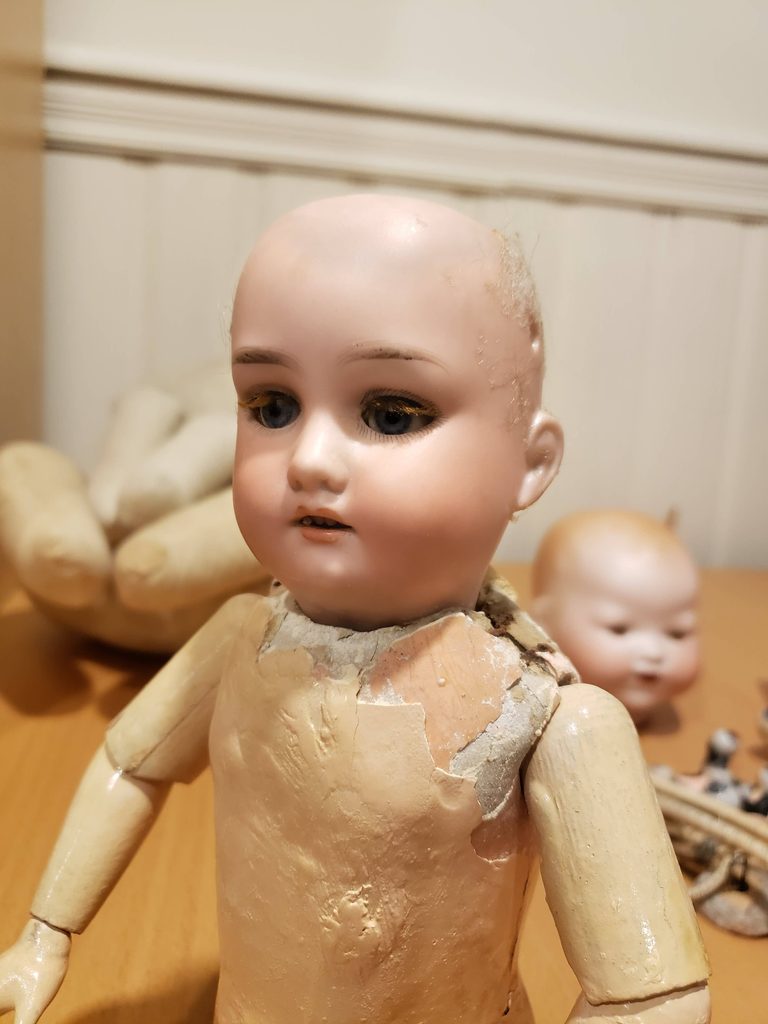
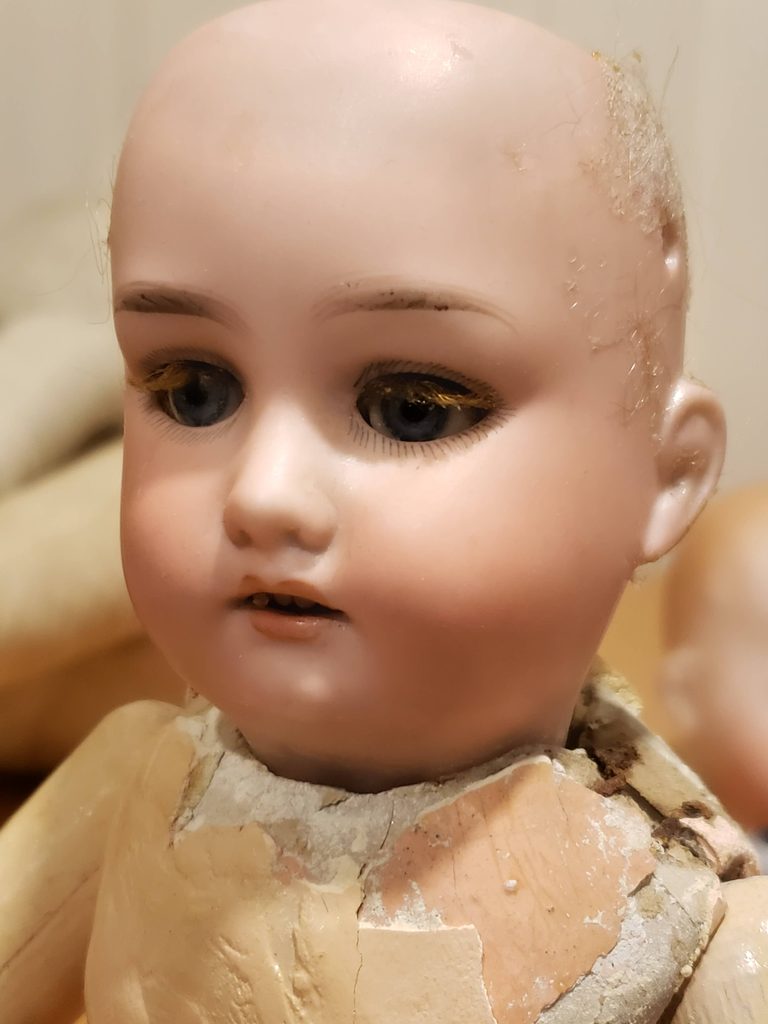
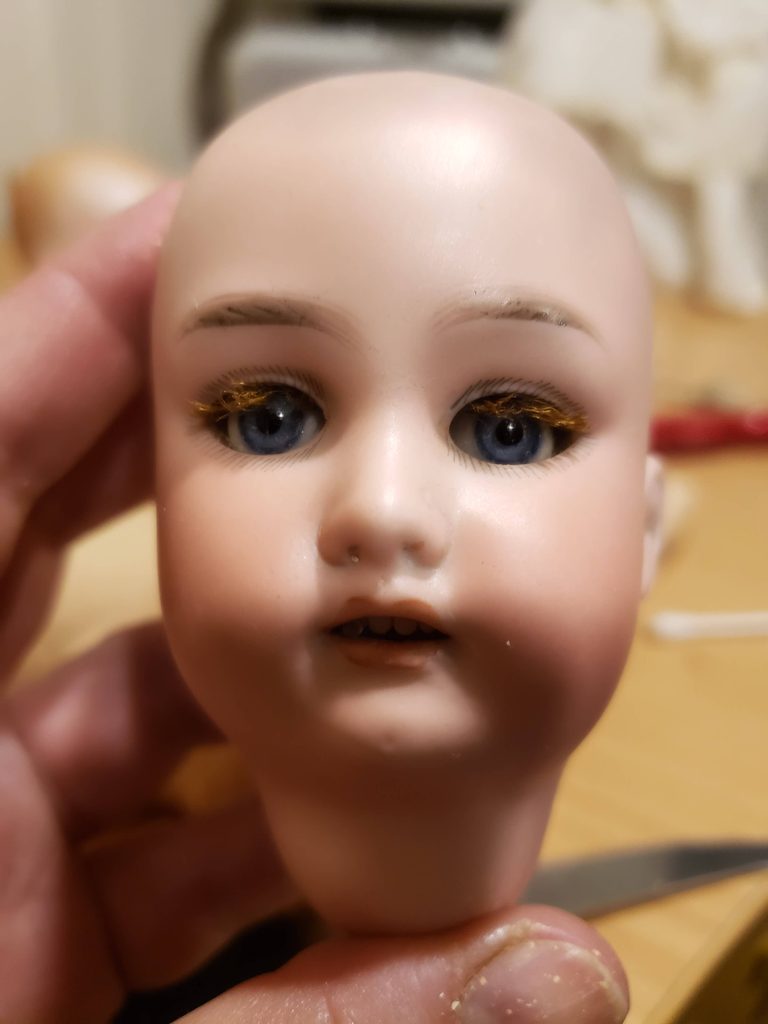
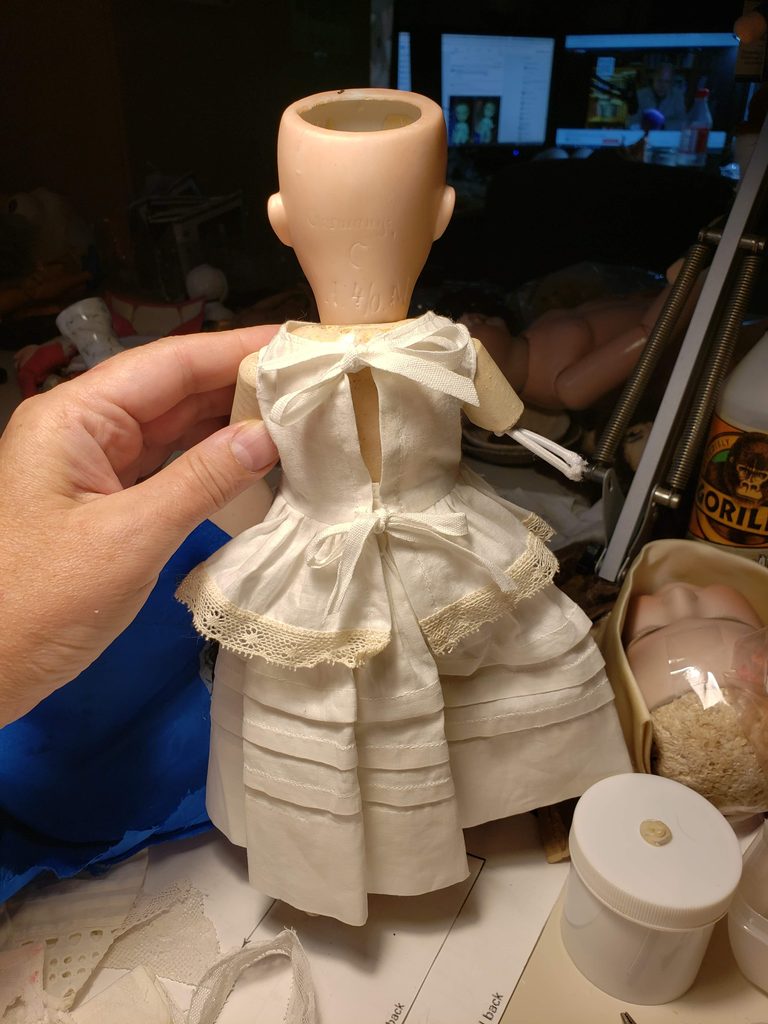
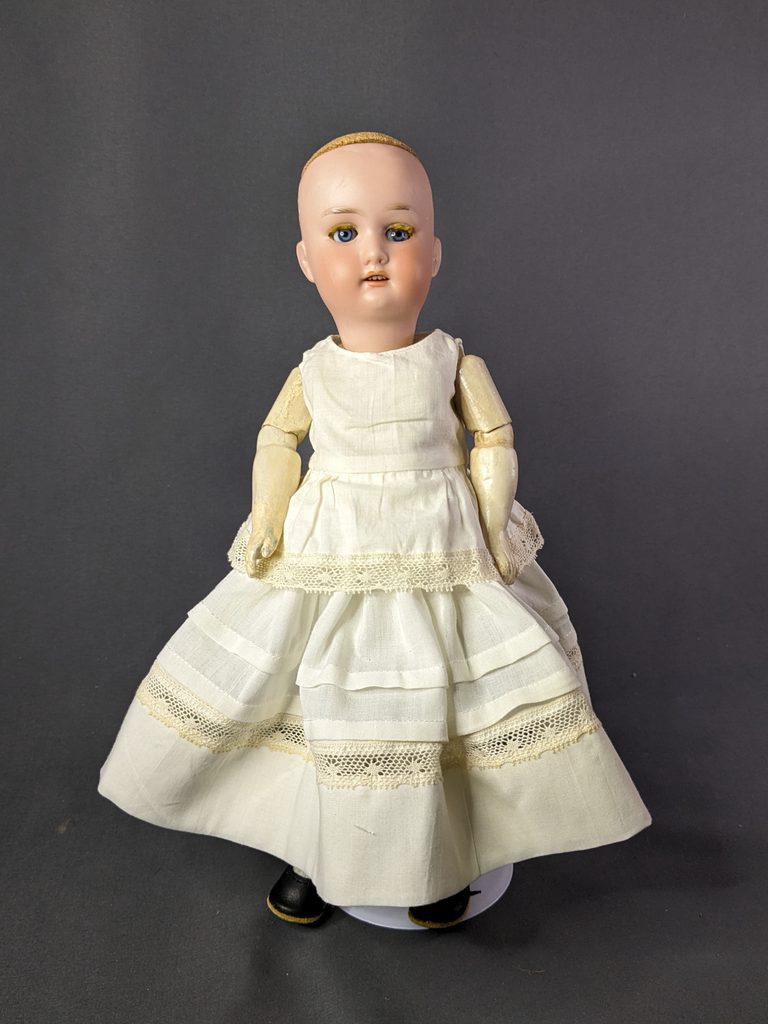
Here is a miniature antique doll that came to my hospital: a cabinet-size Armand Marseille bisque doll, marked C.A. 4/0 M. She has a simple jointed composition body and a porcelain head with deep blue eyes. At first, it seemed to me that she was almost sobbing. And she had every reason to.
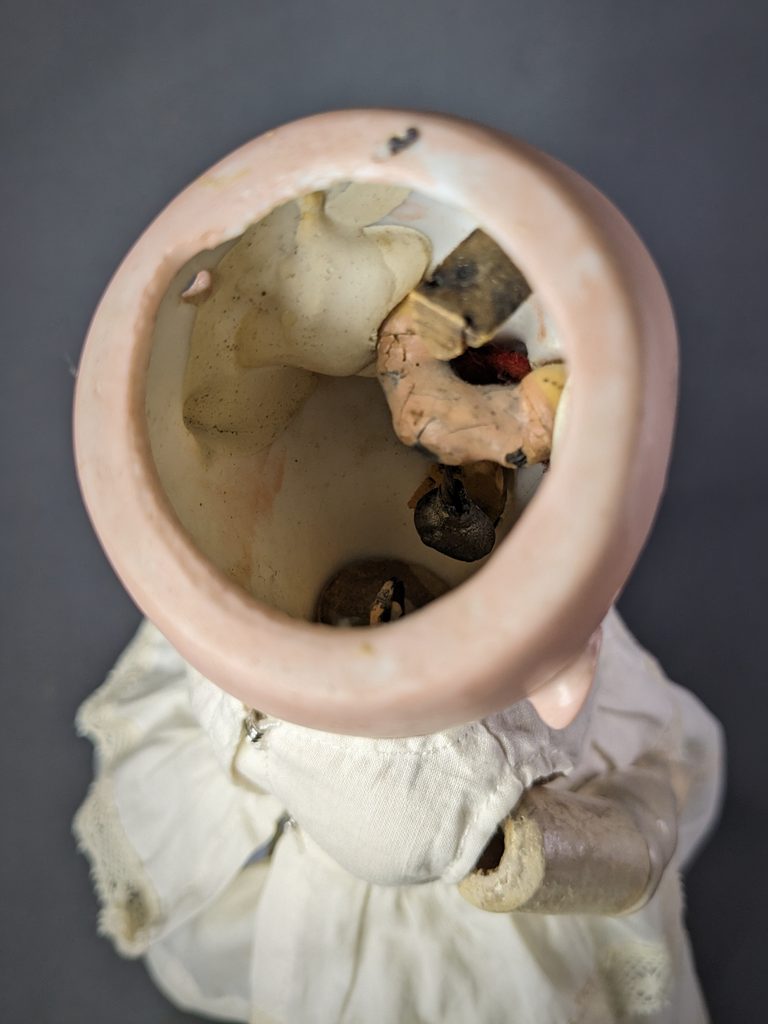
With eyes like these, a doll should be admired and proudly displayed. Instead, fragments of a century-old past were falling from her body. Her damaged neck socket could no longer support the intact porcelain head with the proud posture it deserved.
Fate brought her to my workshop. Let us look at the story of her transformation.
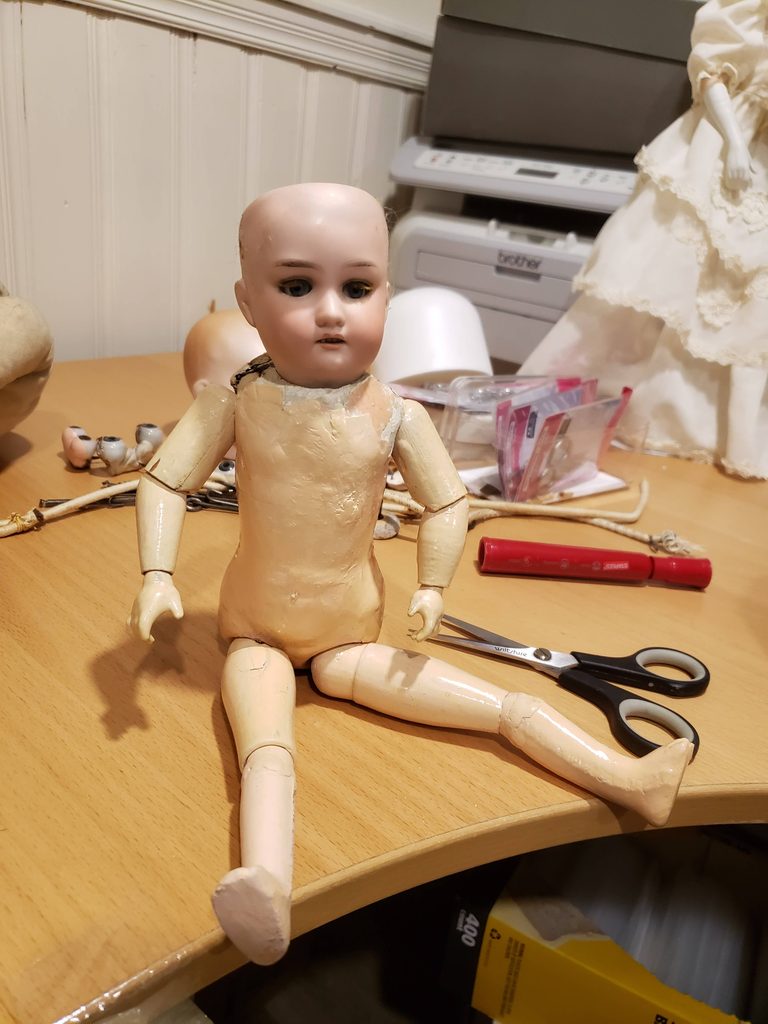
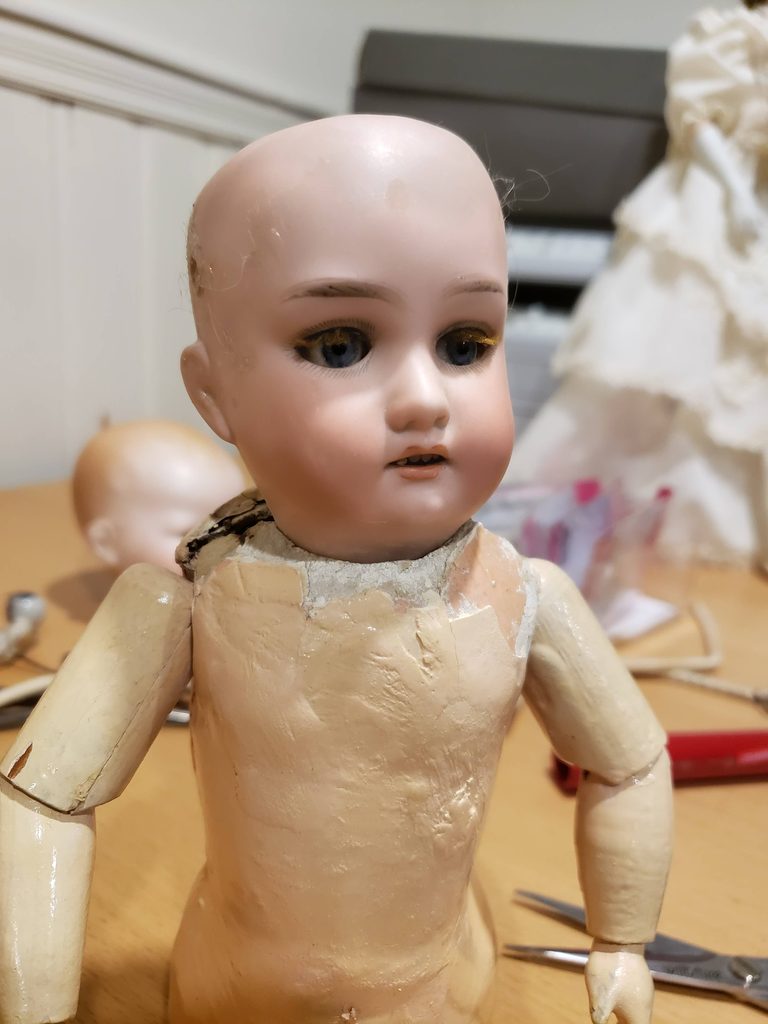
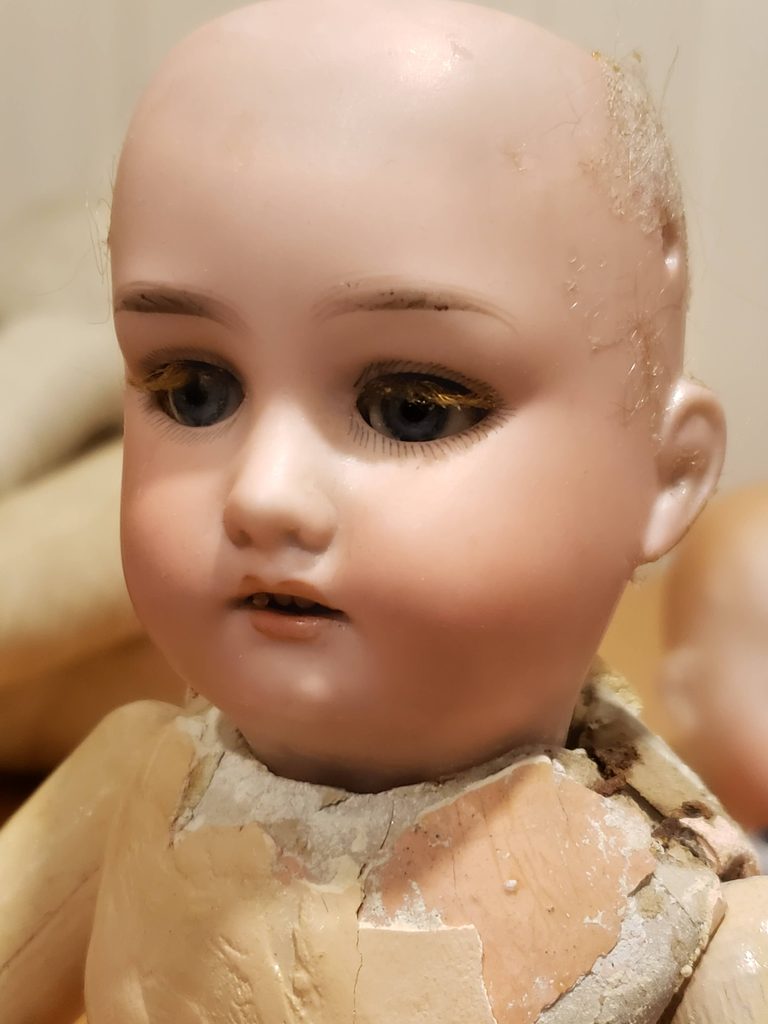
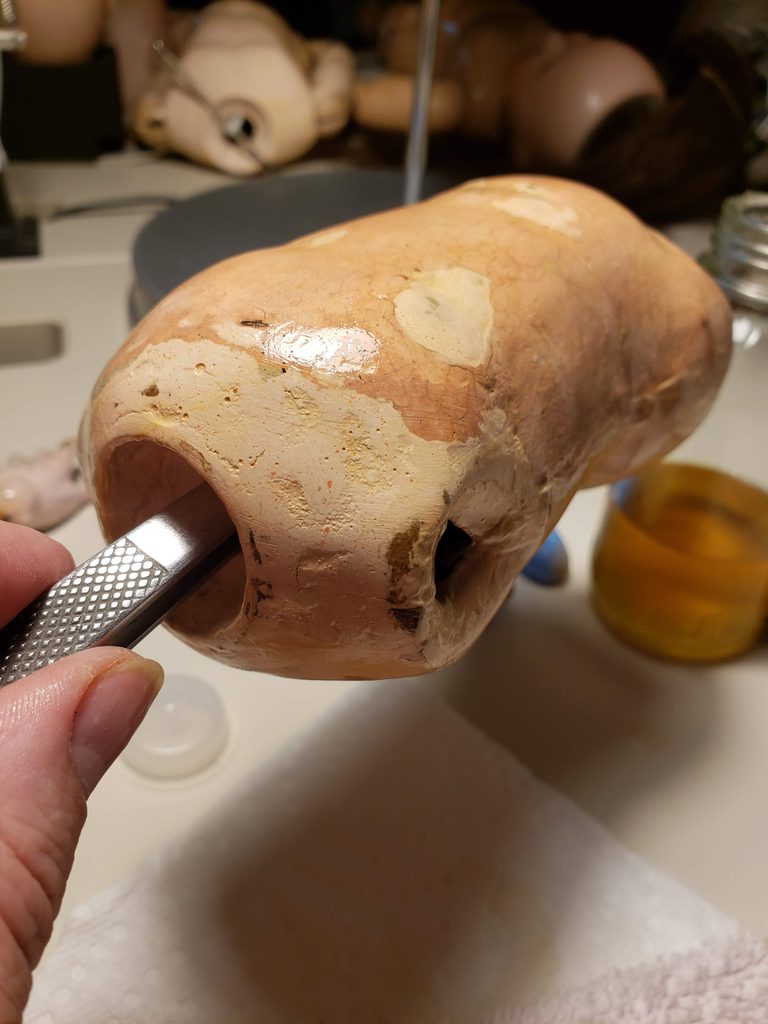
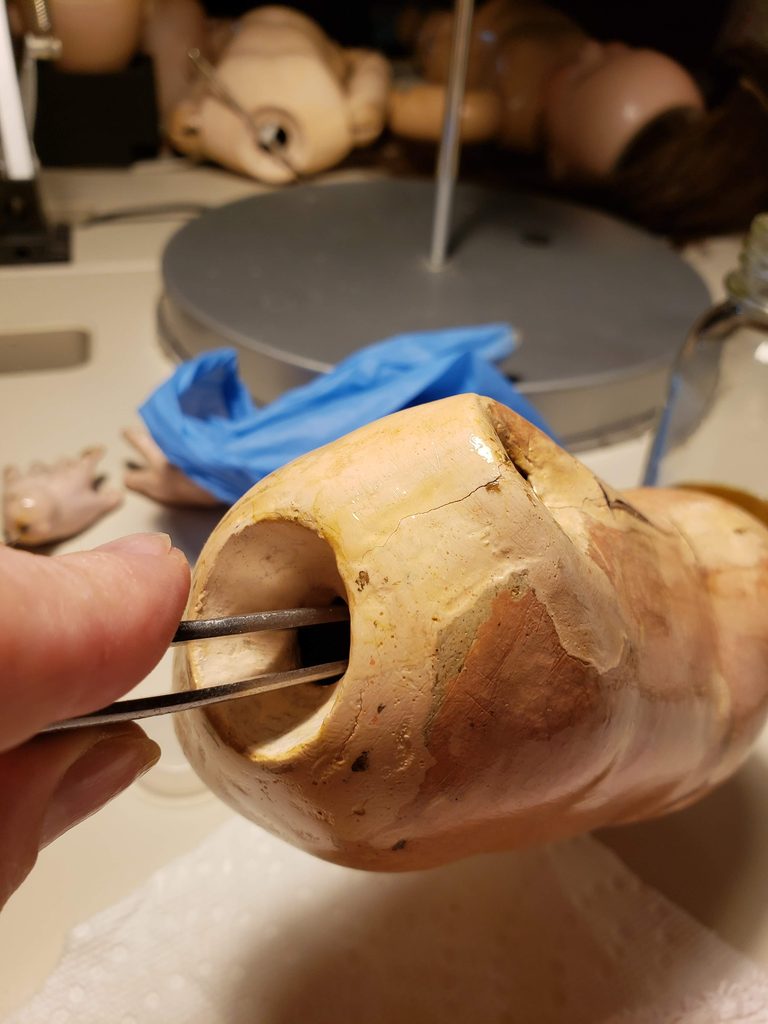
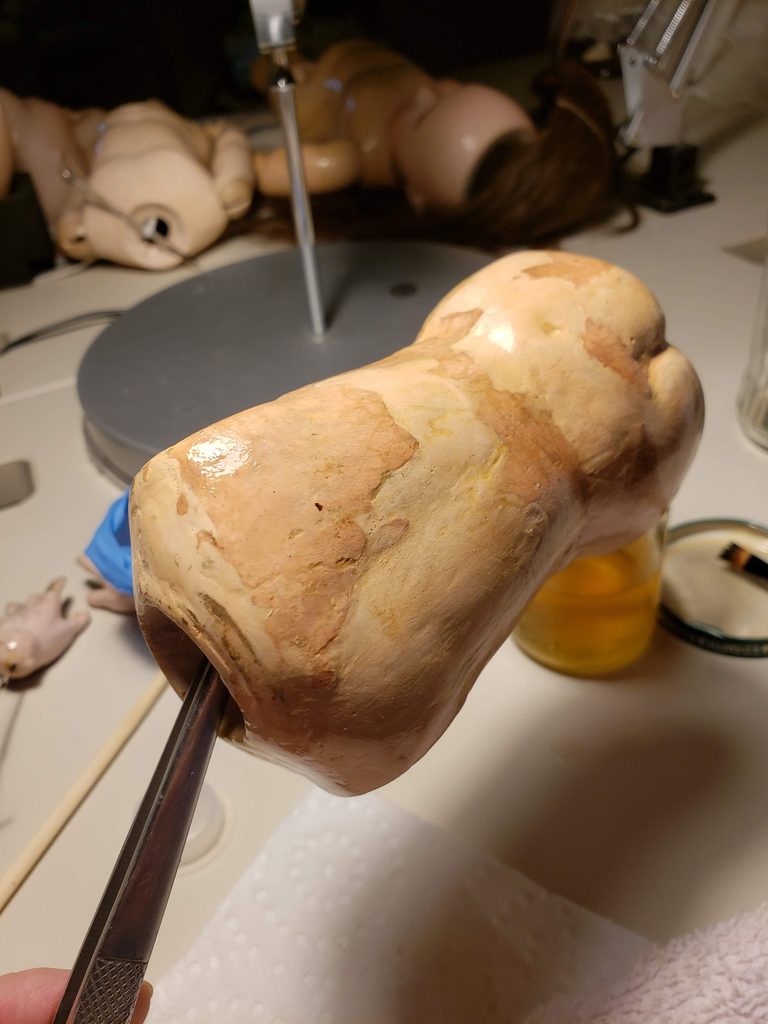
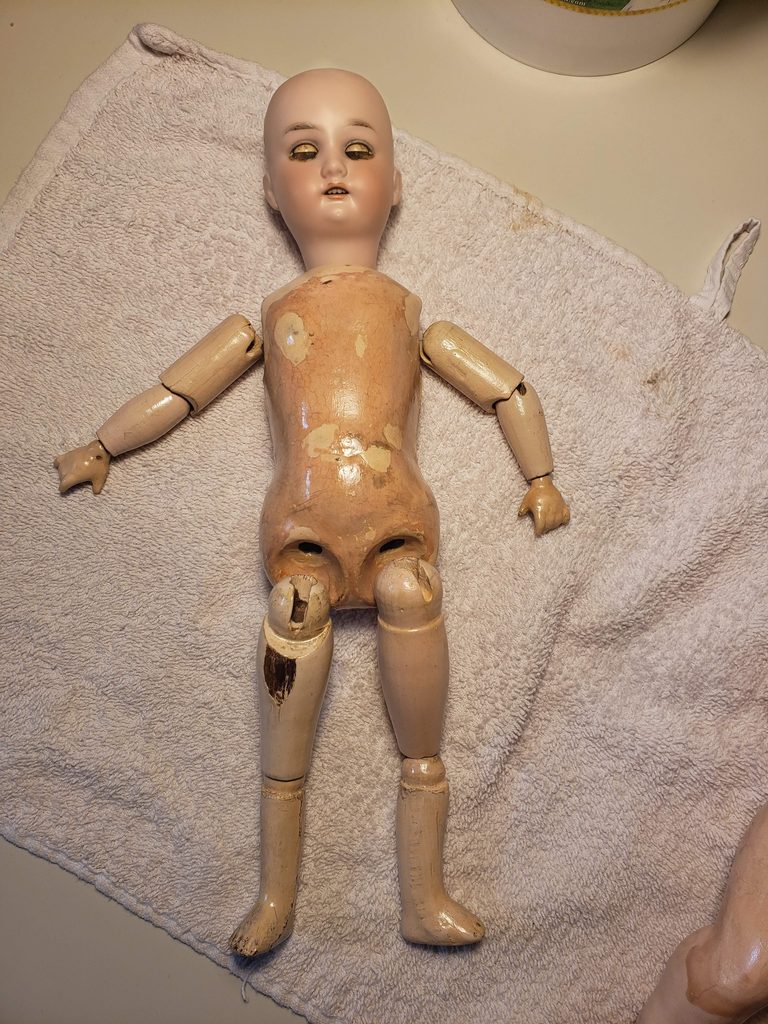
At first, the doll’s condition was far from attractive. The many layers of old coating on the composition body had begun to detach, revealing cracks along the shoulder seams. The body was held together only by rusty staples from the early twentieth century.
Then I found the original cardboard base for the neck socket inside the body. That was very good news.
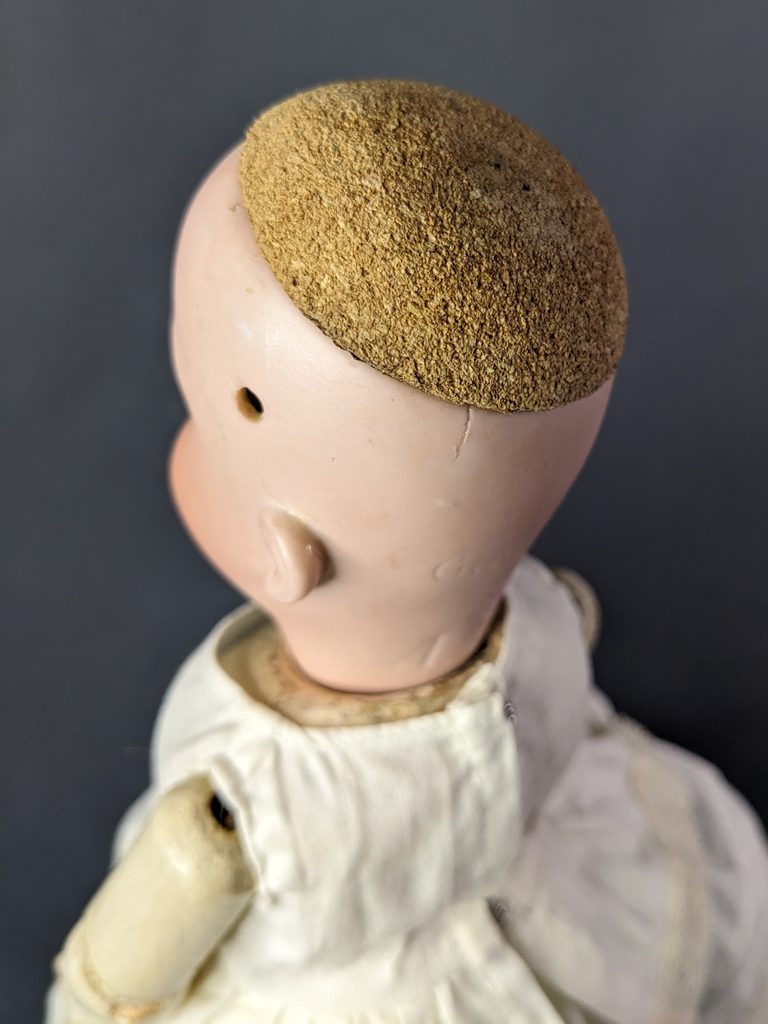
Most importantly, the doll’s bisque head was completely intact. Her sleep-eye mechanism was still working, and the mohair eyelashes above her glass eyes were nearly perfect. For a doll more than 100 years old, that alone is an extraordinary survival.
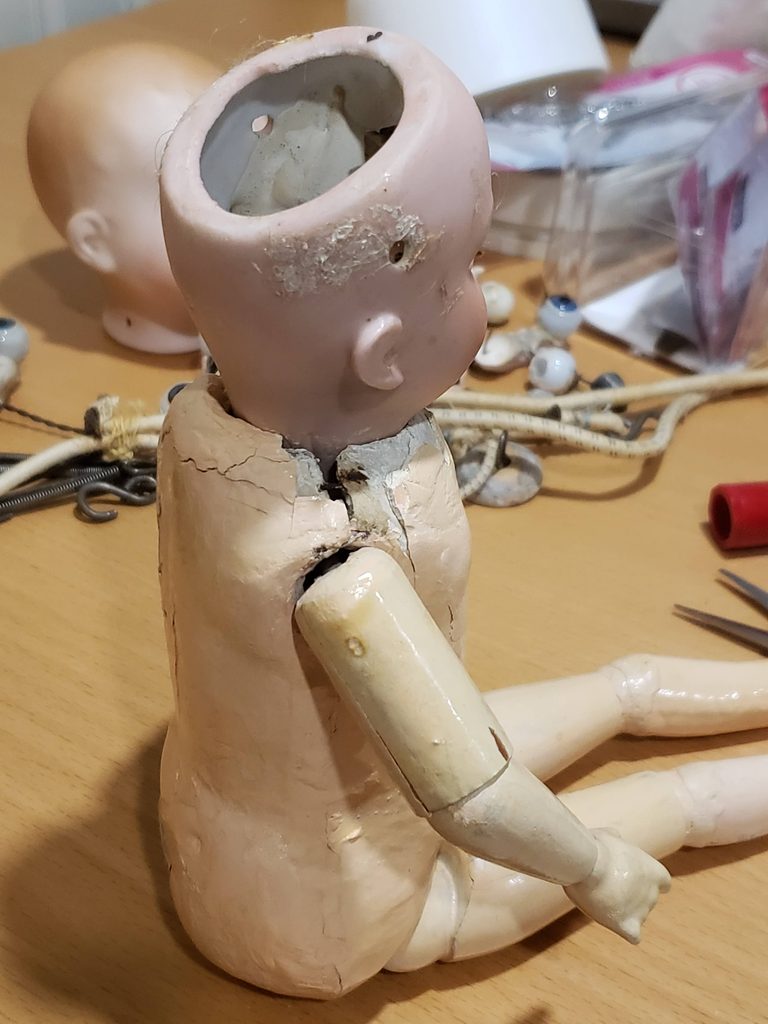
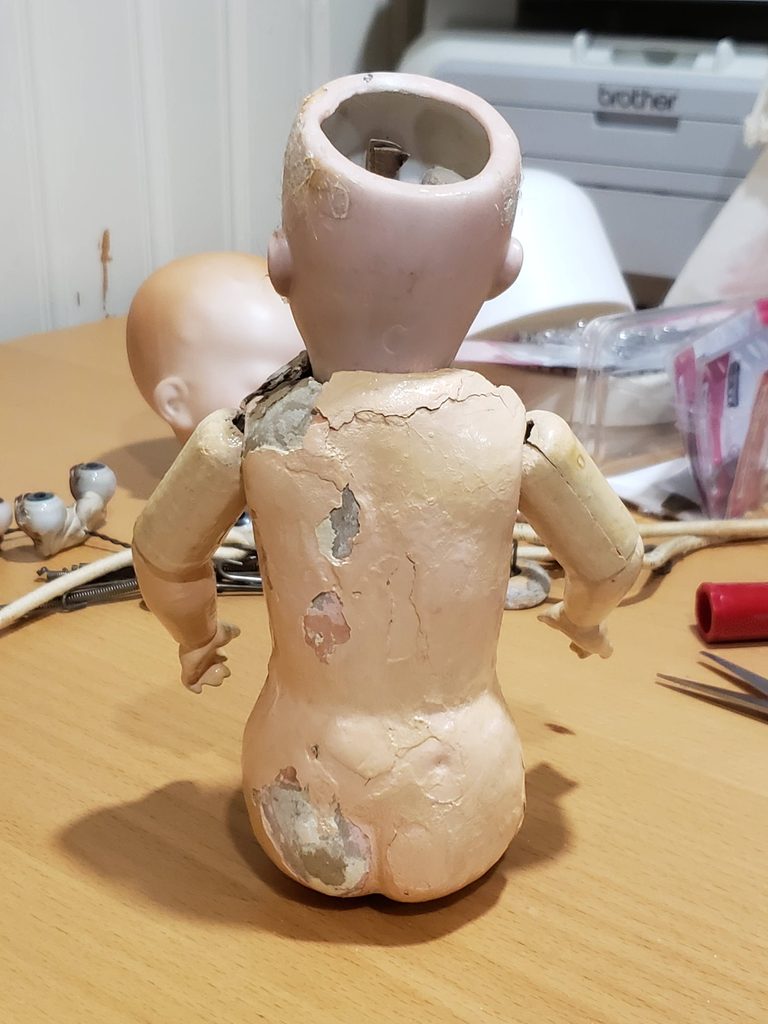
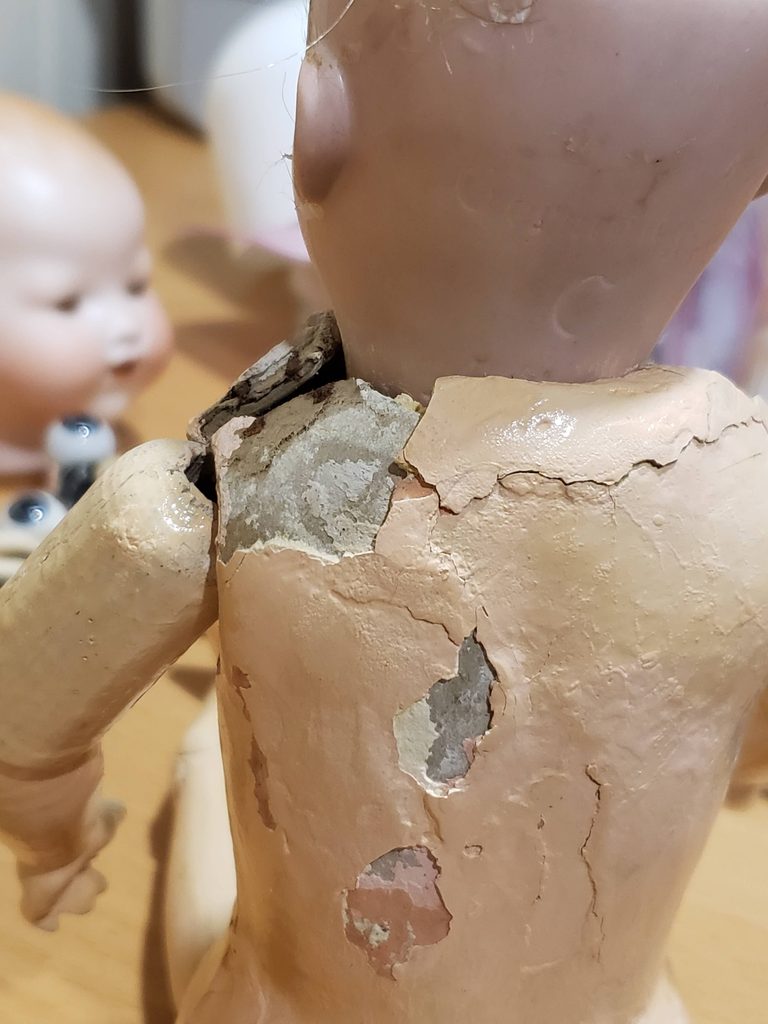
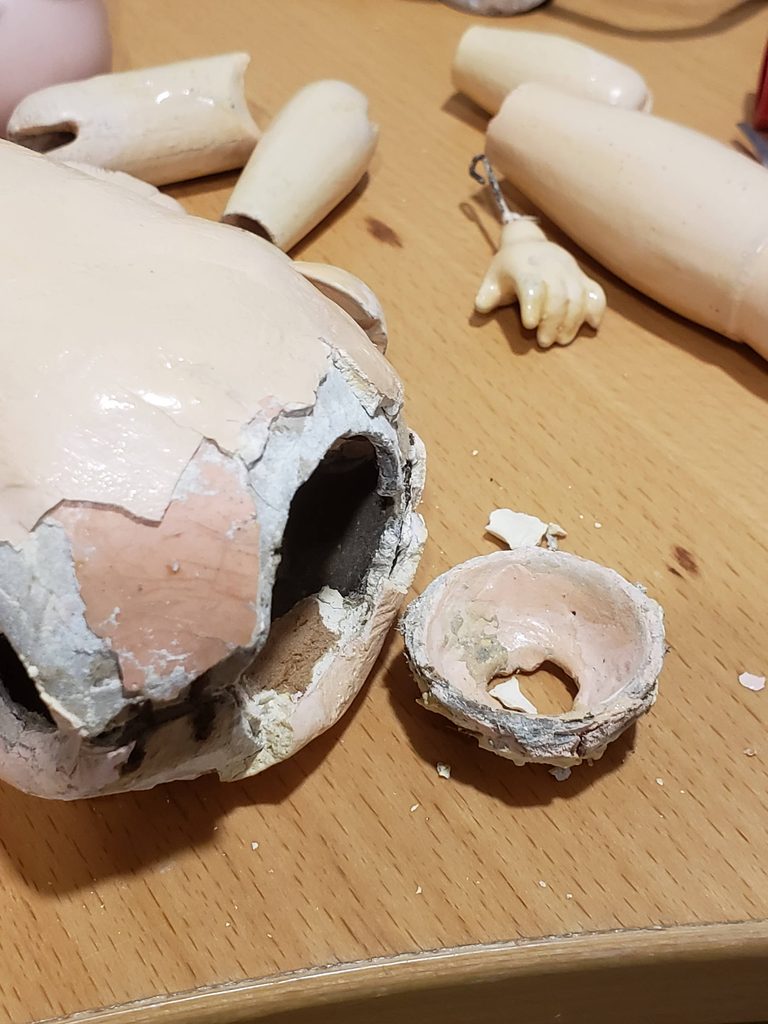
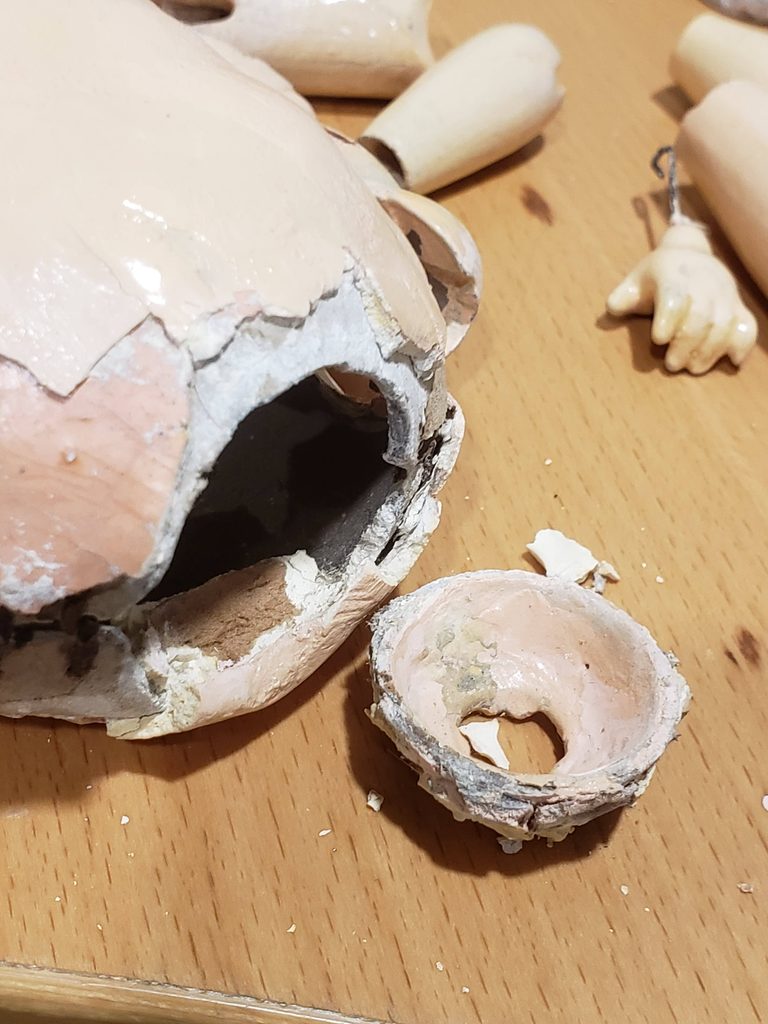
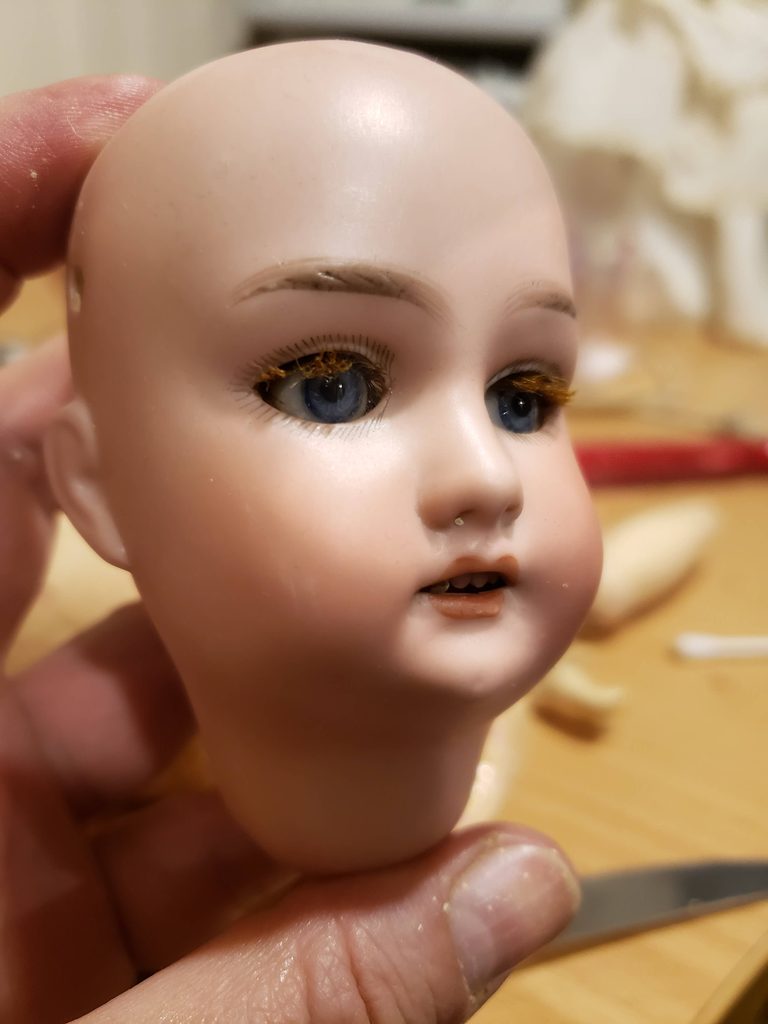
I began work on the body’s surface. All unstable layers from previous repairs were carefully removed, and the authentic surface was stabilized with gesse and animal glue, followed by a protective layer of shellac. The neck socket was secured back in place, and the exposed cardboard areas were covered with gesse.
Once all of the doll’s parts were assembled again, she already looked much better. So we continued.
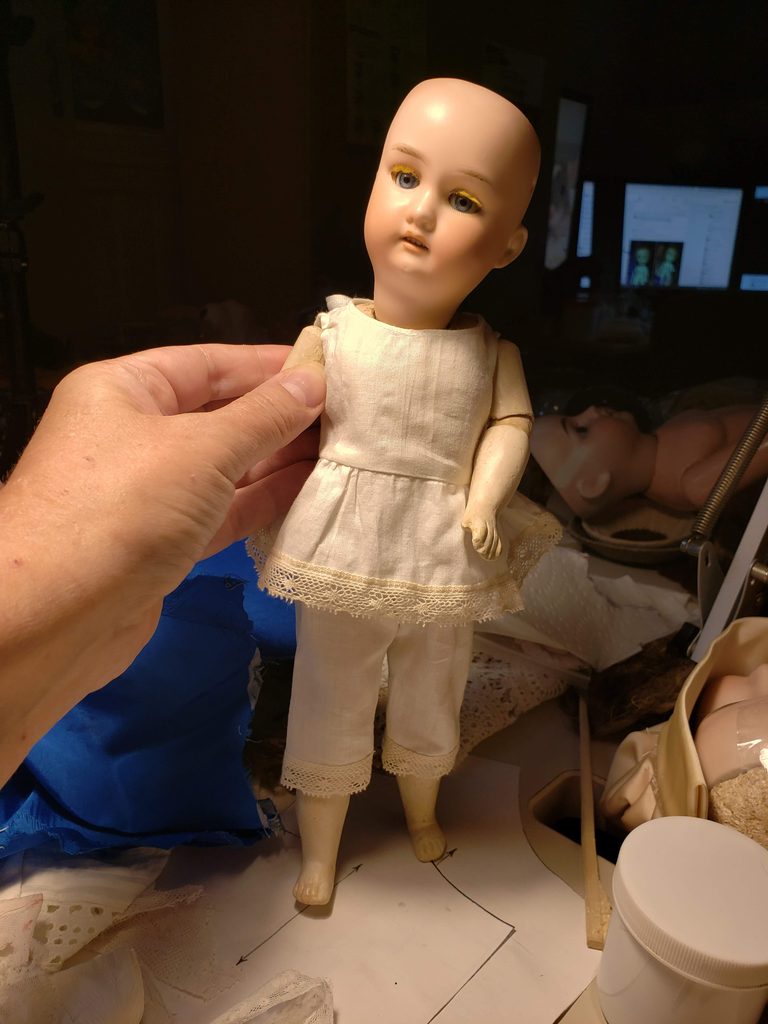
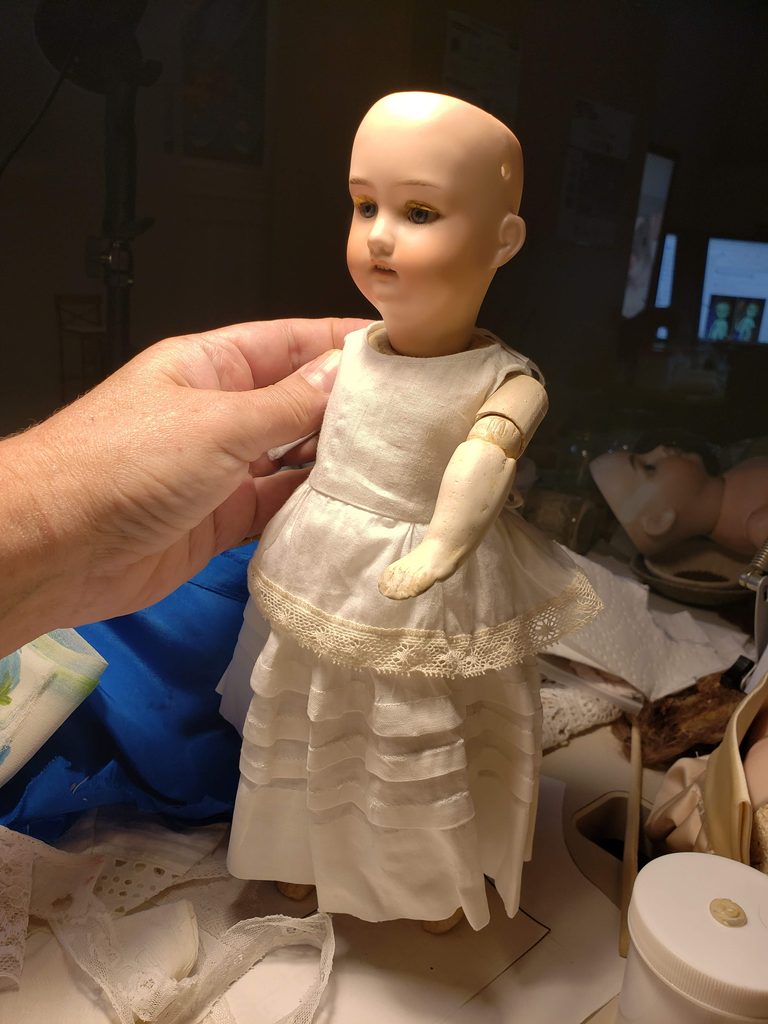
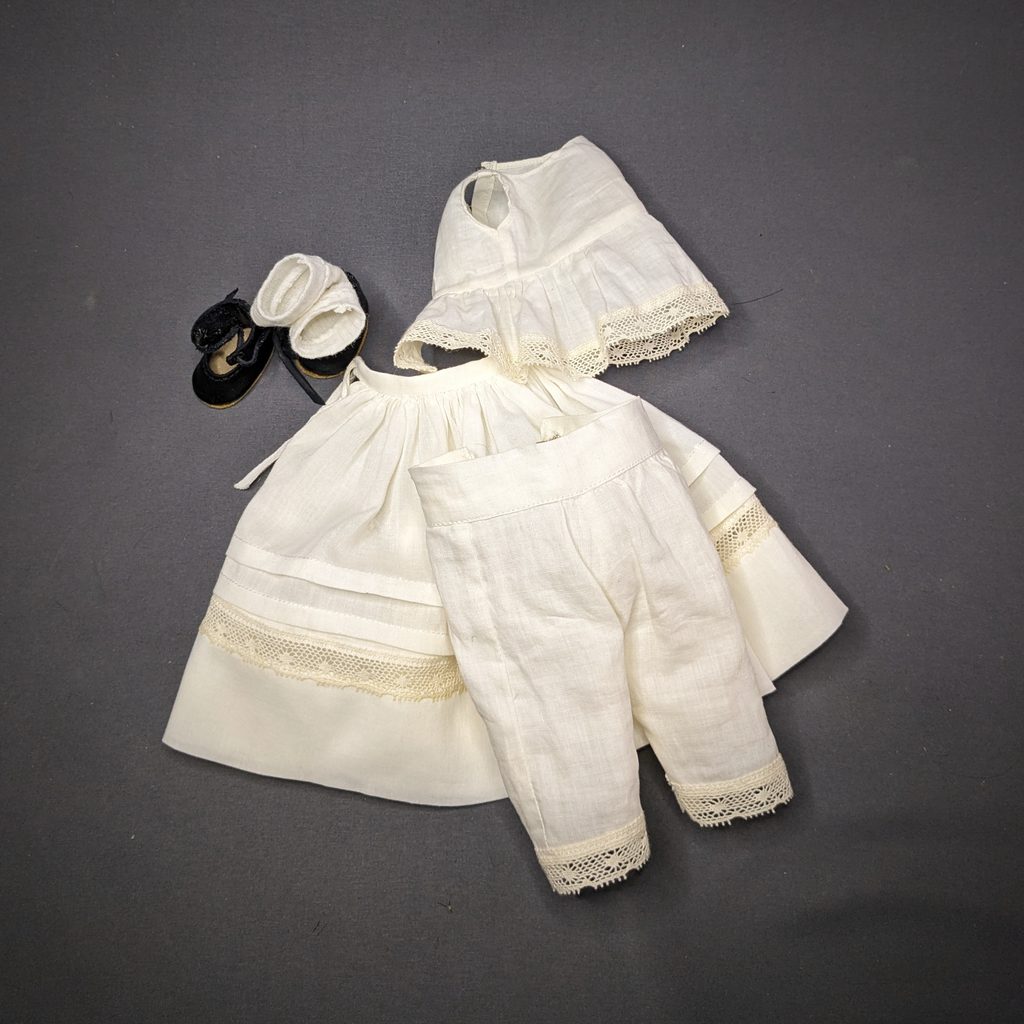
It was time for the first layer of her new wardrobe. My workshop holds a small collection of antique doll clothing. It is a very valuable source not only of inspiration, but also of fabrics, construction details, and fastenings appropriate to the period in which this doll was made.
As you can see, the little one was very positive about the fitting process. She seemed to turn in my hands and show off her new clothes.
Even the tiny hook on her petticoat is antique. It had waited patiently for its moment.
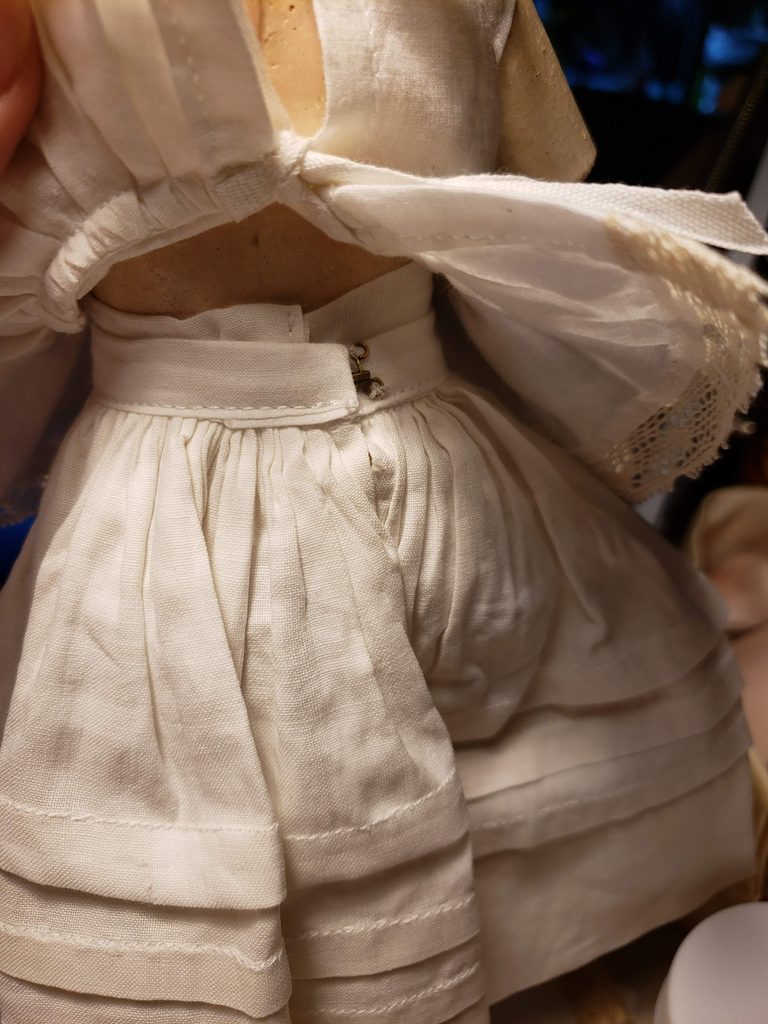
In my workshop, a doll can receive not only the clothing she needs, but also a hairstyle suited to her age and character. As always, I work only with natural materials.
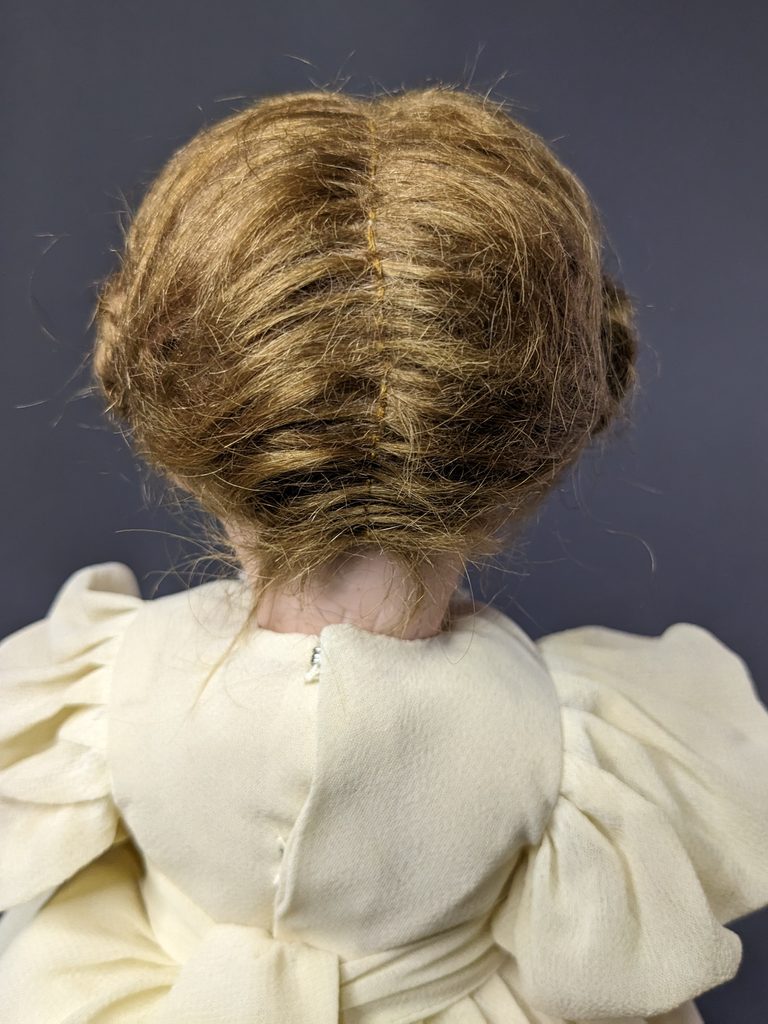
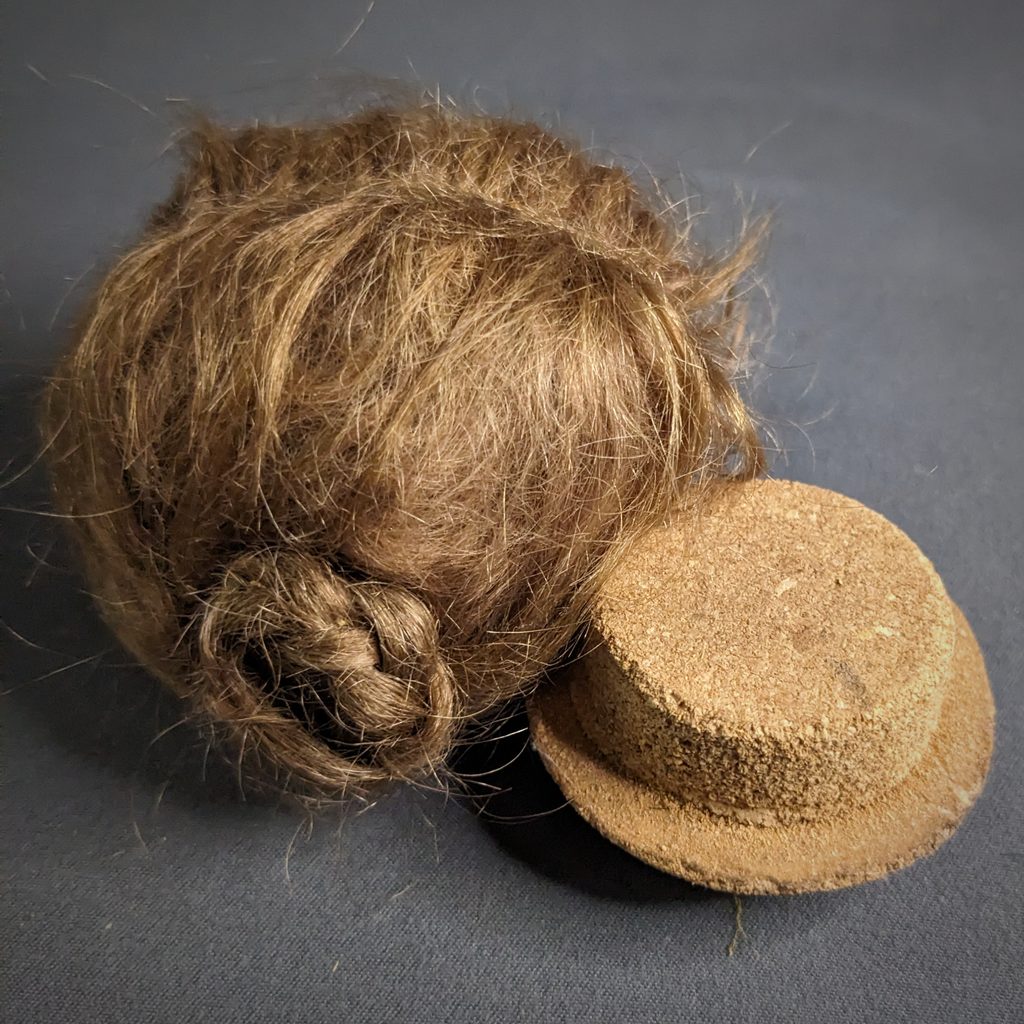
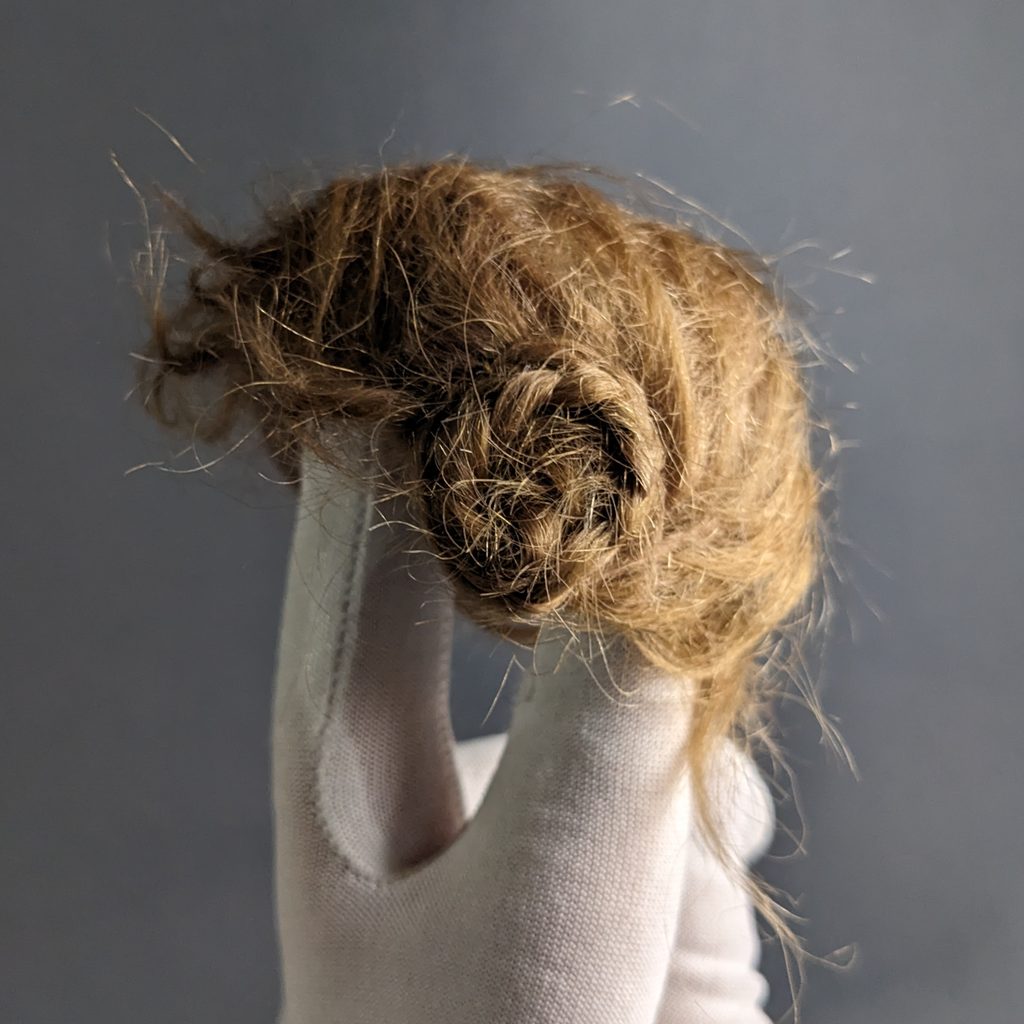
The restored mohair wig received a custom-made cotton wig cap, created especially for this doll. Fine mohair fibres were gathered into delicate braids, resembling little mouse tails.
Our small doll began to change. What delight appeared on her face. Or perhaps I am the only one who can see it?
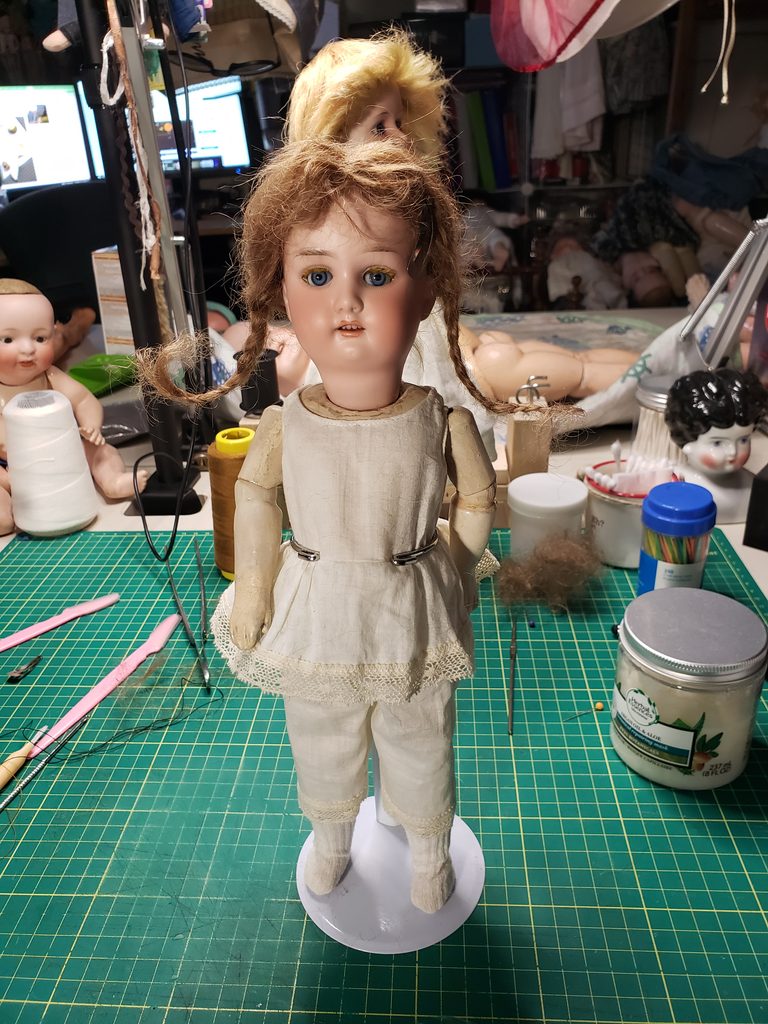
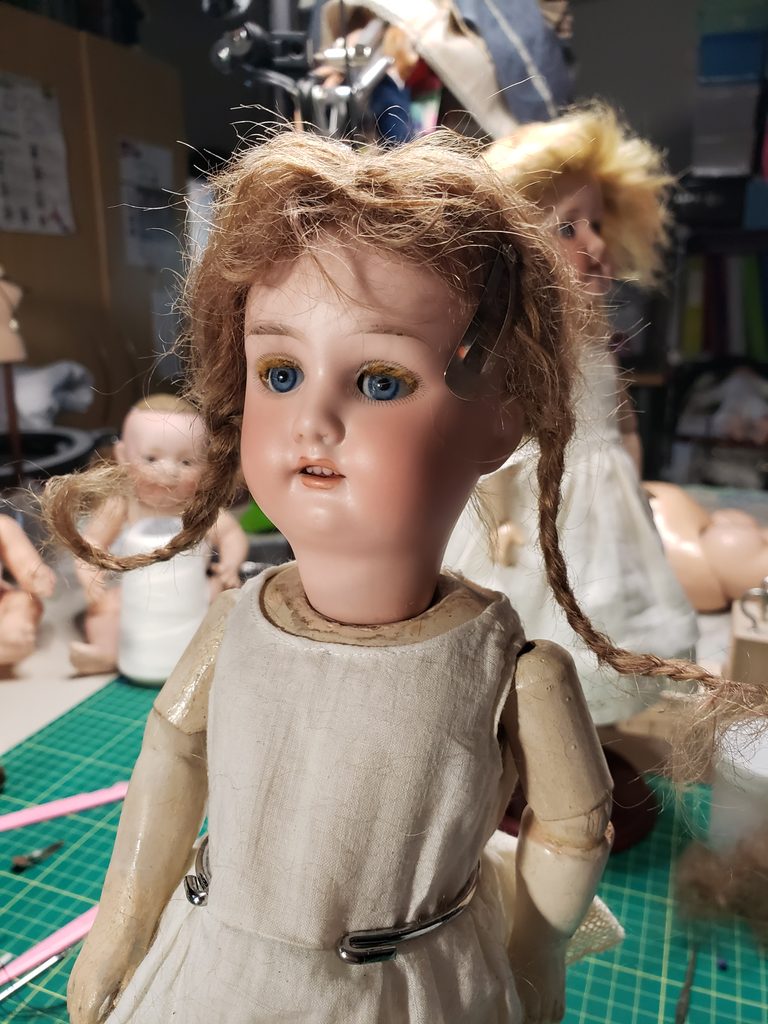
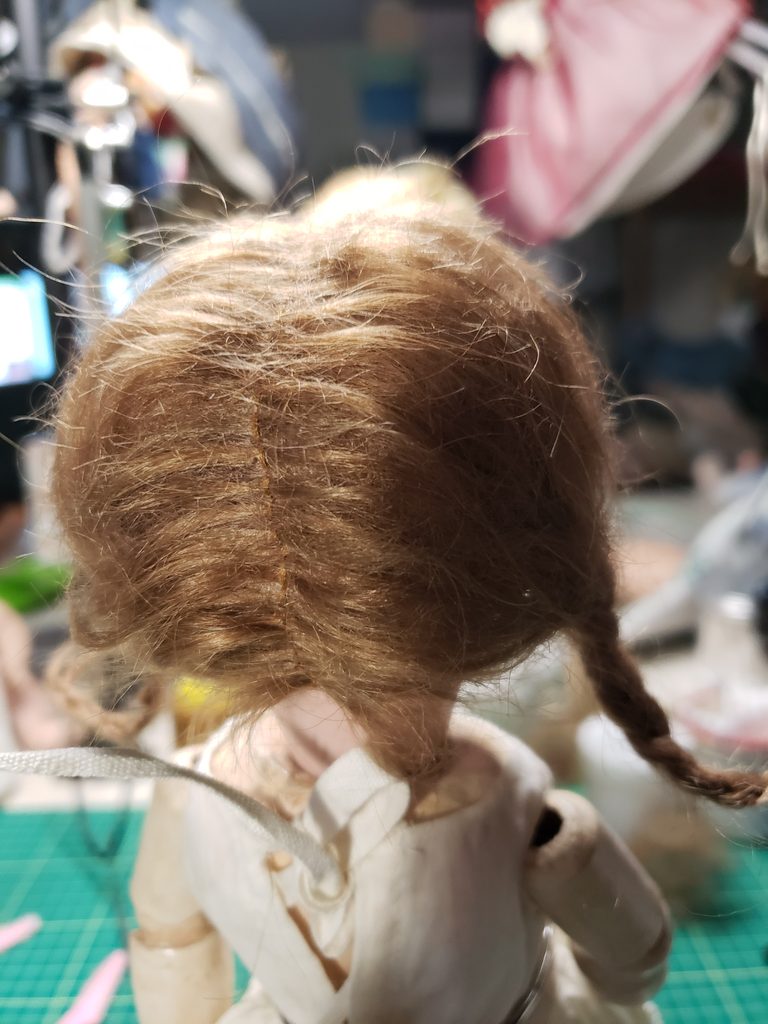
The fine braids were styled into small baskets on each side of her head. It seemed that she had begun to smile. Just look at this little model: such a poser. A girl, simply a little girl.
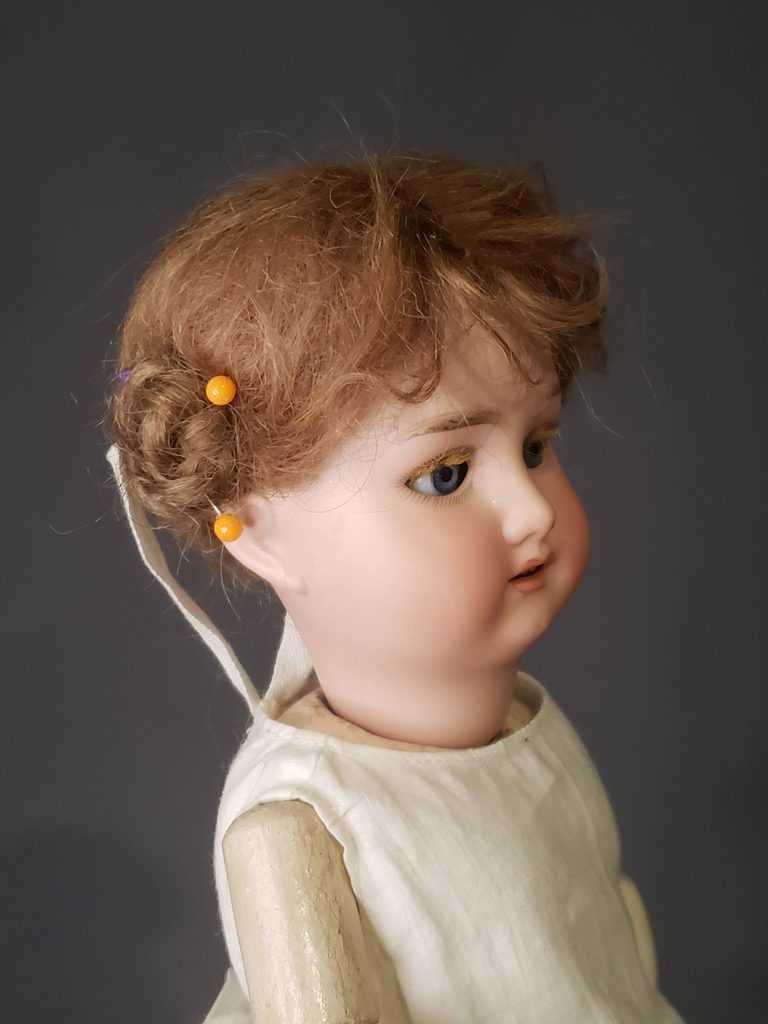
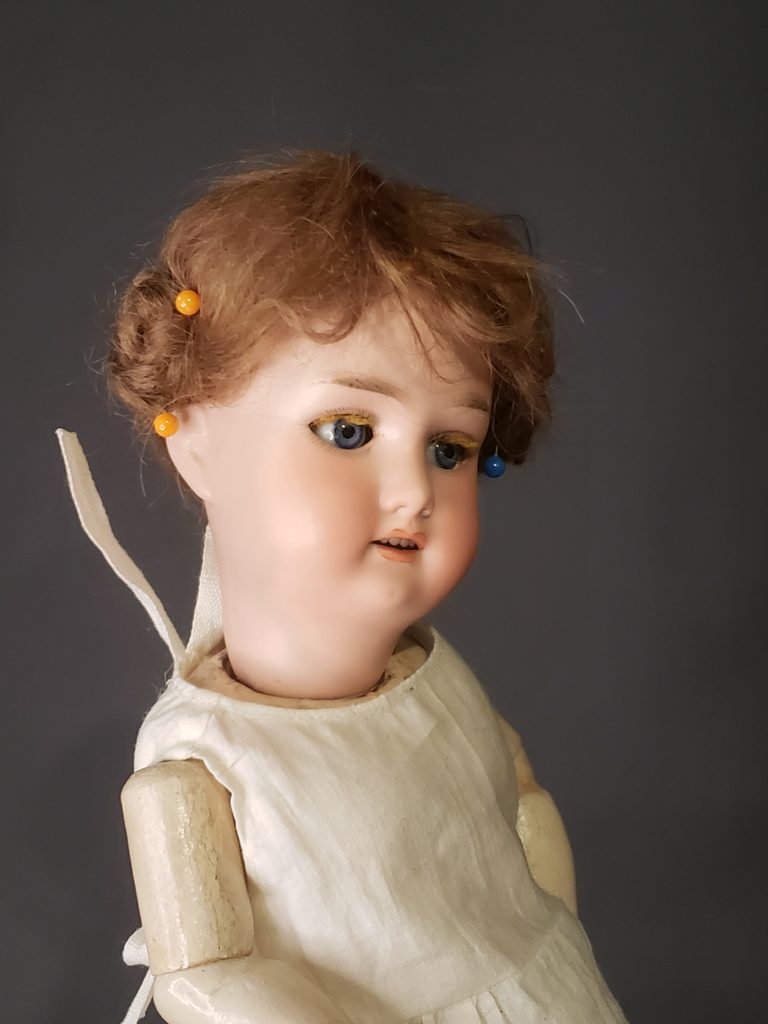
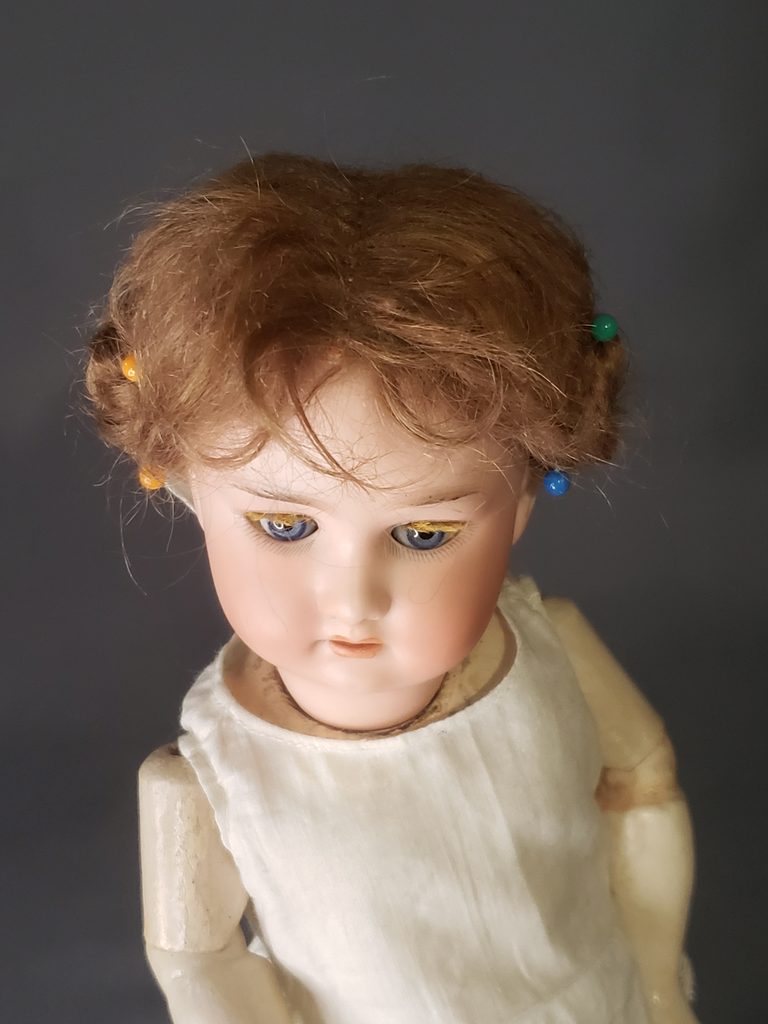
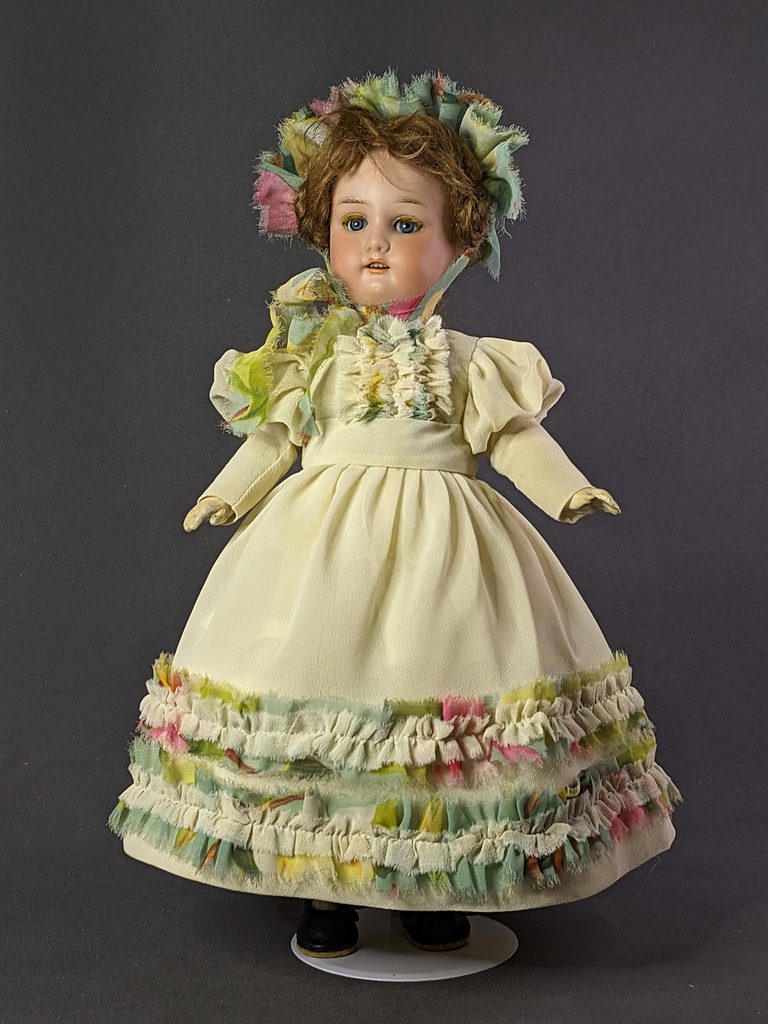
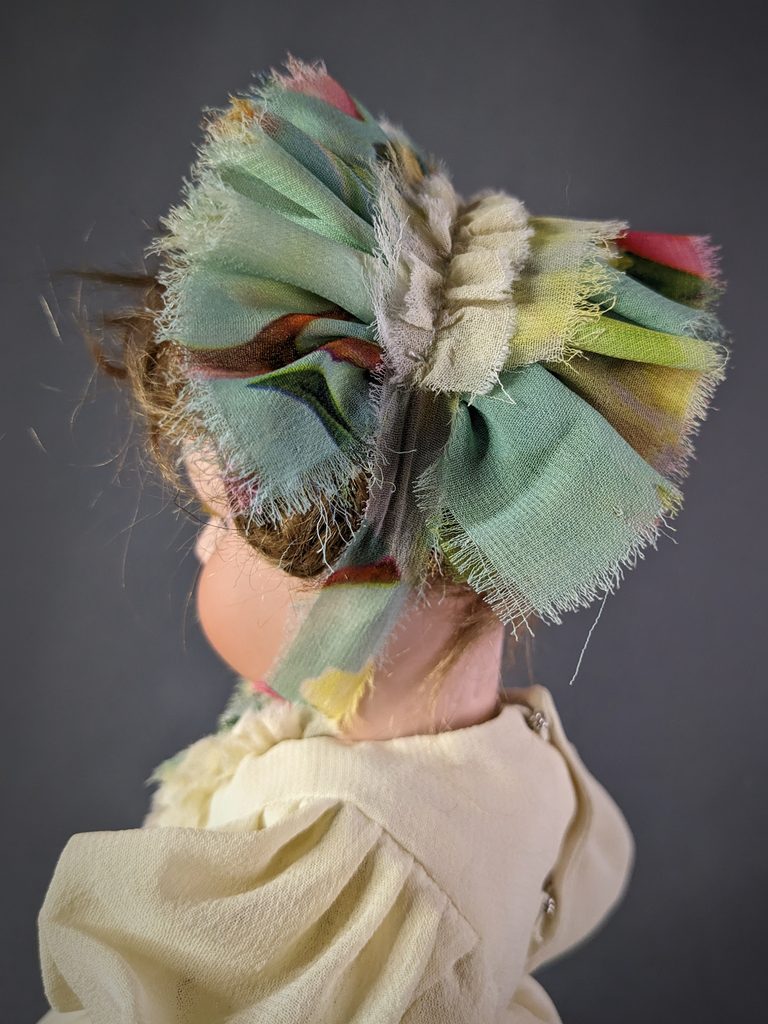
At last, a vintage wedding dress made from silk chiffon found its purpose. I placed a piece of the fabric against our heroine, and she seemed to approve of her new dress. However, she firmly insisted that she also needed a bonnet. After all, how could a century-old beauty go out into society without one?
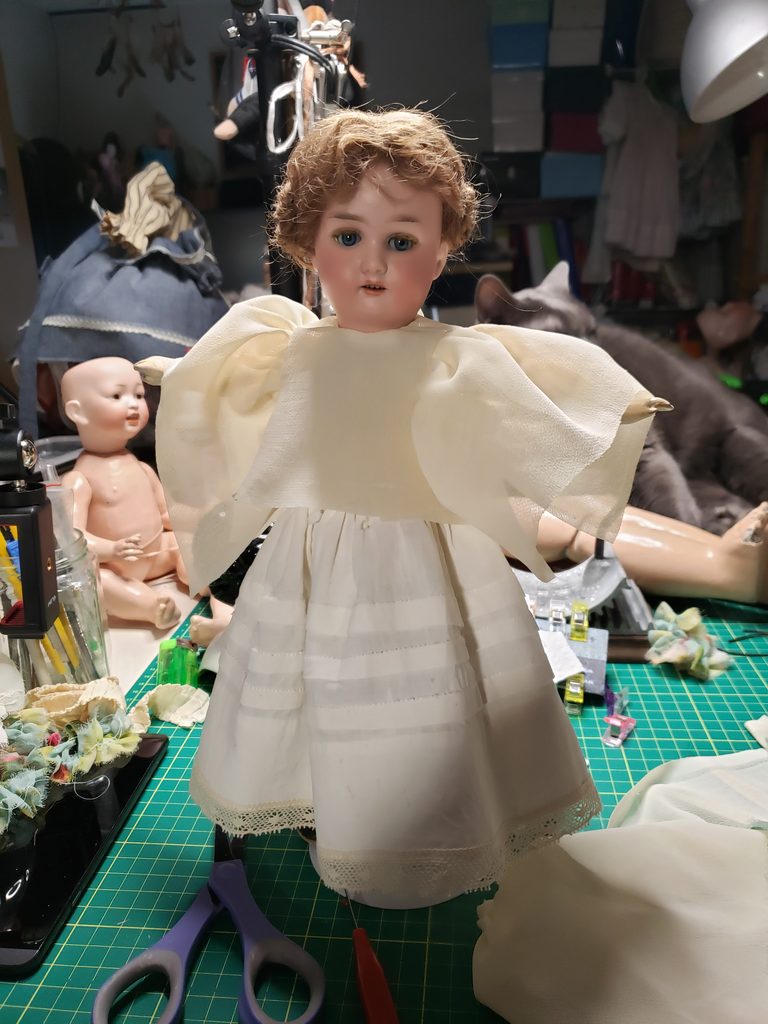
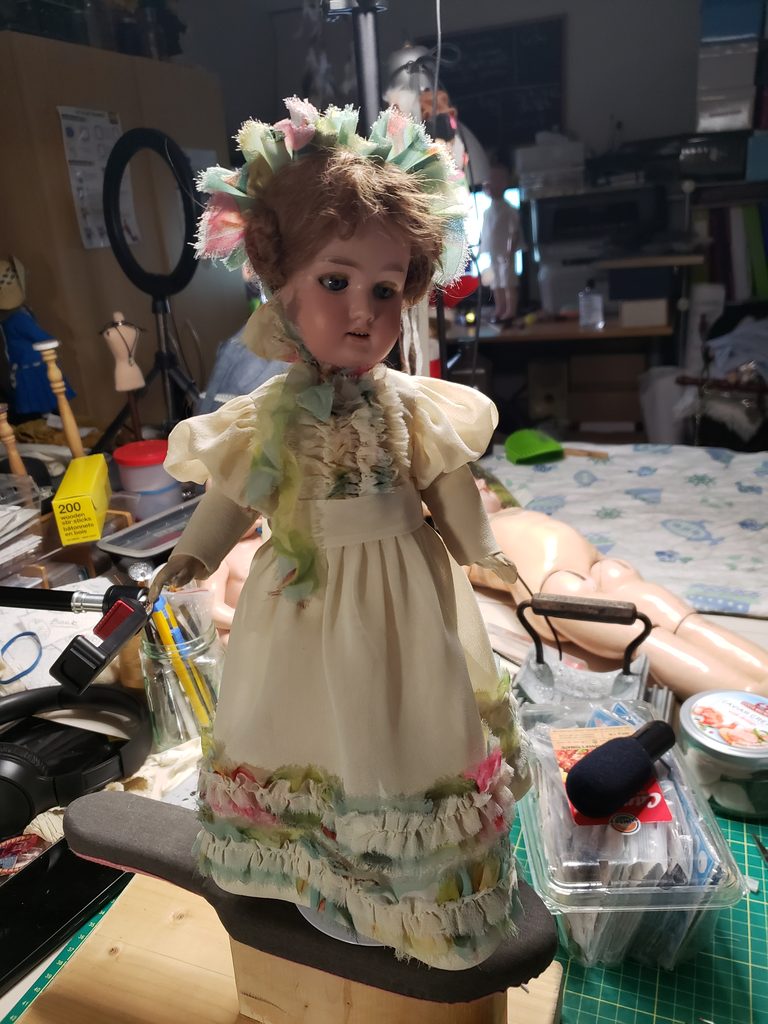
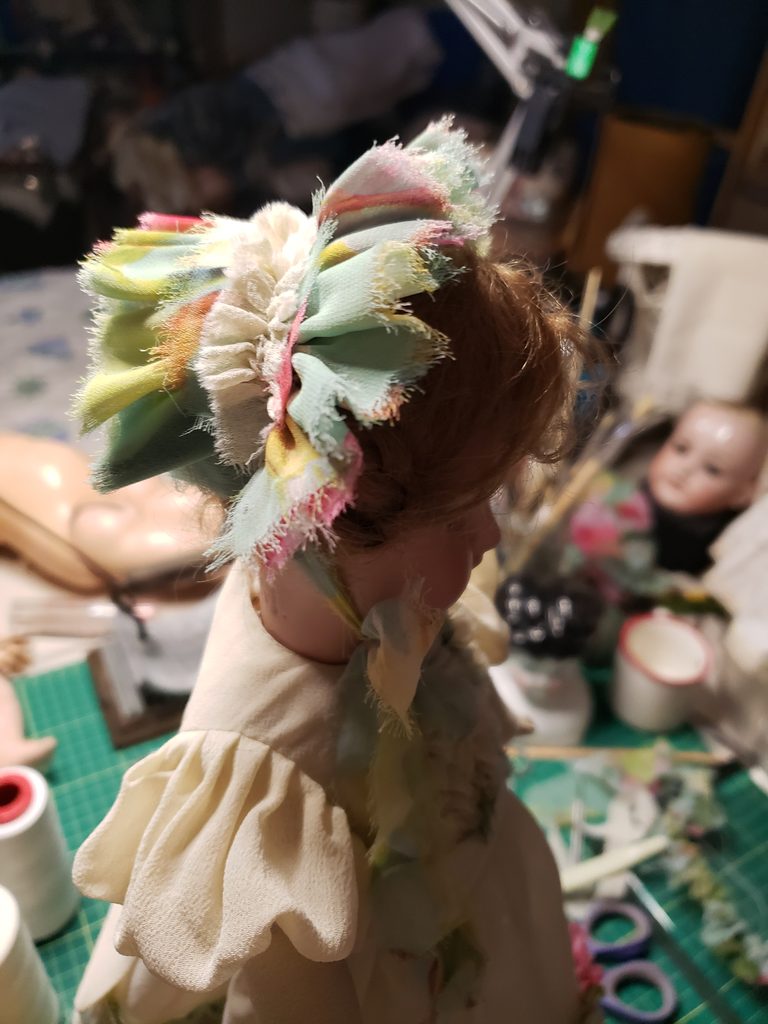
And that is how this restoration project for a small cabinet doll came together.
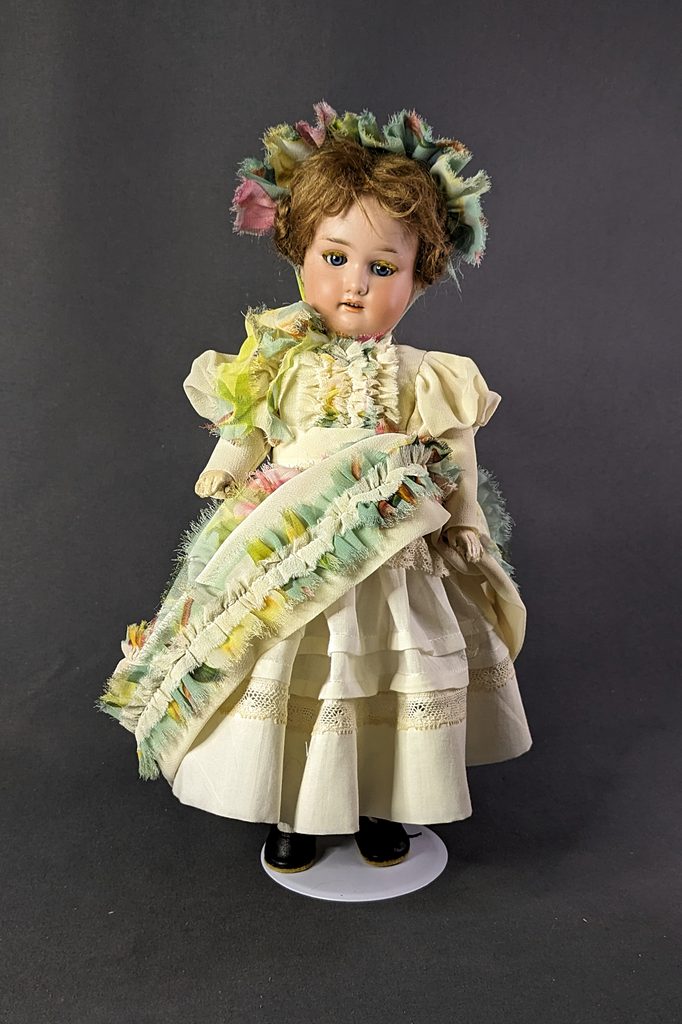
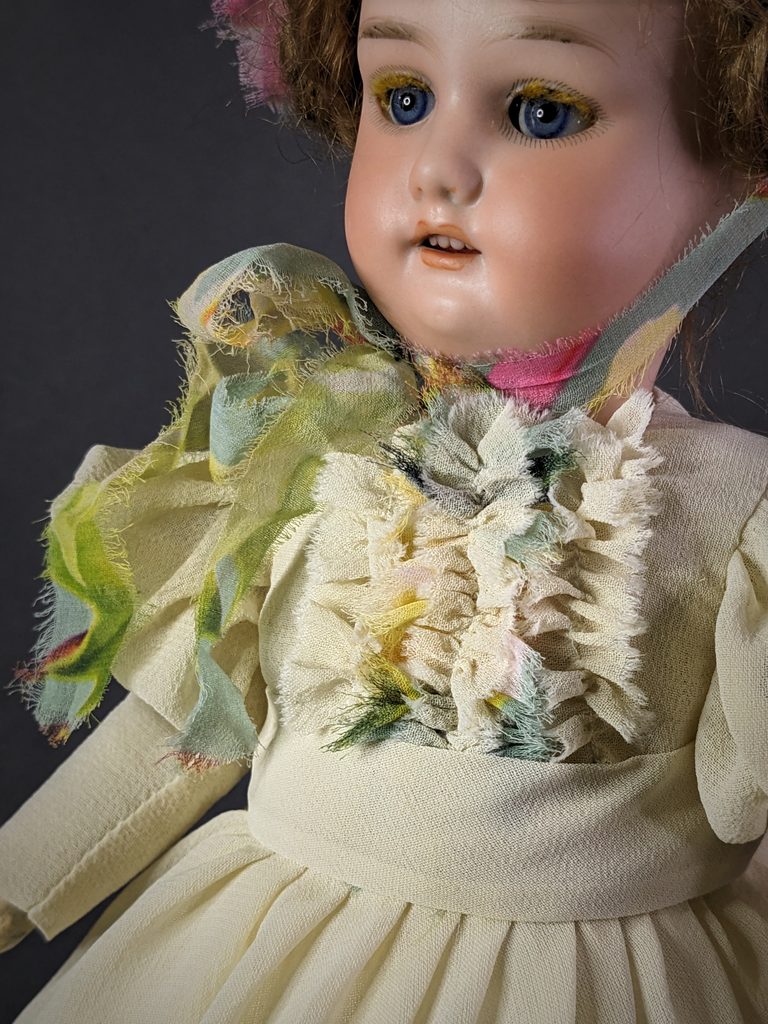
After many fittings and much thought, she received a body that looked more harmonious for her scale. Her porcelain head, carefully cleaned from every side, now rests naturally in the neck opening. Her underwear was adapted from antique examples of doll clothing, with fastenings appropriate to what she might originally have worn.
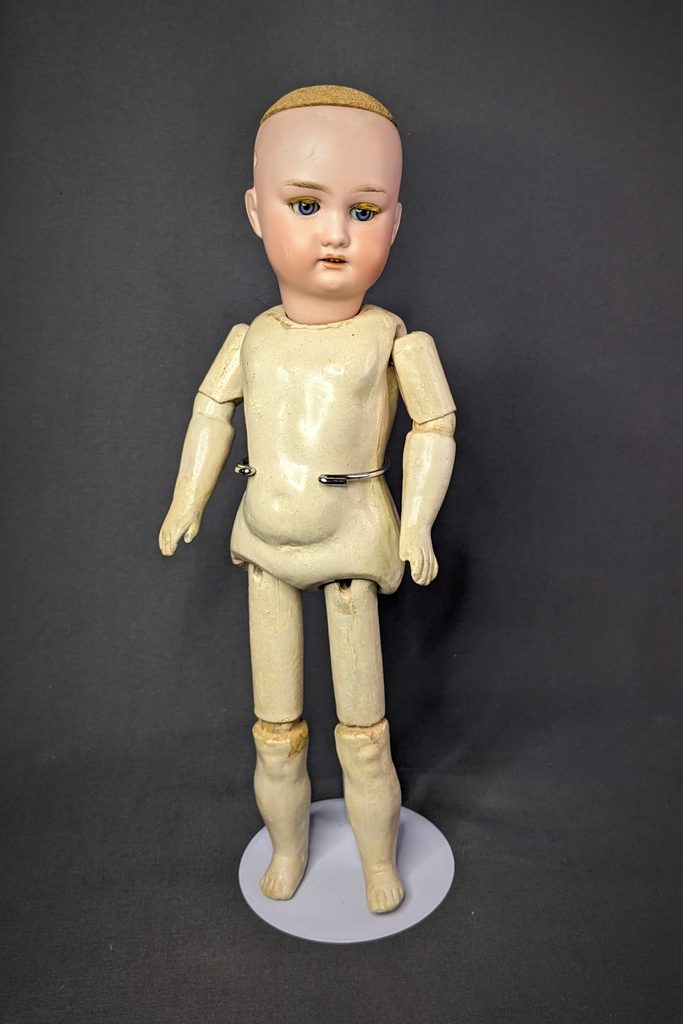
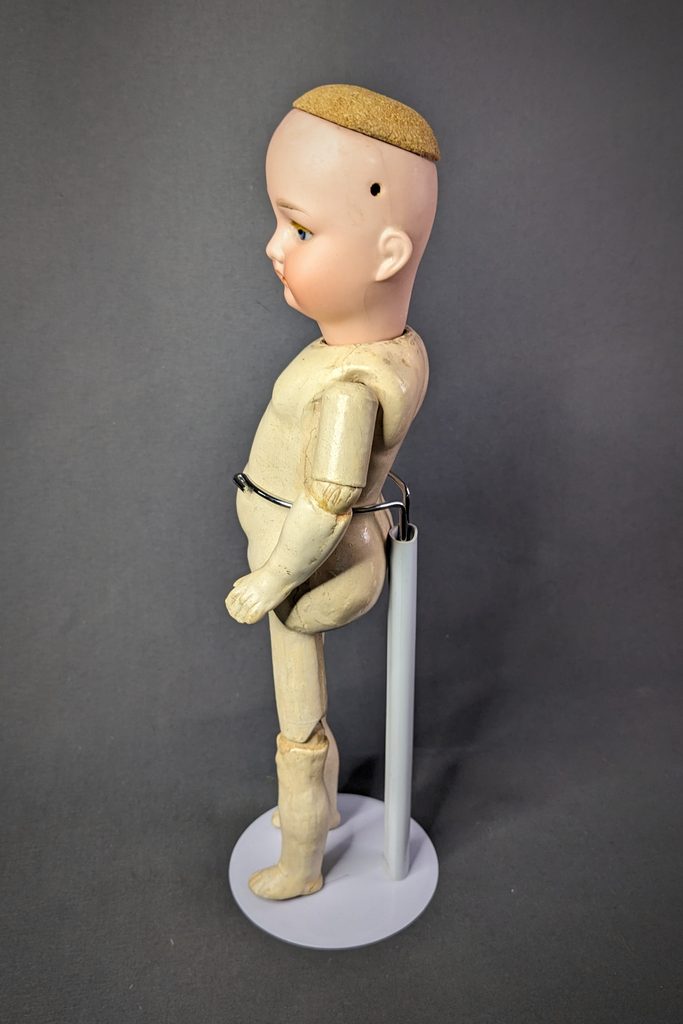
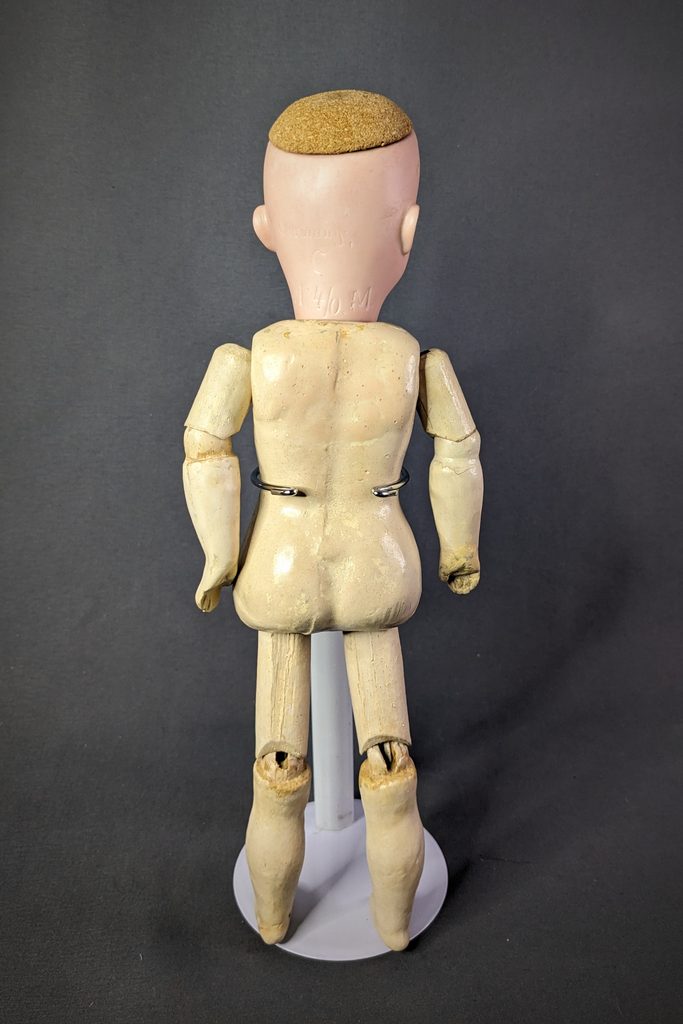
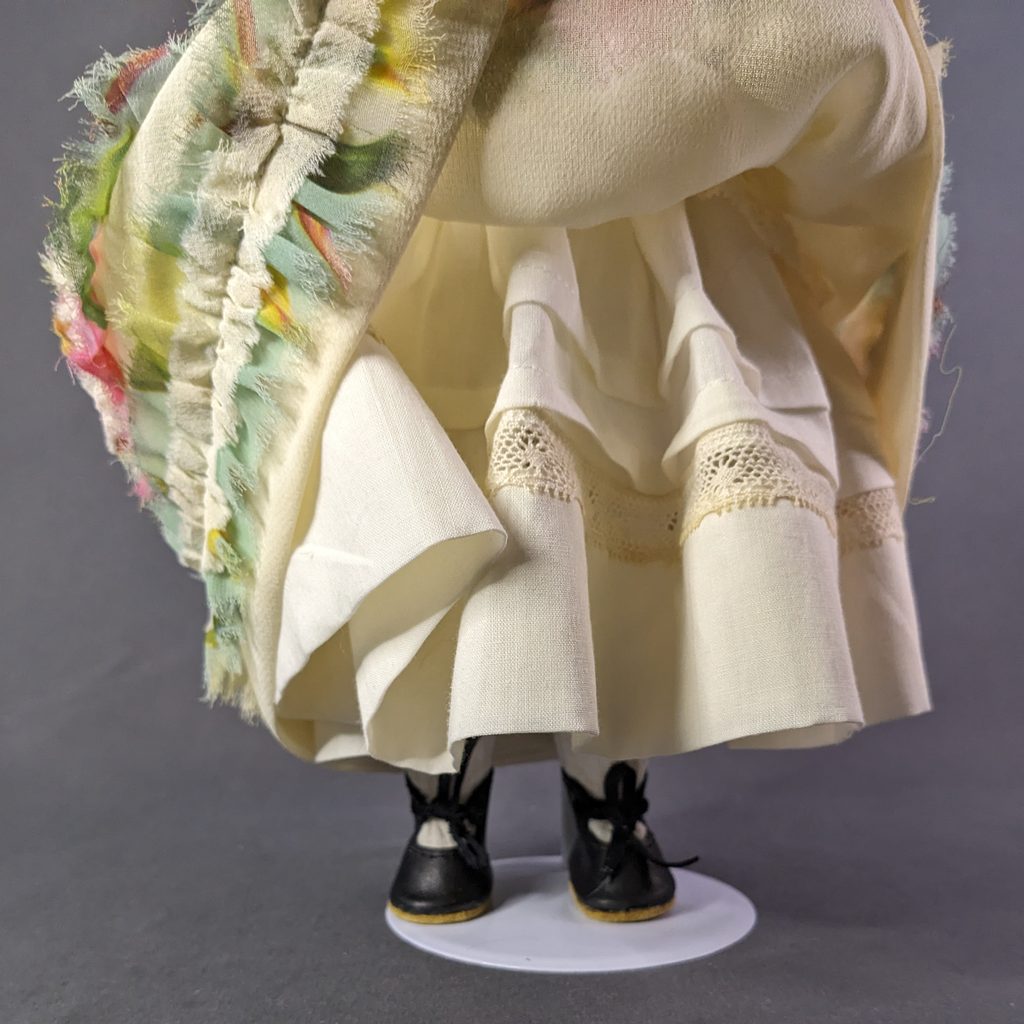
The boots on her feet were made entirely from natural materials, following an antique pattern. A cork pate was made specifically for her head. Now the wig can be held securely in place with pins, while the eye mechanism can be checked at any time without damaging or reglouving the pate. I borrowed this practical idea from French dolls of the same period.
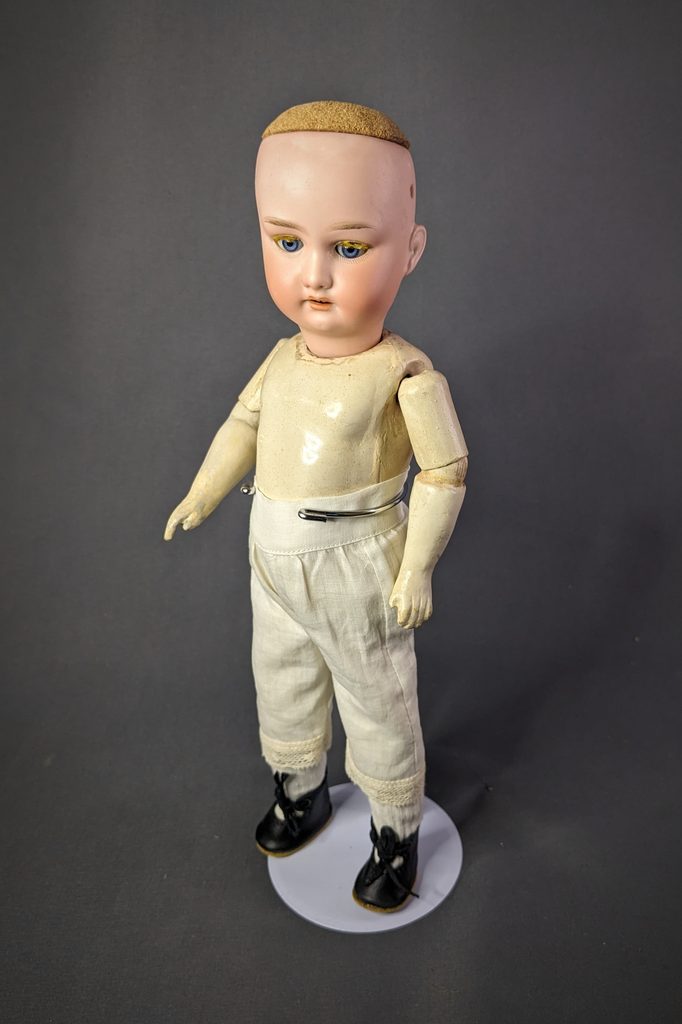
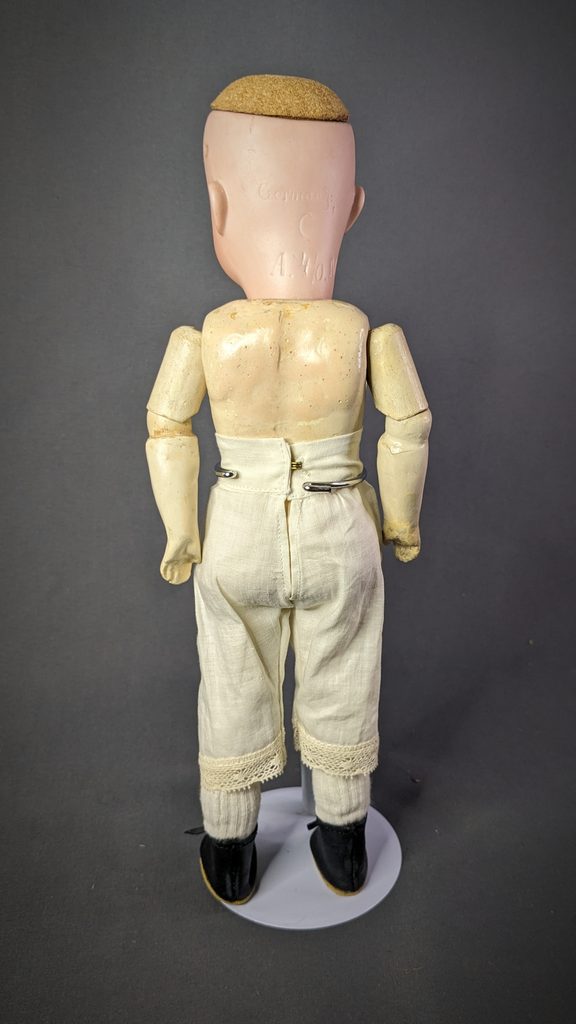
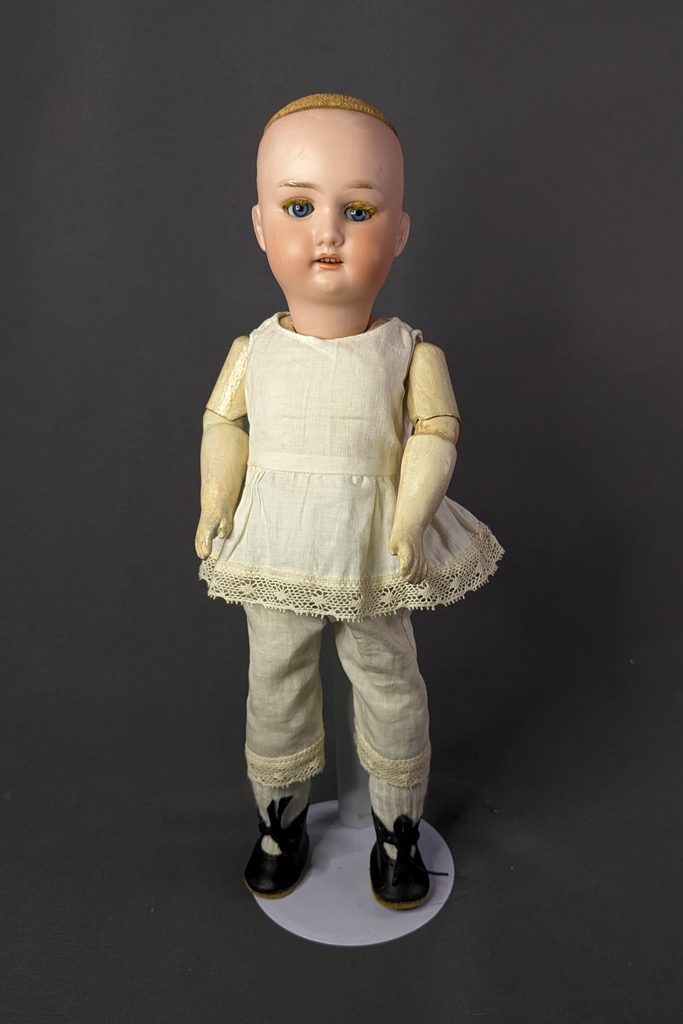
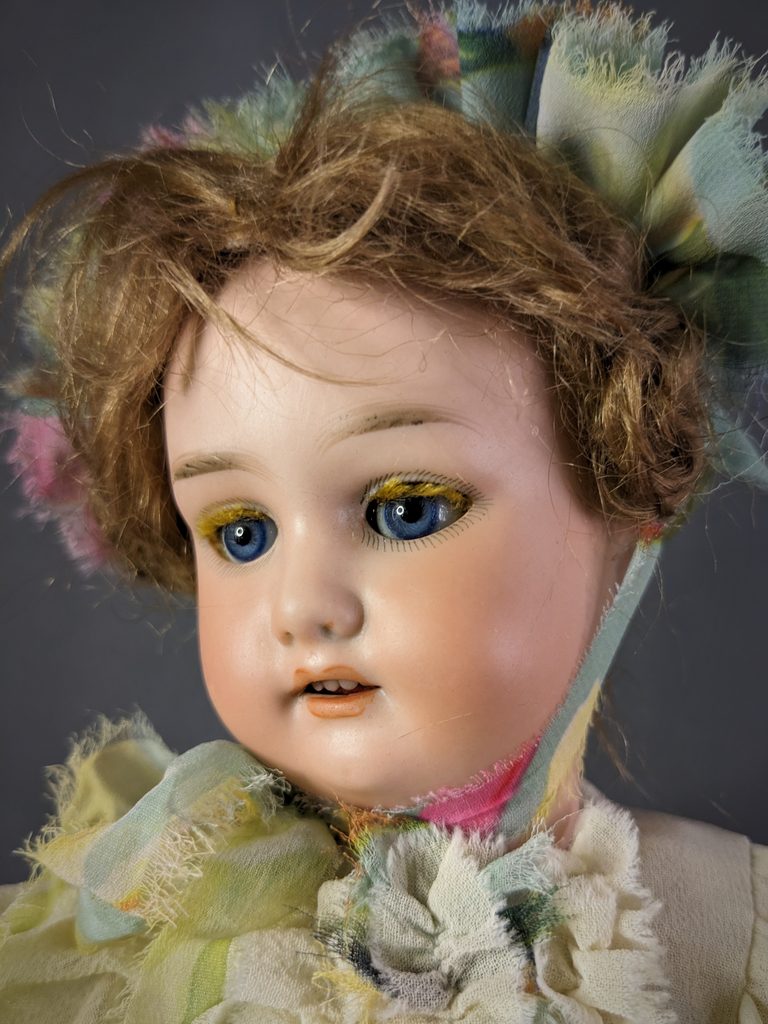
The cleaned and restored 100-year-old mohair wig finally took its proper place. Small strands across doll forehead give her a childlike expression, while the braids lifted at the sides reveal her porcelain cheeks and ears.
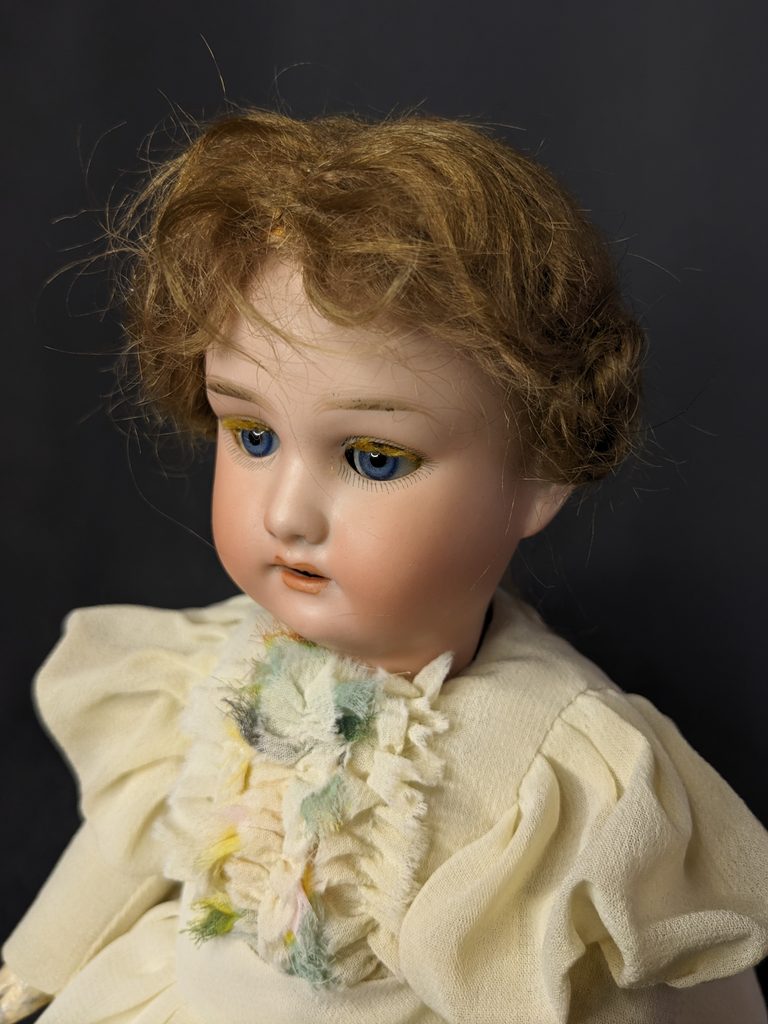
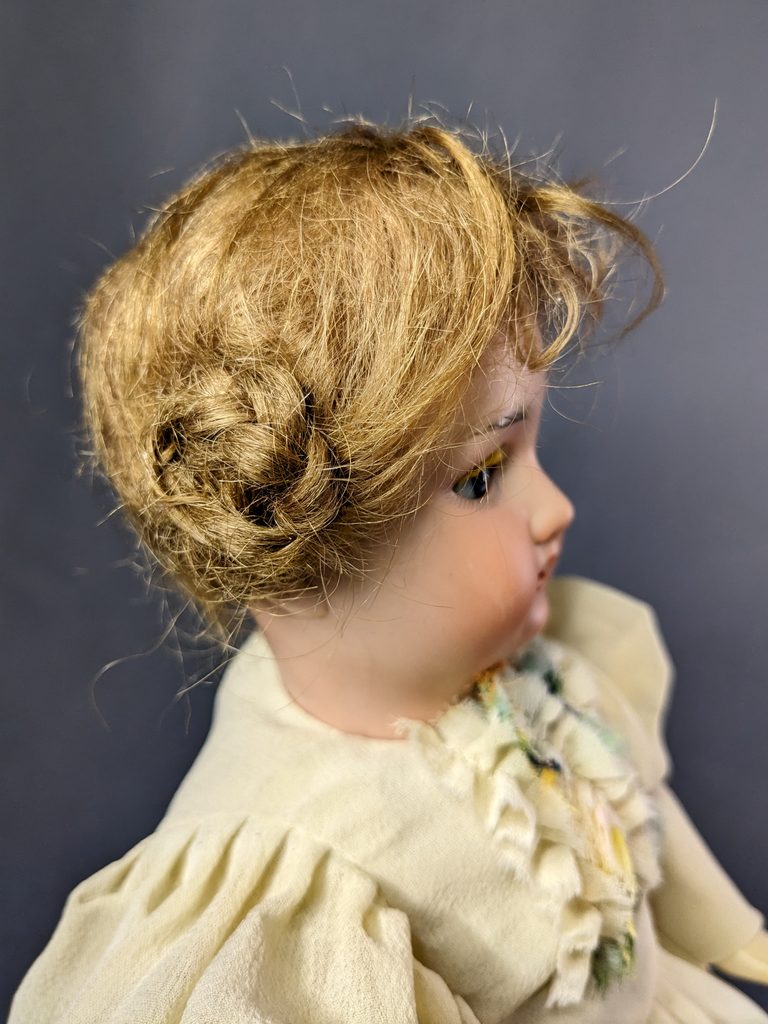
Vivid blue eyes, framed by their original natural mohair lashes, complete new image.
Now she looks dignified and entirely appropriate for the social expectations of the early twentieth century.
Even if the wind were to lift the edge of her dress, she would still look elegant underneath.
I would like to add a small advertising slogan: “Made with love.”
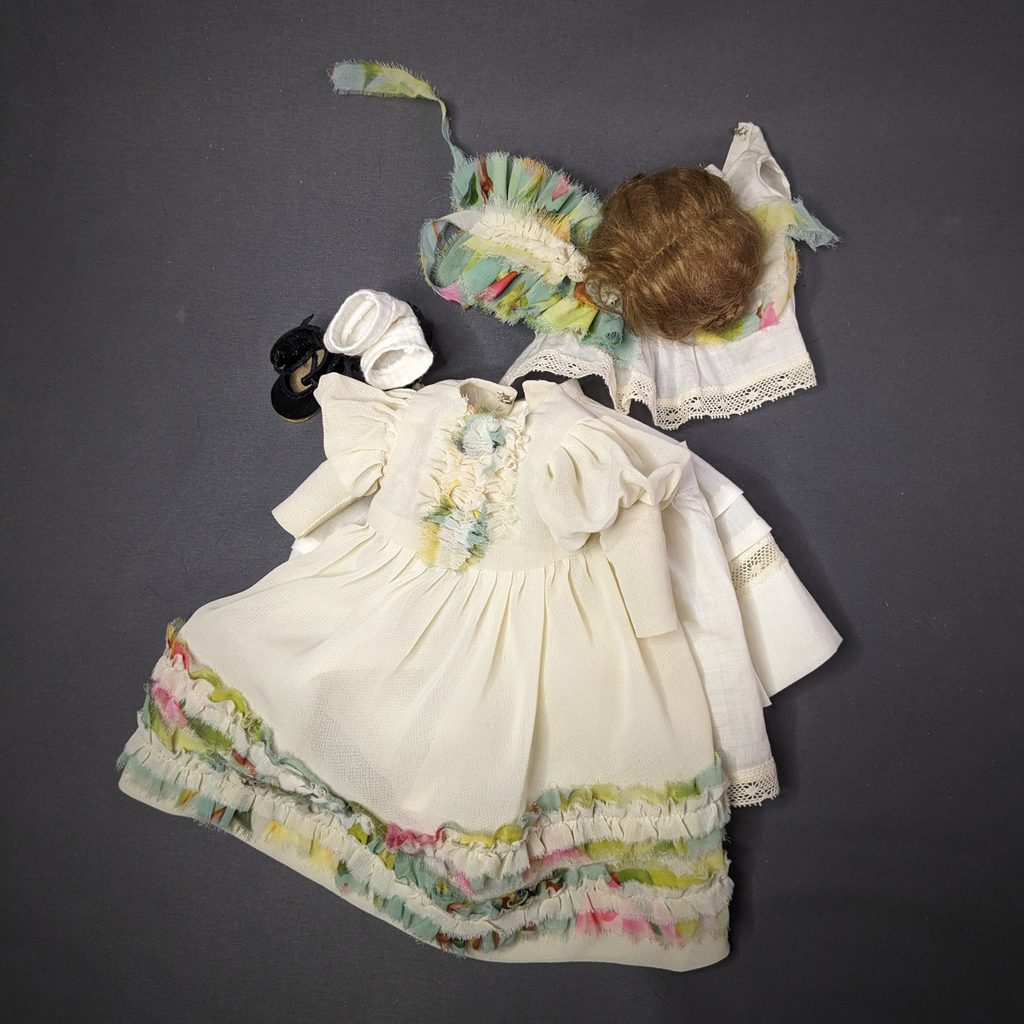
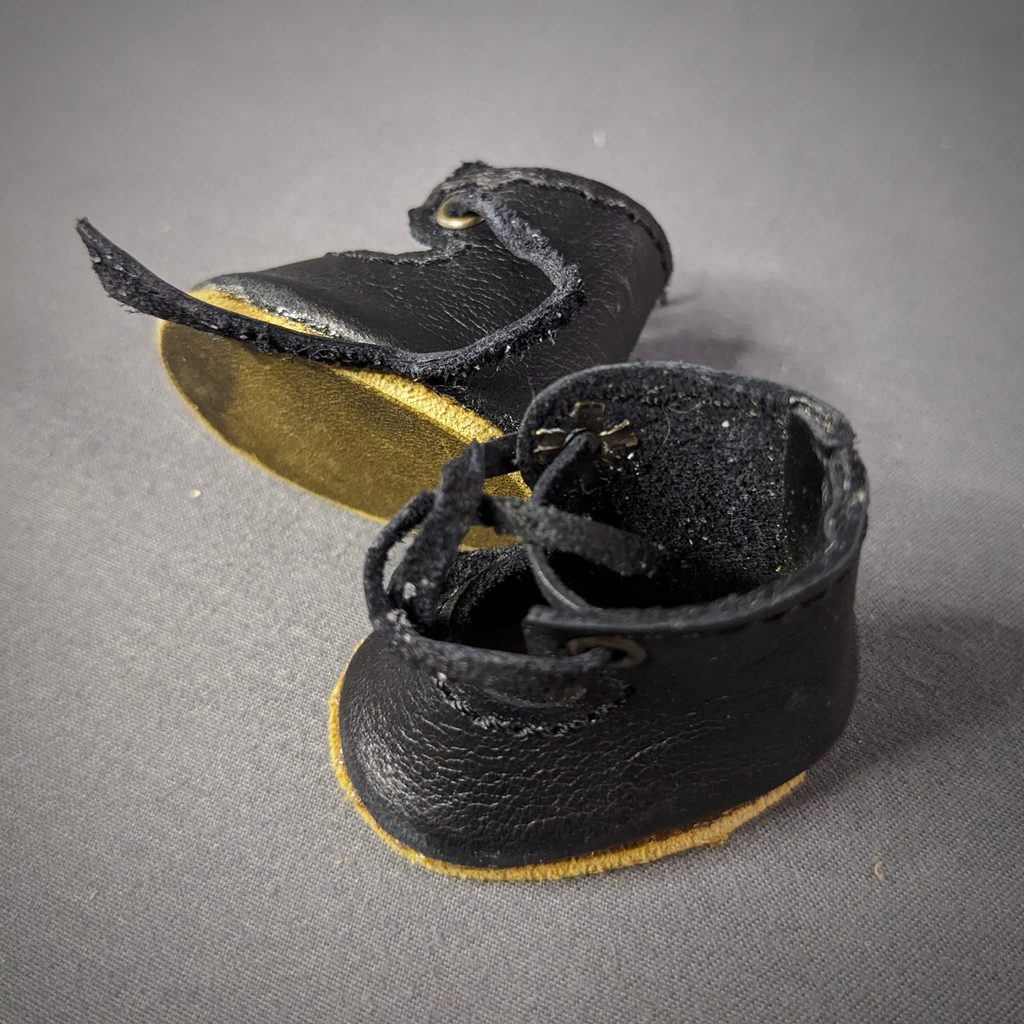
Created from natural materials and with traditional techniques, every part of her costume looks refined both inside and out.
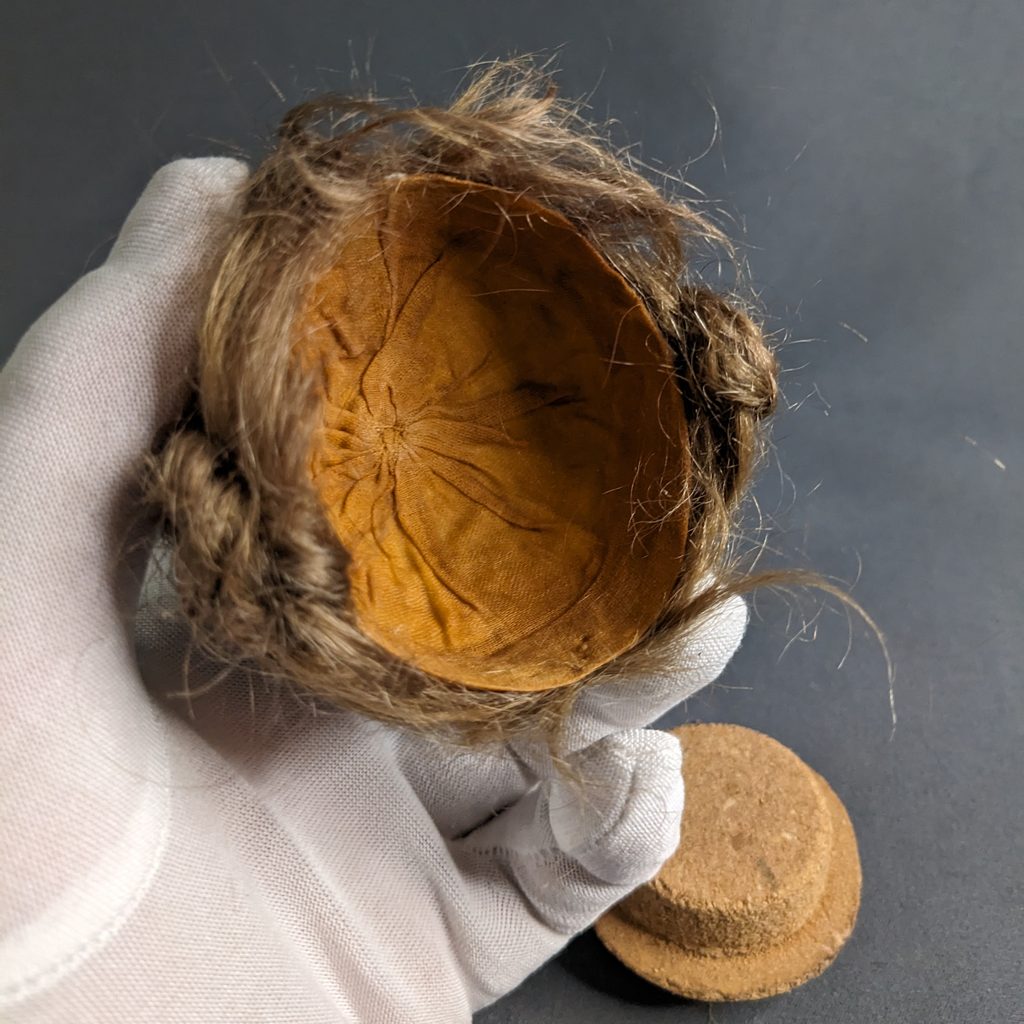
Enjoy your new life, little one. May you travel safely into the next century.
You are welcome to visit my YouTube channel DollsStoriesHospital, where I occasionally publish new videos about doll restorations and transformations.