
Doll-Like: The Child Jesus in 18th-Century Silk at The Met
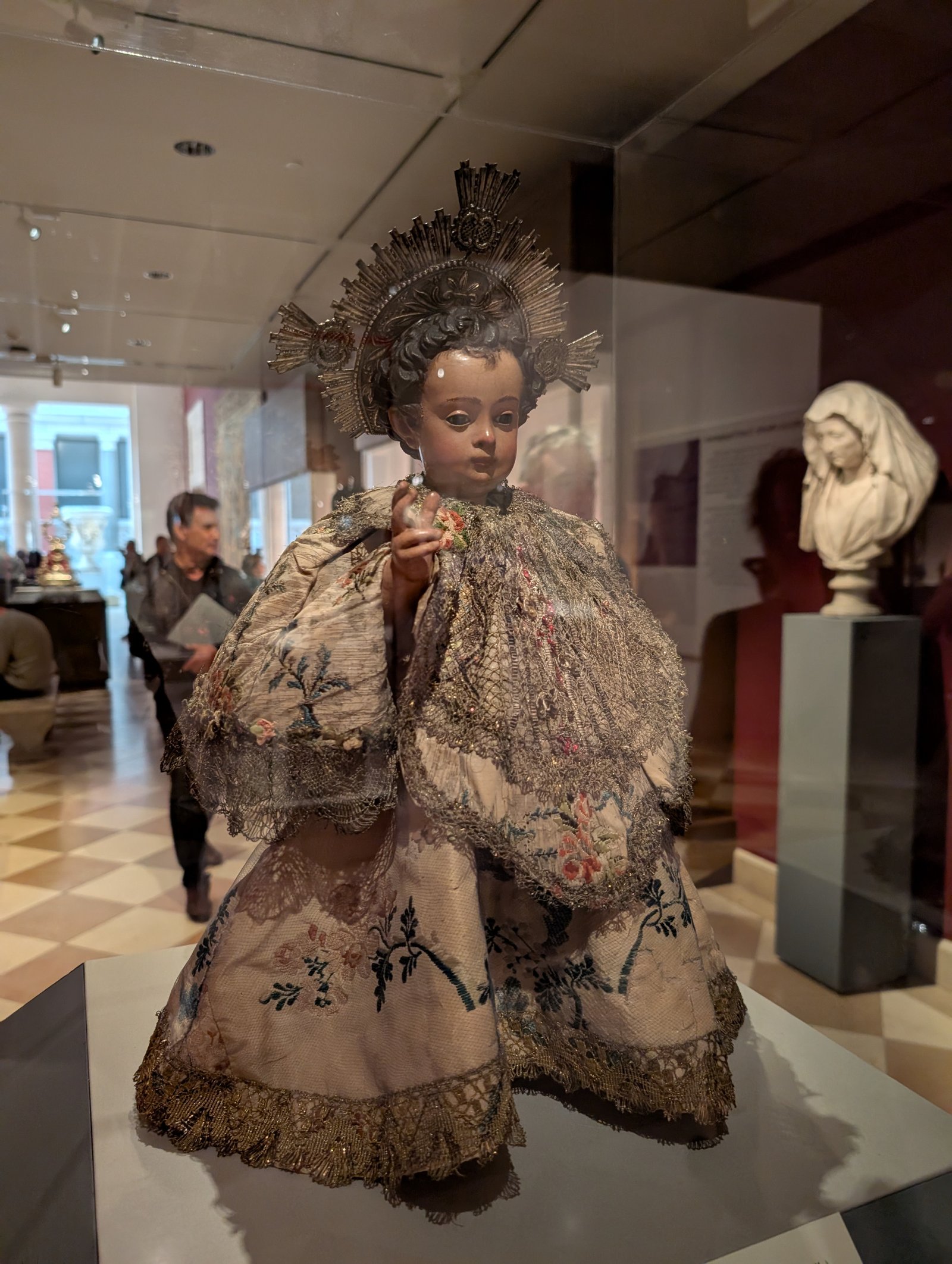
Among museum treasures, there are pieces that instantly pull you in. For me, this tiny figure was just such a find. A delicate child’s face, shining glass eyes, and rich textiles that make you want to examine every detail up close. A doll artisan’s immediate reaction: “It looks just like an antique doll!”
Yet this is no toy, but a sacred sculpture titled The Child Jesus Triumphant, carved by Spanish sculptor Juan de Mesa in Seville around 1625. Standing at 40.6 cm tall (without the halo), its scale is immediately recognizable to anyone who makes doll clothing, even if its original purpose was entirely different.
A Garment from Another Century
The luxurious outfit almost completely covers the figure. Floral patterns on cream silk, metallic lace, and heavy fringe create a grand silhouette. From the back, you can clearly see how the capelet overlays the skirt, beautifully framing every edge.
It is easy to admire the costume and miss a surprising detail in the museum notes: the sculpture and its clothing belong to different centuries!
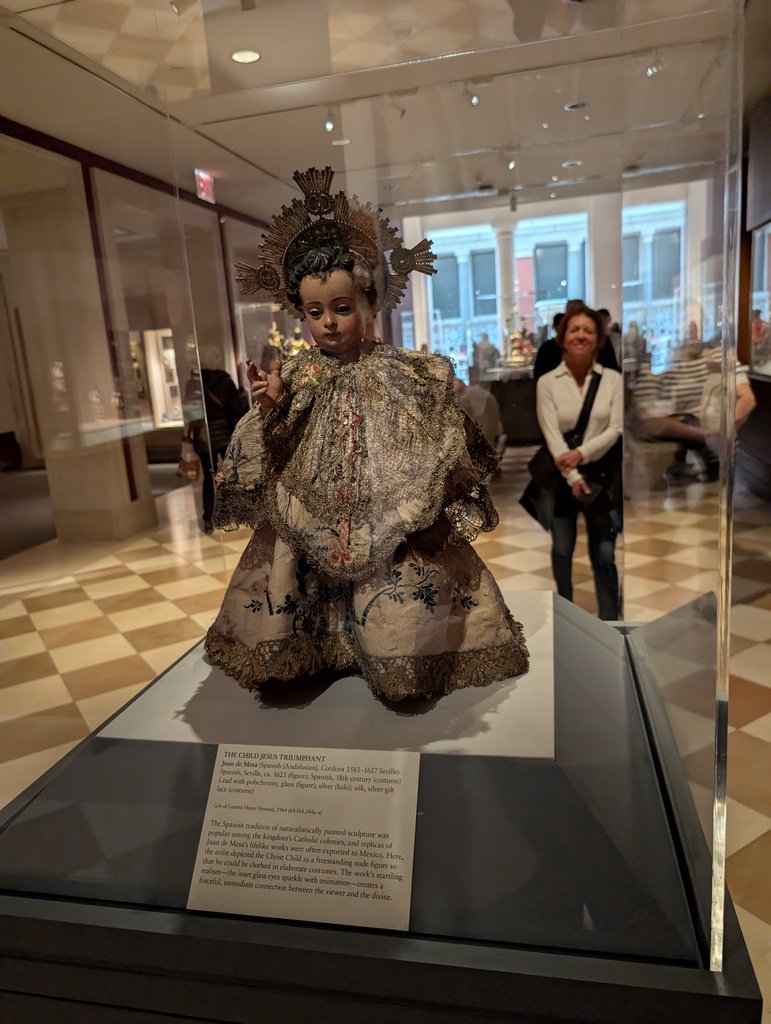
Juan de Mesa (Spanish [Andalusian], Cordova 1583-1627 Seville) Spanish, Seville, ca. 1625 (figure); Spanish, 18th century (costume) Lead with polychromy, glass (figure); silver (halo); silk, silver-gilt lace (costume)
Gift of Loretta Hines Howard, 1964
While the figure was carved around 1625, this Spanish ensemble dates to the 18th century. In The Met’s catalog, the dress is cataloged separately as Dress for a statuette.
Beneath the Silk: Lead and Glass Eyes
The materials beneath the textile are full of surprises:
- The figure is cast in lead, polychromed (painted), and fitted with inset glass eyes.
- The halo is silver, while the costume is crafted from silk and gilded silver lace.
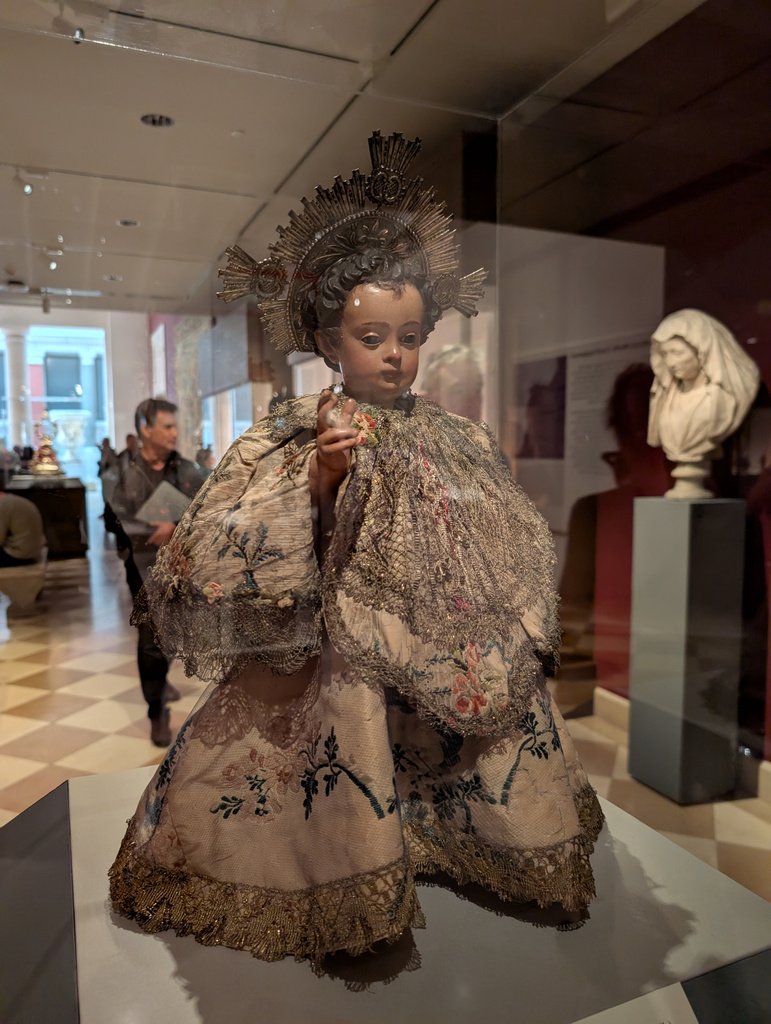
Juan de Mesa sculpted the Infant Jesus as a freestanding nude figure intended to be dressed in rich textiles. This concept of a removable, changeable wardrobe is precisely what bridges this sacred artifact with the doll world.
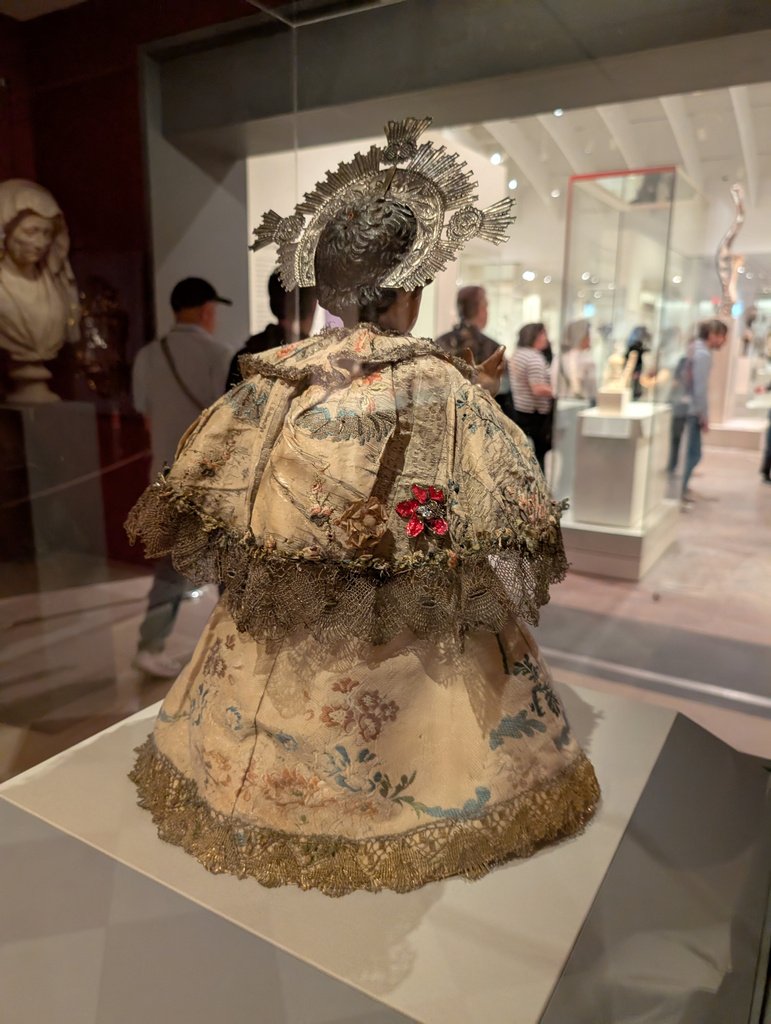
Juan de Mesa (Spanish [Andalusian], Cordova 1583-1627 Seville) Spanish, Seville, ca. 1625 (figure); Spanish, 18th century (costume) Lead with polychromy, glass (figure); silver (halo); silk, silver-gilt lace (costume)
Gift of Loretta Hines Howard, 1964
The glass eyes add an astonishing sense of life. In dollmaking, glass eyes are a familiar hallmark of antique dolls, but here they serve a spiritual purpose, making the sacred image emotionally intimate and realistic to the observer.
What I Look at as a Doll Clothes Maker
- Lace Scale: For a 40 cm figure (roughly 1:4 scale / SD size), the gilded lace features a tight, miniature motif that doesn’t overwhelm the small shoulders.
- Textile Weight: 18th-century silk brocade holds a soft yet structured fold. In doll scale, silk jacquard with a micro-pattern offers a similar historical look.
- Capelet Cut: A short flared capelet is an ideal pattern for small figures, cleverly concealing shoulder joints while adding regal volume.
Object Details
- Title: The Child Jesus Triumphant
- Sculptor & Date: Juan de Mesa (Seville, ca. 1625)
- Garment Date: Spain, 18th century
- Medium: Polychromed lead, glass eyes, silver halo, silk, gilded silver lace
- Credit Line: Gift of Loretta Hines Howard, 1964
- Accession Number: 64.164.244a–e (clothing: 64.164.244c)
- Department: The Metropolitan Museum of Art, New York
Sources & Further Reading
- The Child Jesus Triumphant (ca. 1625) — Juan de Mesa, The Metropolitan Museum of Art, Accession Number: 64.164.244a, b.
- Dress for a statuette (18th century) — Spanish costume for Infant Jesus figure, The Metropolitan Museum of Art, Accession Number: 64.164.244c.
- Sacred Sculpture & Vestments — The Metropolitan Museum of Art collection documentation on Spanish Baroque polychrome lead sculpture, glass eyes, and devotional dressing traditions.