
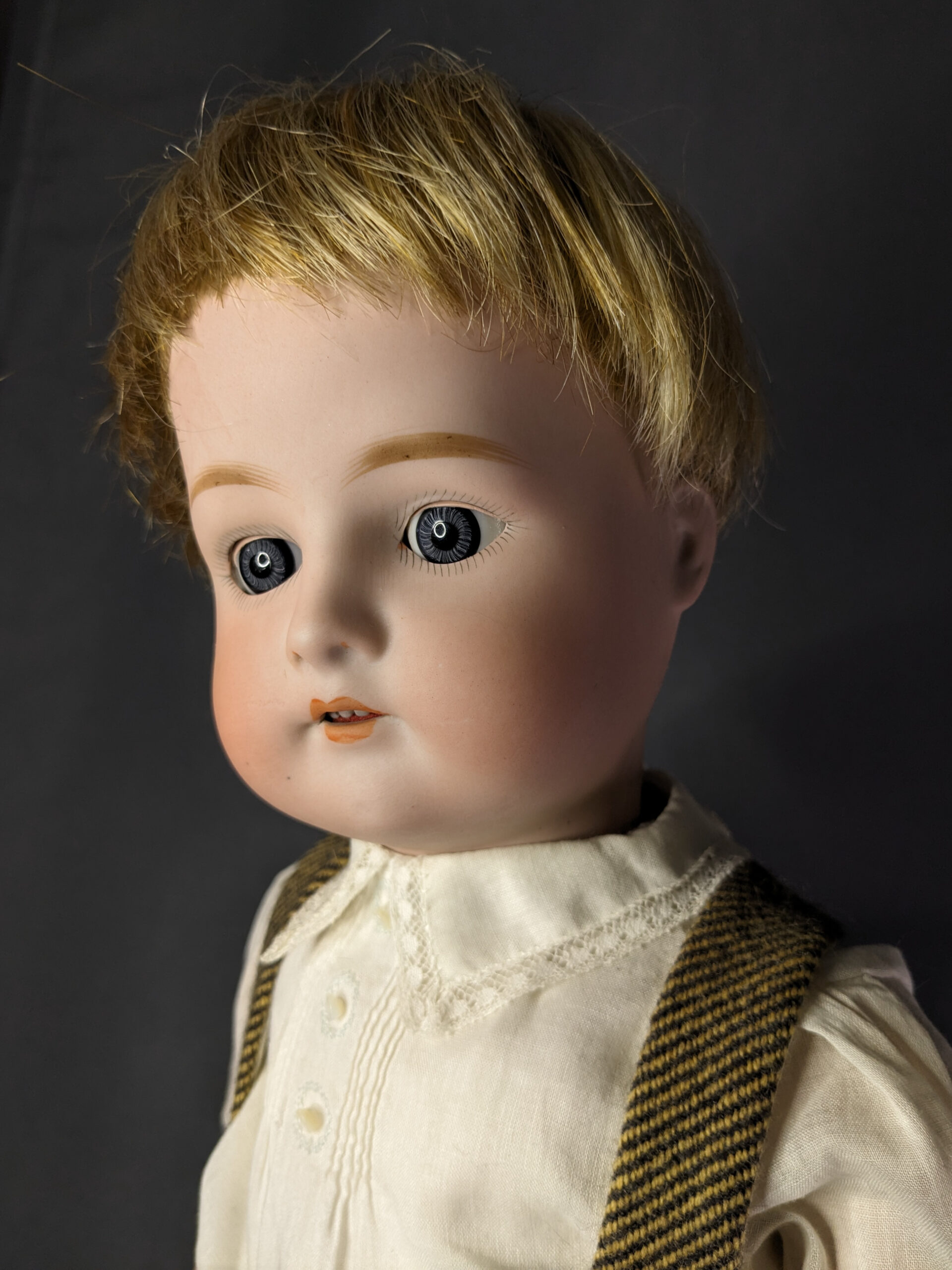
CUNO & OTTO DRESSEL DOLLS
or: Cuno & Otto Dressel Factory in Sonneberg, Germany
The Dressel family toy and doll business in Sonneberg, Germany has a long history, passed from one generation to the next, and by 1873 the company was known as the Cuno & Otto Dressel Factory.
Cuno Dressel died in 1893, and Otto continued the business with his sons Otto Jr. and Ernst.
The production process of creating a doll at the Cuno & Otto Dressel Factory in the early 20th century (Sonneberg, Germany)
«Der Werdegang einer Puppe (1917), Deutsche Lichtbild-Gesellschaft. Digitised by Bundesarchiv / Deutsches Filminstitut (EFG 1914)»
Brothers Cuno and Otto Dressel were at least the fifth generation of the family in the toy business when they took ownership of the company in 1873. They were the wealthiest and most famous citizens of Sonnenburg, and the company had an enormous headquarters in a former ducal palace. Their sample rooms showcased more than 20,000 dolls and toys.
The trademark Holz-Masse was granted to the Dressels in 1875. The English translation is “wooden composition.” The mark was used on heads as well as bodies.


Dressel purchased bisque doll heads from noted manufacturers such as Simon & Halbig, Ernst Heubach, Gebrüder Heubach, Limbach, Armand Marseille, and Schoenau & Hoffmeister, they were also supplied by other small doll factories and home workers. Dressel’s largest American client was Butler Brothers.
Dressel expanded to three factories; dolls were produced in Sonneberg, metal toys in Nürnberg, and wood toys in Grunhainichen, Germany.


Over the years Cuno & Otto Dressel produced dolls of bisque, celluloid, china, composition, hard paste, papier mache, wax or wood; Täuflinge or baby, child, lady, and portrait dolls.
The company very actively registered design patents for its dolls. One of these, in 1897, was for a doll jointed with metal springs instead of an elastic cord. In 1901, they patented mechanisms for dolls that could walk, move, and dance.

Bisque flapper lady, 1469 C.O.D., by Cuno and Otto Dressel, Germany 
German Bisque Flapper Lady, 1469, by Cuno and Otto Dressel 1800/2500 
Cuno & Otto Dressel 1469 Bisque Socket Head Lady 
German bisque flapper lady, 1469 C&O d Germany 2, by Cuno & Otto Dressel in a stylish costume 
Cuno Otto Dressel 1469 flapper doll
The Dressels had a huge export business and put a lot of effort into developing dolls that would be light in weight. Butler Brothers were their biggest American customer.


Otto Jr. and Ernst became sole owners of the company with the passing of Otto Sr. in 1908. The firm registered the trademarks Bambina in 1909, and Poppy, for soft stuffed dolls, in 1912.

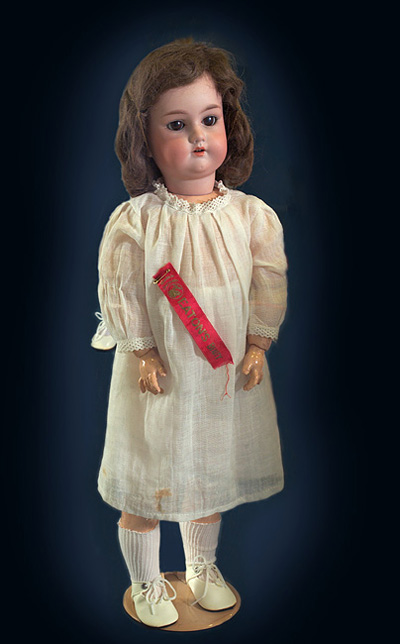


Otto Jr. retired in 1914. That same year, a massive fire destroyed the entire company complex, but they quickly rebuilt and opened several new branches as well, in Grünhainichen, Nuremberg, and Berlin. The firm continued with a succession of family members in leadership positions, until World War II.
Antique Cuno & Otto Dressel Bisque Doll, Mold 1912-4 (restored at Doll Stories Hospital)
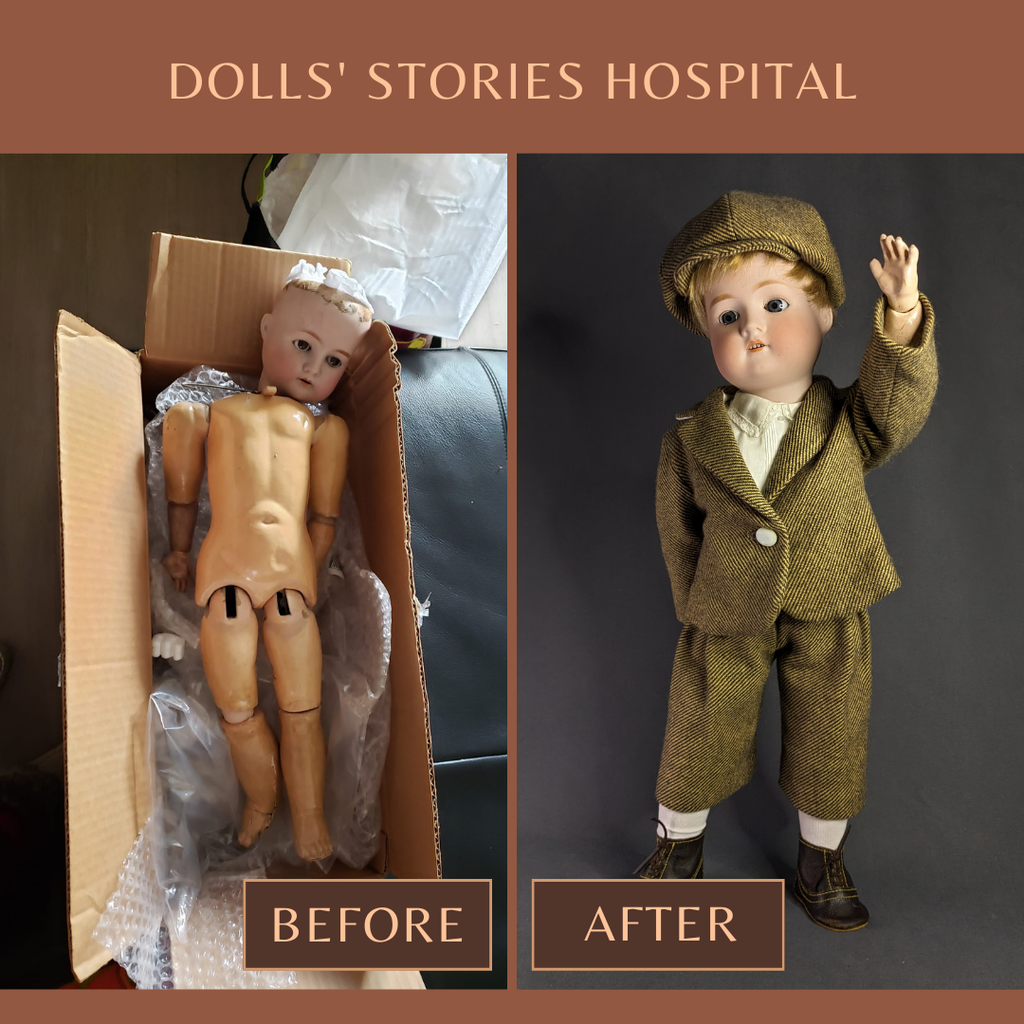
The doll was completely restored at Doll Stories Hospital. She was thoroughly cleaned; the elastic cords were replaced; stabilized and restored composite body; installed restored sleeping eye mechanism.
After restoration, the doll is structurally stable, complete, and ready for careful display. The work was done using historically appropriate techniques and natural materials selected to complement the doll’s early 20th century provenance.
A significant addition to a serious collection that will be enjoyed and cared for by future generations.
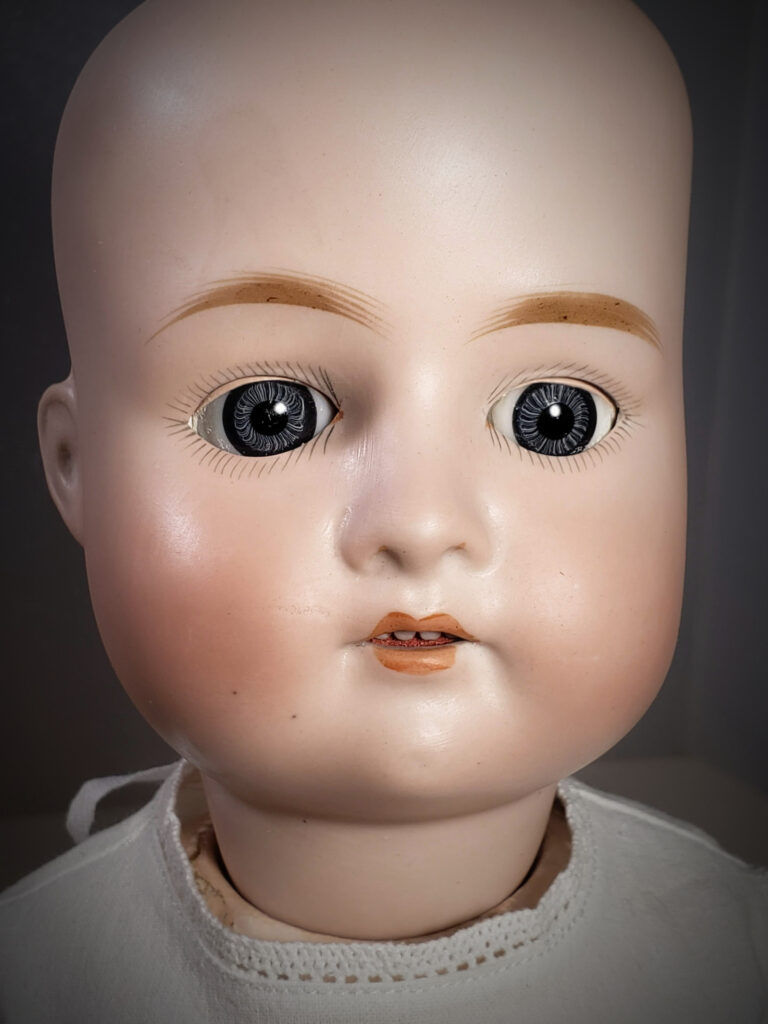
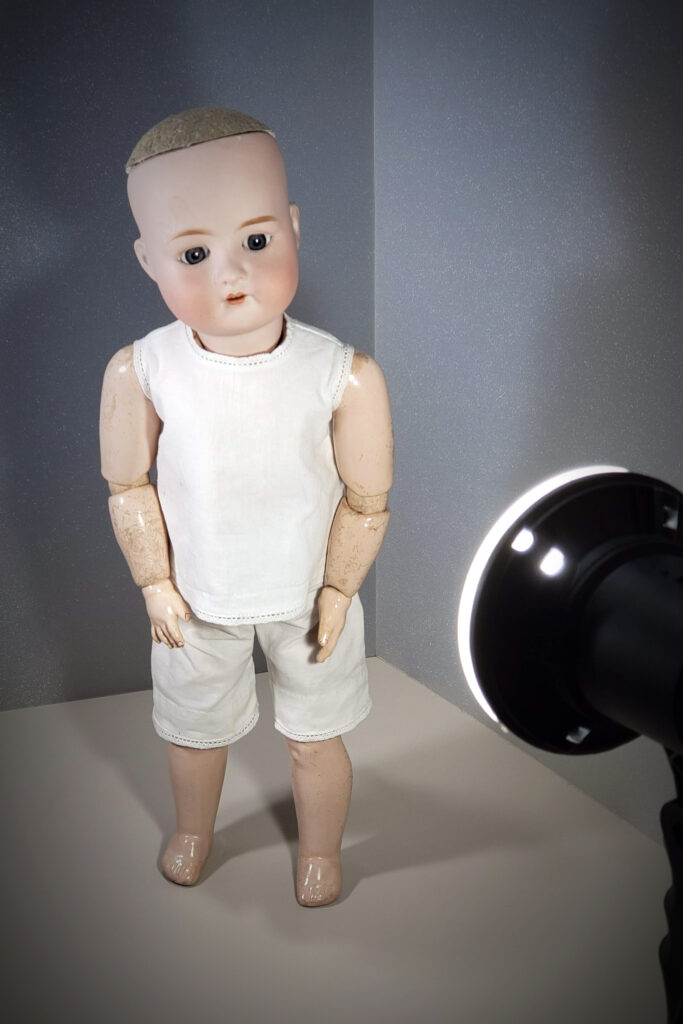
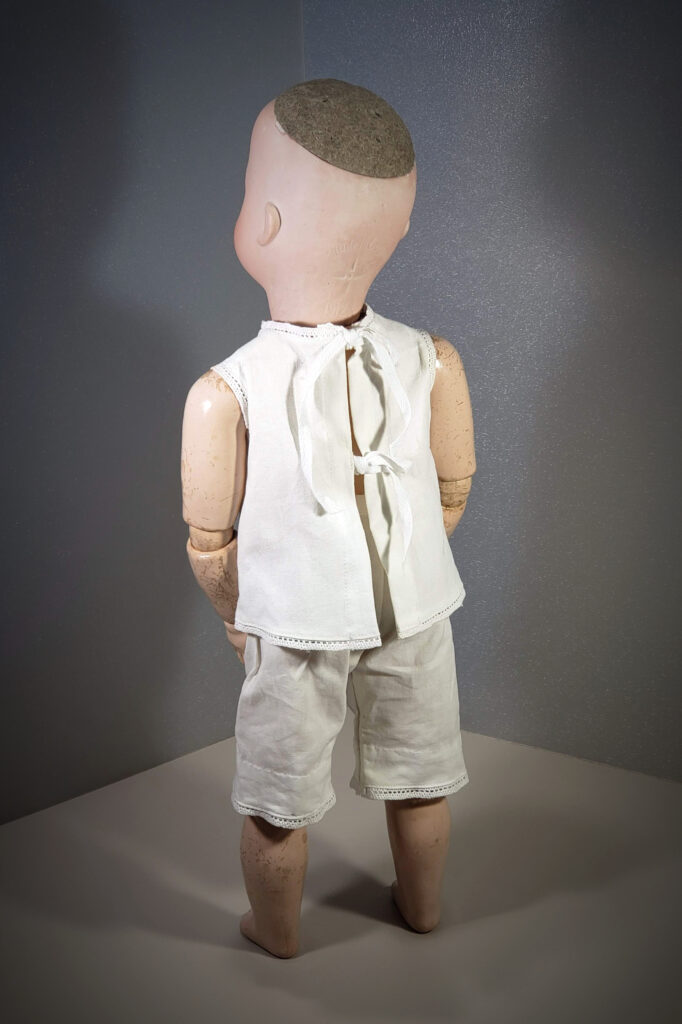
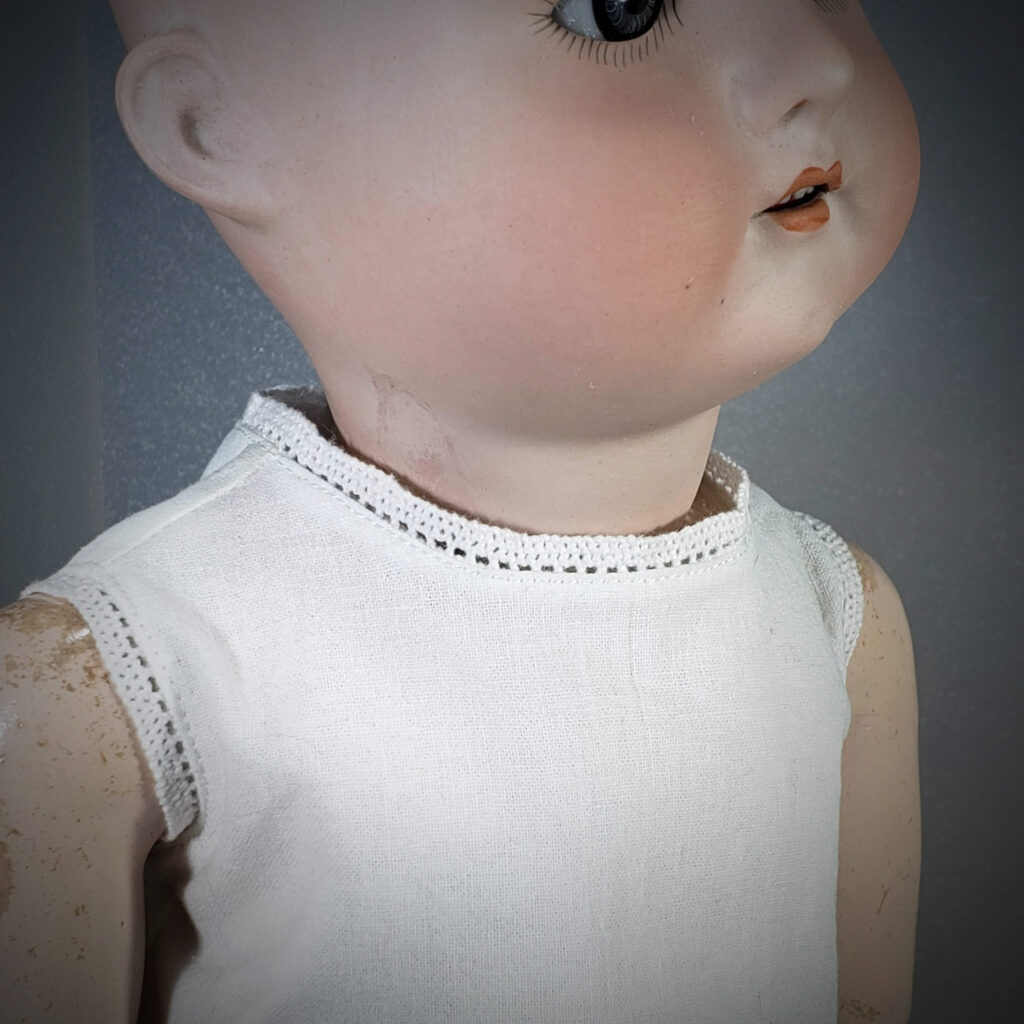
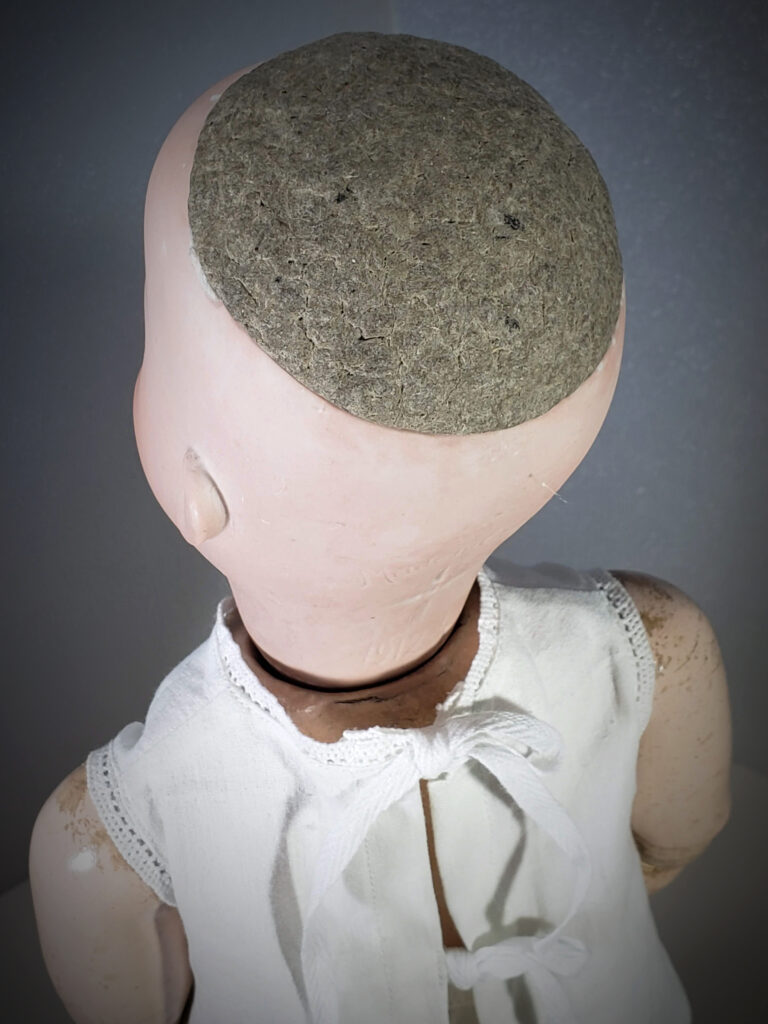
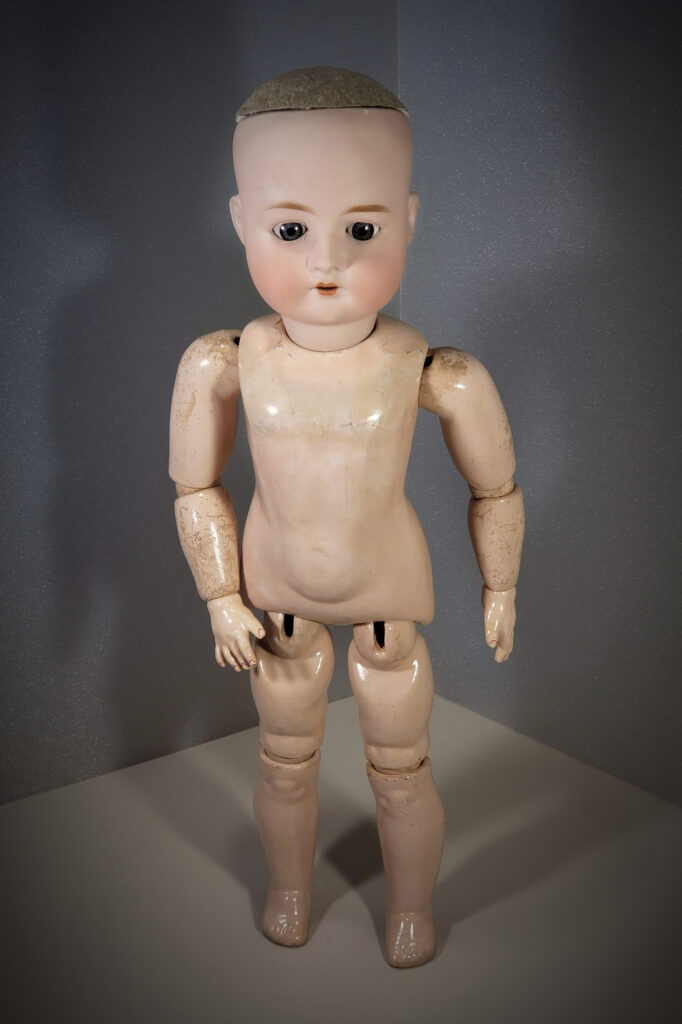
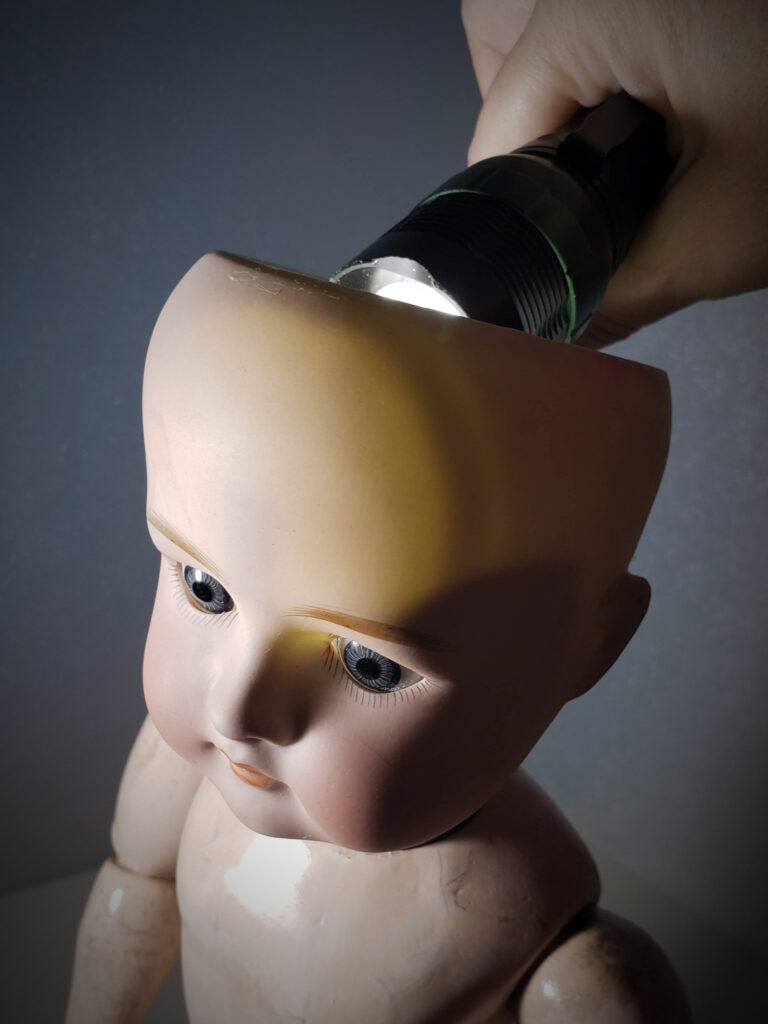
The bisque head is uncracked. The composite body retains visible signs of age typical of a doll of this period and is finished with a natural varnish.
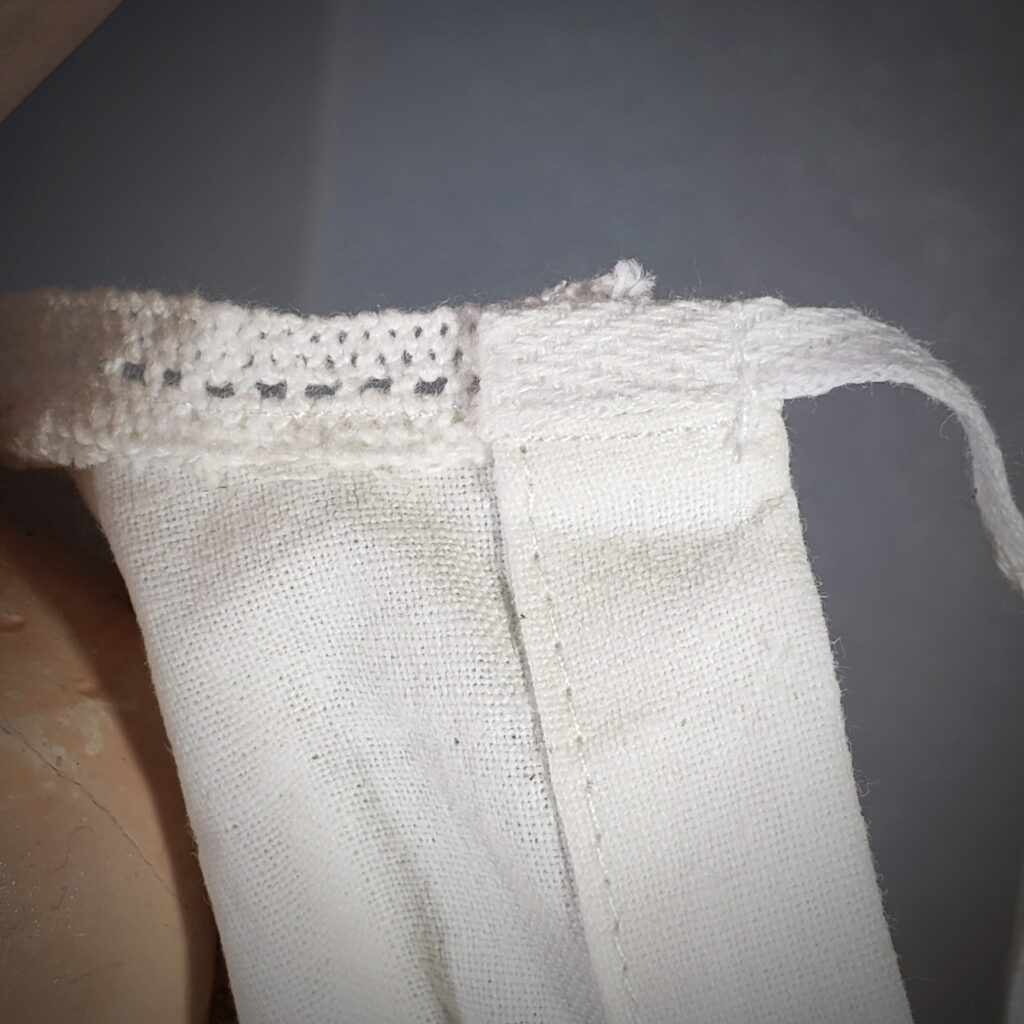
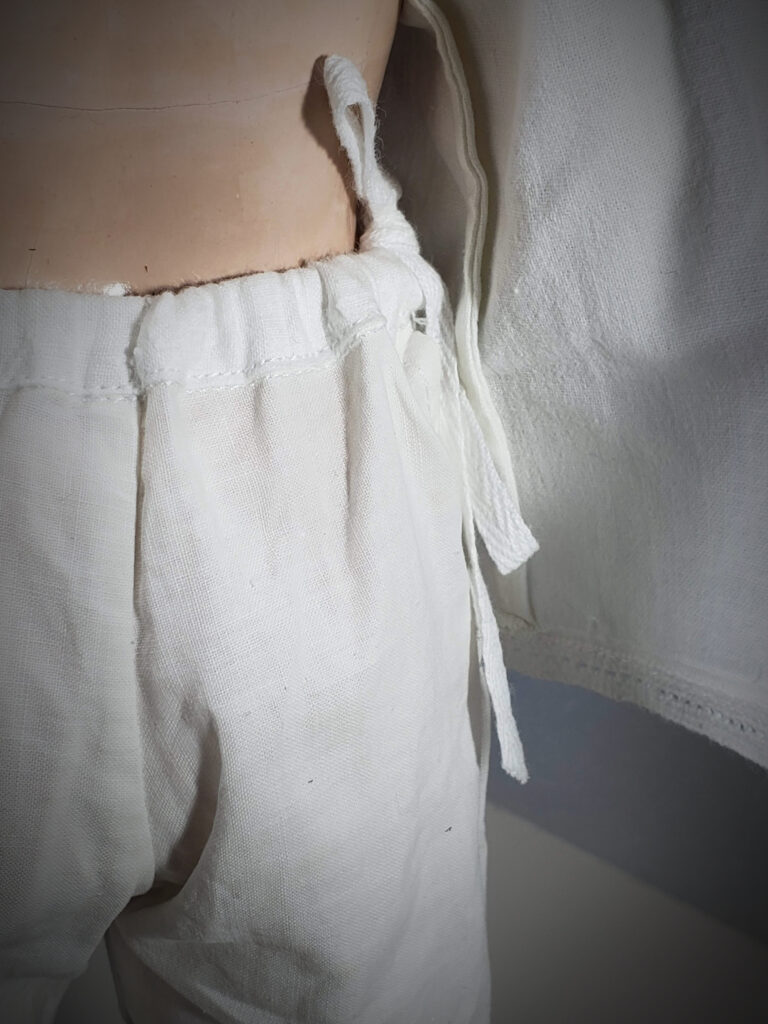
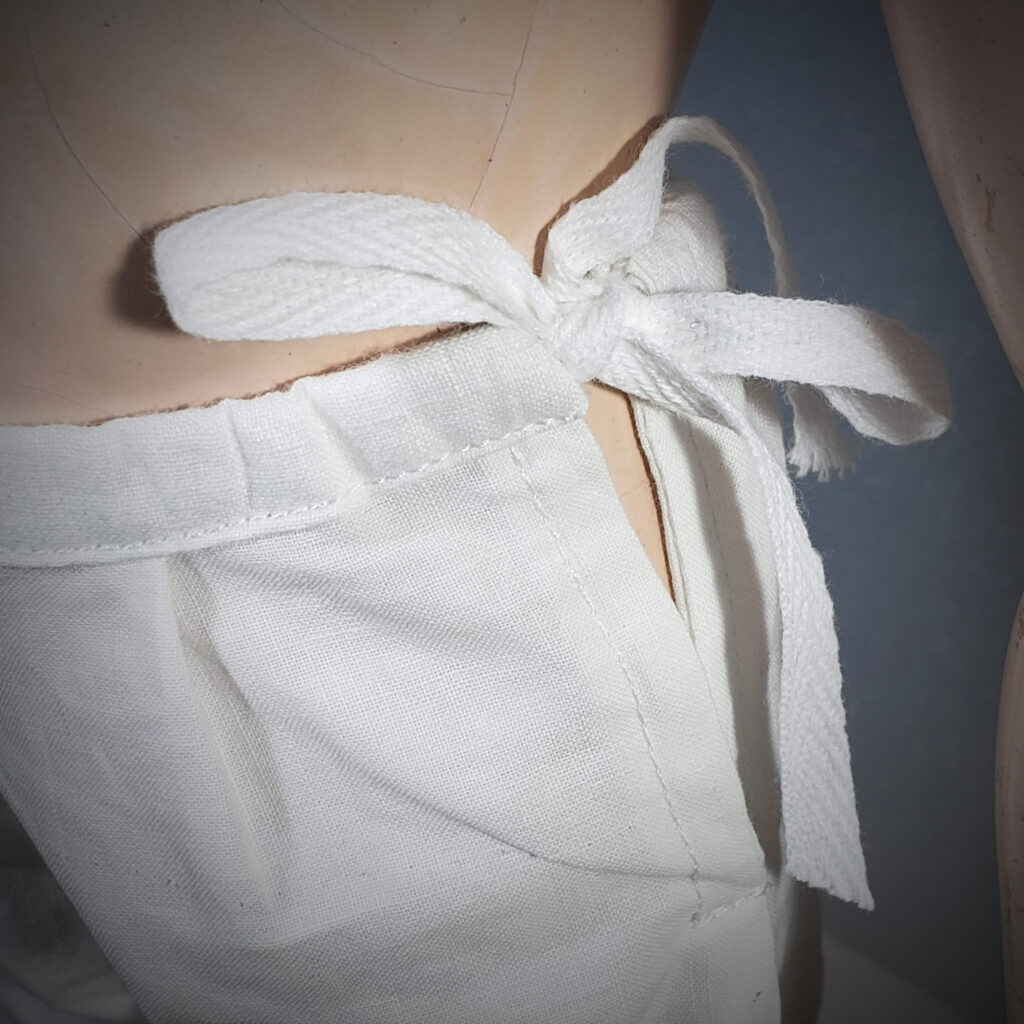
The doll’s undergarments were made by me specifically for this restoration, using antique examples and period sewing techniques as references. Only natural fabrics were used, selected to closely match the types of textiles found in children’s clothing from the early twentieth century.
The original method of fastening the undergarment pieces with ties was inspired by an antique example of children’s underwear. This detail allowed the clothing to remain true to the construction and practical design of the period.
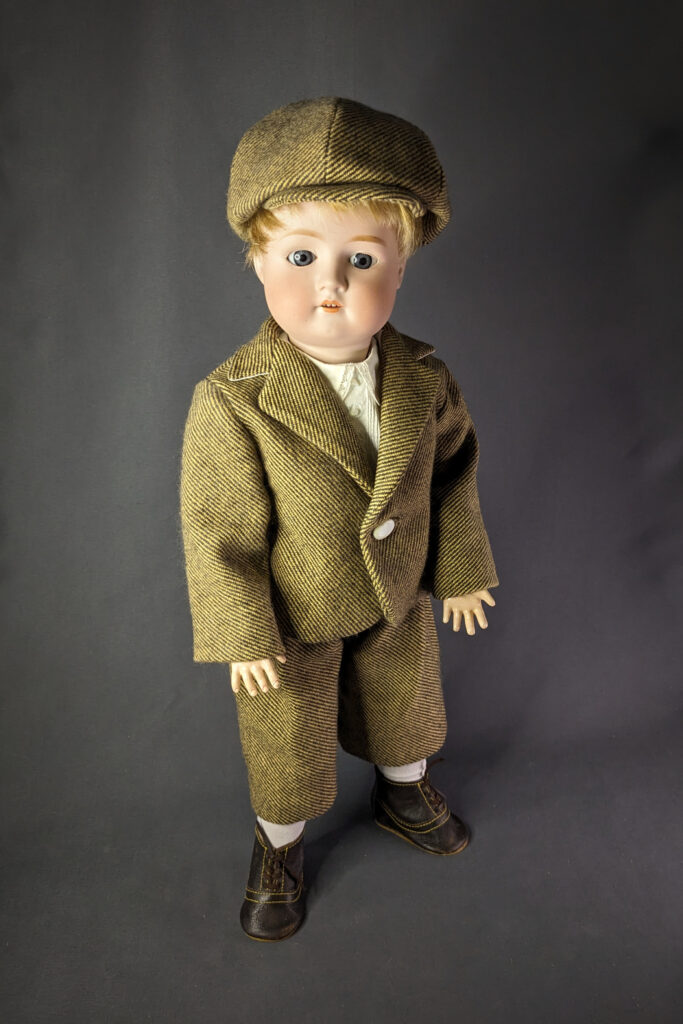
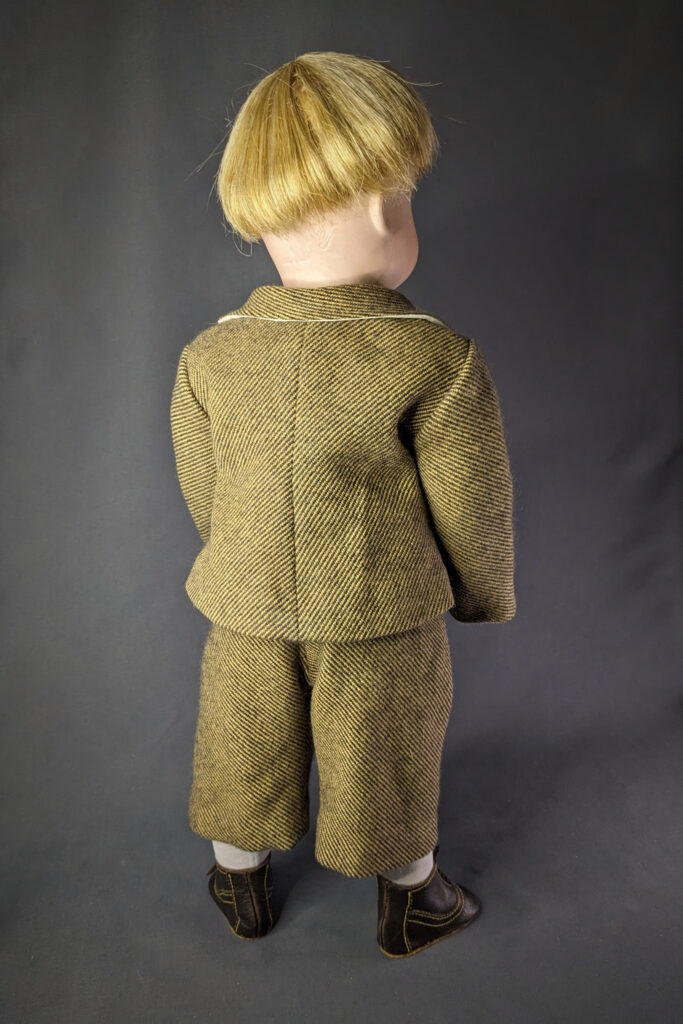
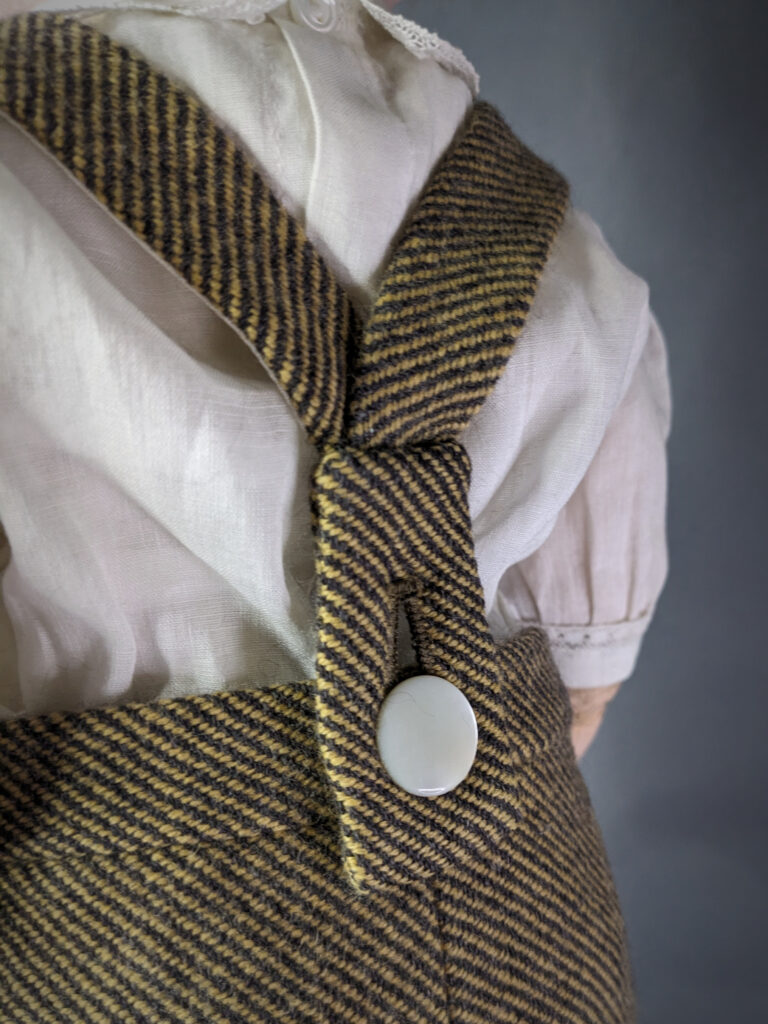
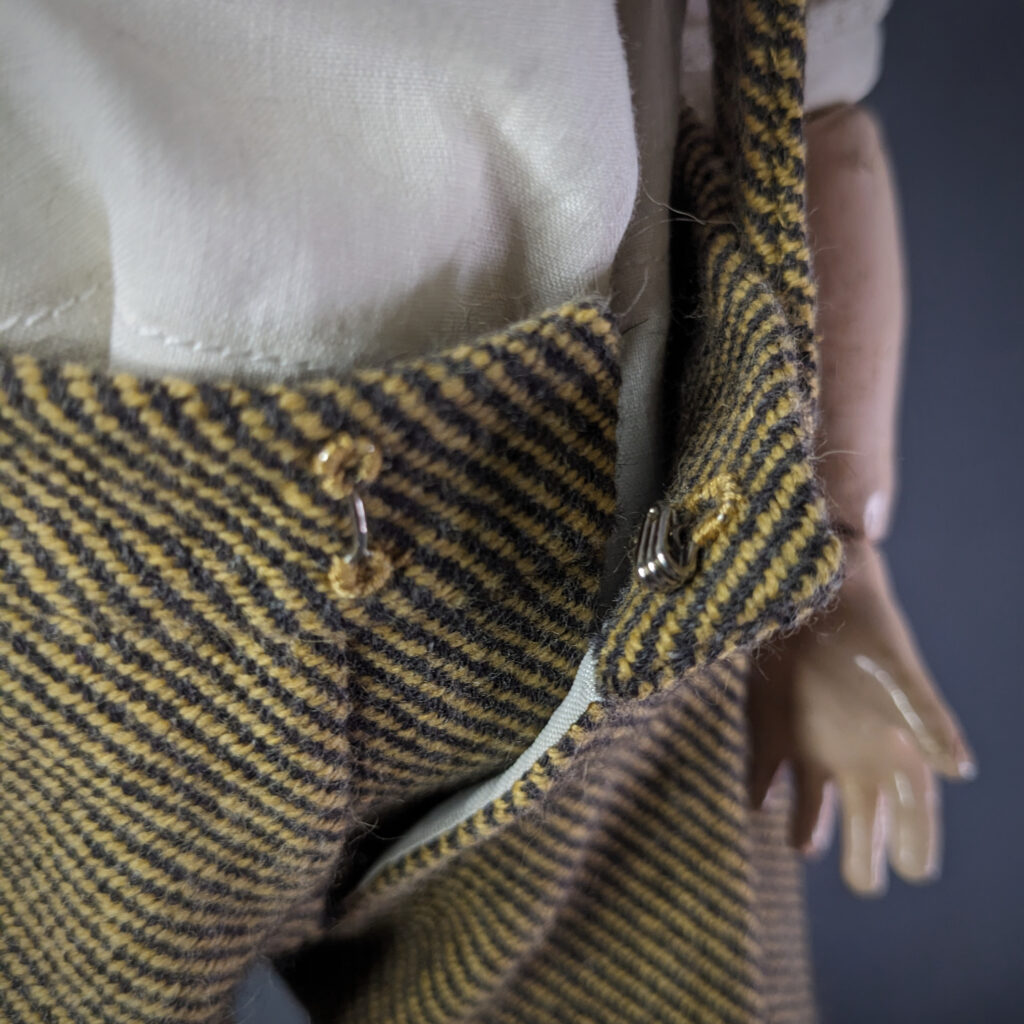
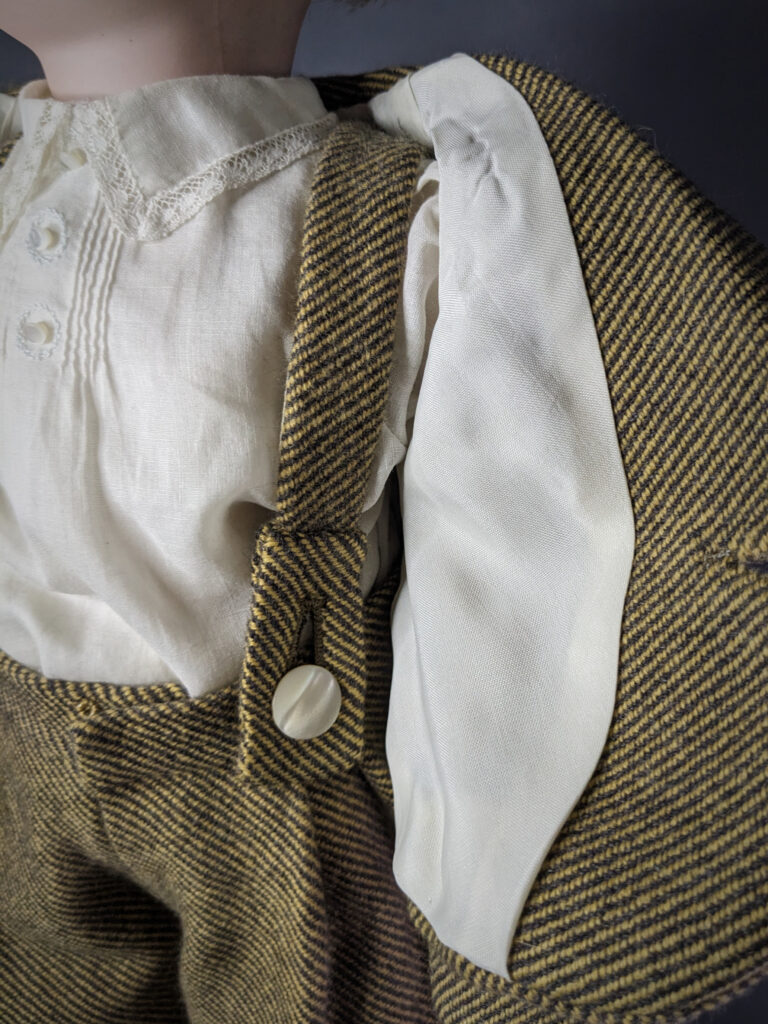
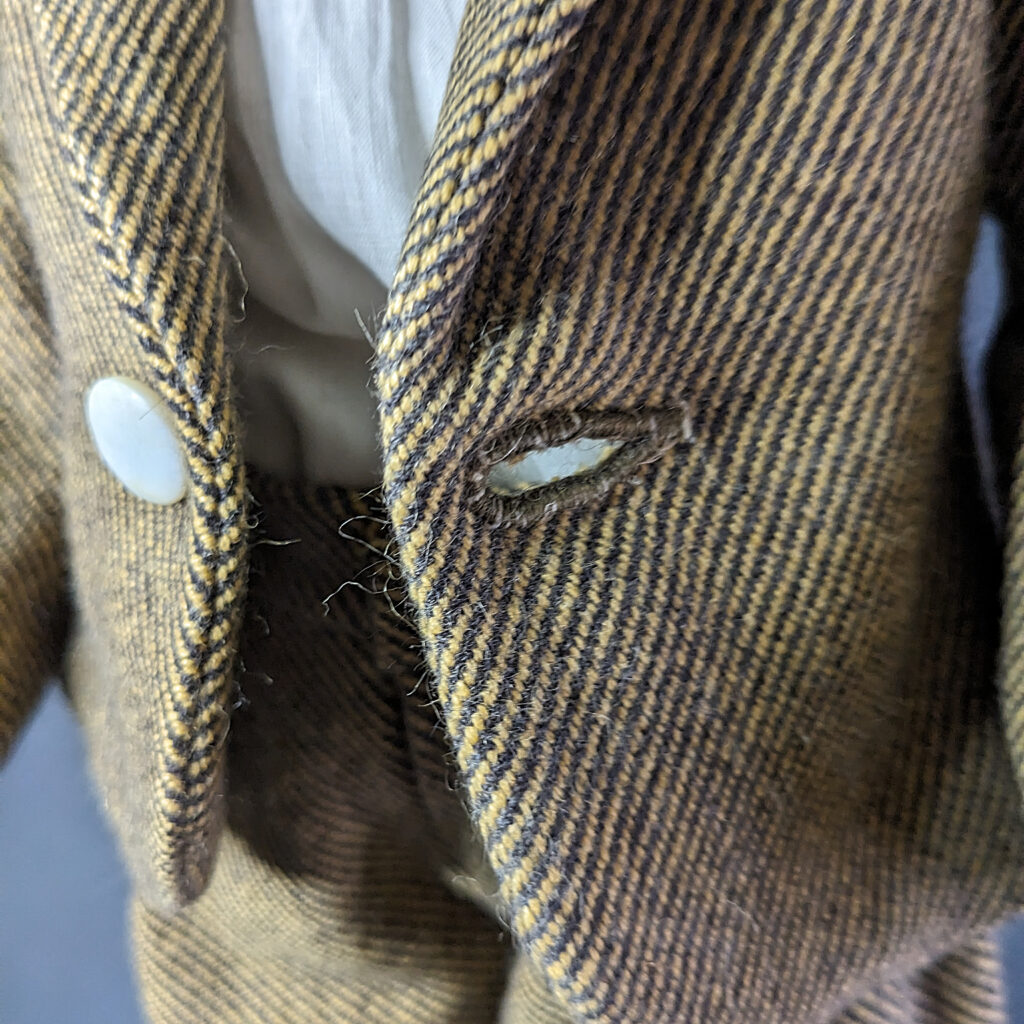
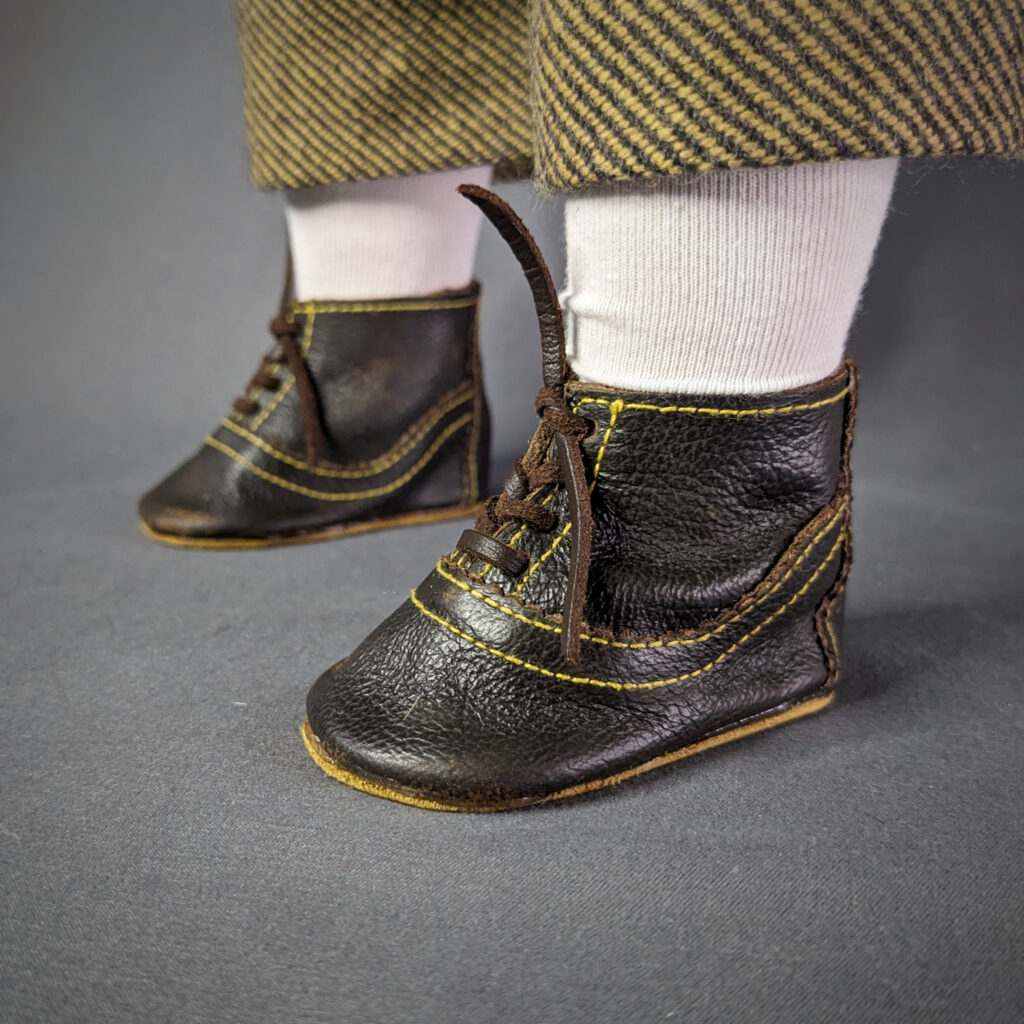
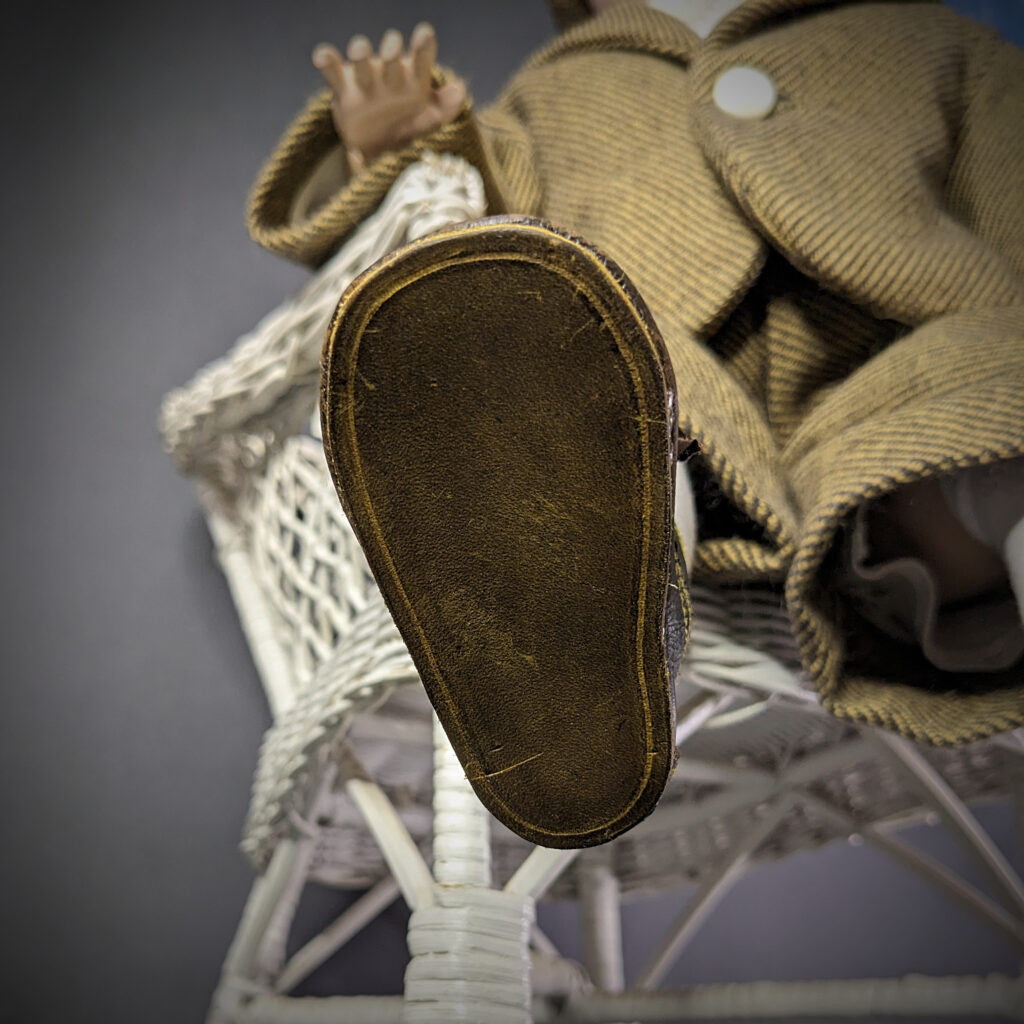
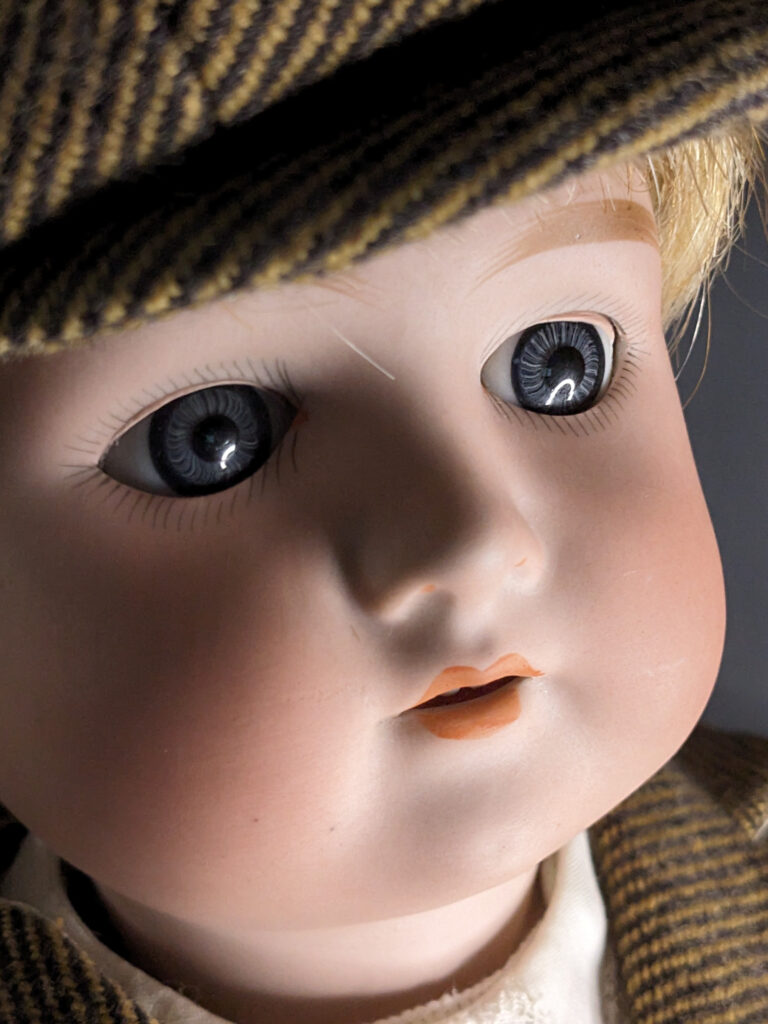
The final look of this boy doll came together quite unexpectedly. Before settling on it, I tried several different possibilities: dresses, lace, ribbons, and long curled hair. I also studied period illustrations showing costume ideas for this particular doll model.
Then, inspired by Peaky Blinders, I made a newsboy cap in that style. The period portrayed in the series corresponds closely to the era in which this doll was made. The cap immediately gave the doll a clear identity and set the direction for the entire costume.
Within three days, I had created a complete outfit for this little newsboy. The socks and boots seemed to come together almost on their own.
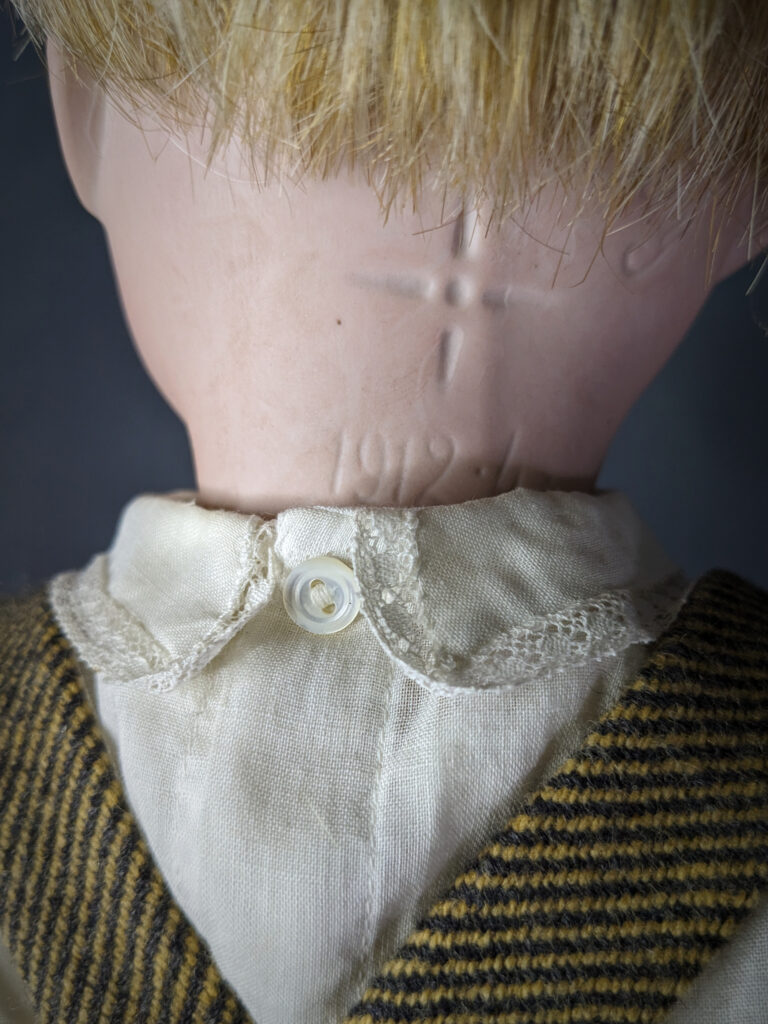
The shirt was made from fragments of an antique child’s shirt. Its exceptionally fine stitching and original period details were preserved and incorporated into this small-scale garment.
The three-piece outfit—a lined jacket, trousers with suspenders, and a cap—was made from a repurposed vintage men’s wool club jacket. Each piece was sewn using patterns inspired by doll clothing from the early twentieth century.
Even the small details were chosen with care. The outfit features antique mother-of-pearl buttons, hand-finished buttonholes, and vintage hooks on the trousers.
The doll’s socks were made from vintage knit fabric using an early twentieth-century pattern. The boots were also based on footwear examples from the same period and were made from a piece of vintage leather.
The scuffs on the boots were added deliberately. After all, what kind of boy in a newsboy cap would wear perfectly polished new boots? Just joking.
Cuno & Otto Dressel, mold #1912-4, 1912 Poppy Doll (Schoolboy), German, 21 inches is ready to begin his next chapter. This one-of-a-kind restored doll is now available to purchase in my store: Shop This Doll
Source:
https://www.dollreference.com/dressel_cuno_otto_dolls.html, https://www.historymuseum.ca/cmc/exhibitions/cpm/catalog/cat2101e.html#1226666, https://www.worthpoint.com/dictionary/p/toys-dolls-games-puzzles/dolls-manufacturers/cuno-and-otto-dressel-dolls, https://www.europeanfilmgateway.eu/detail/Der%20Werdegang%20einer%20Puppe/barch::634722a011a95b59fdadd4a6fd126a35