
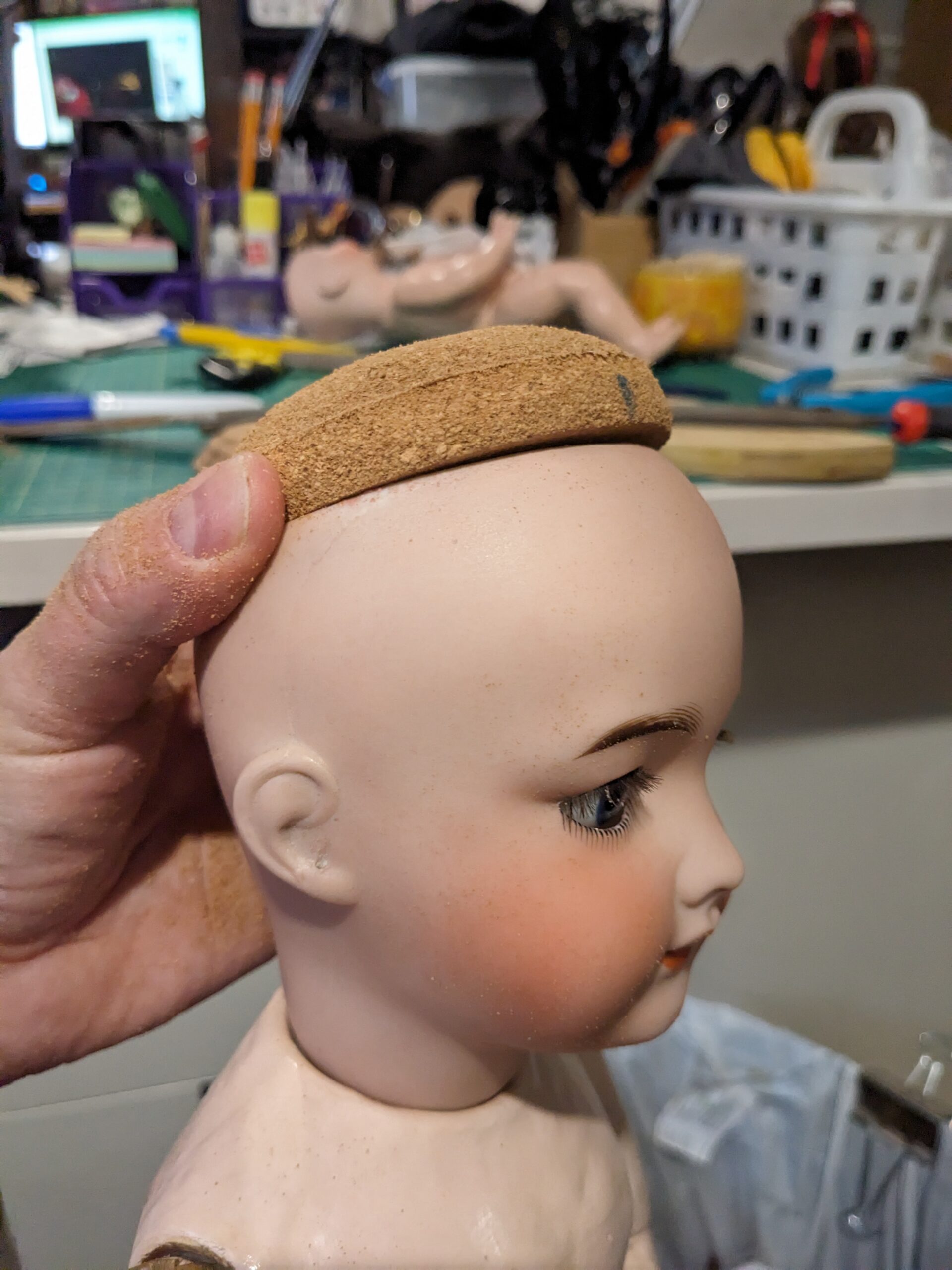
How to Make Cork Pate for a French Antique Doll
Every French antique doll has a little secret hidden under the wig: its cork pate. It is this that shapes the characteristic silhouette of the head, holds the wig in place, and preserves the authenticity that collectors love so much. It is not difficult to make it yourself. It is a process that gives the doll its history and personality back.
What Is a Cork Pate?
Let’s define the concept right away:
Cork pate is an internal cork insert that closed the hole in the upper part of the porcelain head of French dolls of the late 19th century. It served as the basis for fixing the wig and forming the internal structure of the upper part of the doll’s head.
It was made of natural cork of medium density. It is light, elastic, easily moldable, and provides ventilation inside the head (this is important for wigs made of natural hair).
The pate was hand-carved to the shape of the inner hole of the head. It could be single-layered or multi-layered. It often had a slight taper to fit tightly into the hole. The top surface sometimes retained factory labels or model numbers
The main function of the pate: to be a base for sewing or gluing the wig. But it also covered the internal mechanism of the eyes, added stability to the head during movement, and maintained the correct fit of the wig without slipping.
The replica is made of sheet cork 3–5 mm thick. It is important to recreate the shape, thickness, slight elasticity, and method of attaching the wig.
Step-by-Step: How to Make a Cork Pate
First, what you will need:
- 3–5 mm sheet cork
- sheet of pattern paper and a pencil
- rasp (or knife and sandpaper)
- cloth to protect the porcelain
So, we started to create the lower part of the pate. The one that is inserted into the head. Here, we need an exact pattern that matches the hole in the head.
This lower part of the pate should be located there so as not to put pressure on the walls of the hole. But at the same time, it should stay there.
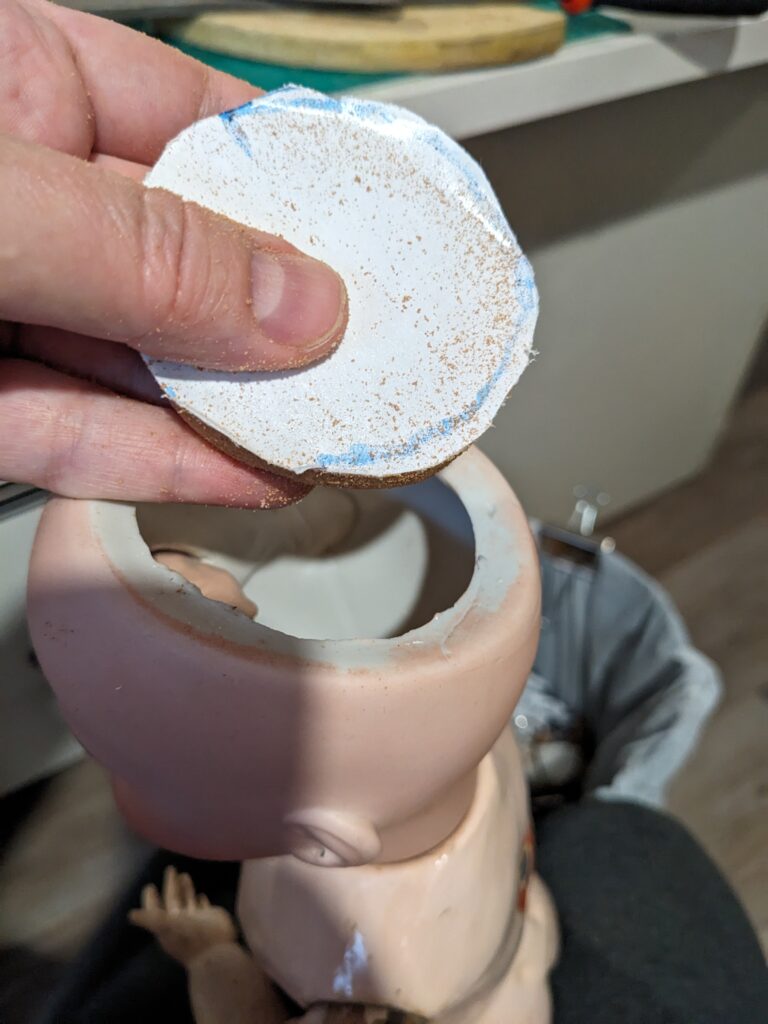
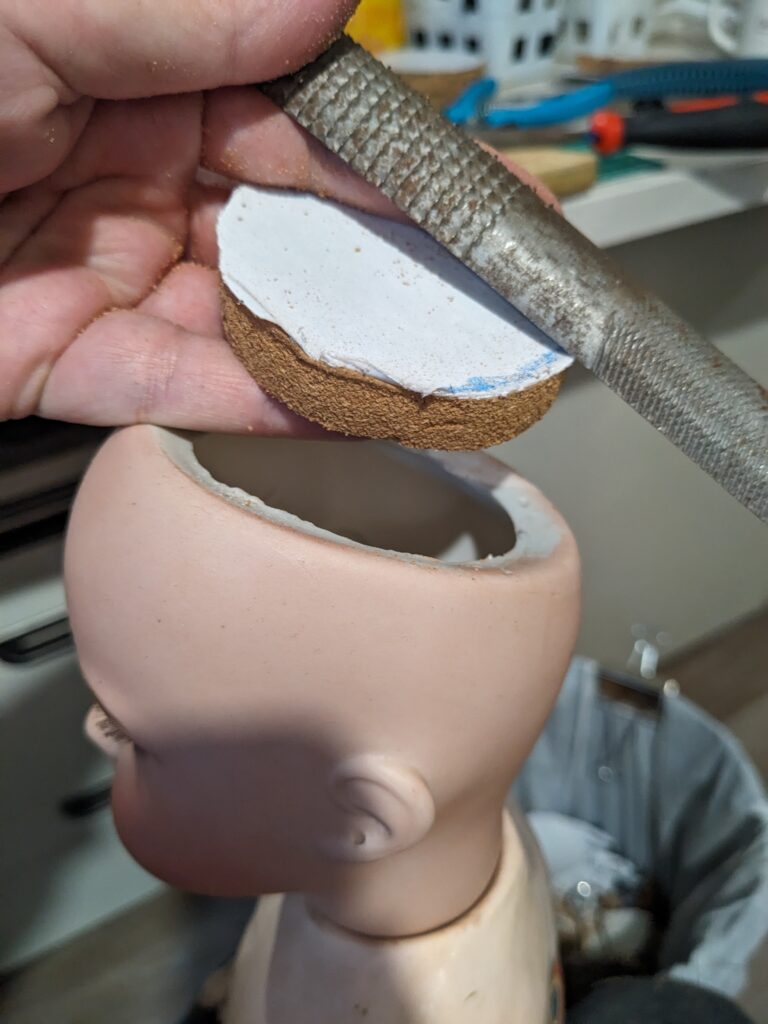
We measure and grind the pate stand. Therefore, the work is quite delicate. Although a very rough tool is used – a rasp.
I use thin sheets of cork on an adhesive base. Therefore, I can regulate the thickness by the number of layers.
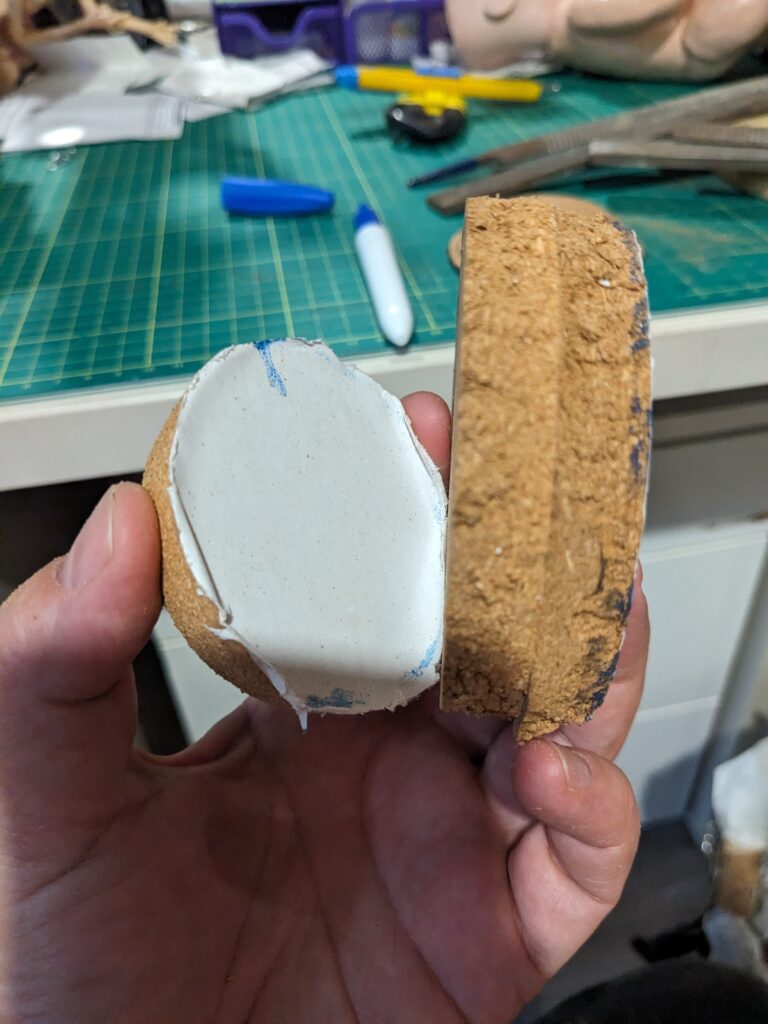
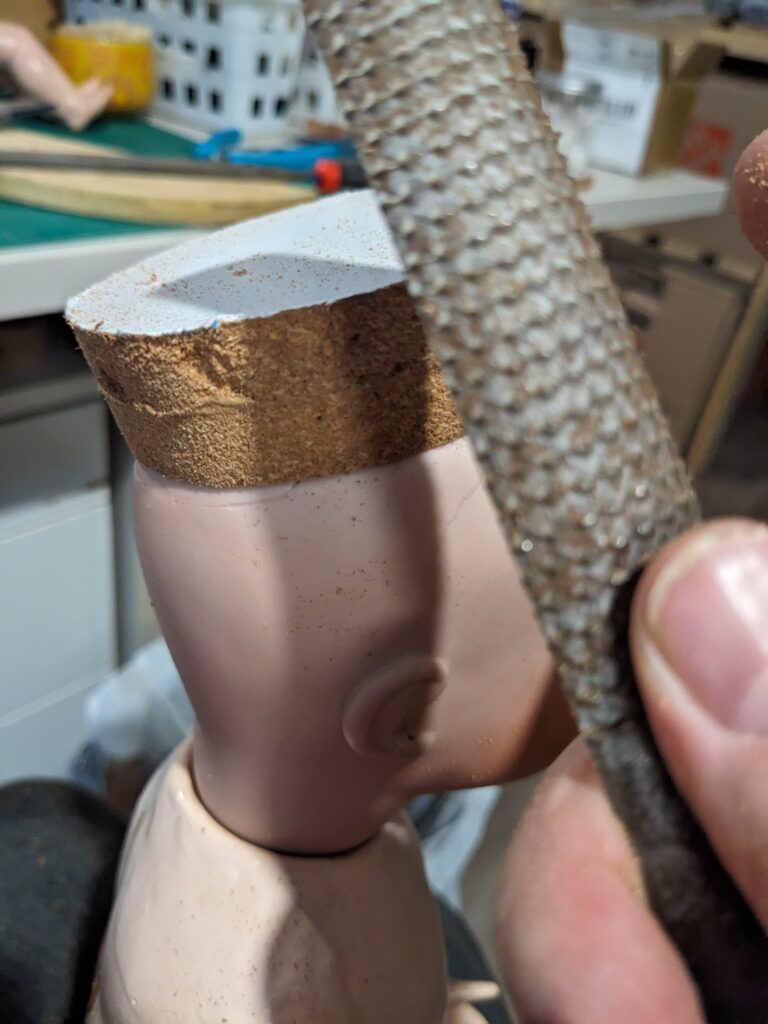
I can make the shape by cutting off the excess. Some do this with knives or saws.
The irregularities are then removed with sandpaper.
But I liked the recommendation to work with a rasp. The main thing is to protect the porcelain from it.
I hope you are protecting yourself from inhaling cork dust and rasp blows.
The work is monotonous and dirty. But it’s worth it!
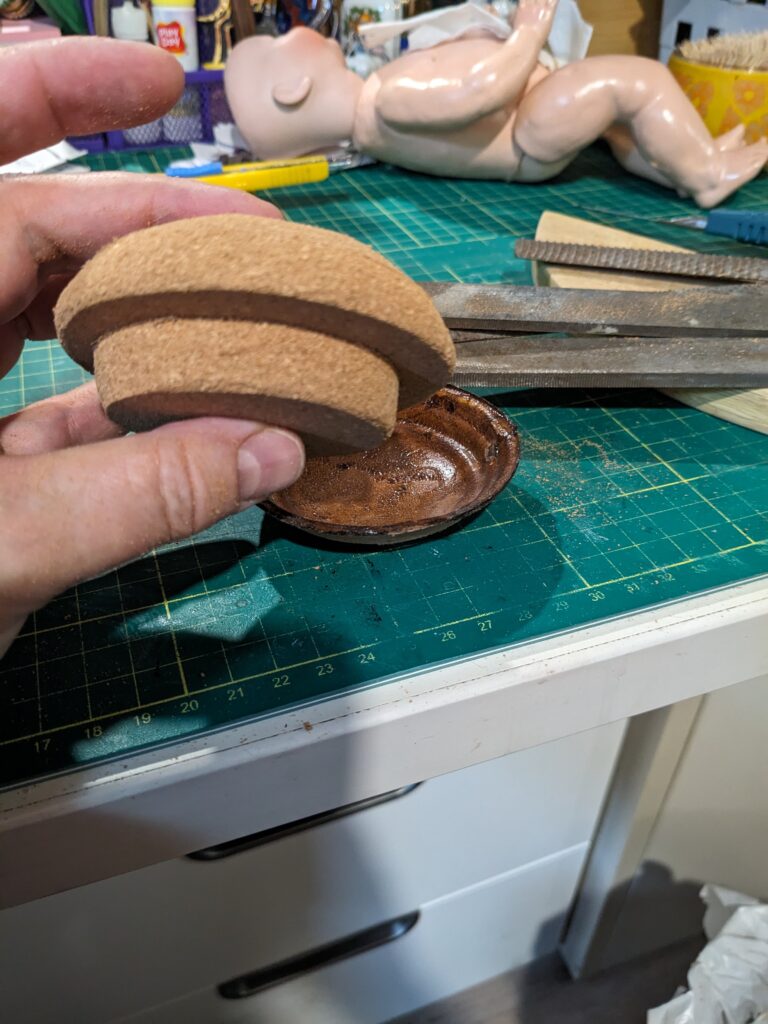
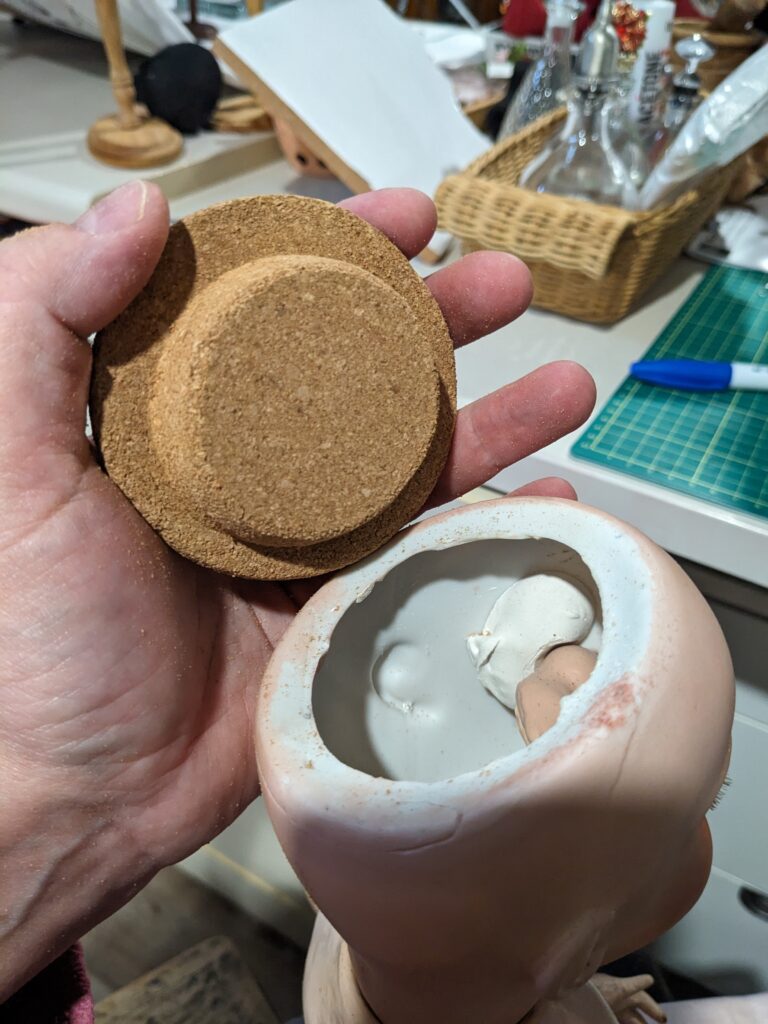
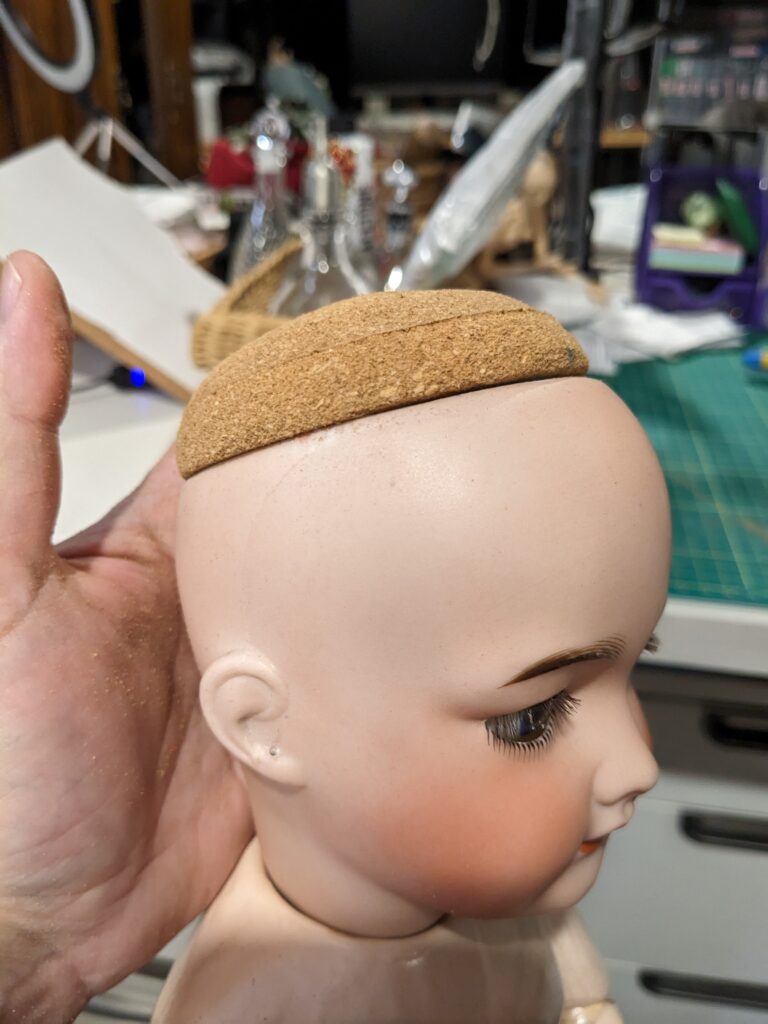
The pate is ready. Next fitting of it on the doll’s head.
I love such pate. They hold wigs in place without gluing. A few sewing pins go through the wig and the cork. And the wig stays in place until you decide to take it off.
Jumeau, Bru, Steiner, Gaultier, Rabery & Delphieu and other high-class French factories used cork pate. This is a characteristic French tradition.
Cork pate is less common in German dolls.
For collectors, the presence of the original cork pate significantly increases the value of the doll. Loss or replacement with modern materials reduces authenticity. A replica is permissible, but must be made of natural cork and correspond to the historical form.
When restoring, it is advisable to preserve the original pate, even if it is partially damaged.