
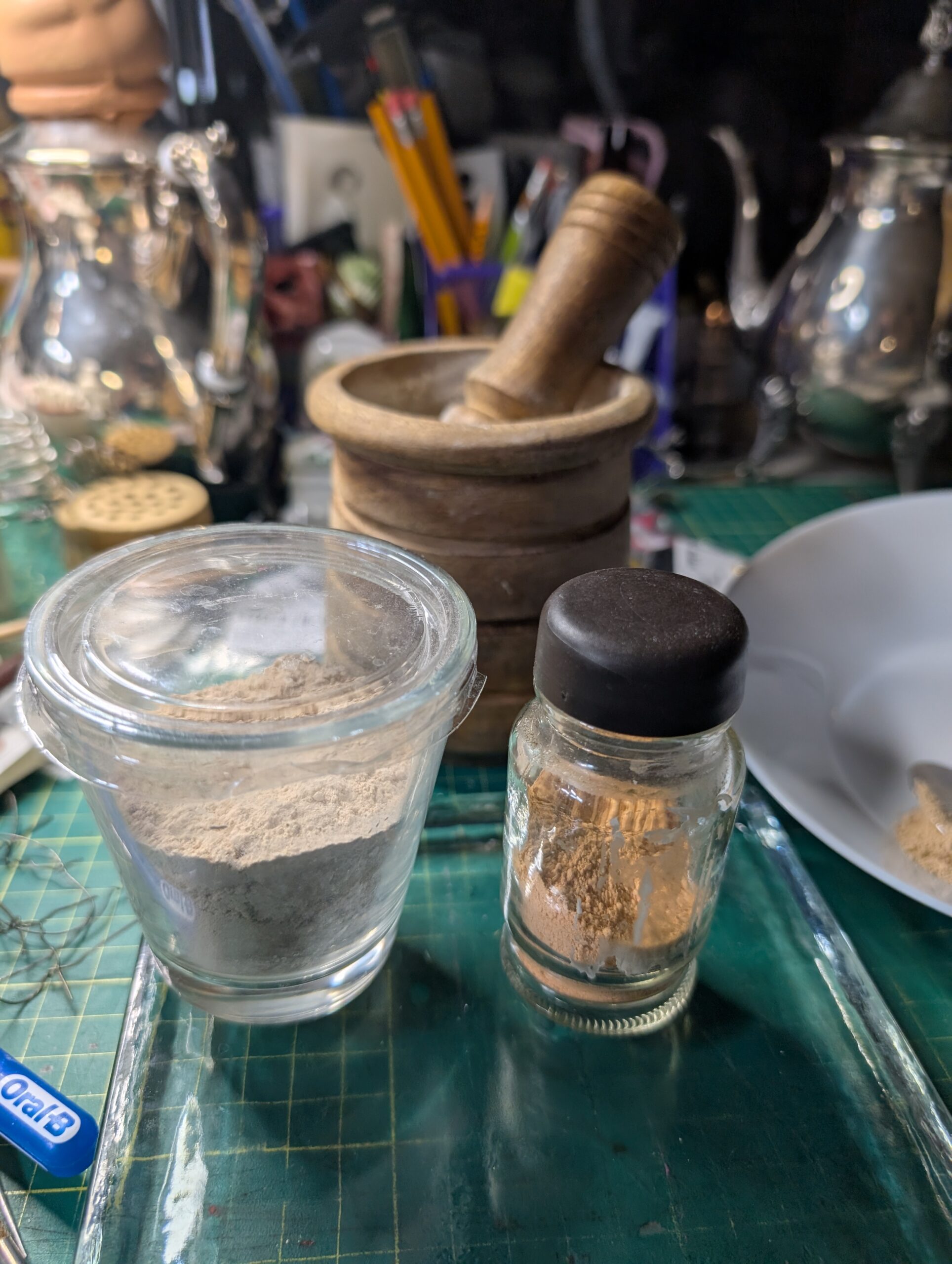
Recipe for Gesso, Paint, and Composition Based on Hide Glue for Antique Dolls
Below are safe, modern, and maximally authentic recipes for gesso, paint, and composition mixtures based on hide (animal) glue, used by restorers for antique dolls made of wood, papier-mâché, and composition.
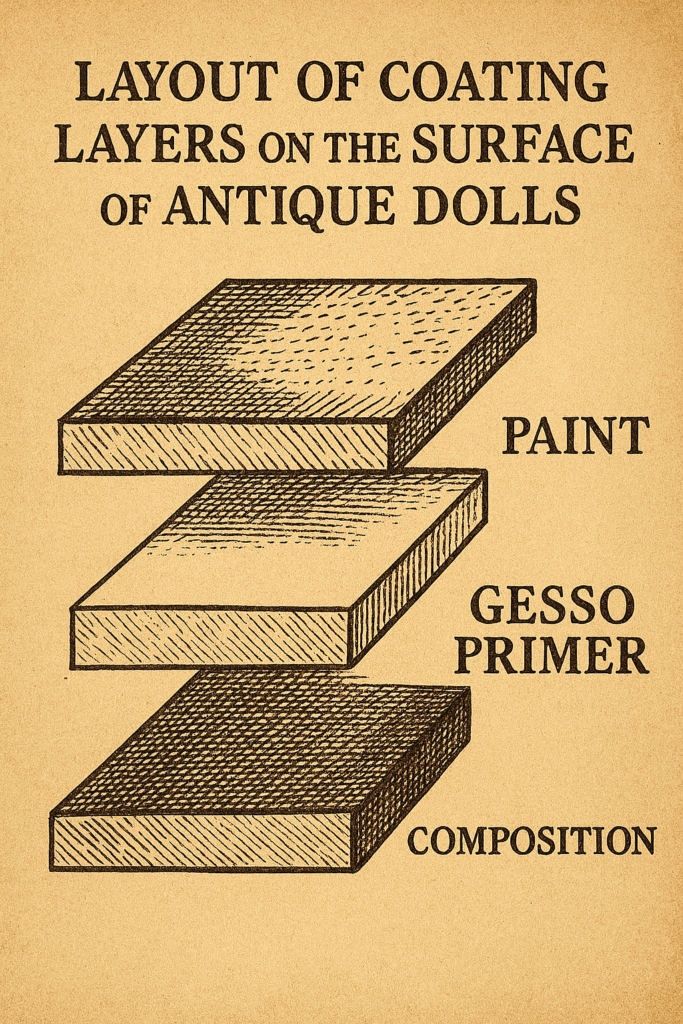
No toxic pigments (no lead, cadmium, chromates). The mixtures are as close to historical as possible, but safe.
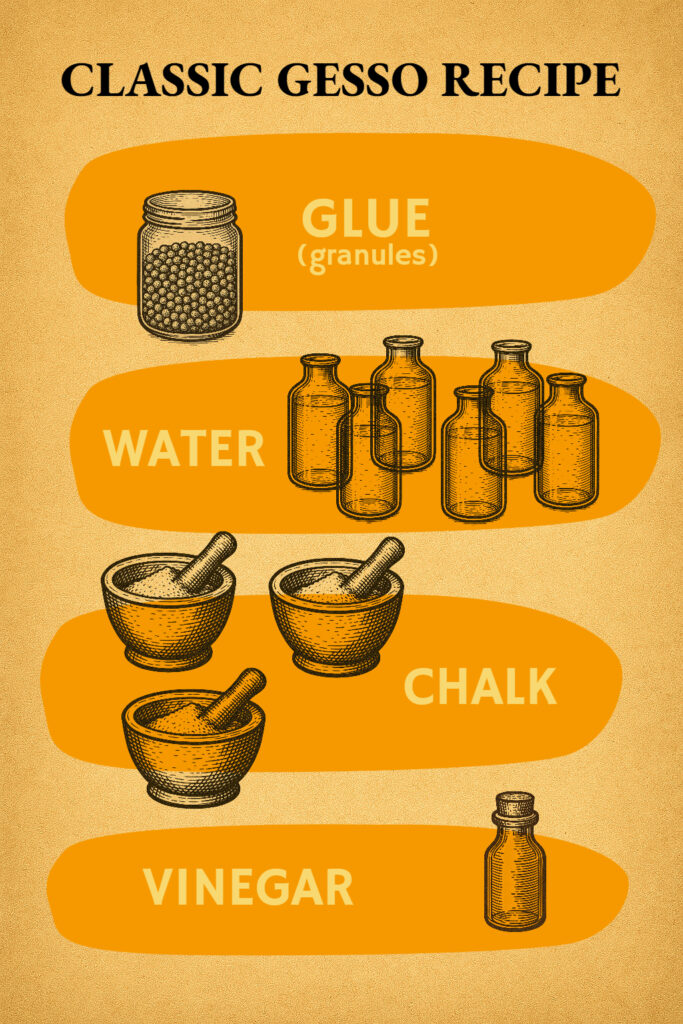
GESSO RECIPE FOR ANTIQUE DOLLS
This is classic chalk gesso based on hide glue. It provides a strong, smooth surface for painting.
Ingredients
- Hide glue (granules) – 1 part
- Water-6 parts
- Chalk (precipitated chalk / whiting / calcium carbonate) – 3 parts
- A few drops of vinegar – optional (as an antiseptic)
Preparation
- Soak the glue in cold water for 4-12 hours.
- Warm it in a double boiler without boiling until it becomes liquid.
- Add chalk gradually while stirring thoroughly.
- Consistency: like heavy cream.
- Strain through cloth to avoid lumps.
Use
- Apply 3-10 very thin layers.
- Dry each layer and lightly sand (grit 400-800).
- Produces a smooth surface typical for bisque and composition dolls of the 19th-early 20th century.
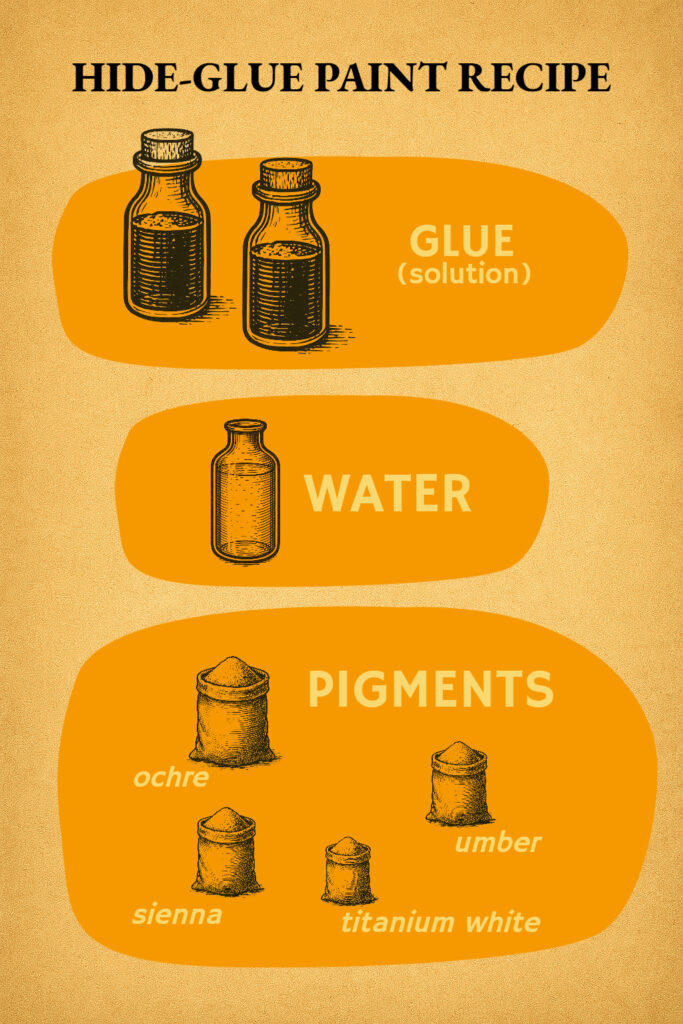
HIDE-GLUE PAINT (TINTED GLUE PAINT)
This type of paint was used on many early composition and wooden doll heads.
Ingredients
- Hide glue (prepared warm solution) – 2 parts
- Water – 1 part
- Pigments (non-toxic, mineral or earth pigments) – as needed
Suitable: ochre, umber, sienna, iron-oxide reds/yellows - A bit of white pigment (titanium white)
Preparation
- Add a small amount of pigment to the warm glue solution.
- Mix thoroughly until smooth.
- Thin with water to the consistency of liquid gouache.
Features
- Paint dries quickly – best to mix small portions.
- Apply in thin layers.
- Gives a characteristic “matte vintage” look.
COMPOSITION (PAPIER-MÂCHÉ / COMPOSITION) BASED ON HIDE GLUE
This mixture was used for making doll torsos, arms, legs, and heads in the 19th-20th centuries.
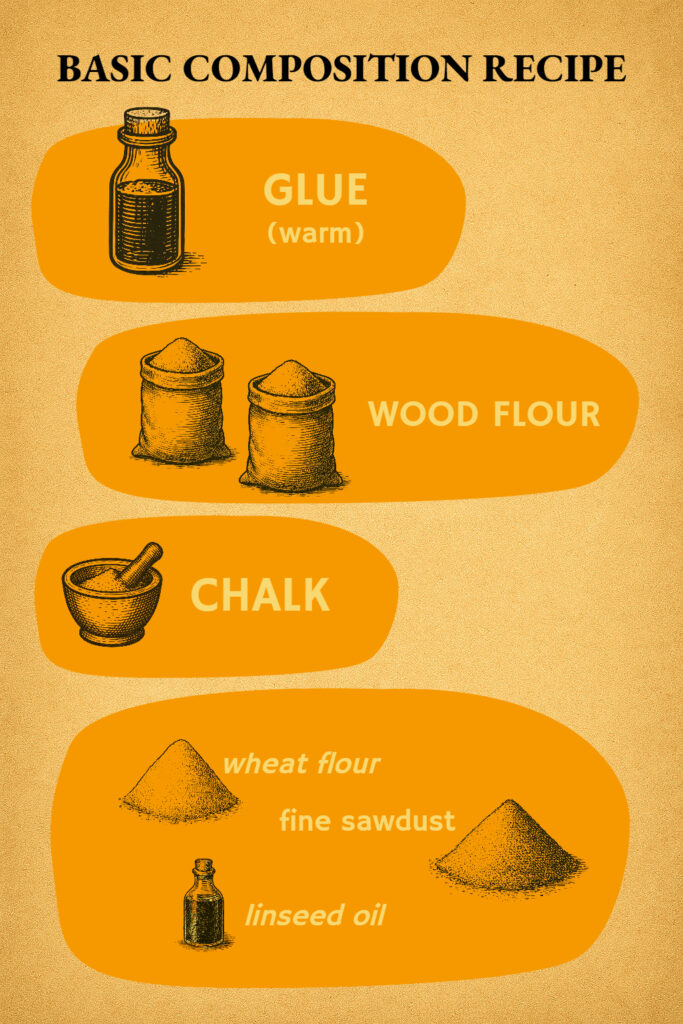
BASIC COMPOSITION FOR REPAIRS
(film strength + hardness + mild flexibility)
Ingredients
- Hide glue (warm) – 1 part
- Fine wood flour / cellulose flour – 2 parts
- Chalk / chalk powder – 1 part
- Wheat flour (as plasticizer) – ½ part
- Fine sawdust (optional) – up to 1 part
- A few drops of linseed oil (plasticity, durability)
Preparation
- Prepare warm liquid glue.
- In a bowl, mix the dry ingredients (flours, chalk, sawdust).
- Slowly pour in the glue while kneading to the consistency of firm plasticine or thick dough.
- Let the mixture sit for 5-10 minutes to hydrate.
Use
- Sculpt small details, fill cracks and losses.
- After drying (24-48 h), sand.
- Then apply gesso and paint as in previous recipes.
FOR VERY FINE REPAIRS
(Cracks, chips, tiny losses)
Fine hide-glue putty:
- Hide glue – 1
- Water – 1
- Chalk – 2-3
- A little white pigment for color
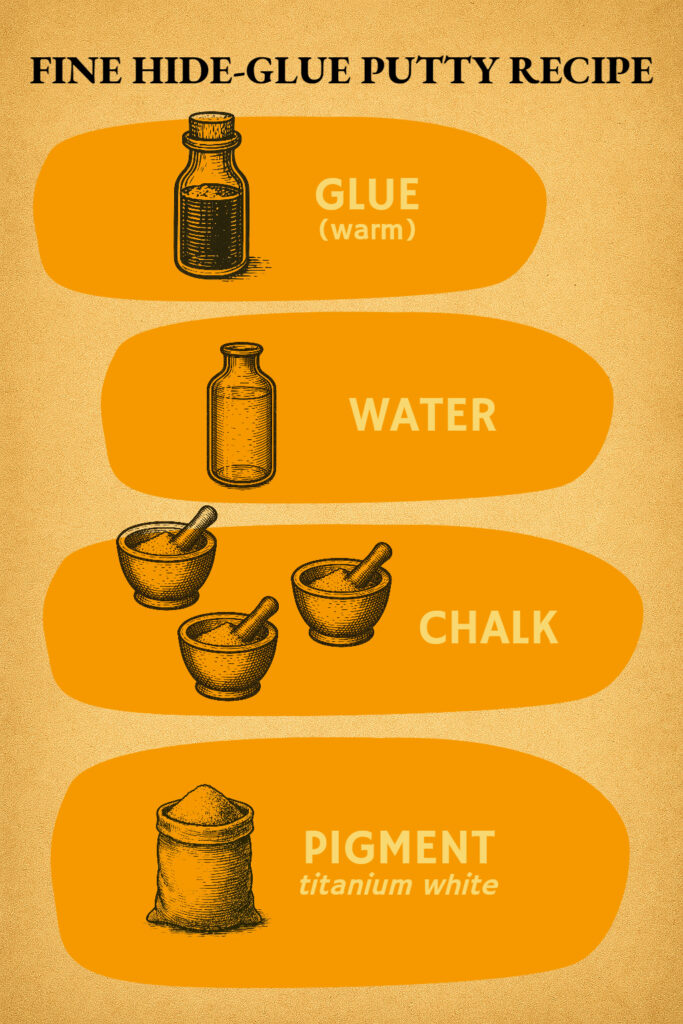
Consistency – like toothpaste. Works well for tiny recesses.
IMPORTANT TIPS
- Do not overheat glue – boiling reduces its strength.
- Store mixtures in the refrigerator for no more than 1 day.
- Pigments – only modern lead-free ones (historical lead pigments are dangerous).
- For restoration, apply very thin layers – this is the key to an authentic appearance.