
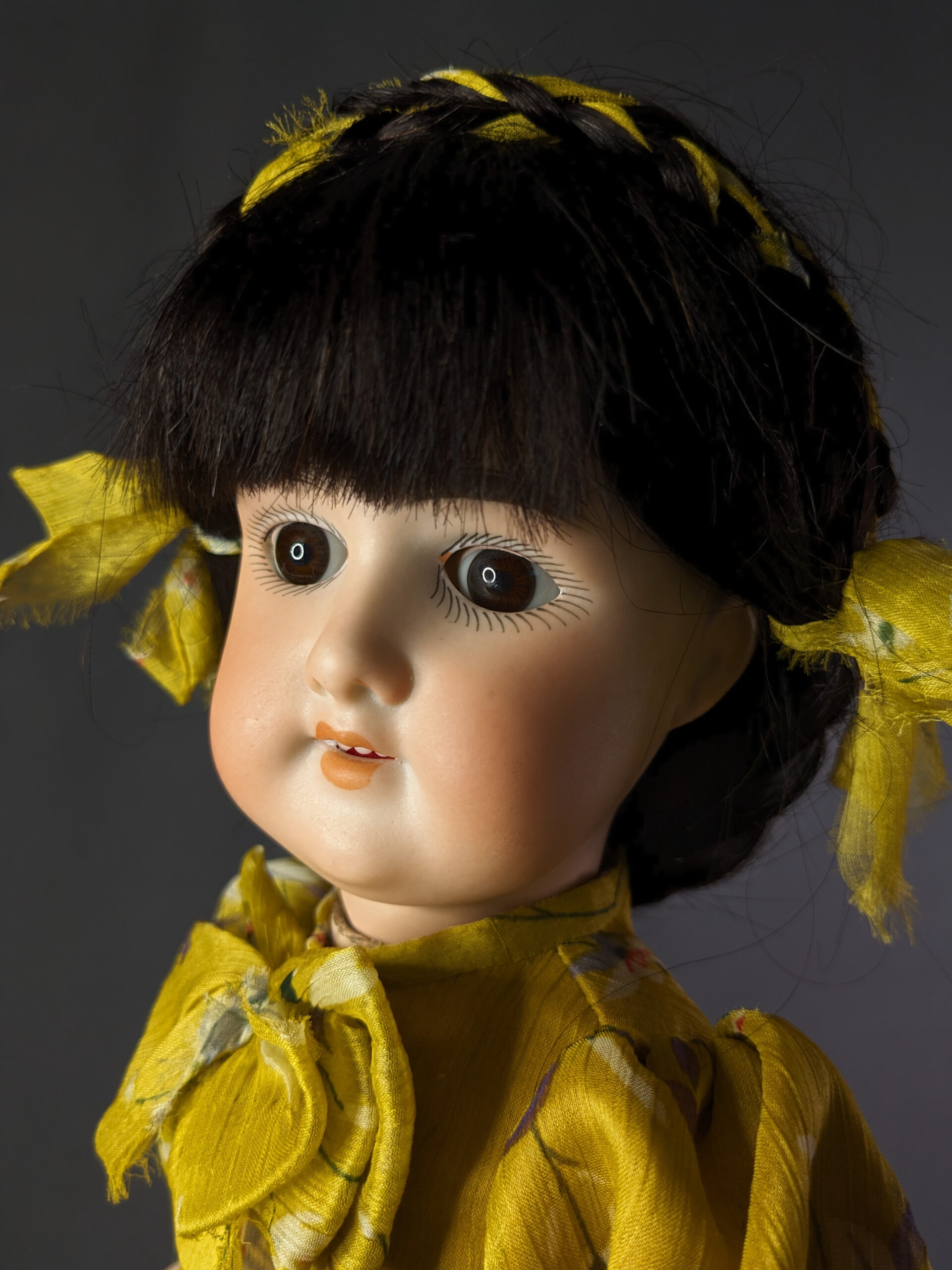
A Sunny Floradora Finds Her Joy Again
Restoring an A.M. Floradora from a Damaged Antique Doll into a Golden Girl
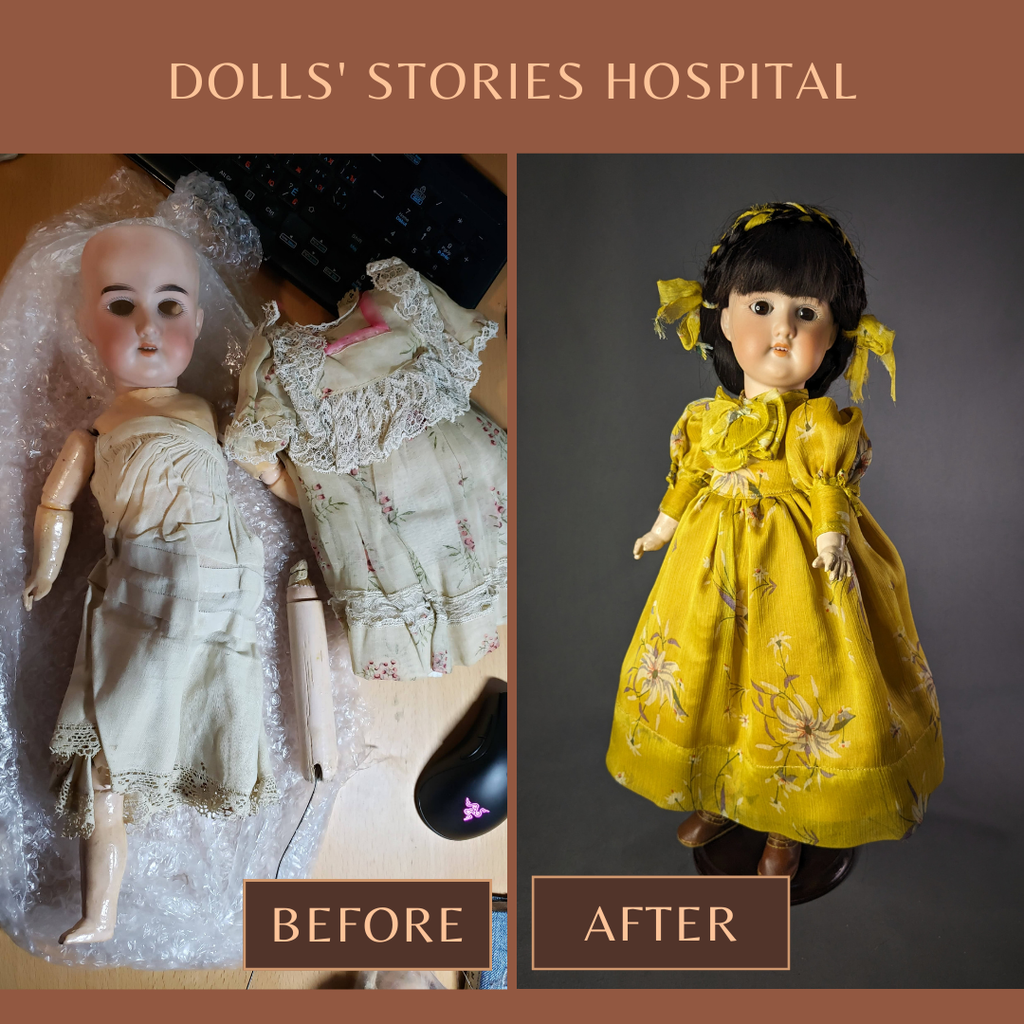
This A.M. Floradora 3/0 doll became a special patient for me at Dolls’ Stories Hospital. Of all the dolls I had to rescue, she turned out to be the most cheerful. So after the restoration, I chose the image of a yellow sun for her: warm, bright, a little vintage and full of quiet joy.
The origin story of the Floradora doll: A Doll Born of Fashion and Theater
Floradora is one of the most famous series of dolls associated with the German manufacturer Armand Marseille, a company that became one of the main producers of biscuit doll heads in the early 20th century (from 1885, Keppelsdorf, Thuringia). At its peak, production reached approximately a thousand doll heads per day. An impressive scale even by today’s standards.
The name Floradora is reminiscent of the famous musical comedy “Floradora”, which premiered in London in 1899 and soon became a sensation on Broadway. Its famous chorus line, known as the “Floradora Girls”, is closely associated with the fashionable, romantic images of the period. Although the exact origin of the doll’s name is not fully documented, it is widely understood as a reference to this cultural phenomenon of the early 20th century.
Floradora dolls were made in a variety of sizes and designs. The Victoria and Albert Museum dates the Armand Marseille “Floradora” doll to 1901–1921; other examples and references indicate production from the early 1900s to the early 1920s. Early examples may have bisque-coated shoulder heads with leather or cloth bodies, while later dolls are often found with articulated composite bodies.
The A.M. marking on the back of the head identifies the Armand Marseille production. The accompanying numbers usually indicate the shape and/or size designation, depending on the particular doll. Floradora was not one single, uniform model, but an entire family of dolls with the unchanging appeal of the classic “doll-faced” child: large glass eyes, round cheeks, an open mouth with tiny teeth, and a gentle, friendly expression that is recognizable to collectors.
The Restoration Process
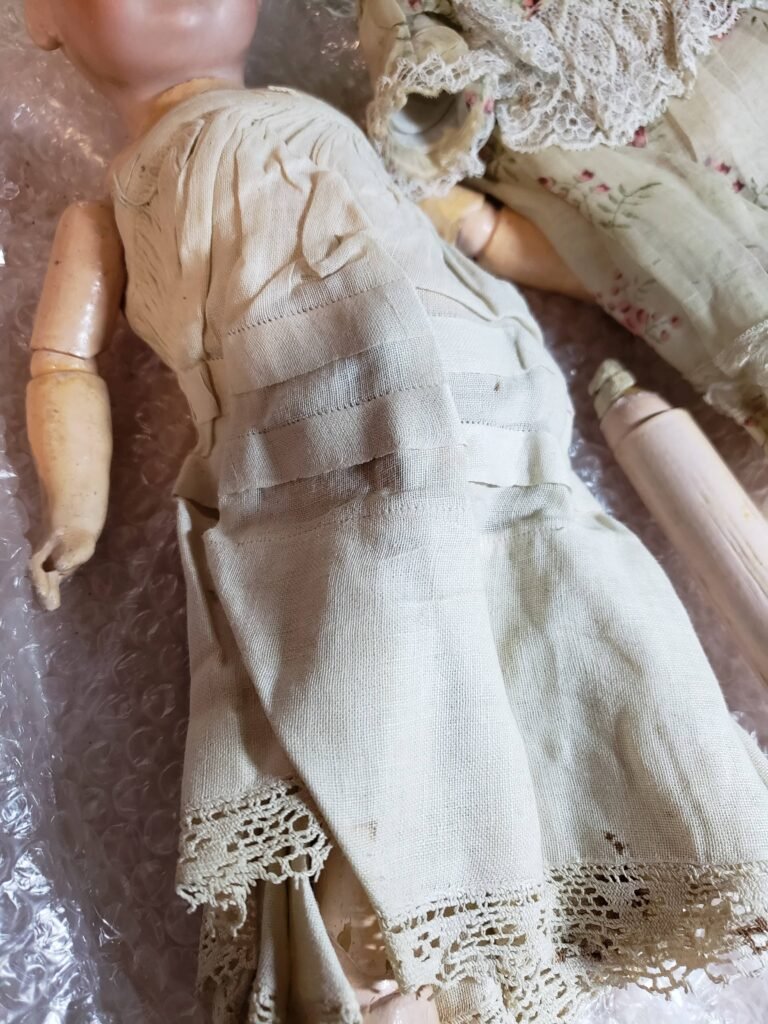
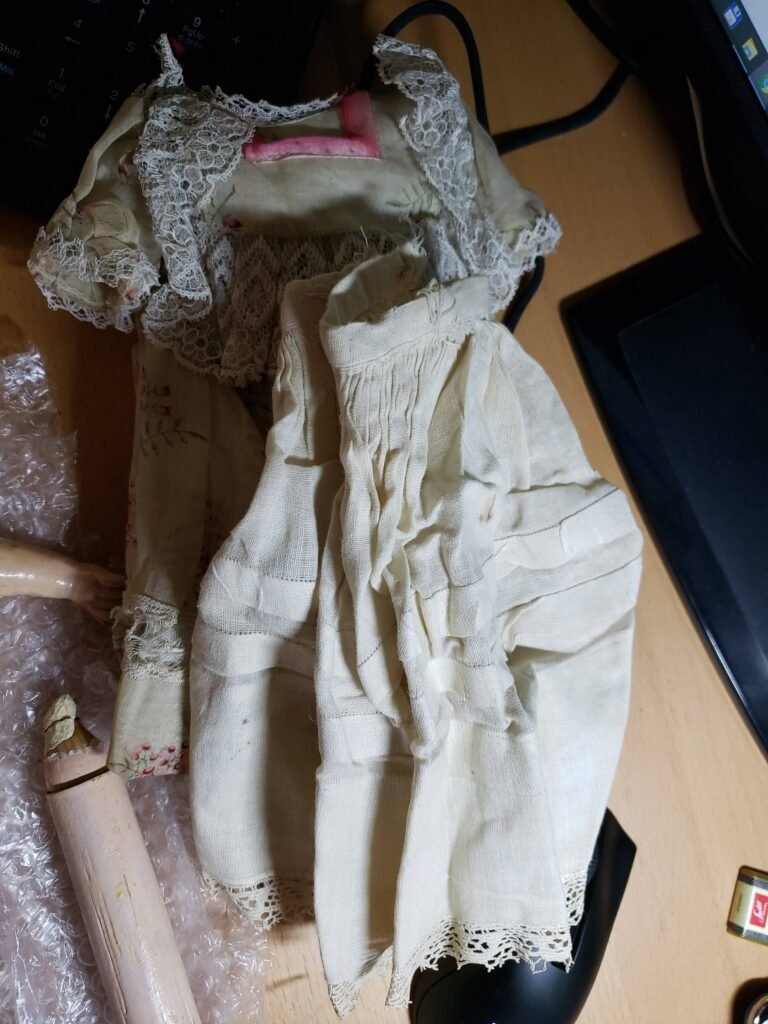
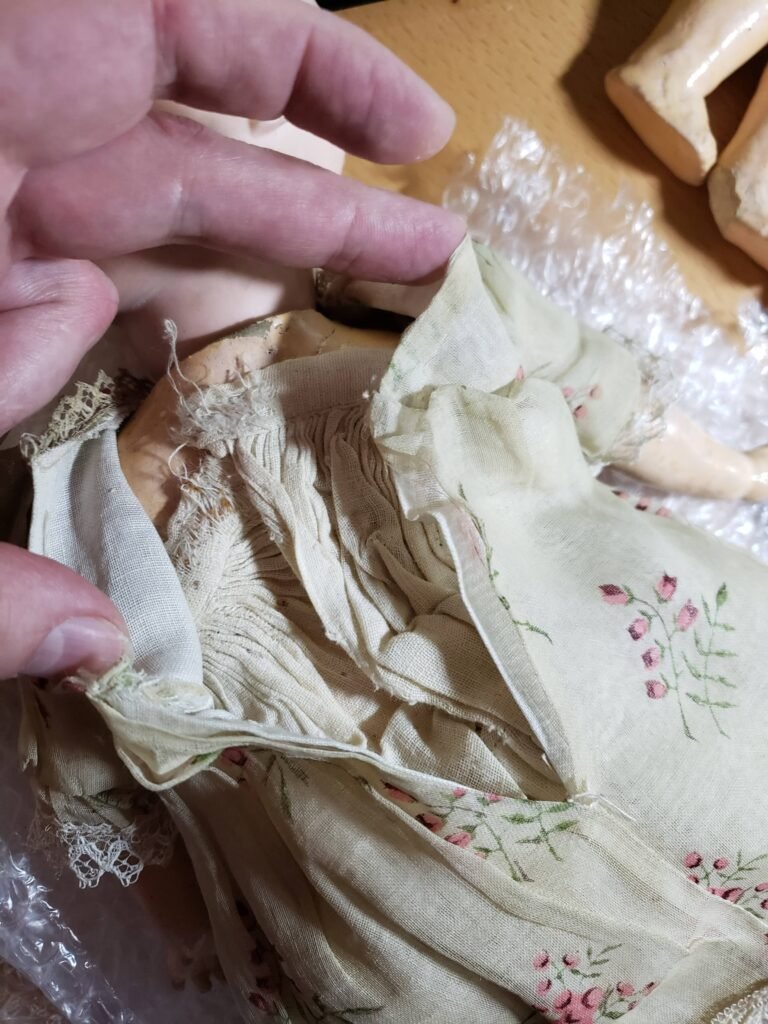
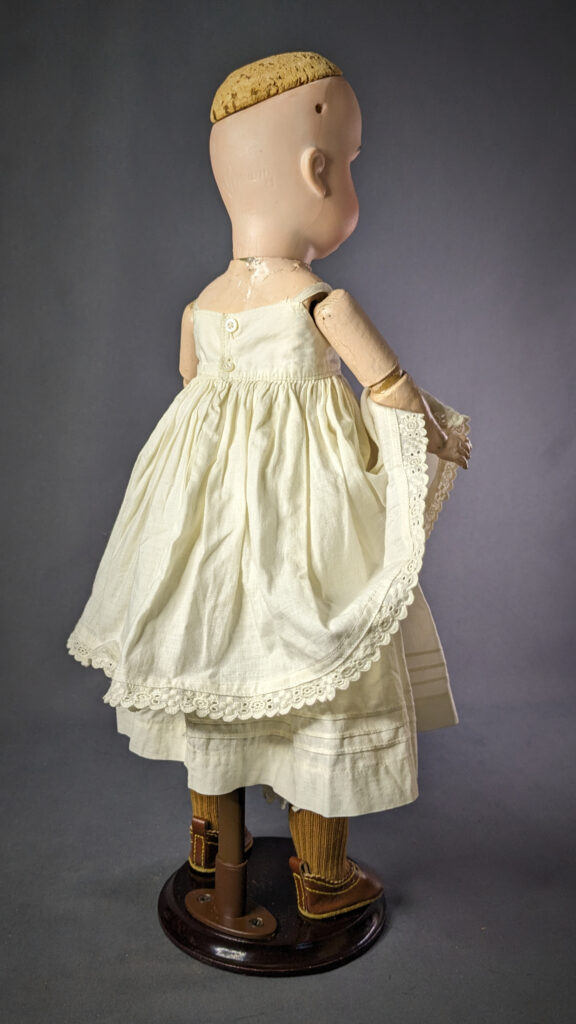
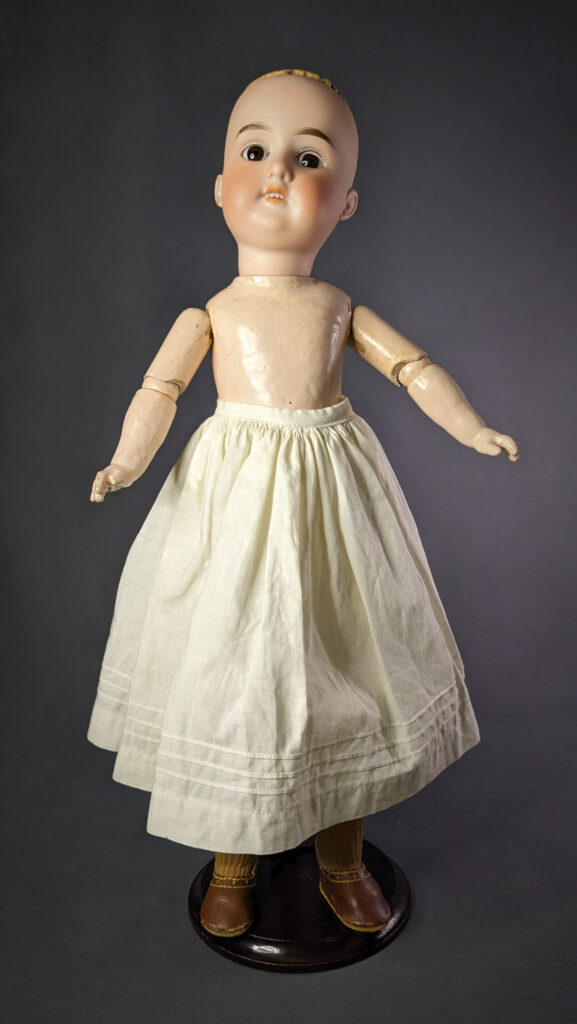
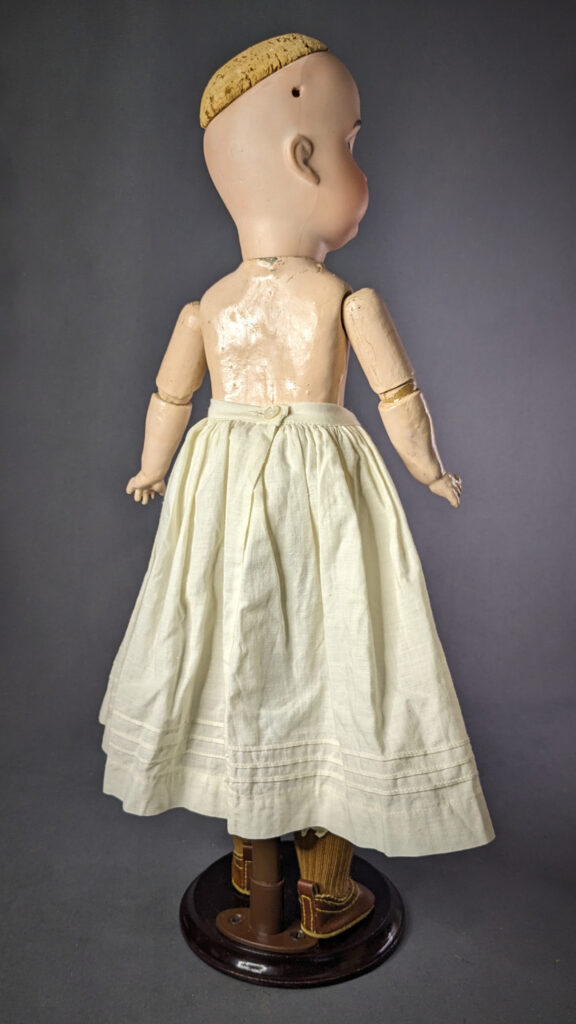
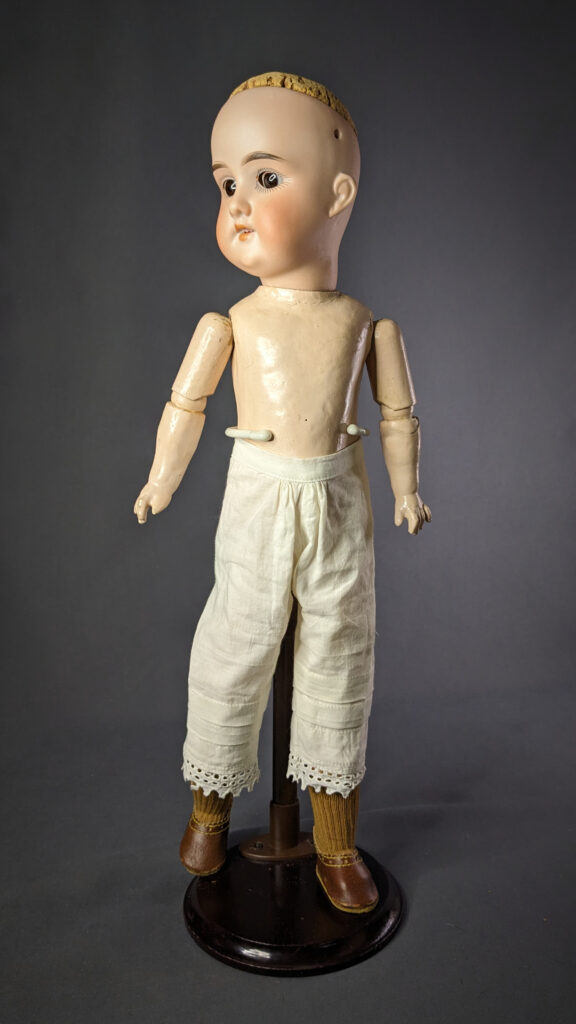
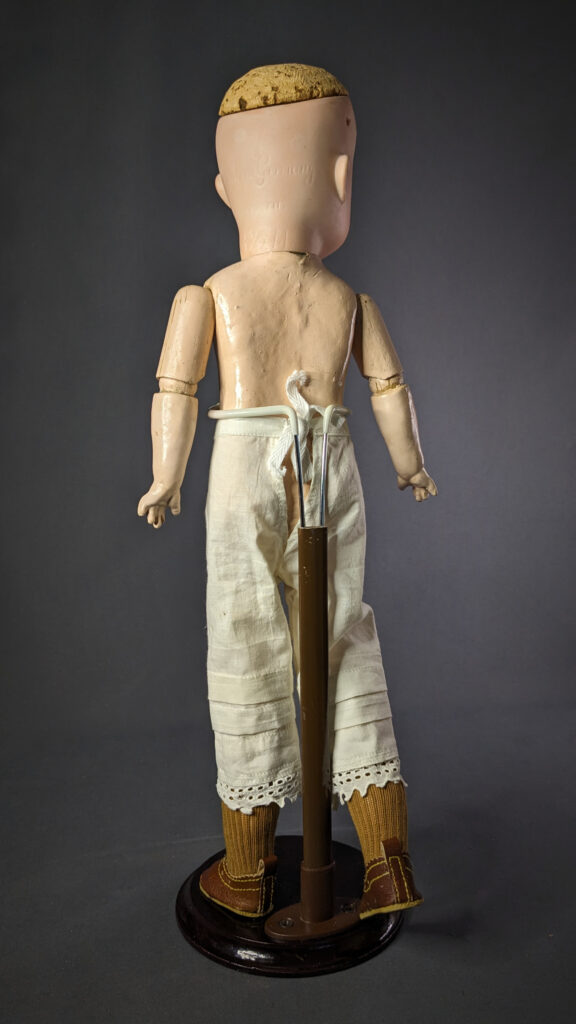
The restoration began with a careful examination of every part of the doll, as well as the surviving textiles. The old composition and wooden elements showed cracks, losses to the painted surface, and missing or damaged fasteners; some original parts were absent altogether.
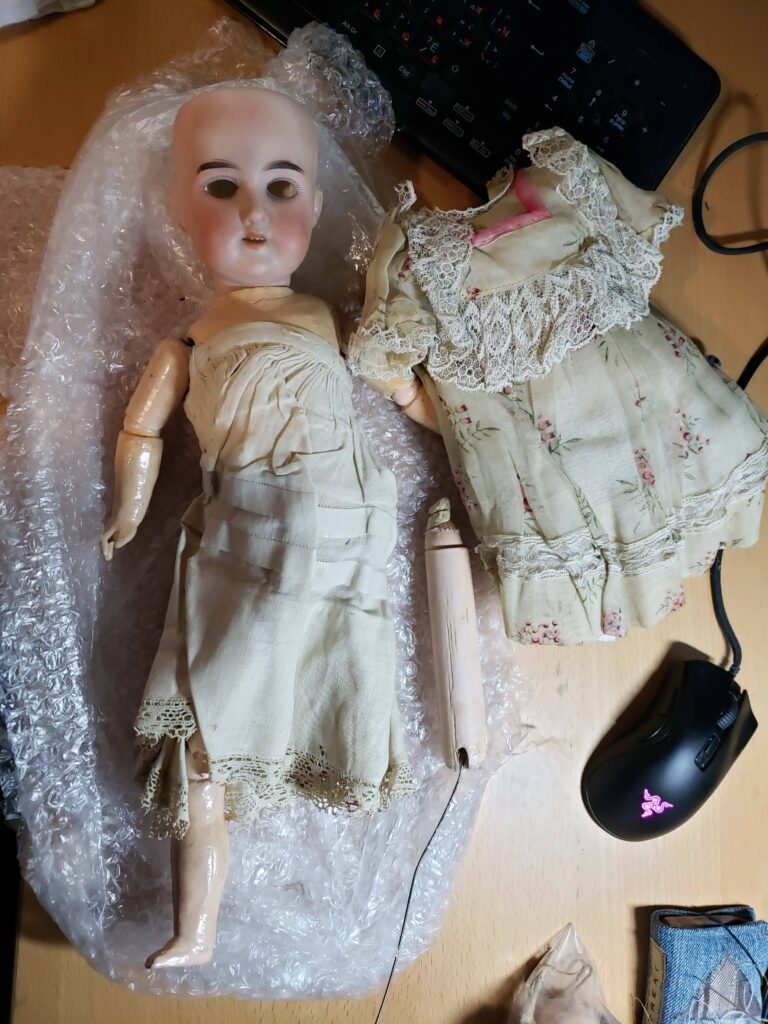
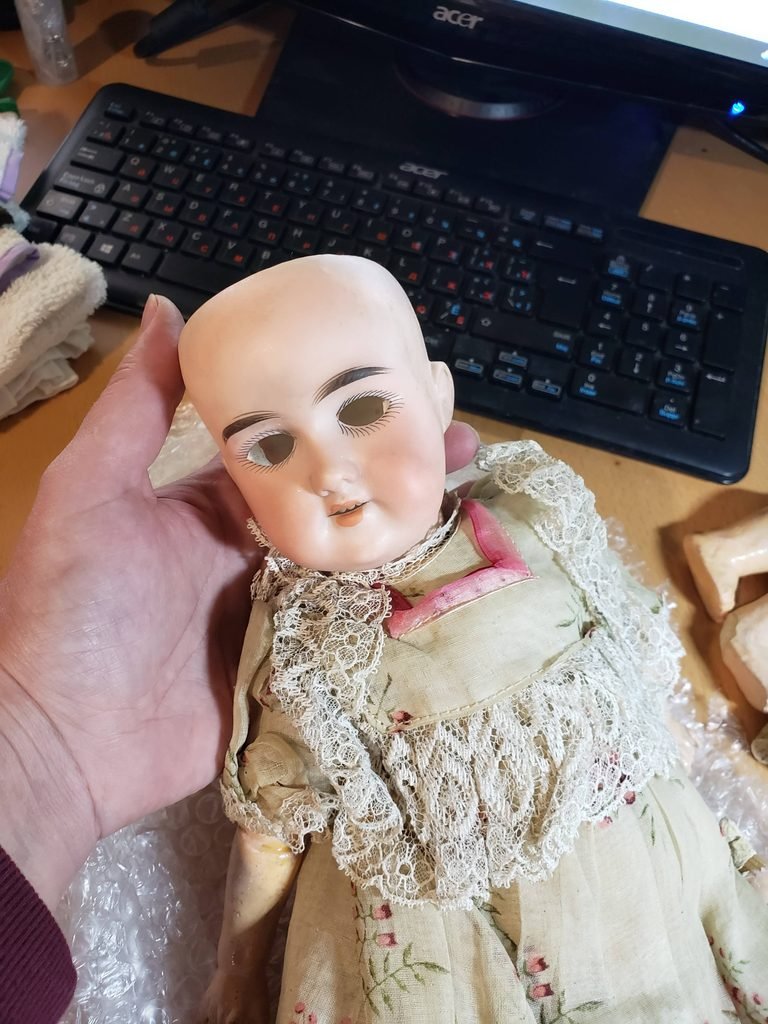
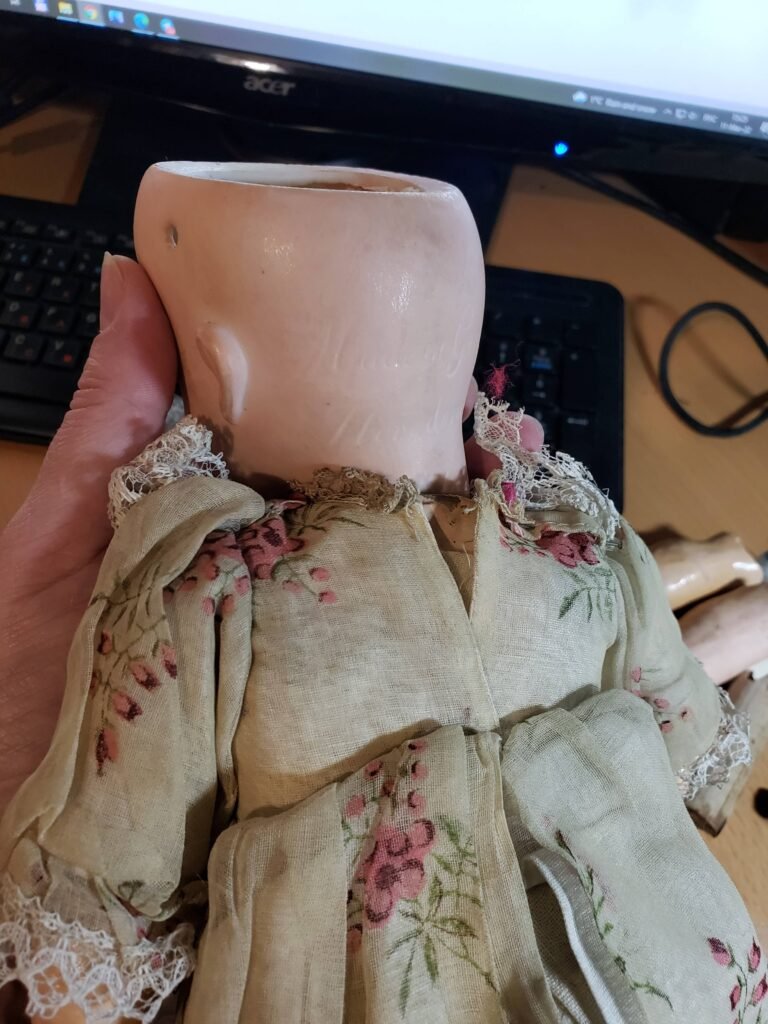
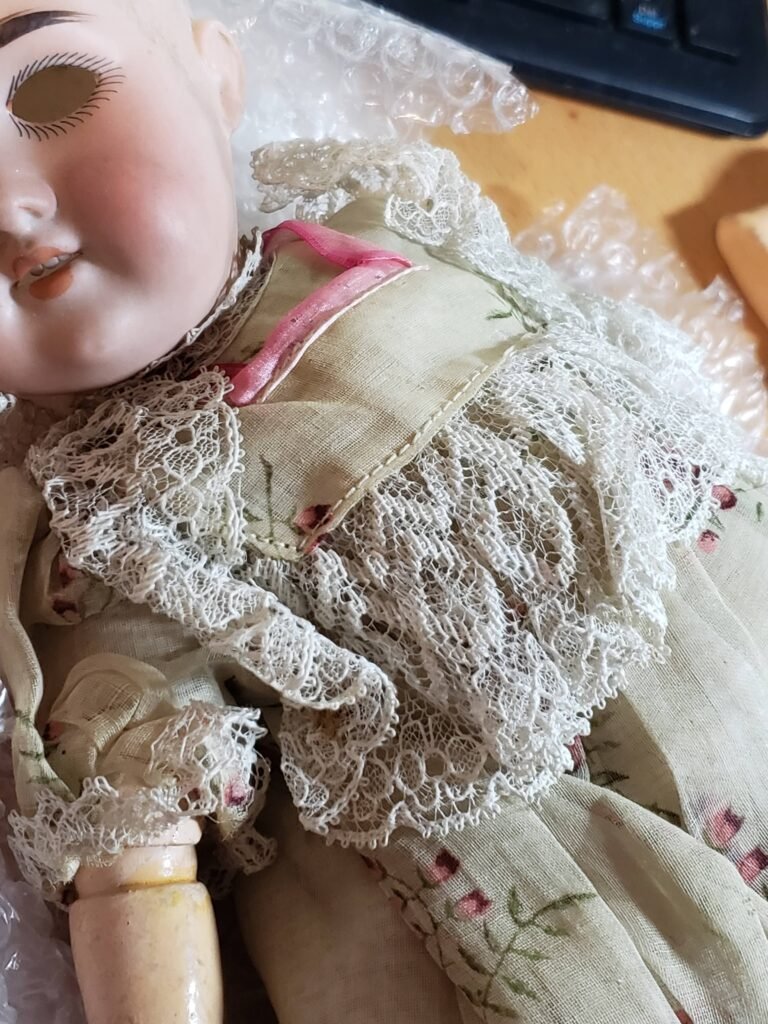
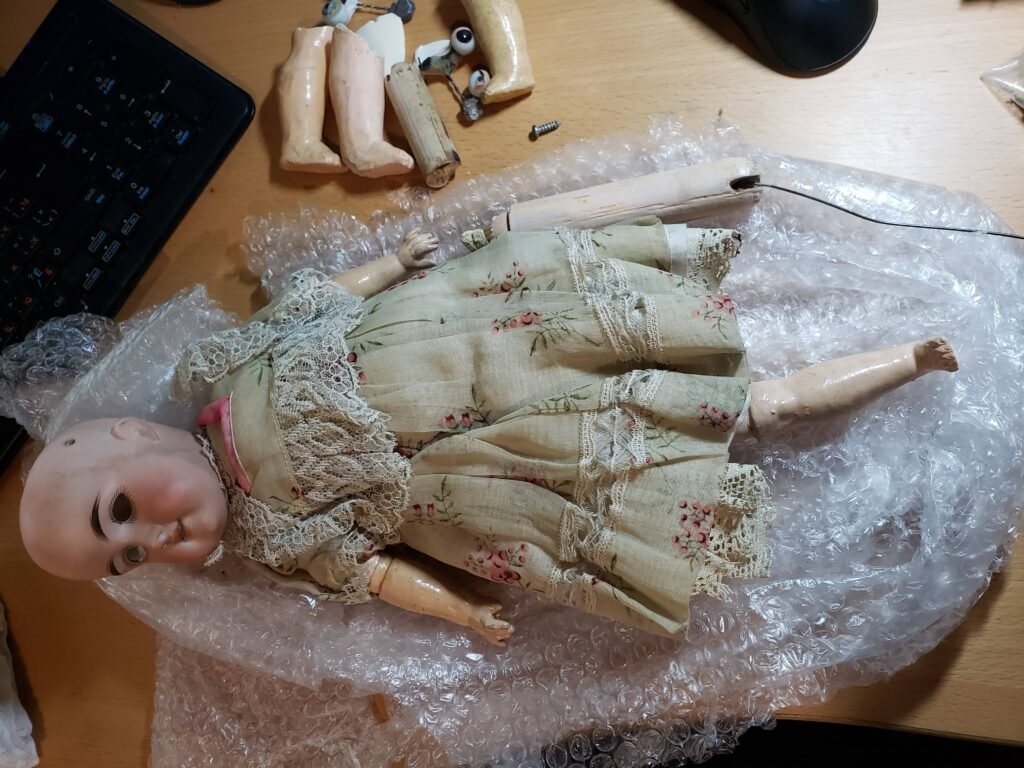
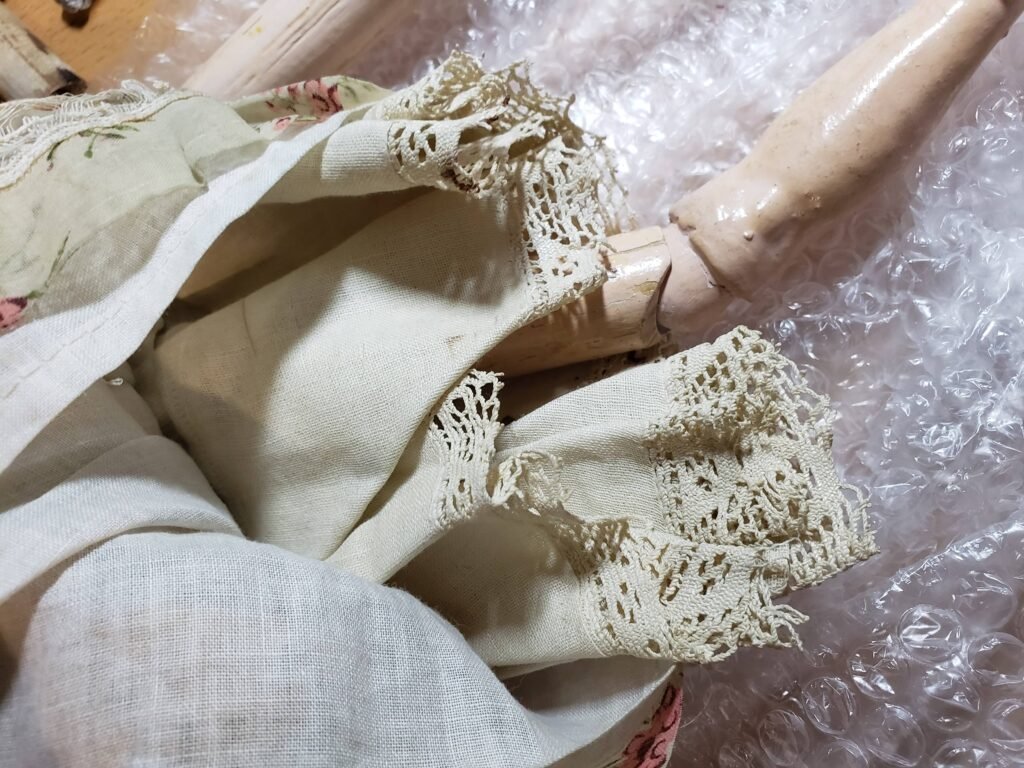
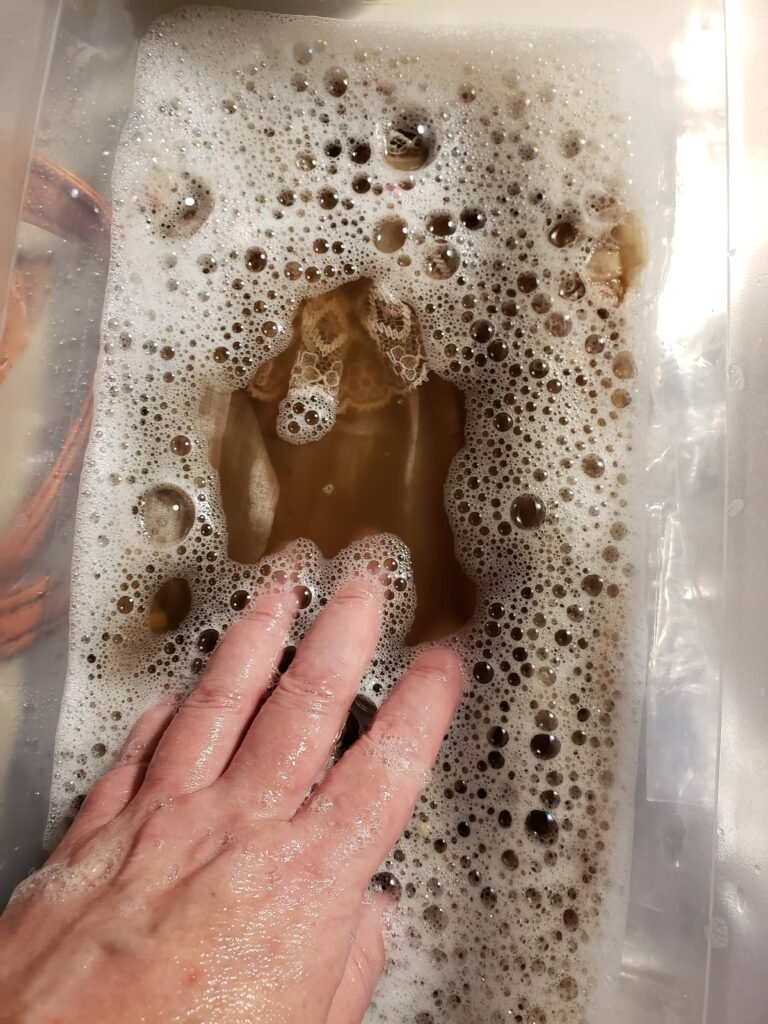
After the initial cleaning, it became clear that the textiles, too, were extremely worn and in places beyond practical repair. The first priority, therefore, was to restore the doll’s structural integrity and functionality. Only then could I begin to search for the image she was meant to have.
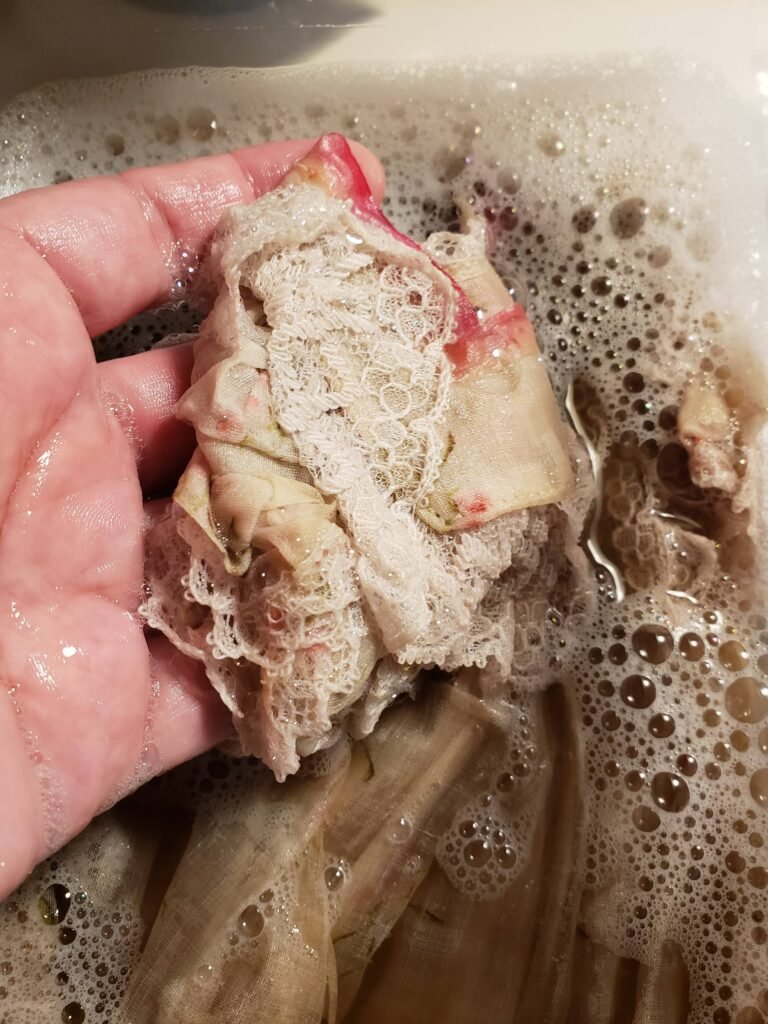
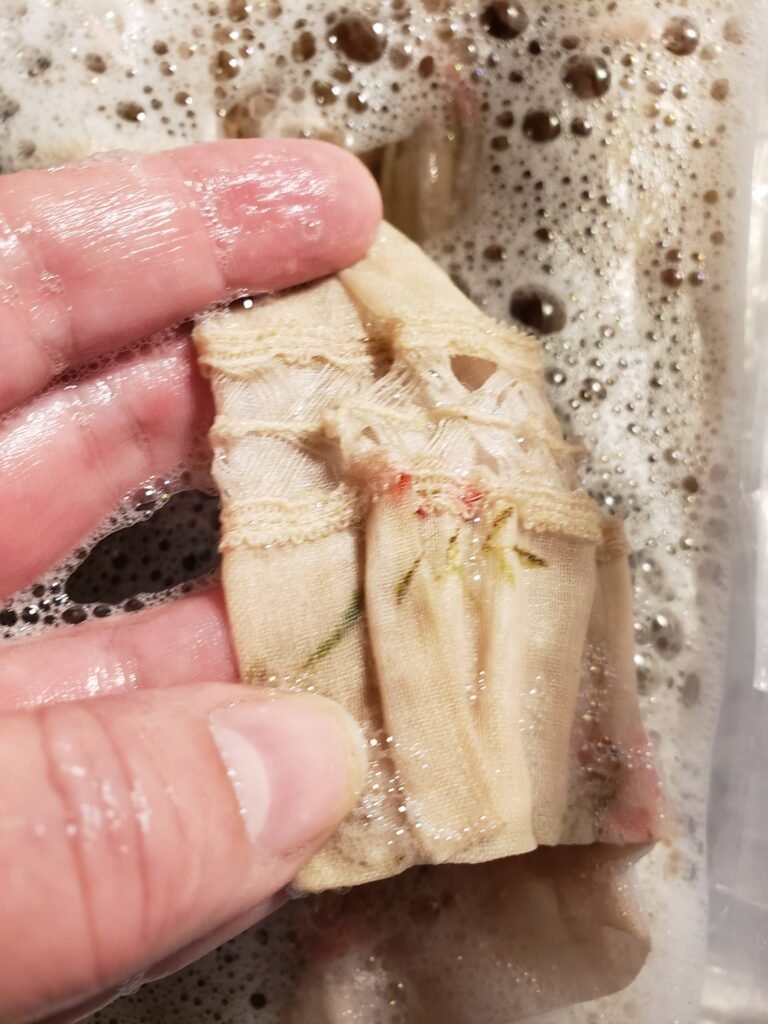
I usually document every stage of a restoration with photographs, but this time I did not. The work moved quickly, although it was carried out in short, separate sessions rather than as one continuous project.
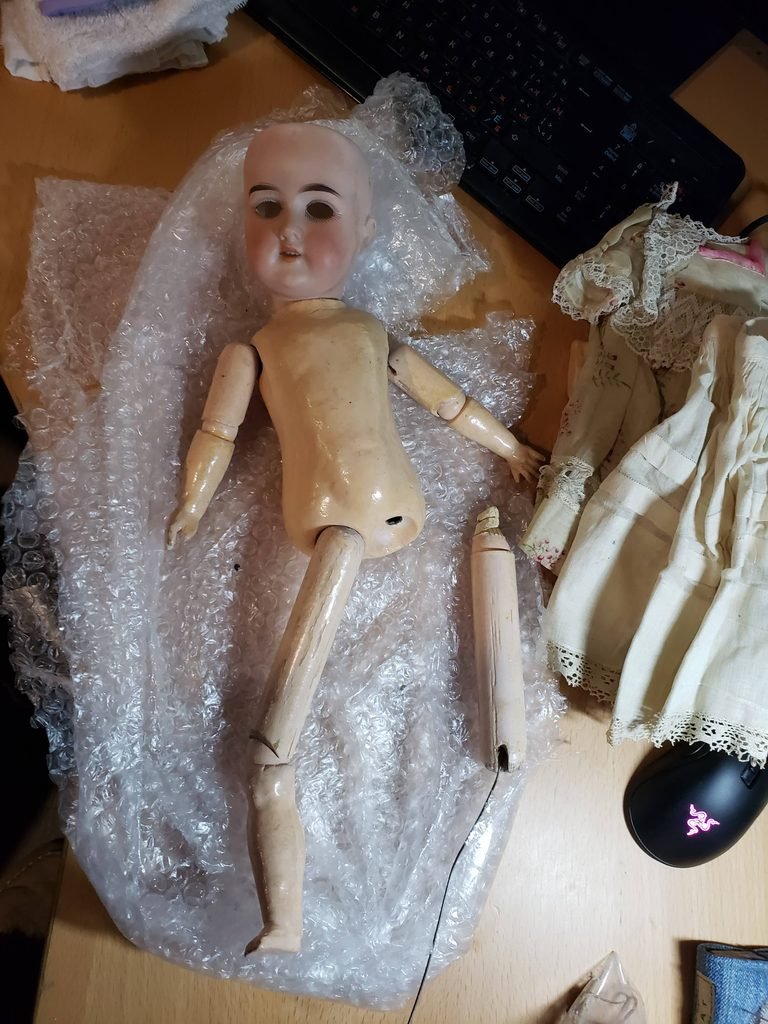
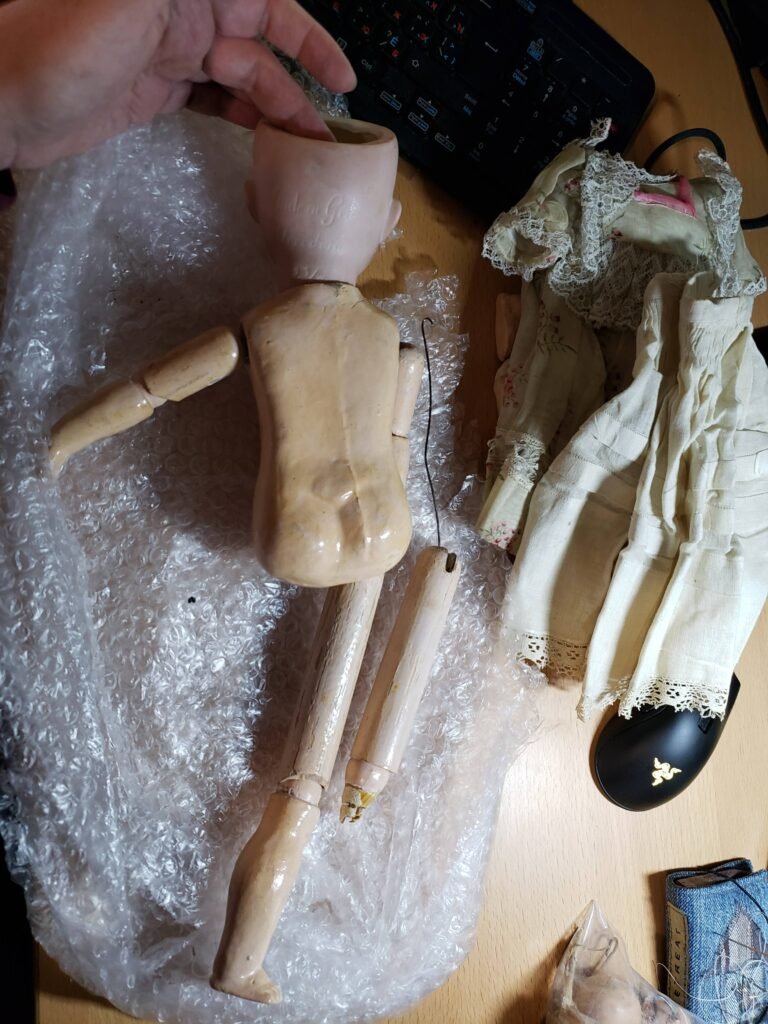
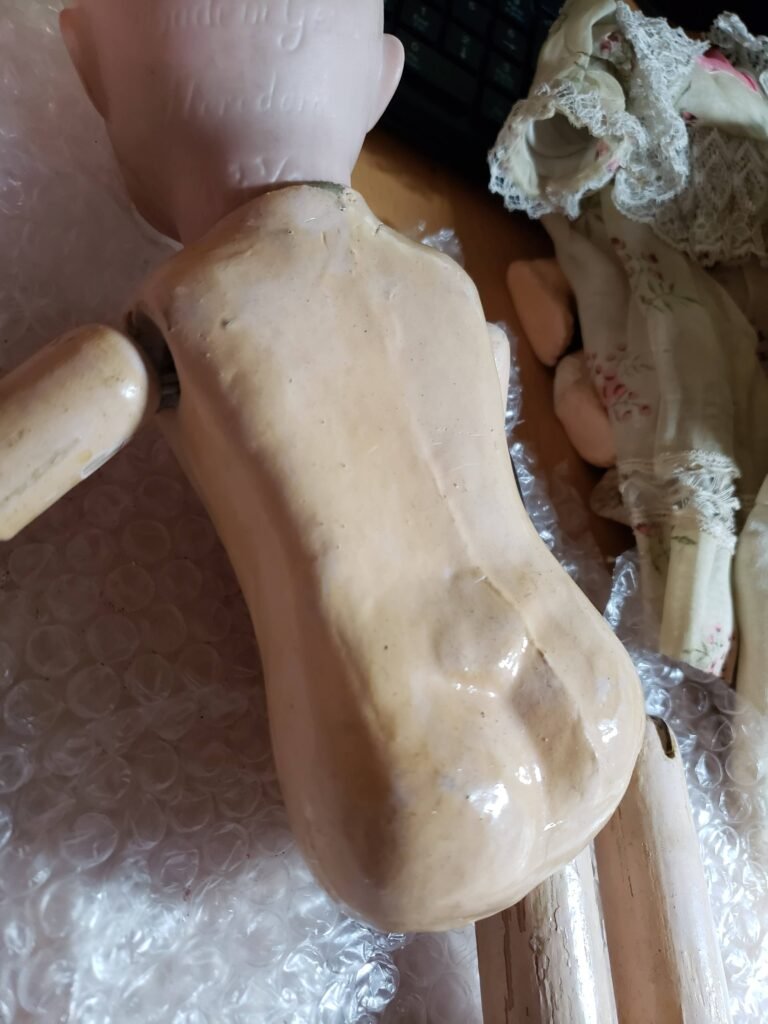
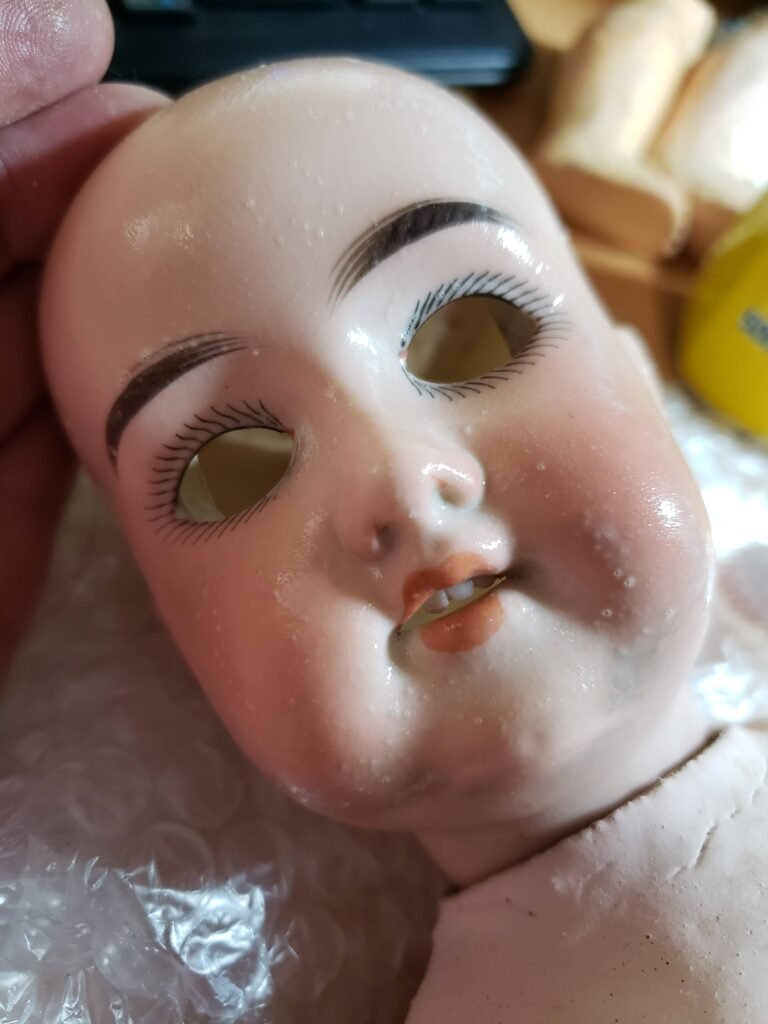
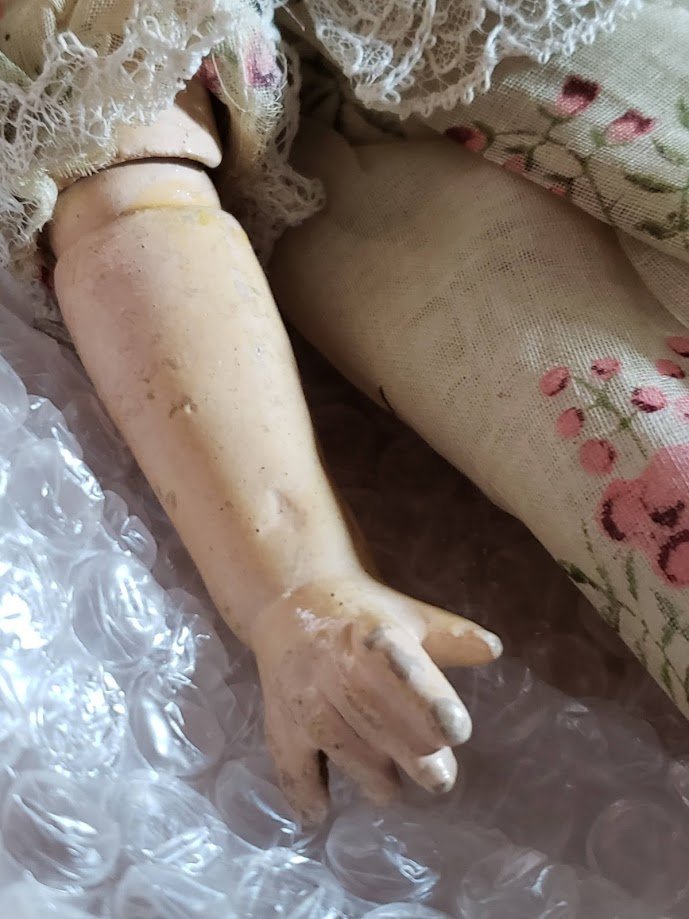
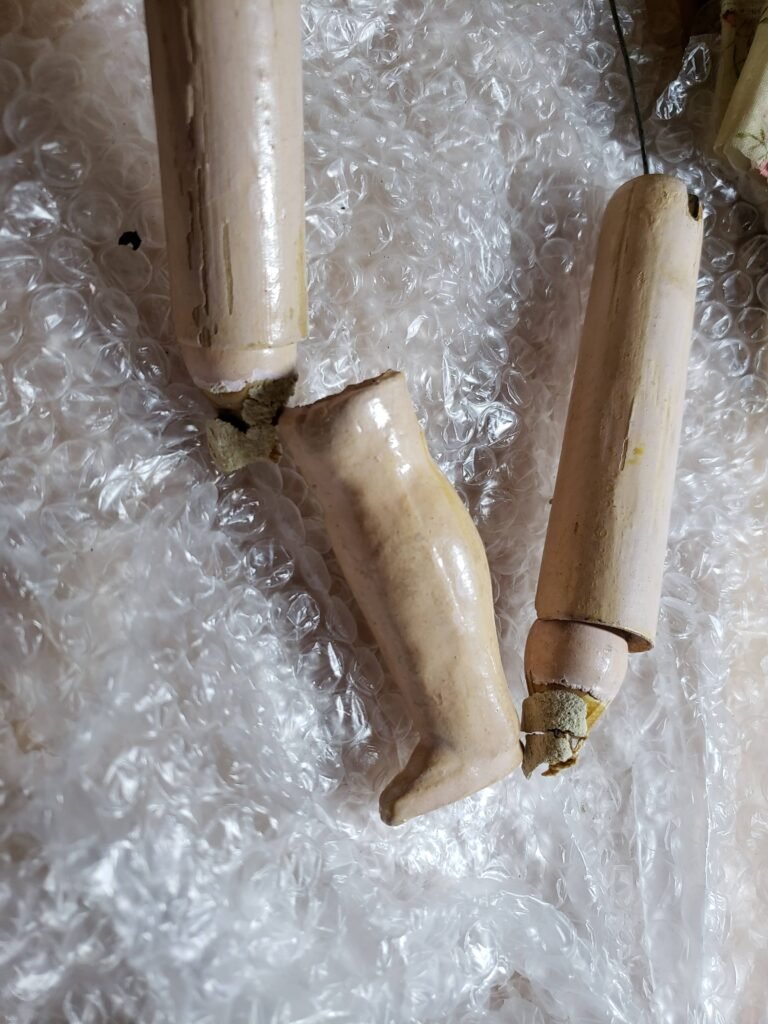
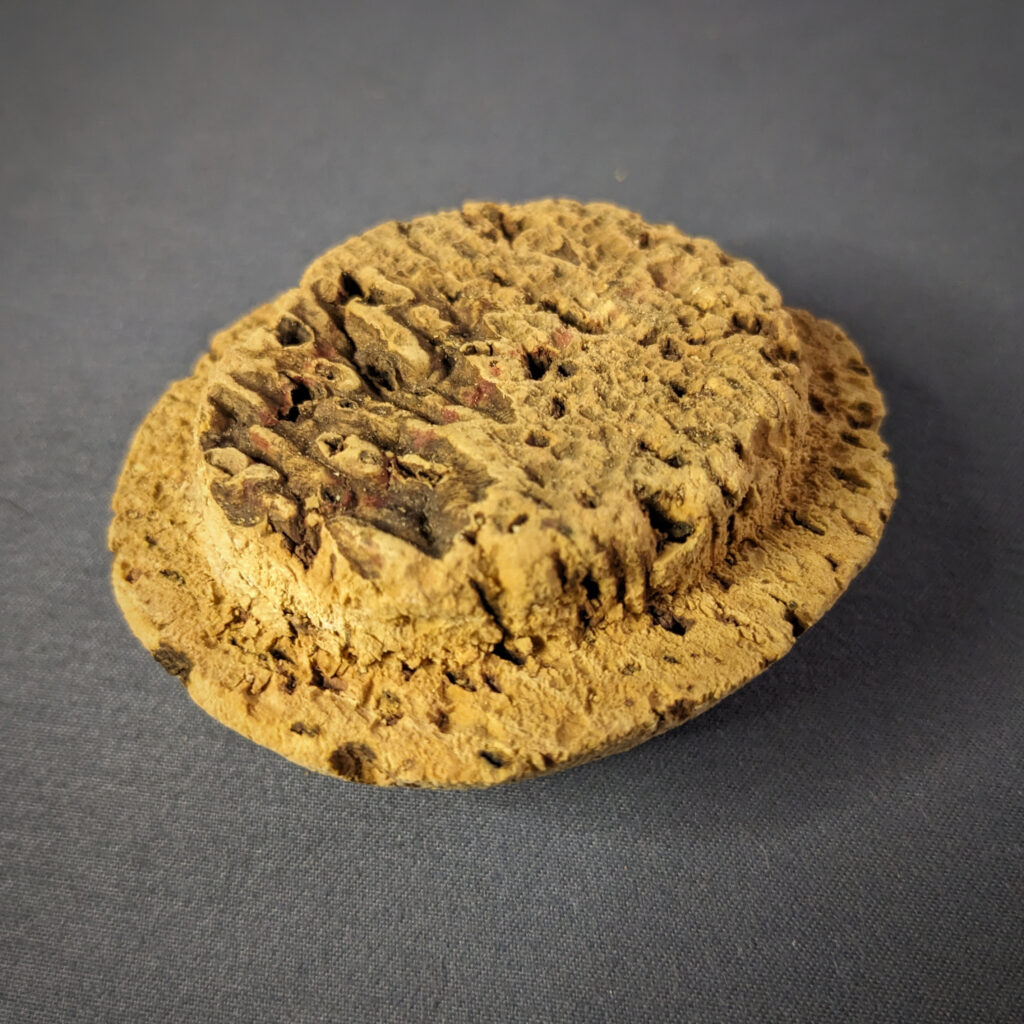
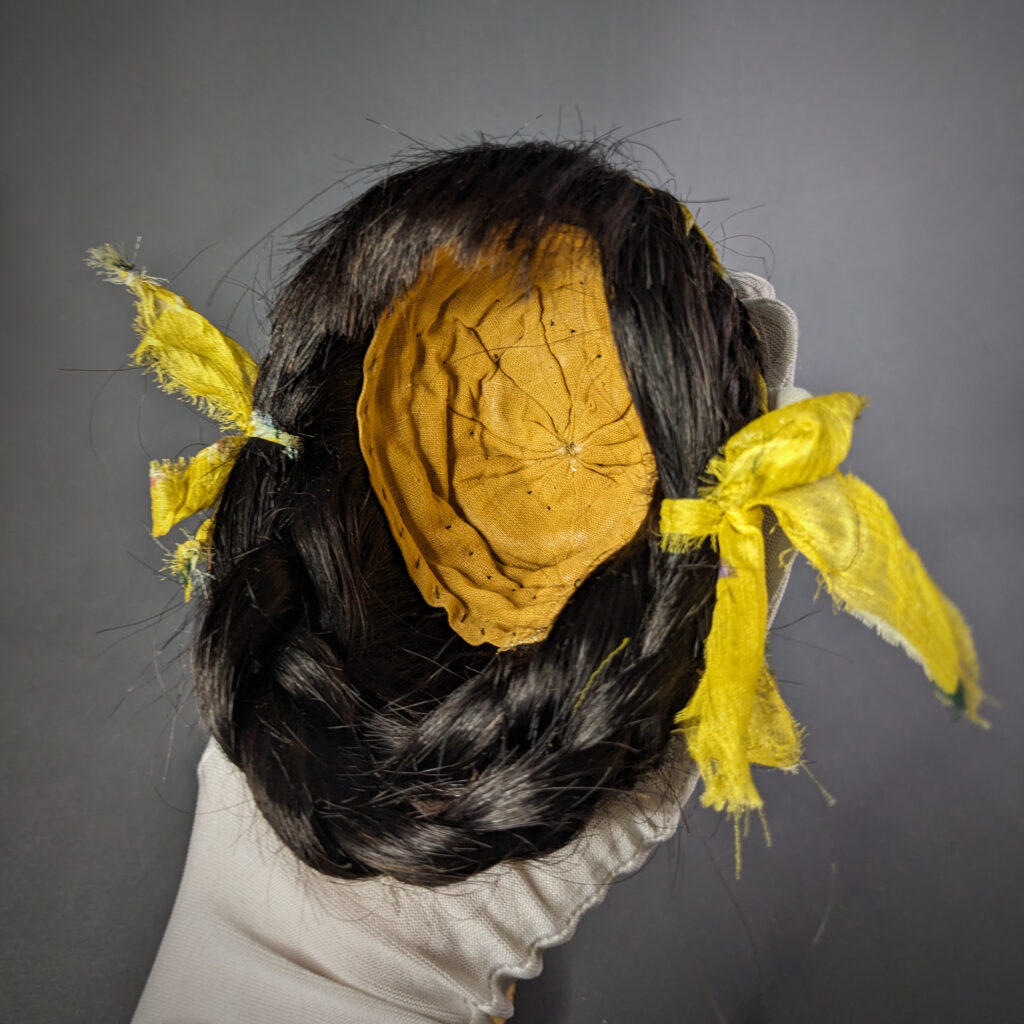
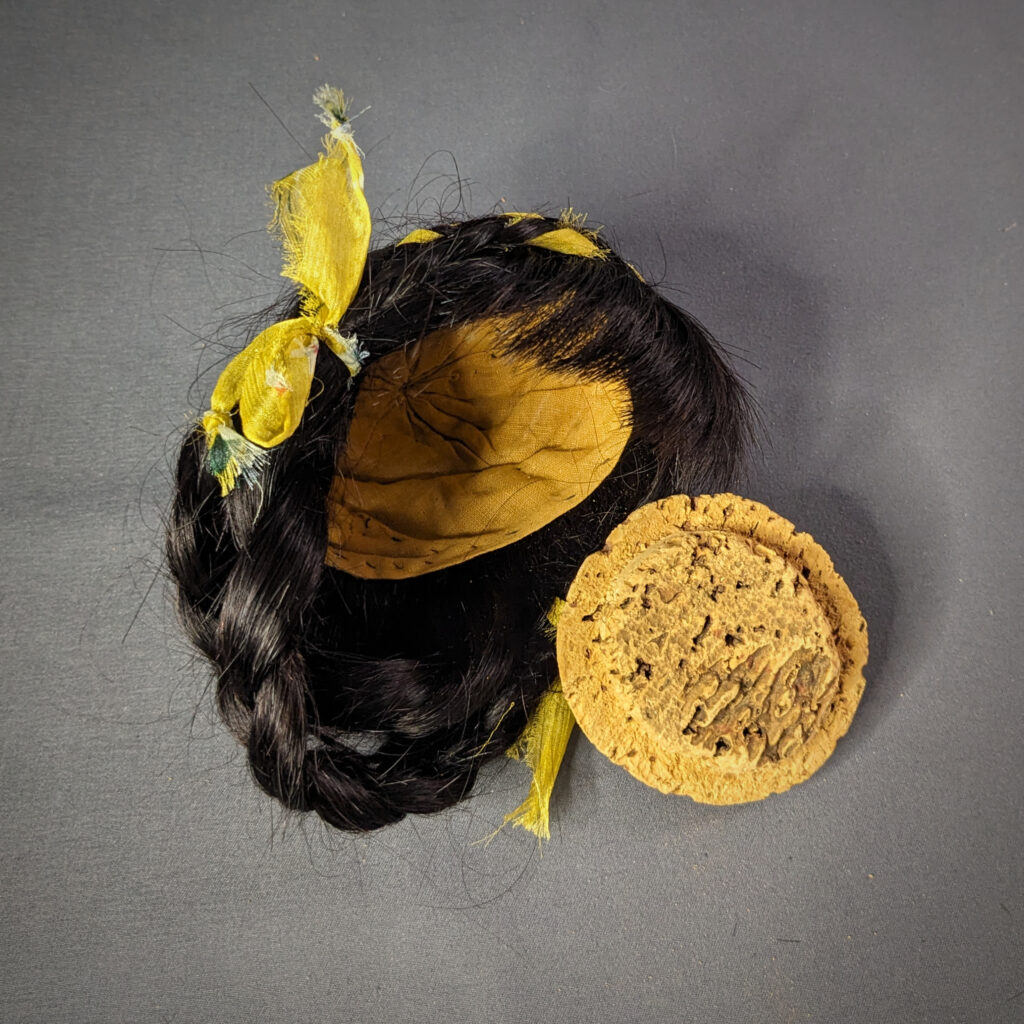
A period cork pate was found and carefully adjusted to the shape of the doll’s head. The pate provides the foundation for securing the wig, so finding an appropriate one was an important step. I was also able to restore her sleep-eye mechanism surprisingly quickly. There is something magical about the moment when a doll looks back at you for the first time.
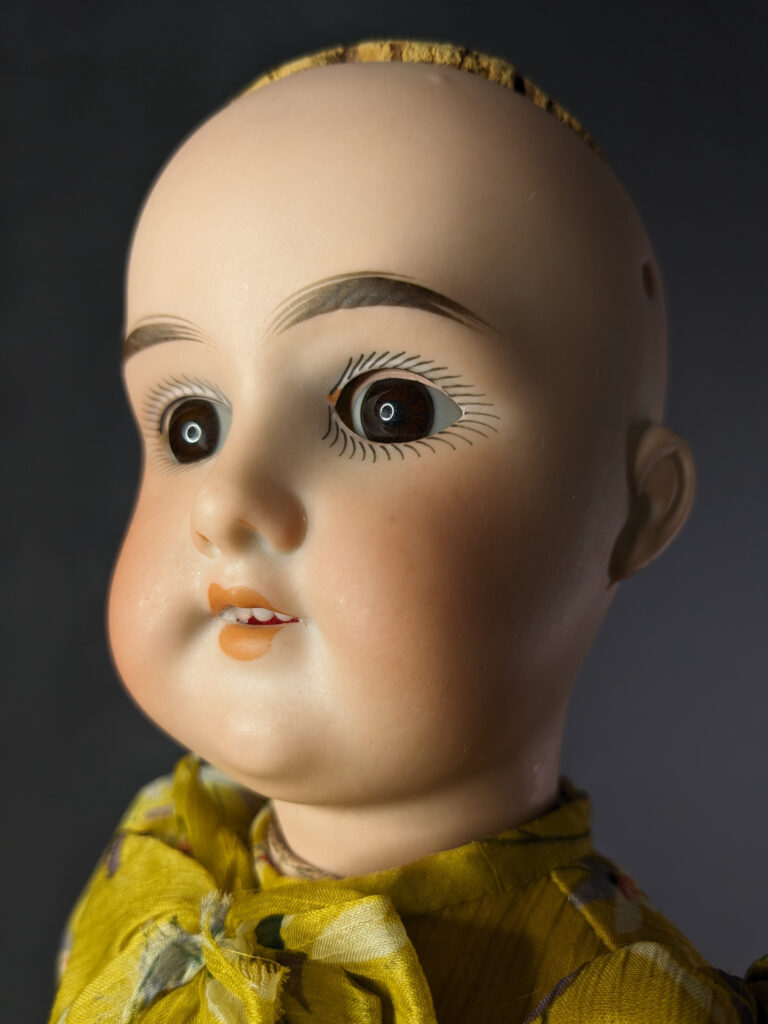
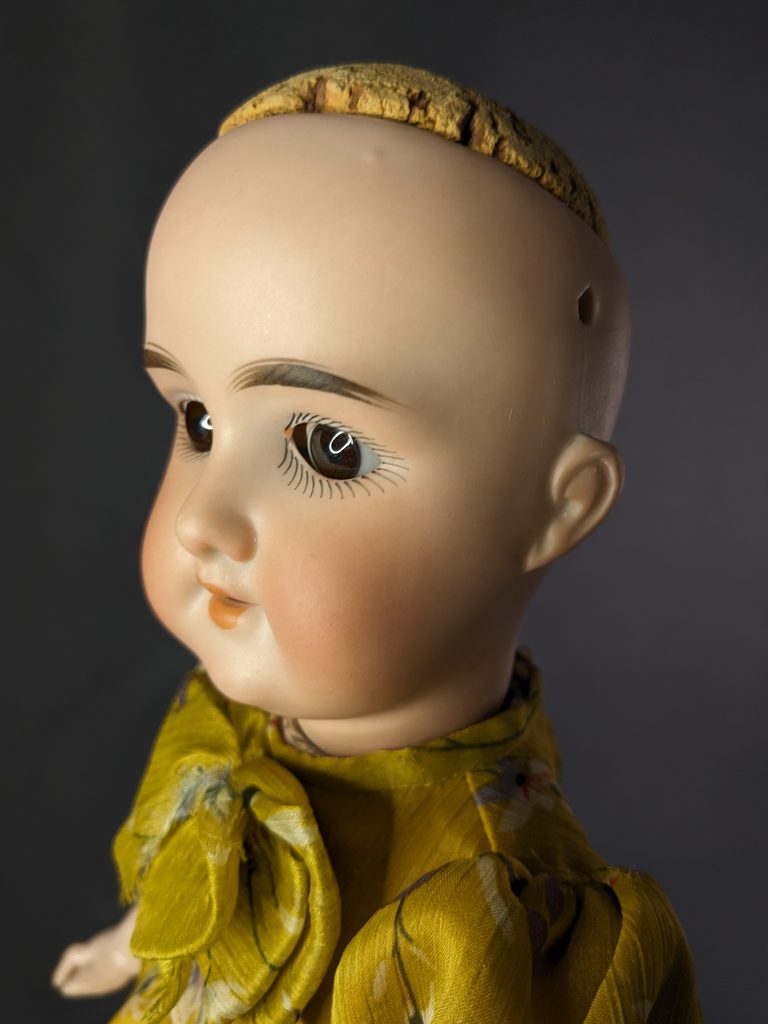
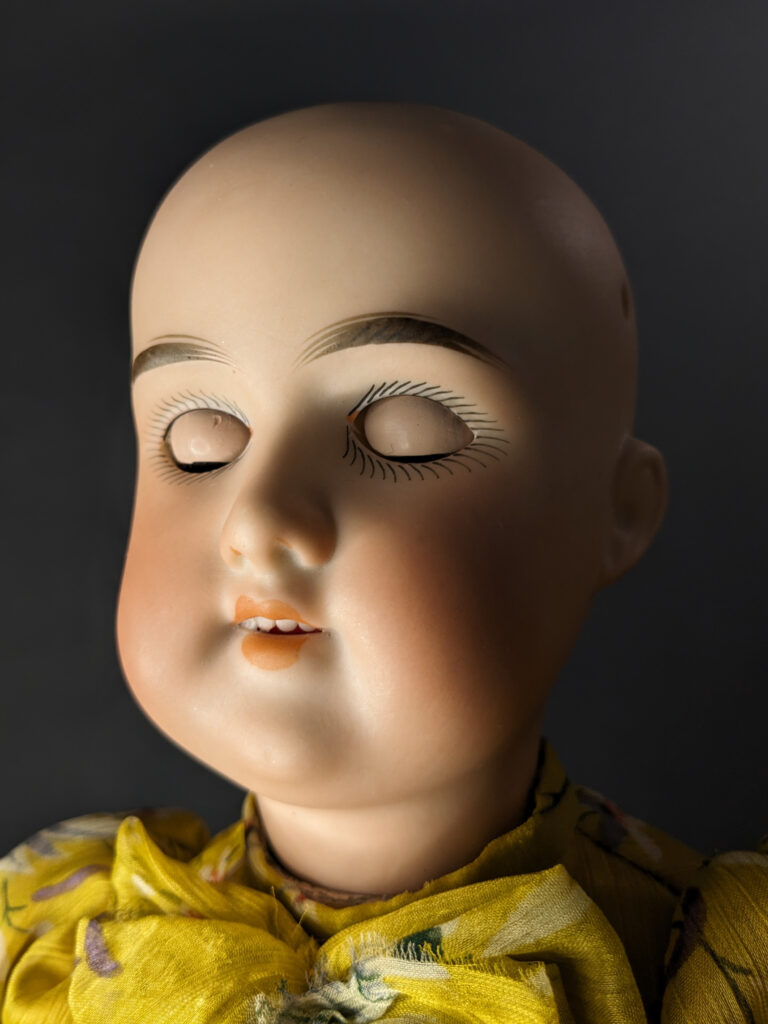
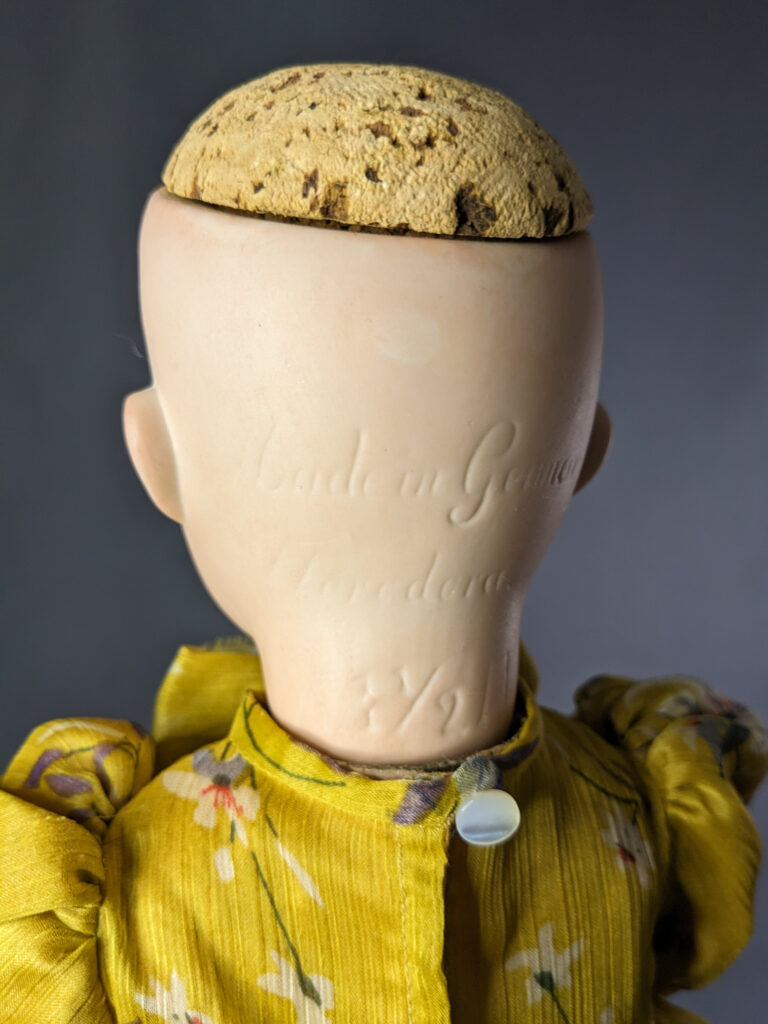
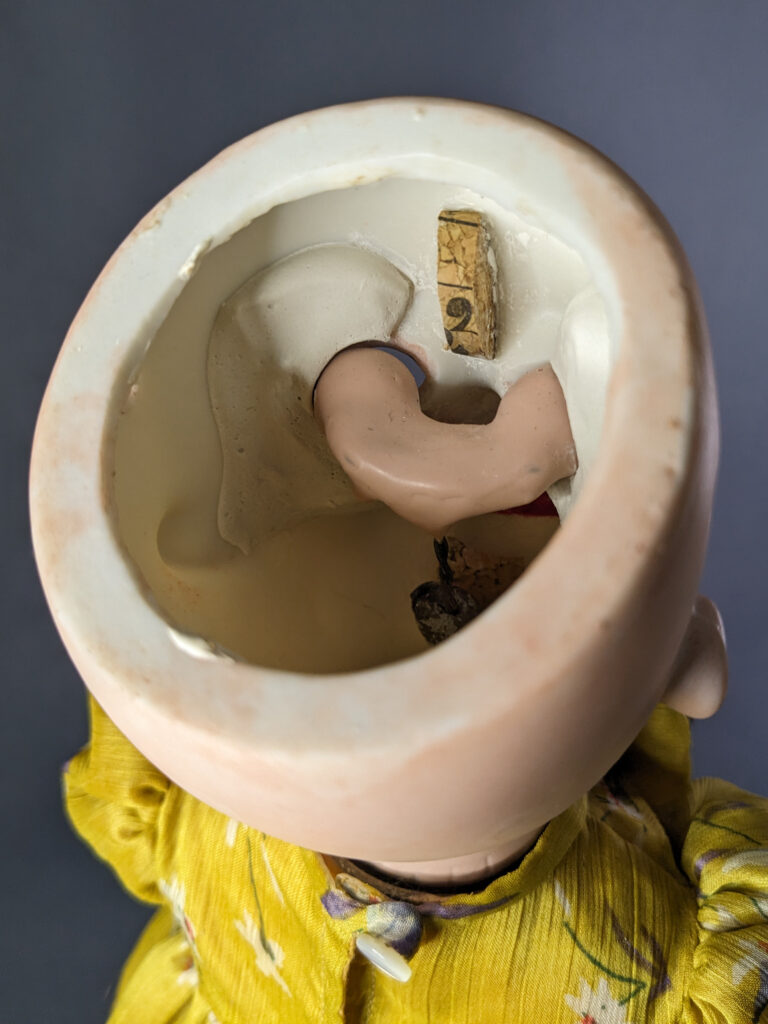
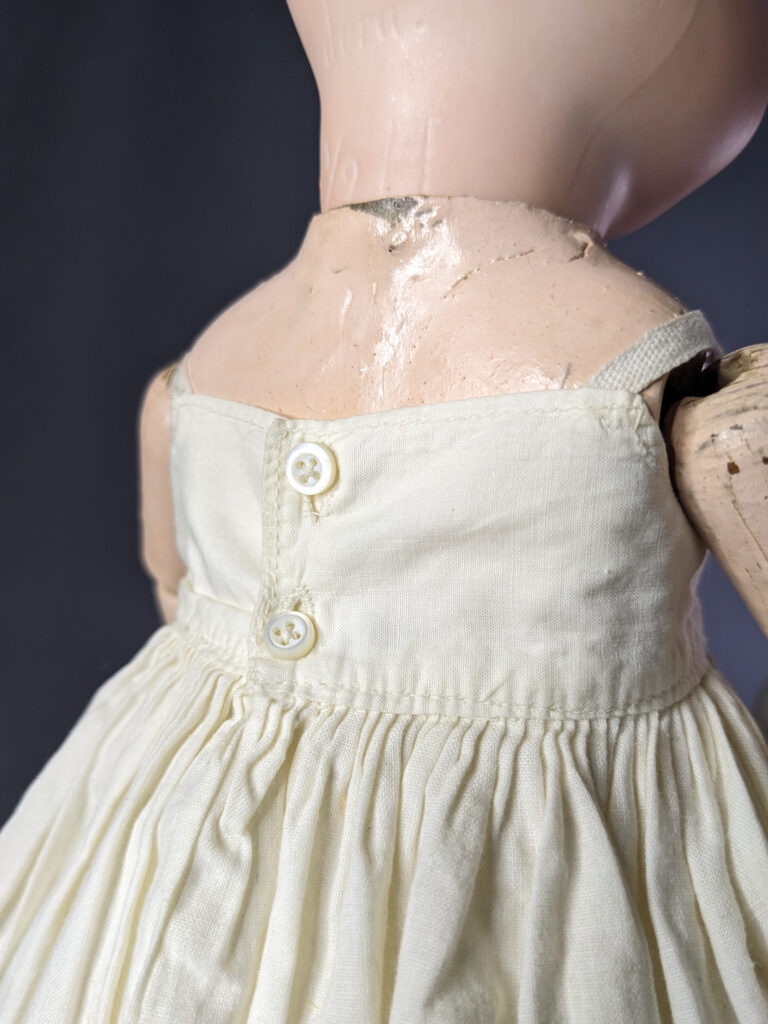
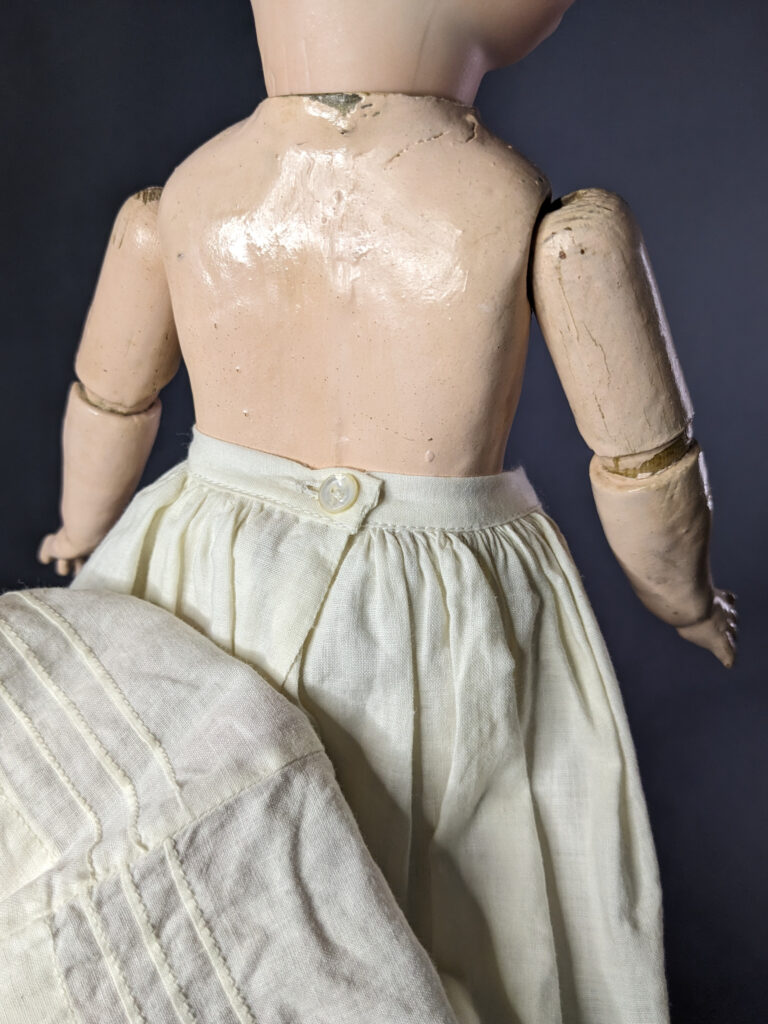
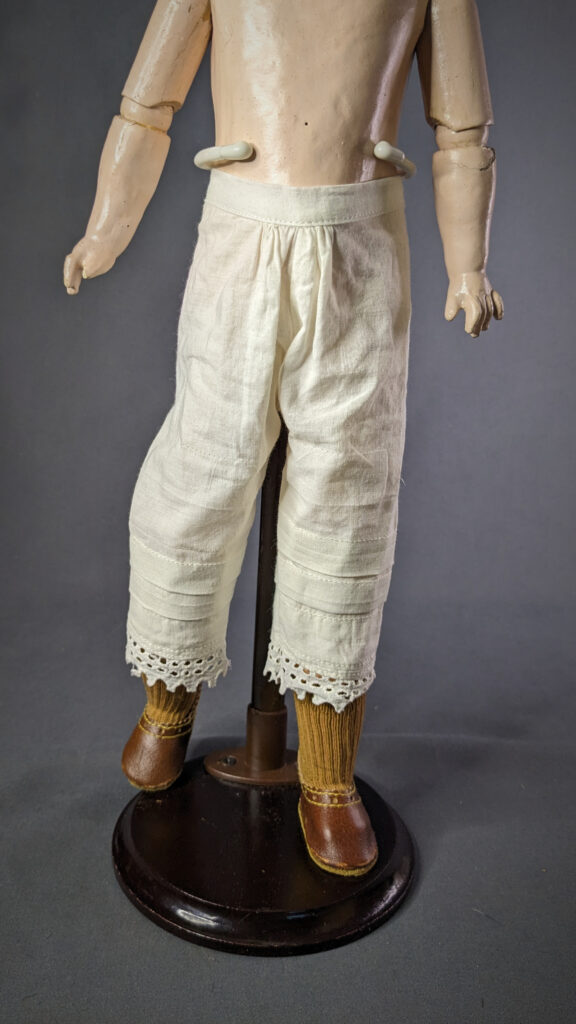
The body was cleaned and reassembled in its proper construction. The straight-hip legs, which give this type of doll its elegant height, were reunited with a matching pair of lower legs. The cracks and losses were stabilized and filled with a traditional conservation compound made from hide glue and organic fillers.
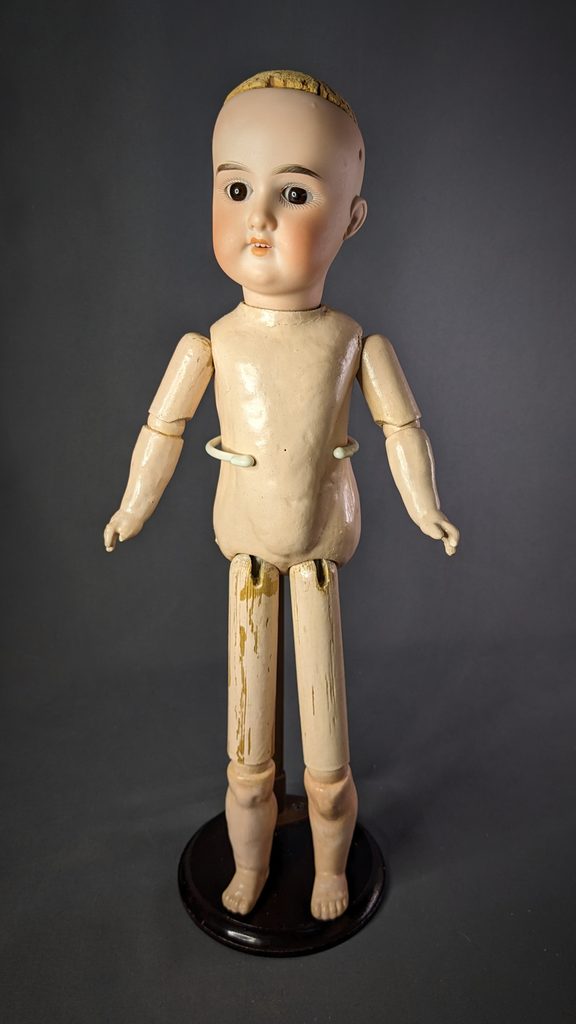
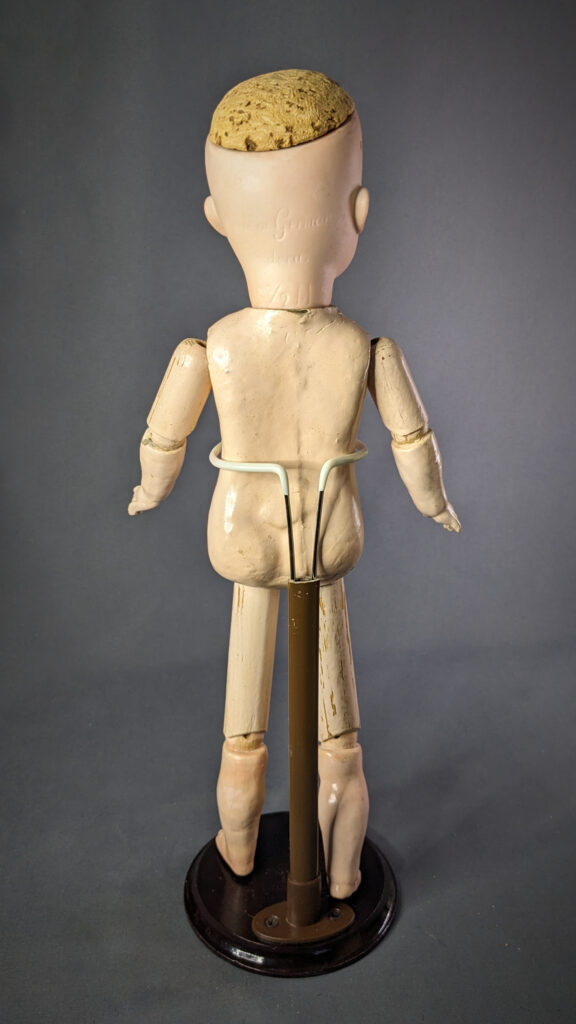
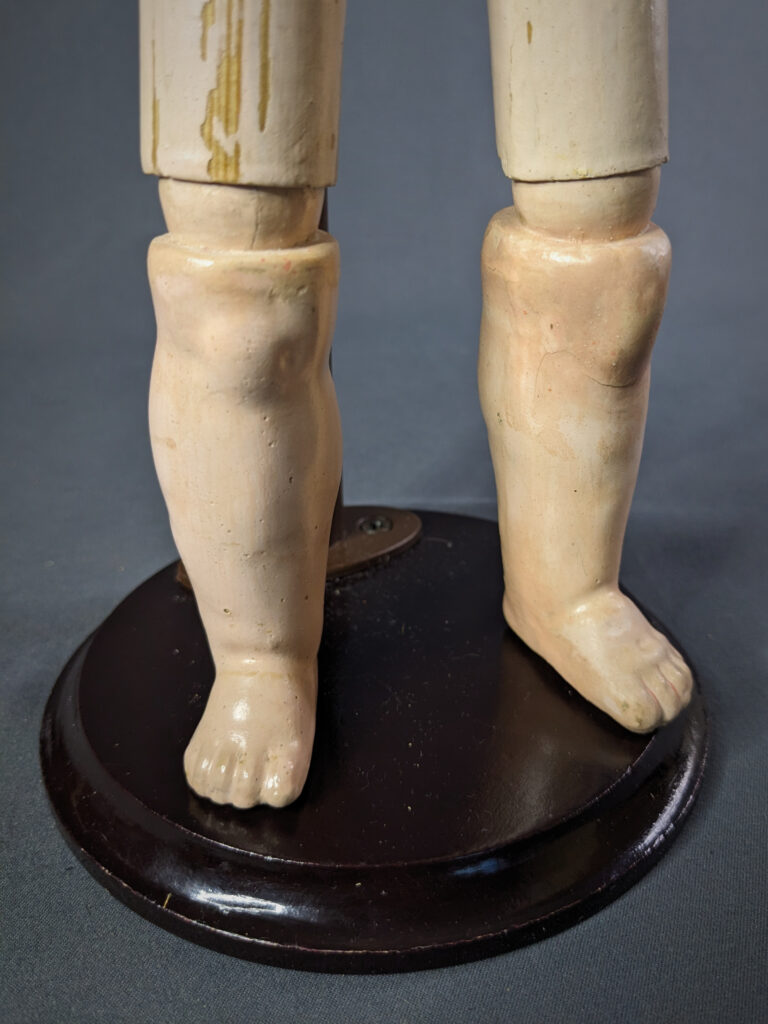
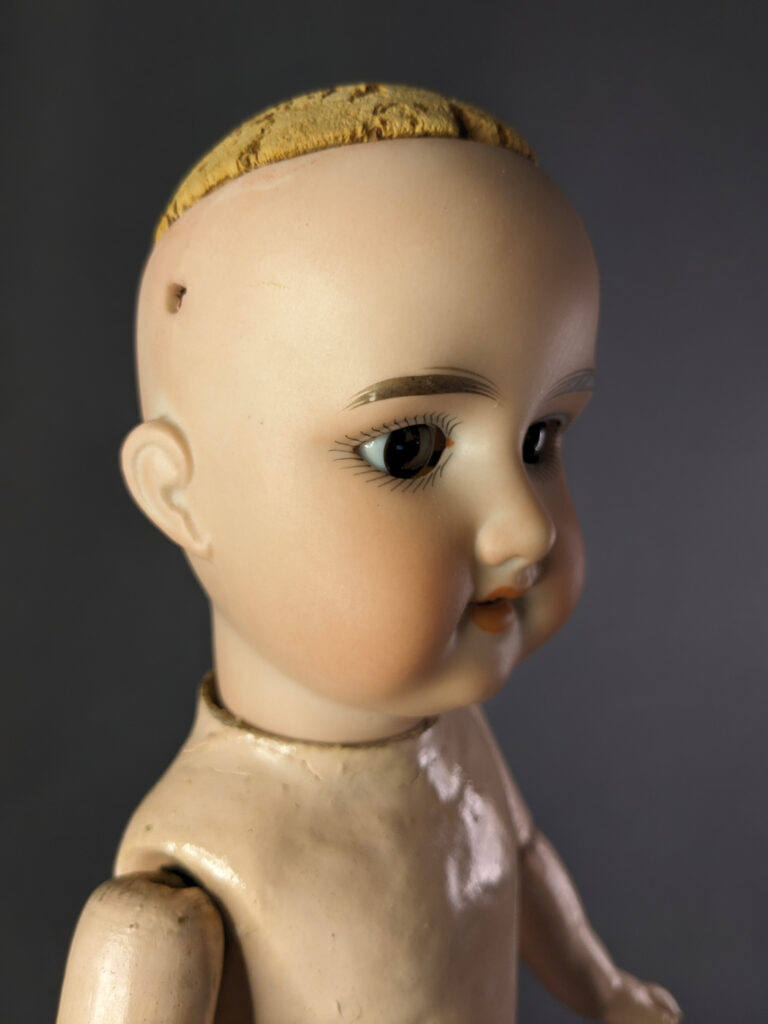
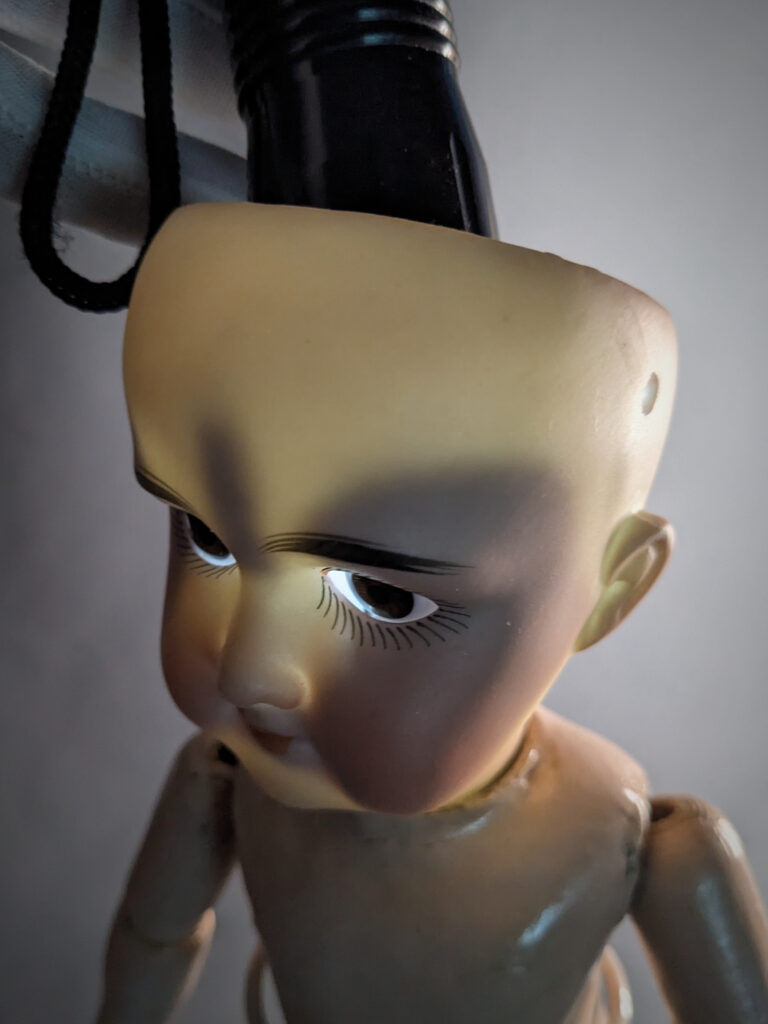
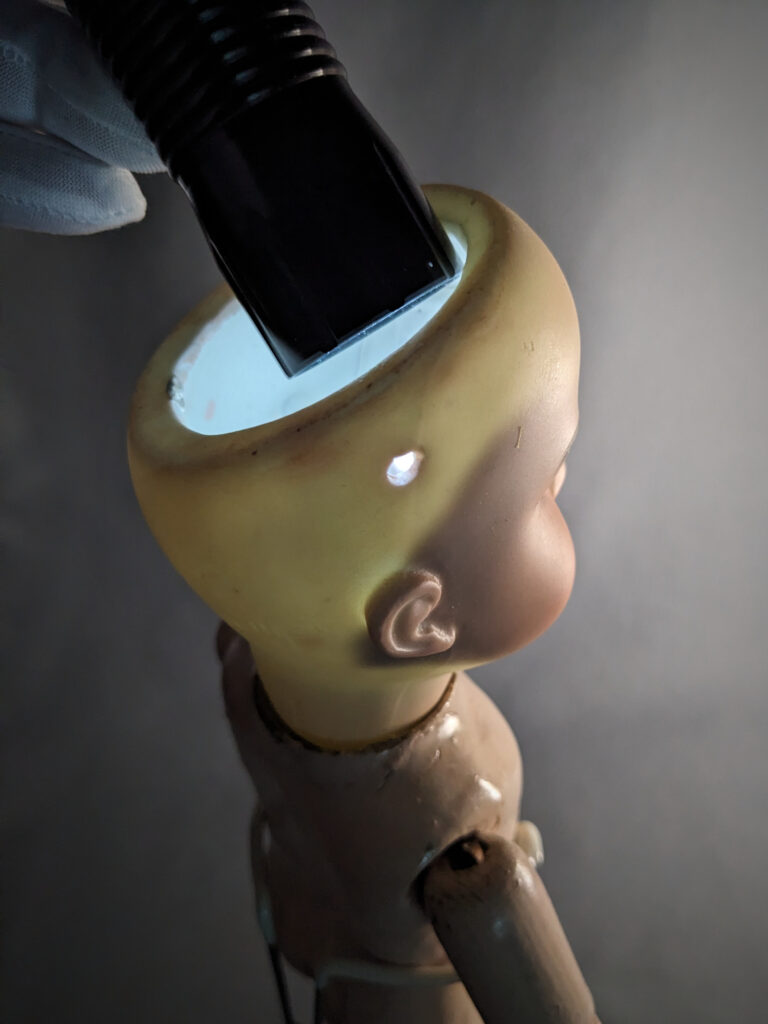
I deliberately chose not to repaint the body. Its worn surface, old finish, and small imperfections are part of its history and should remain visible. Instead, the surface was carefully sealed with several thin layers of shellac, refreshing and unifying its appearance while preserving its authentic sense of age. The doll emerged cleaner, stronger, and more complete, yet she still carried the visible traces of her long life. That was exactly the balance I wanted to preserve: not a doll made new, but an old doll made whole again.
Finding Her New Image
The doll’s expressive brown eyes and tall proportions gave her a particularly lively character. I tried several shades of hair, but none of the darker options felt right. Then, quite by chance, the hair fell across her face, and suddenly I knew: this was her look.
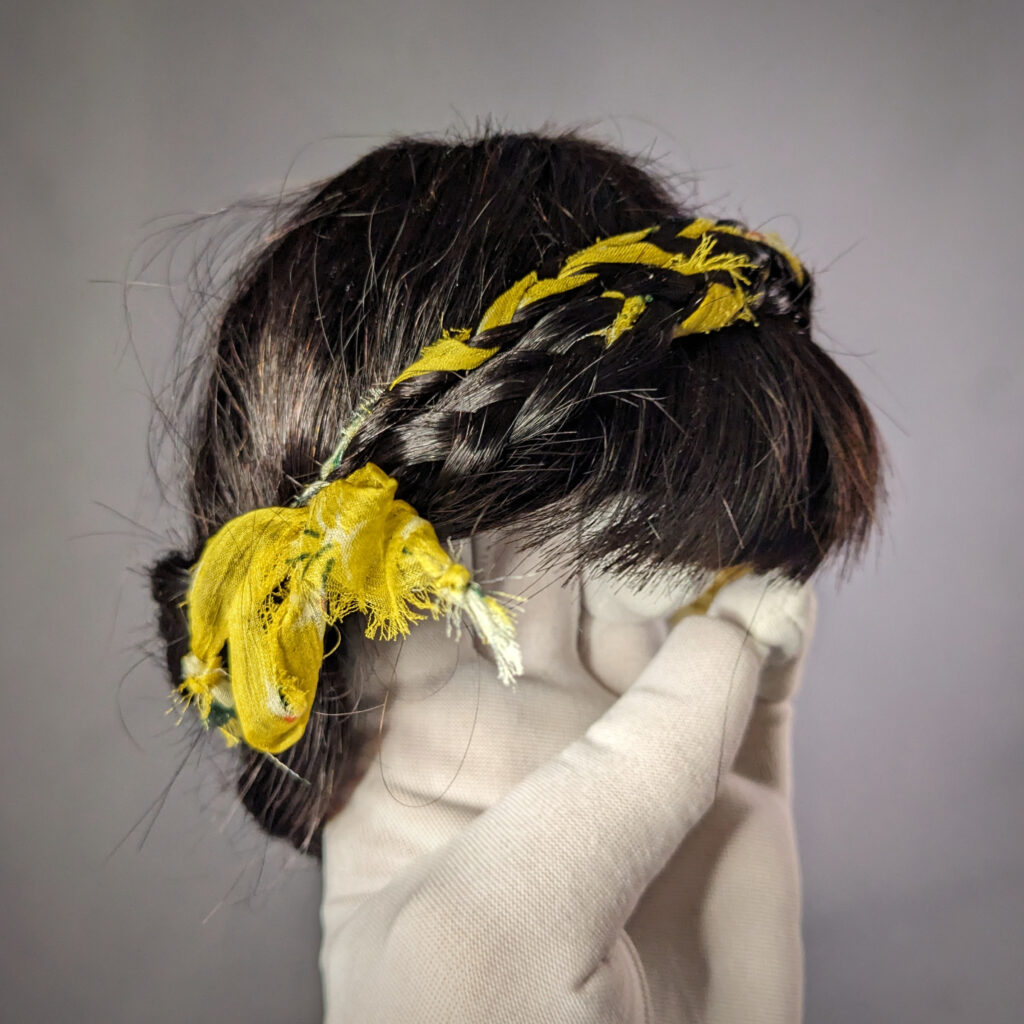
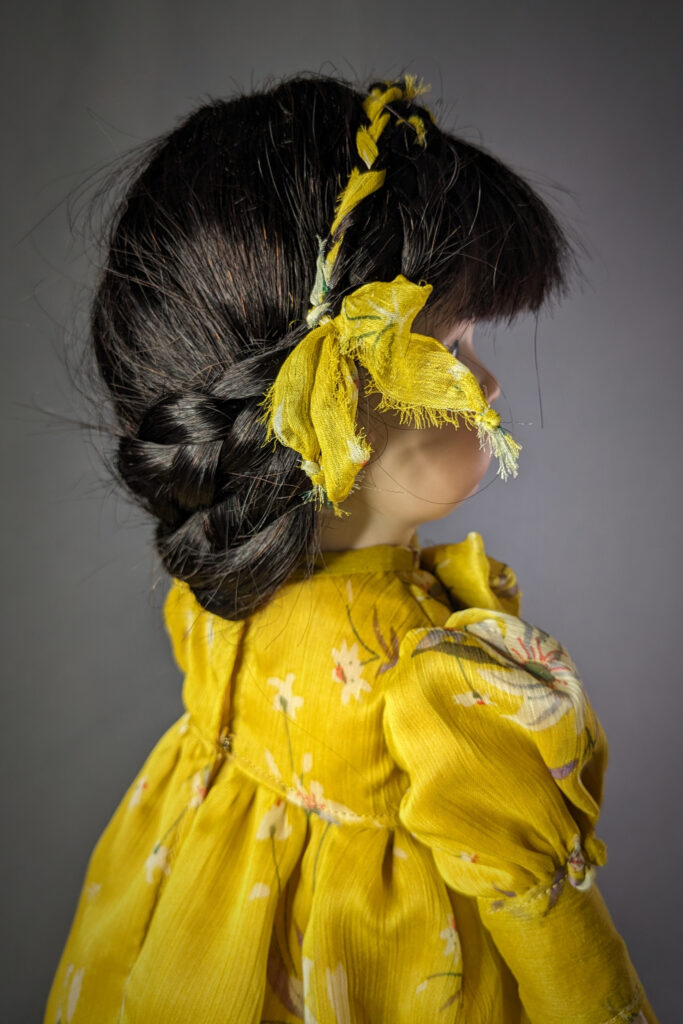
I quickly made a wig with two long braids from natural human hair. I could not bring myself to cut them. So I created a hairstyle from them instead. The braids were arranged in a basket-like crown around her head, giving Floradora a distinctive silhouette and a old-fashioned charm.
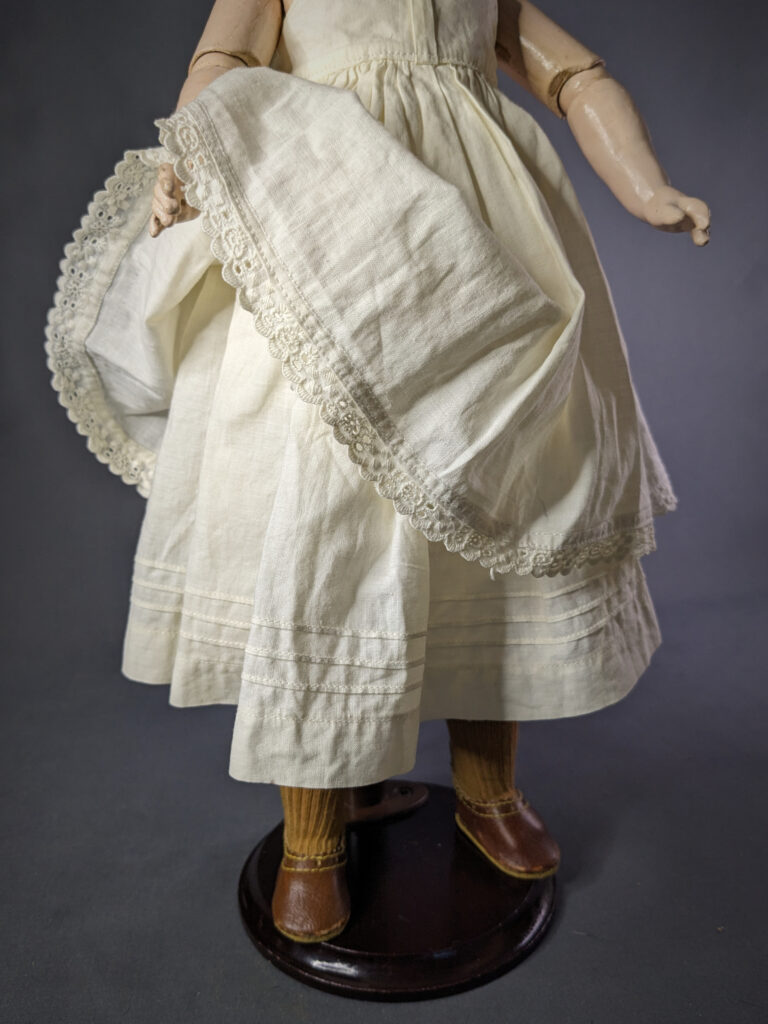
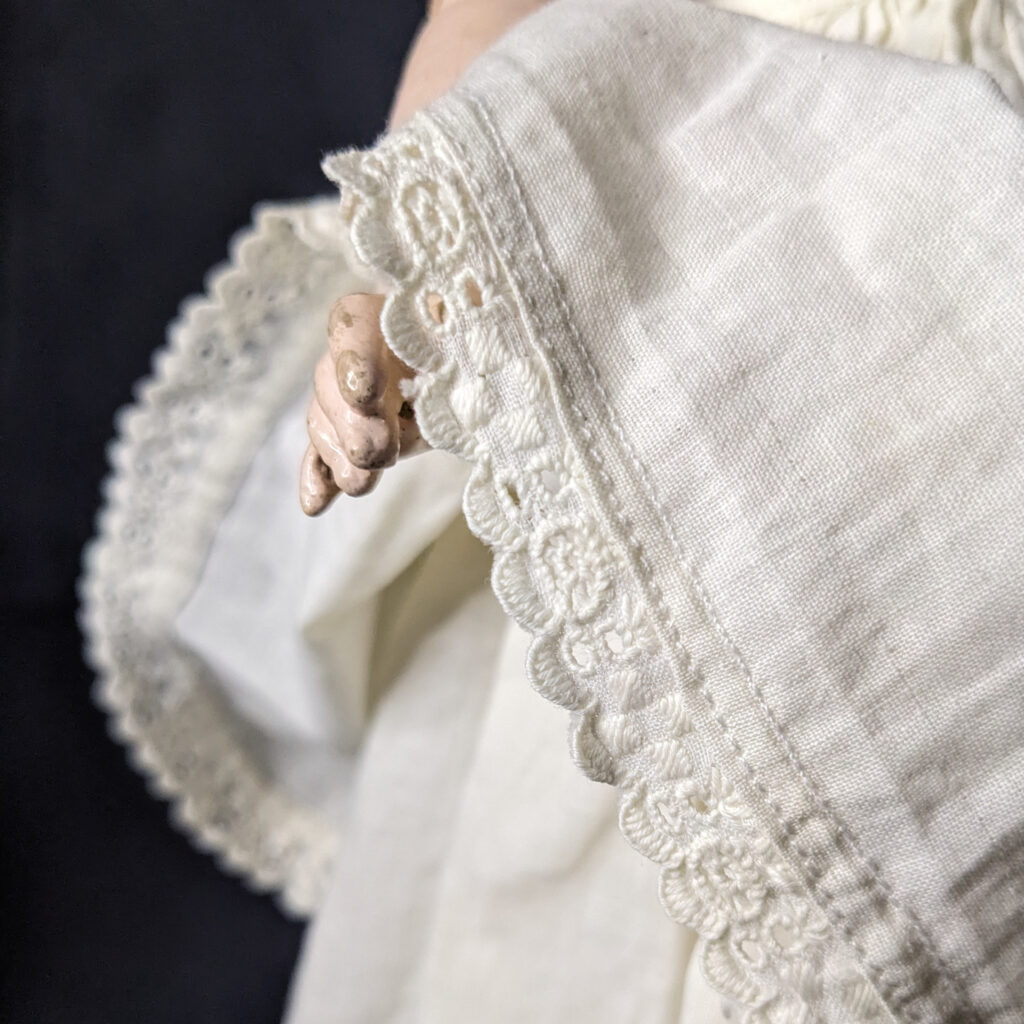
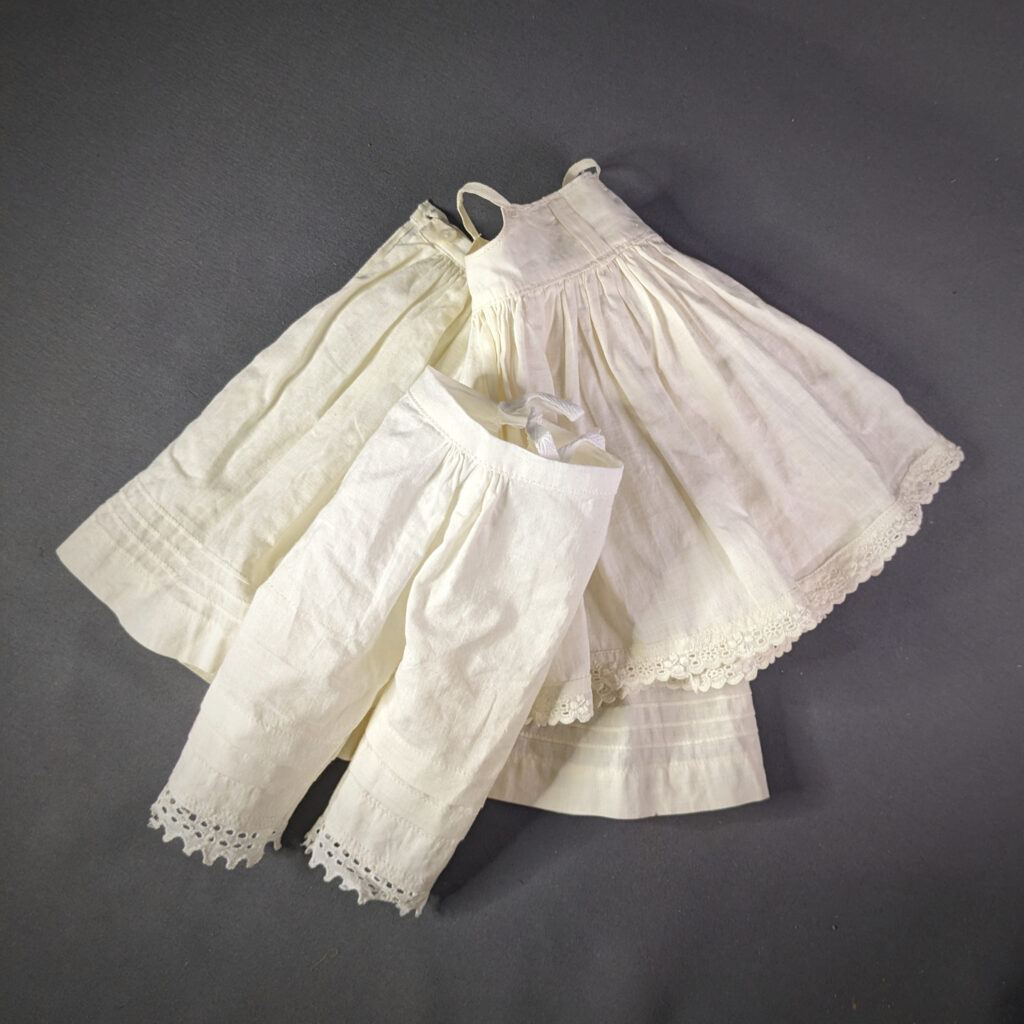
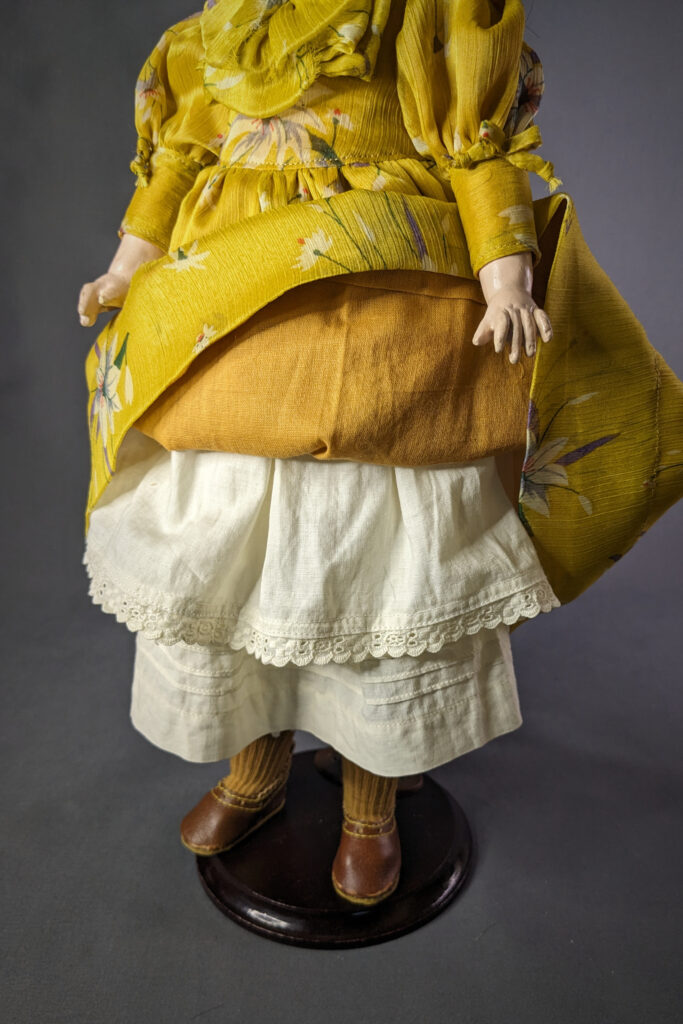
Her underclothing was created from antique doll garments. I carefully selected and reworked original doll chemises, choosing fabrics whose quality, texture, and weave were as close as possible to the materials traditionally used in early twentieth-century doll clothing. The result was not simply a costume underneath the dress, but a proper foundation for the entire image: delicate, layered, and inspired by antique examples.
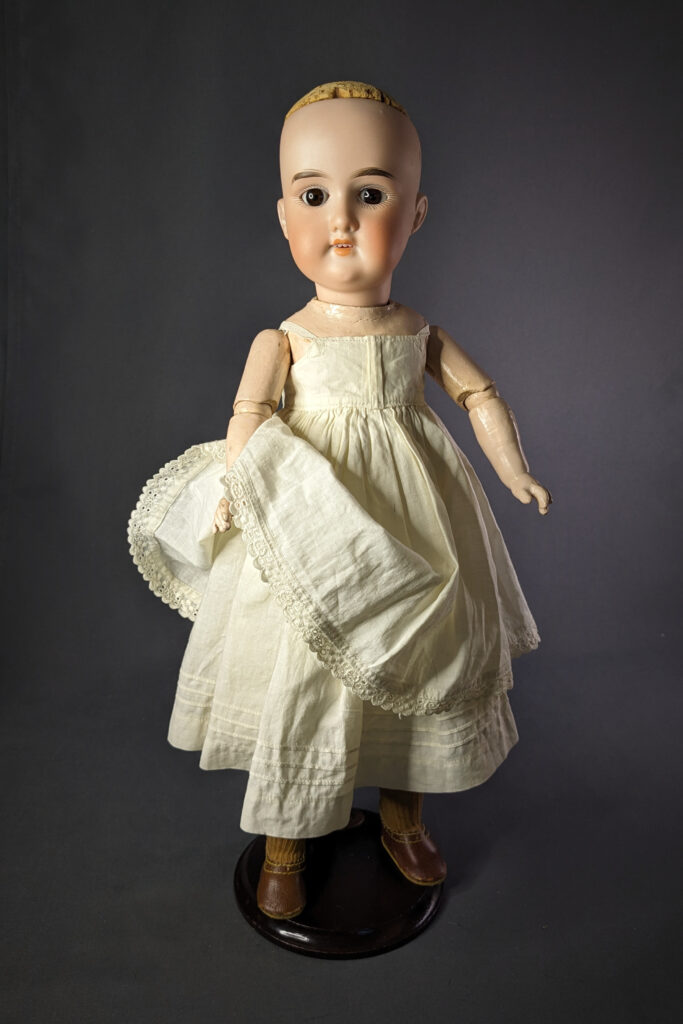
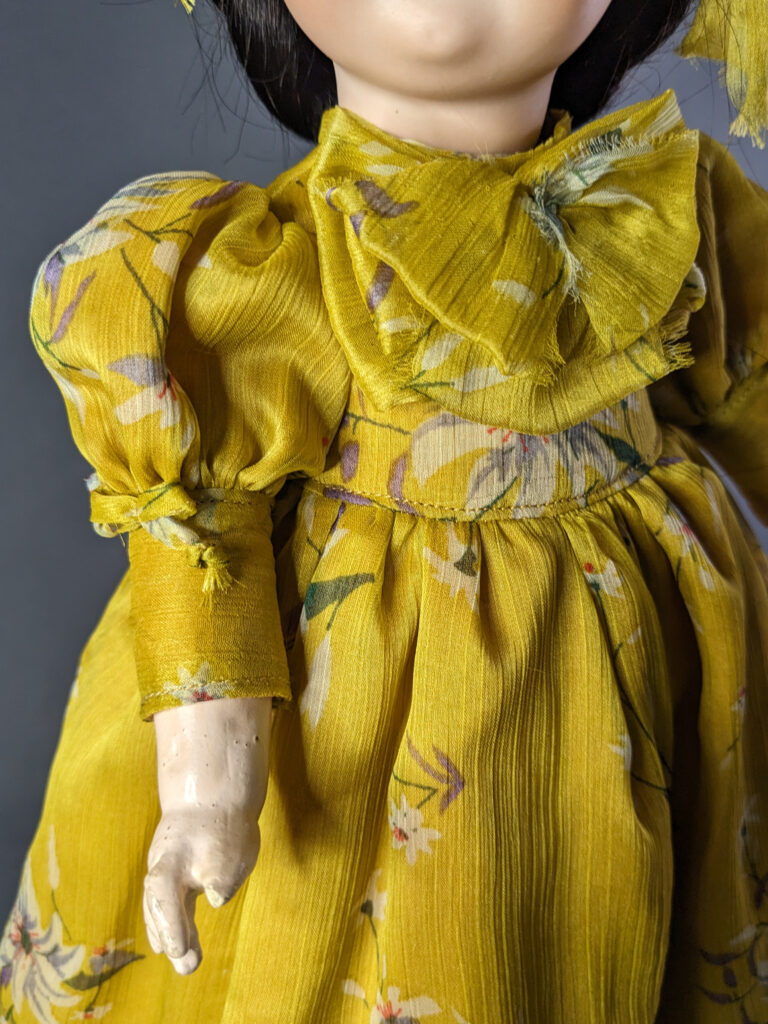
Floradora’s personality called for something vivid and full of light. Antique dolls are so often dressed in white, soft pastels, or subdued, time-worn colours, but this doll seemed to ask for something warmer and more joyful. I had a piece of vintage silk chiffon in a radiant shade of yellow, and it looked beautiful beside her warm porcelain complexion and optimistic expression.
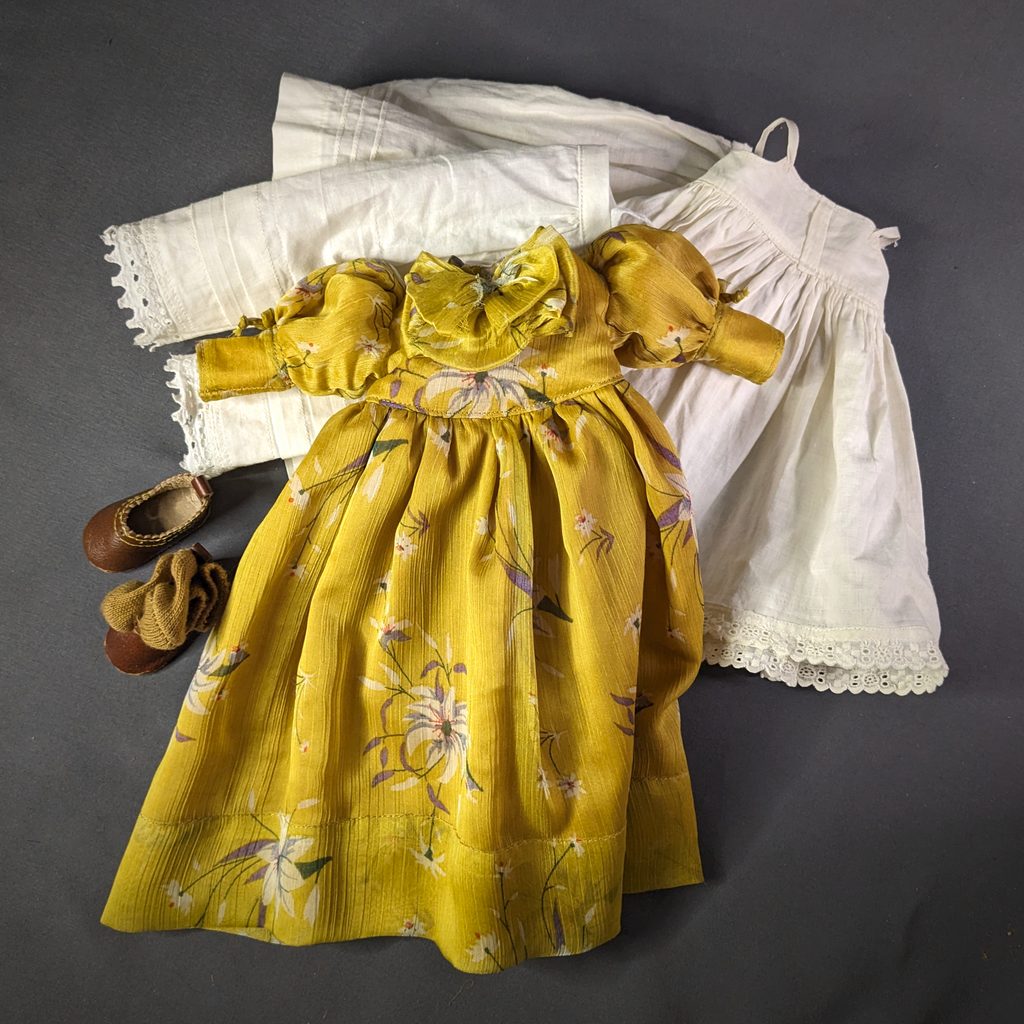
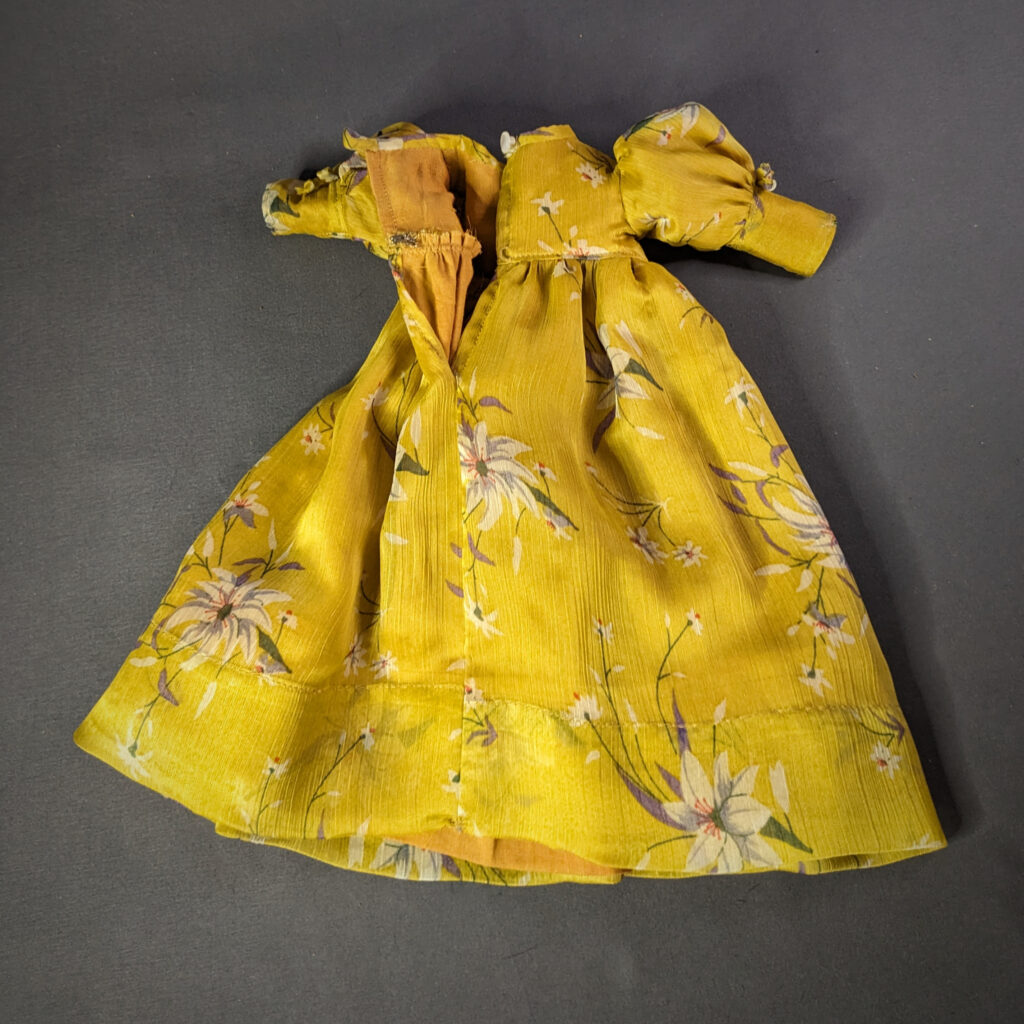
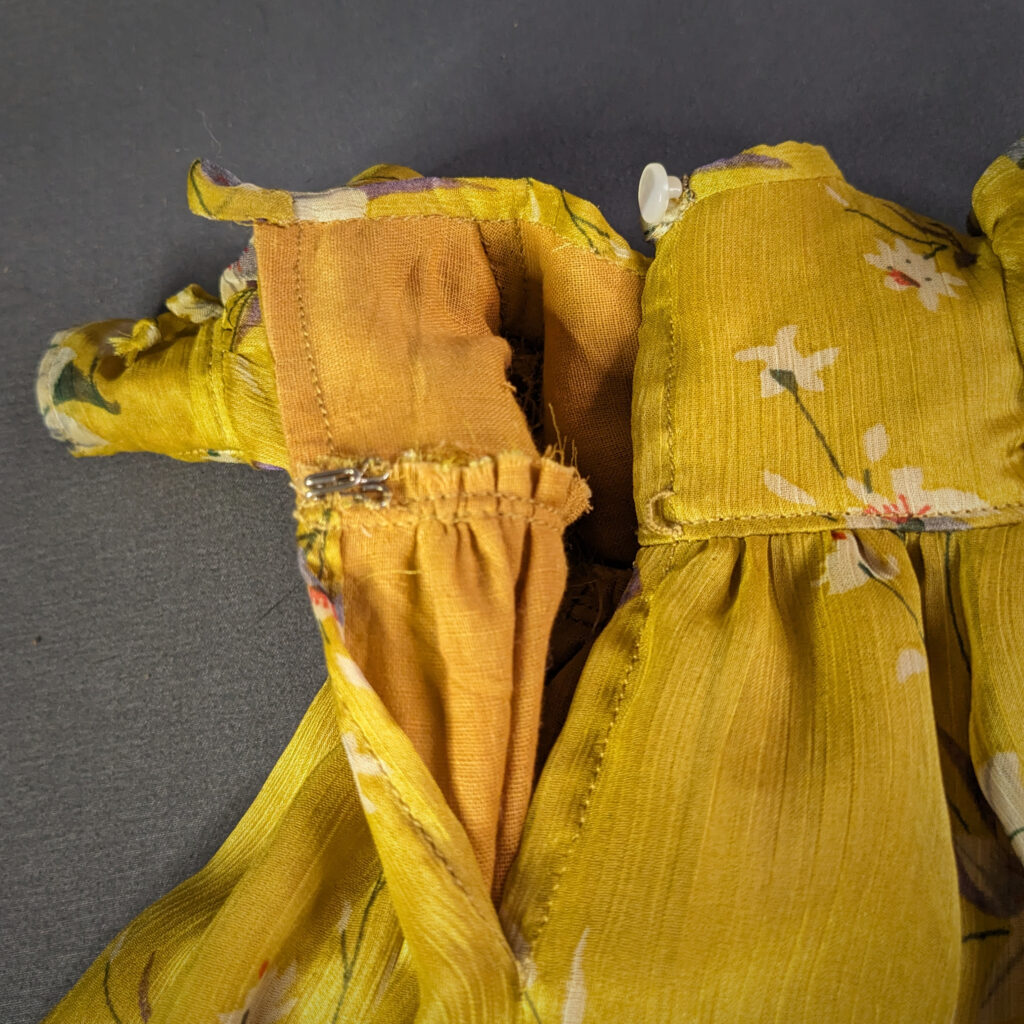
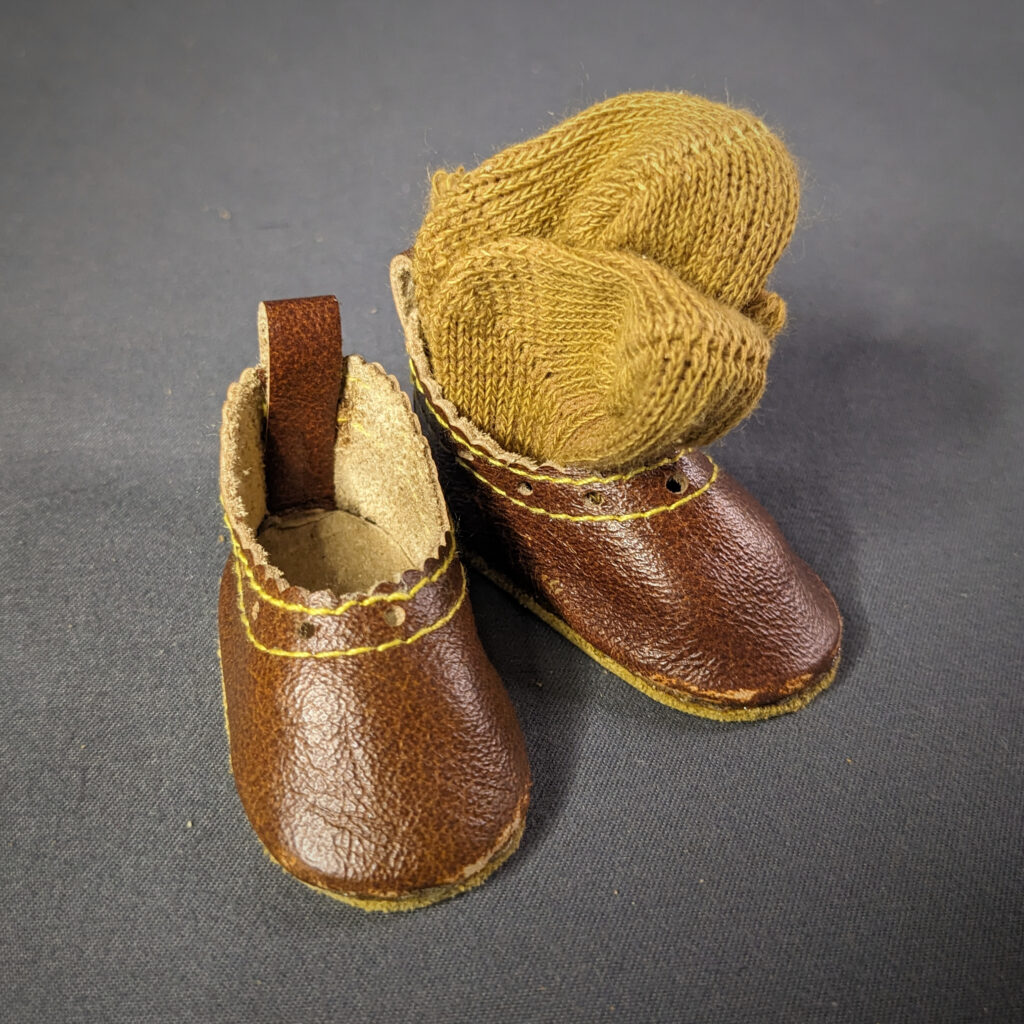
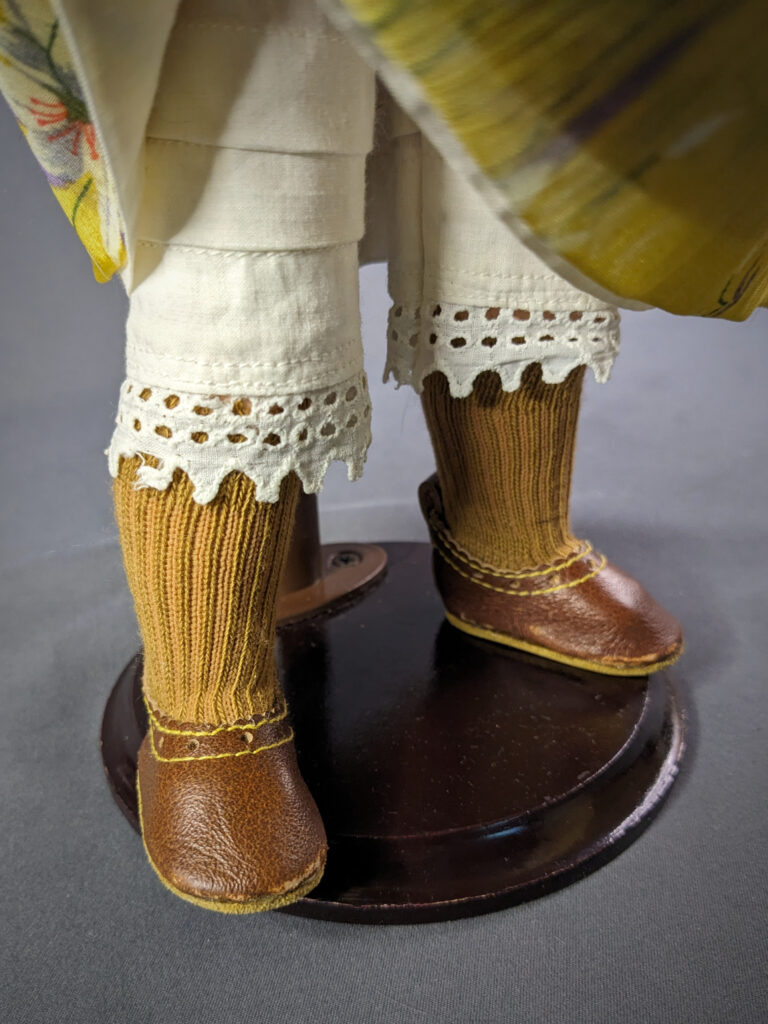
From there, the separate elements began to come together into one complete image. Simple shoes were made especially for her from vintage natural brown leather, and a pair of doll socks fitted her feet perfectly. Finally, yellow ribbons woven into her braids tied the entire ensemble together.
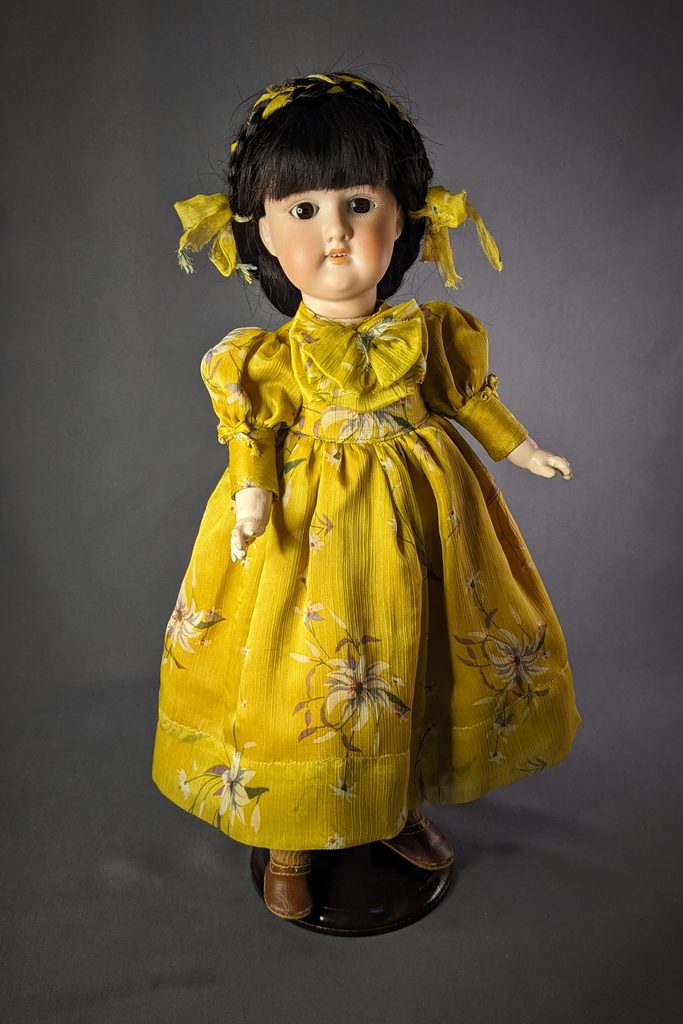
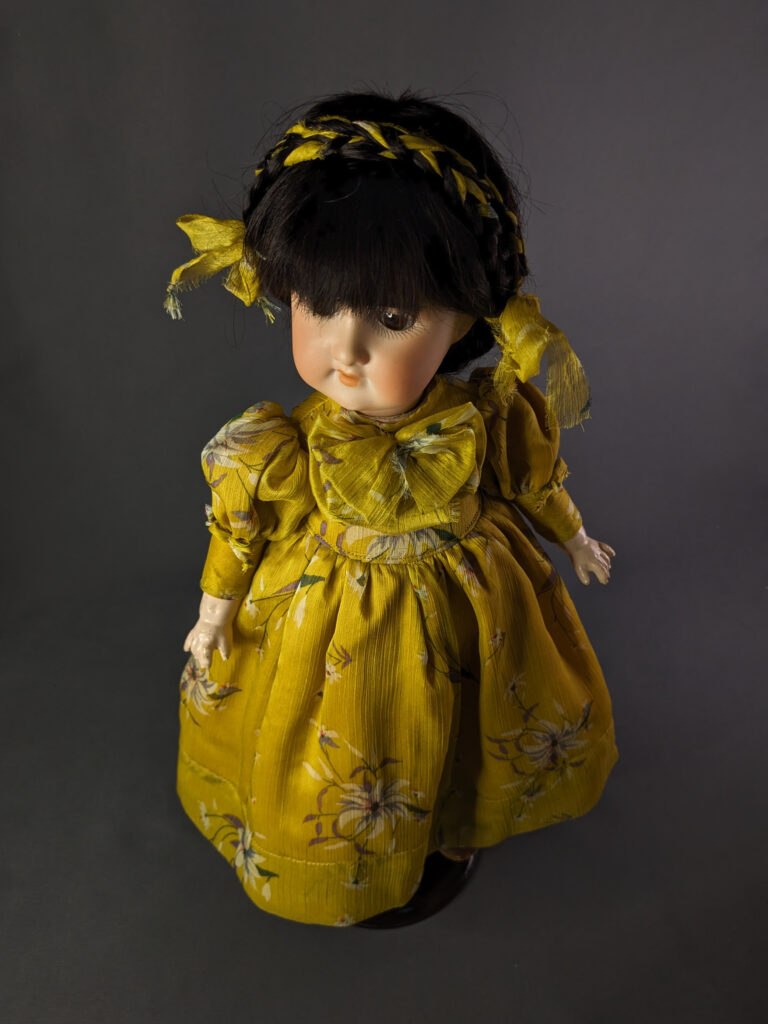
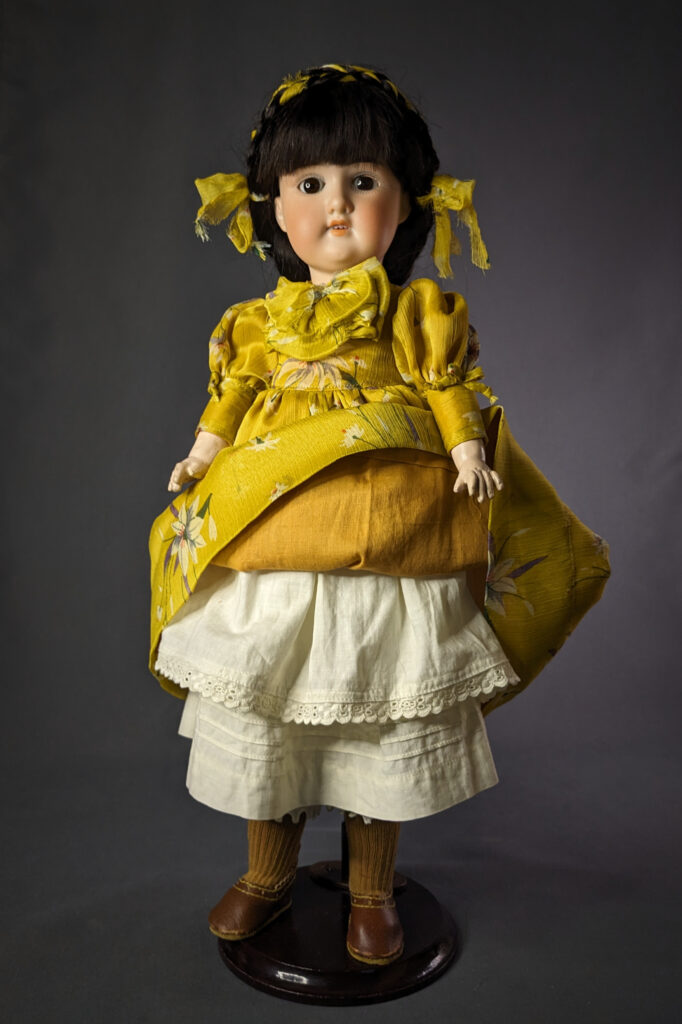
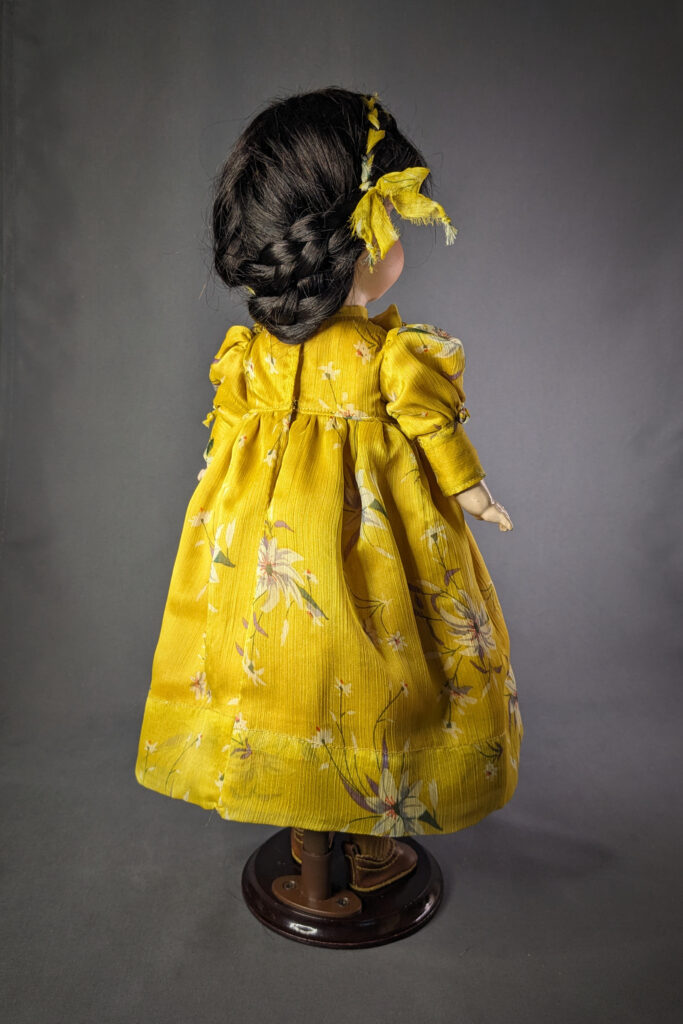
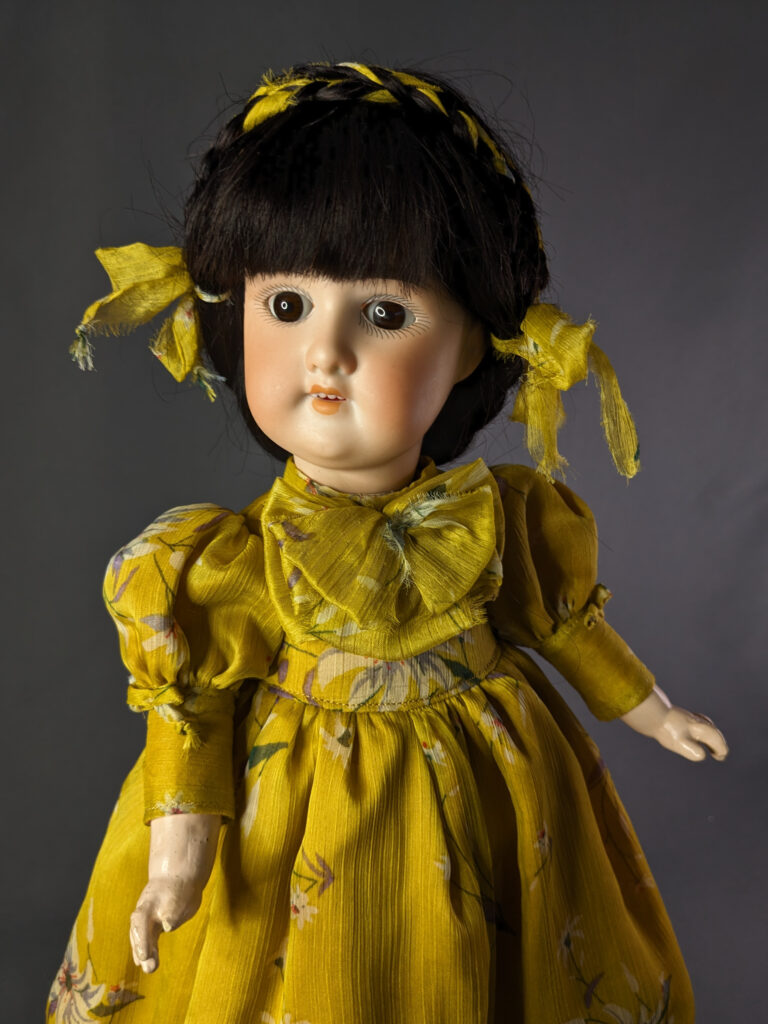
I like to think Floradora knew from the beginning that this restoration would lead to something beautiful. She had waited a long time for her second life. And she was worth every careful decision.
Sources
Historical information about Armand Marseille and Florodora dolls was consulted through the Victoria and Albert Museum collection records, including its entries for Armand Marseille and the “Florodora” bisque doll.
Background on the musical comedy Florodora and the famous Florodora Girls was consulted through the New York Public Library for the Performing Arts and Theatre Heritage Australia.
Historical references for doll clothing and undergarments were consulted through the Victoria and Albert Museum’s doll-clothing collection records.
Technical restoration methods, including cork pate fitting, hide-glue-based repair materials, and shellac finishing, are based on my own restoration practice and documented in the Dolls’ Stories Hospital restoration guides.