
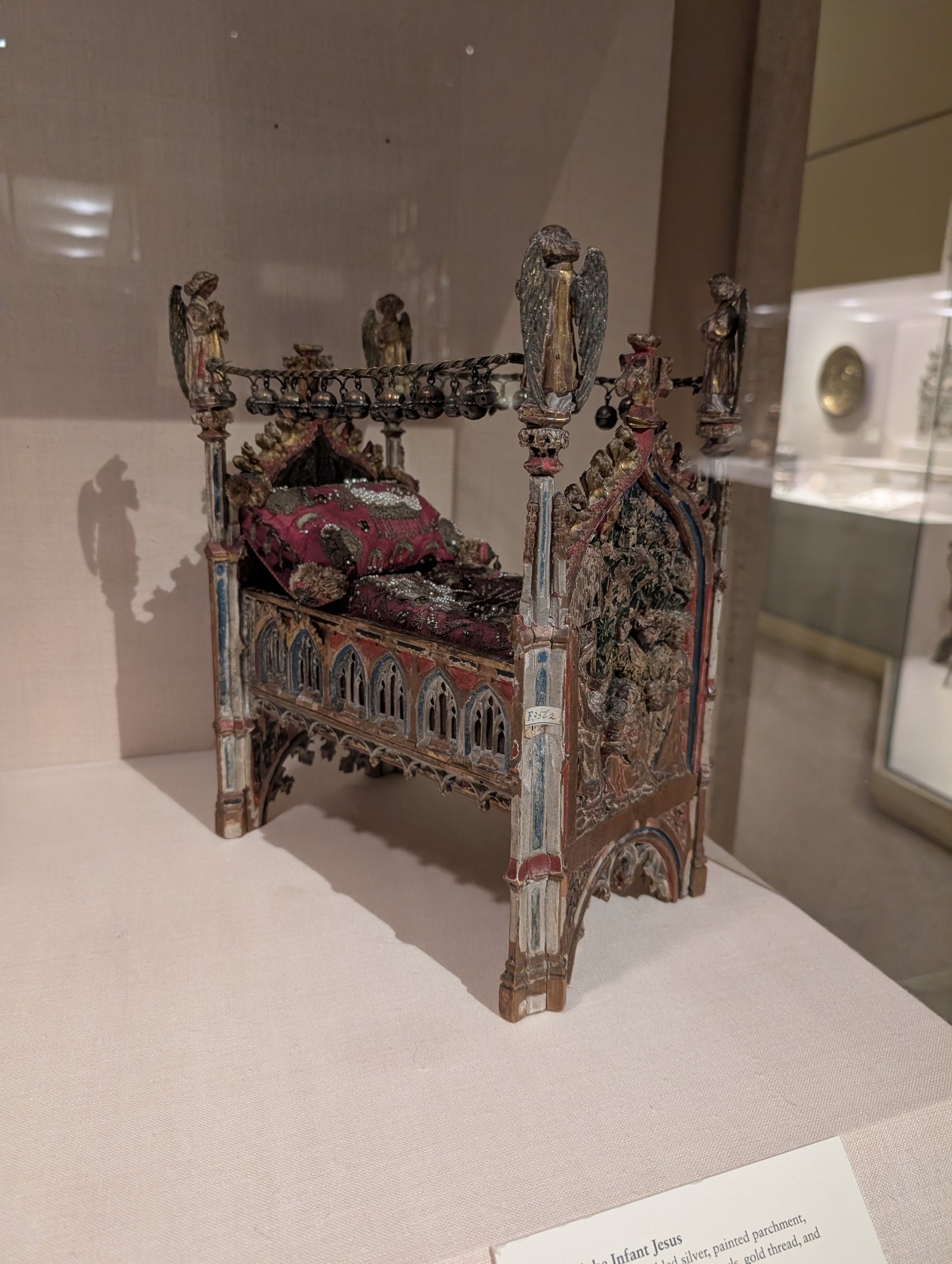
Doll-Bed Charm: The Gothic Cradle of the Infant Jesus at The Met
Here is another extraordinary discovery from the galleries of The Metropolitan Museum of Art that will captivate any miniature enthusiast or doll artisan. A delicate, ornate bed featuring soaring Gothic posts, miniature carved biblical scenes, tiny sculpted angels, and lavish bedding. A dollmaker’s immediate thought: “What an incredible antique doll bed!”
Yet behind this fairytale appearance lies a completely different story. This is no toy, but a sacred Cradle of the Infant Jesus, a rare 15th-century devotional object crafted in Brabant (Southern Netherlands).
A Miniature Masterpiece Rich in Detail
The dimensions of this artifact are truly miniature: measuring just 35.4 × 28.9 × 18.4 cm (13.9 × 11.4 × 7.2 in). Yet within this compact space, medieval artisans harmoniously combined carved polychromed wood, lead, gilded silver, painted parchment, silk, pearls, and enamel.
Examining the cradle reveals incredible craftsmanship:
- Gothic Architecture: Four tall corner posts are topped with delicate angel figures, while the sides evoke medieval cathedral facades with openwork tracery and arches.
- Reliefs & Embroidery: Carved panels on either end depict the Nativity and the Adoration of the Magi. The silk pillow and coverlet are embroidered in gold thread and river pearls with the Tree of Jesse (the lineage of Christ).
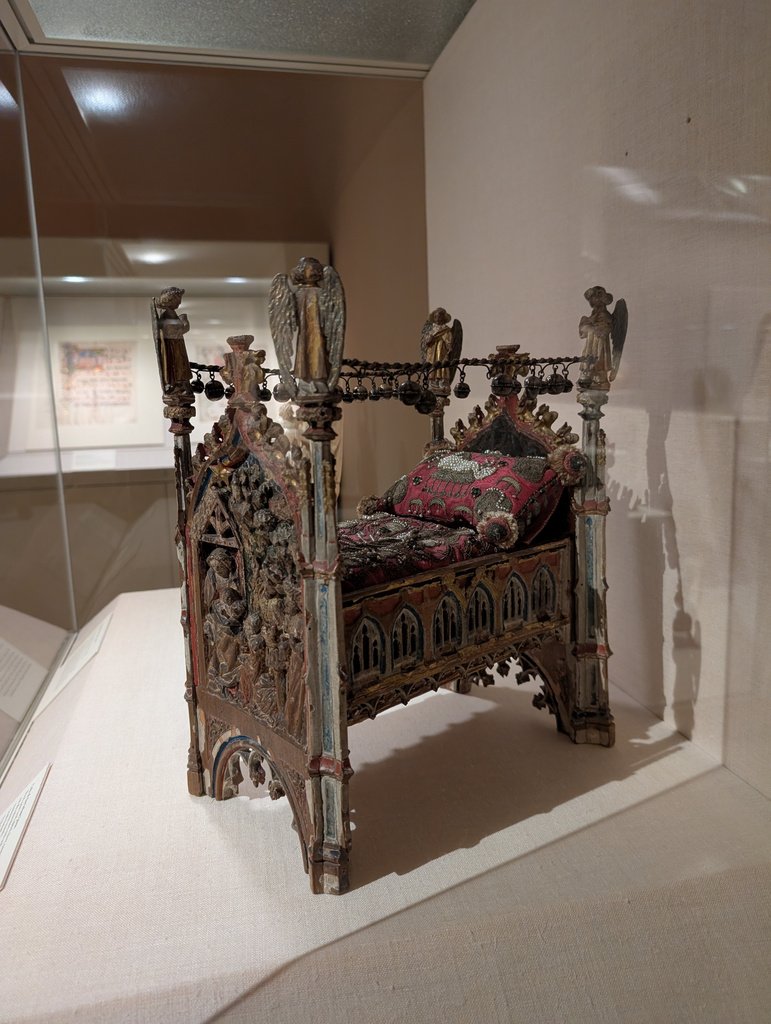
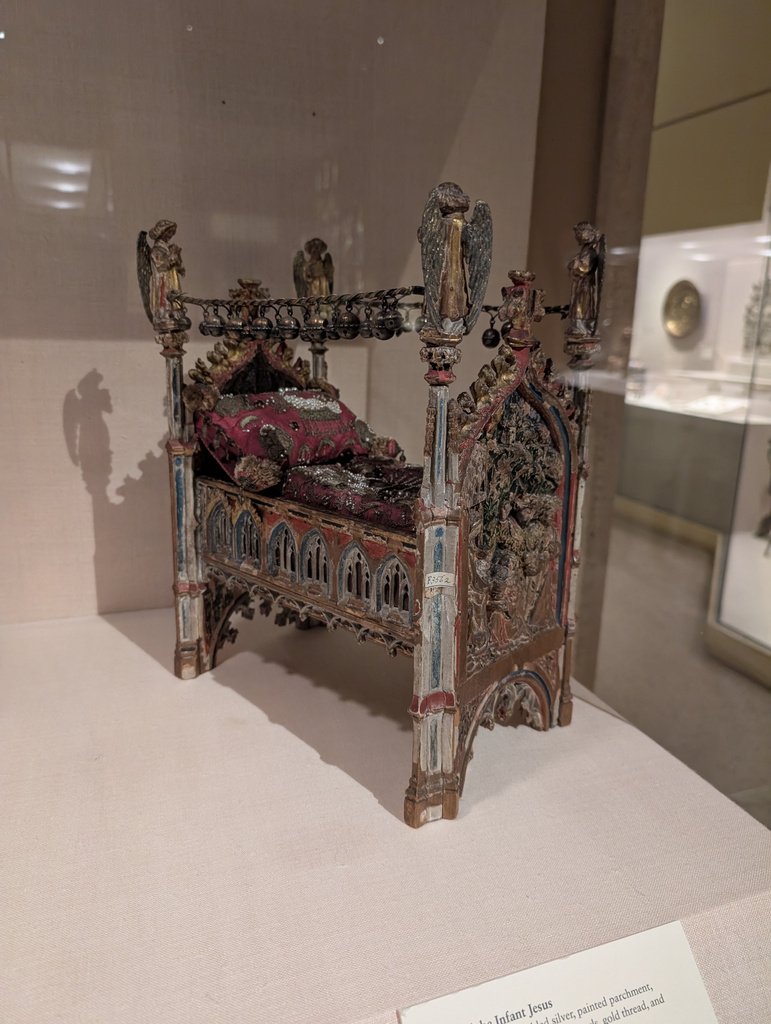
Wood, paint, lead, gilded silver, painted parchment, and silk embroidery with seed pearls, gold thread, and translucent enamels
South Netherlandish, Brabant, made 1400-1500 From the Grand Béguinage of Louvain, Belgium
Gift of Ruth Blumka, in memory of Leopold Blumka, 1974
Devotional Origins & A 20th-Century Story
Miniature cradles like this were cherished devotional objects in 15th- and 16th-century Northern European convents and Beguinages, often presented to women taking their vows as a symbol of spiritual care for the Christ Child. This specific piece originates from the Grand Beguinage in Leuven, Belgium.
The object also bears a tragic 20th-century history: in 1938, Nazi authorities confiscated the cradle from Viennese collector Oscar Bondi. It was eventually restituted to his widow, Elisabeth Bondi, after the war before entering The Met’s collection in 1974 as a gift from Ruth Blumka.
What I Look at as a Miniature Artisan
- 15th-Century Micro-Textiles: The fine silk needlework and seed-pearl embroidery on the tiny pillow match the scale and precision of modern 1:6 or 1:12 doll miniature embroidery.
- Proportion & Scale: Pairing a carved wooden structure with lightweight silk drapes demonstrates how essential it is to keep every line, thread, and decorative element perfectly scaled to the overall 35 cm frame.
Object Details
- Title: Cradle of the Infant Jesus
- Date & Origin: ca. 1475–1500, Brabant, Southern Netherlands (From the Grand Beguinage in Leuven)
- Dimensions: 35.4 × 28.9 × 18.4 cm
- Medium: Painted and gilded oak, lead, gilded silver, parchment, silk, gold thread, pearls, enamel
- Credit Line: Gift of Ruth Blumka, in memory of Leopold Blumka, 1974
- Accession Number: 1974.121a–d
- Department: Medieval Art, The Metropolitan Museum of Art, New York
Sources & Further Reading
- Cradle of the Infant Jesus (ca. 1475–1500) — The Metropolitan Museum of Art, Accession Number: 1974.121a–d.
- Grand Beguinage of Leuven (Groot Begijnhof) — Devotional cradles, medieval textile embroidery (Tree of Jesse), and devotional practices of Brabant beguines in 15th-century Northern Europe.
- Medieval & Renaissance Miniature Artifacts — Collection documentation on carved polychrome oak, gilded silver, seed pearl embroidery, and provenance history (Oscar Bondi collection & restitution).