
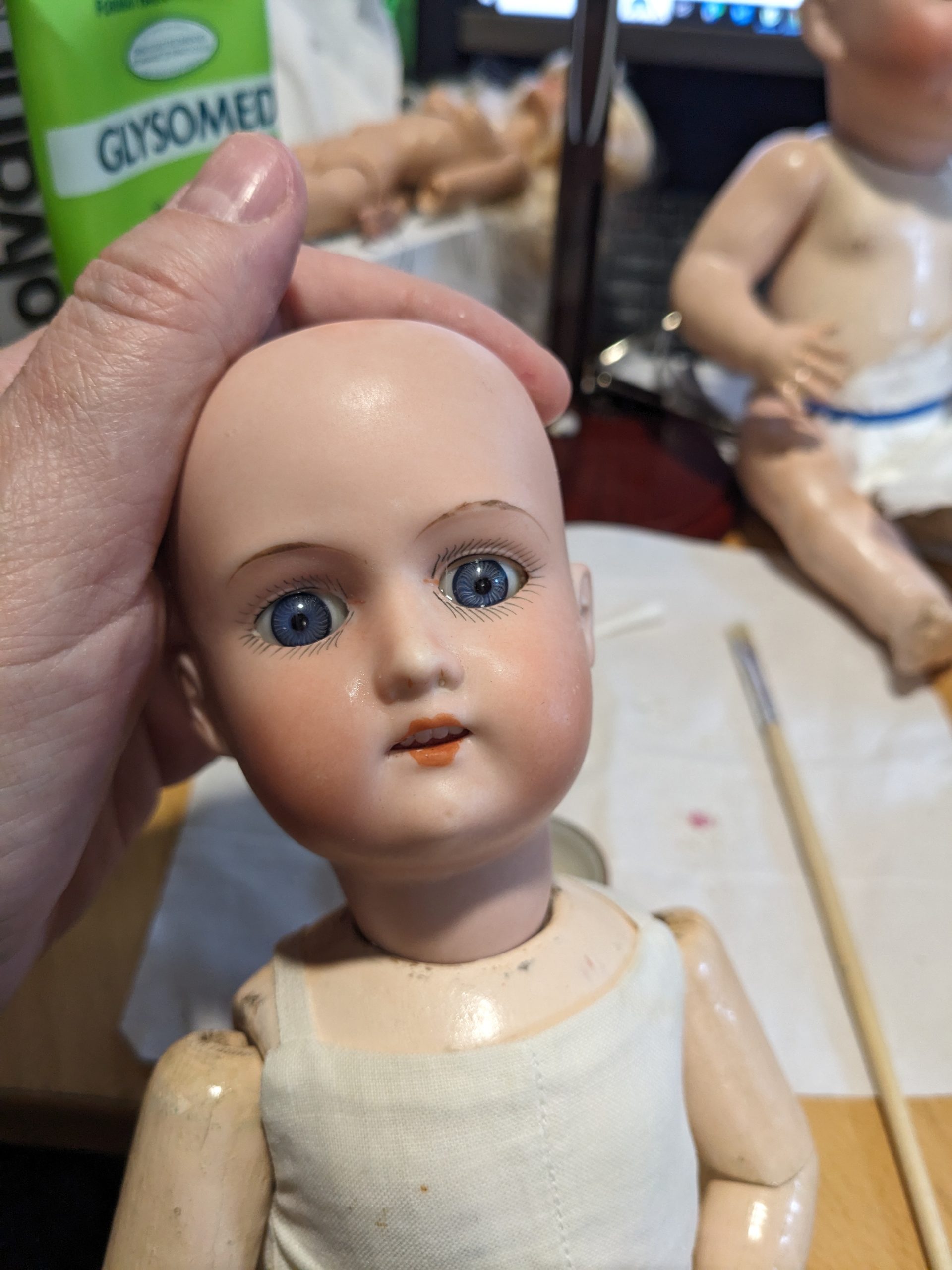
Inside an Antique Doll’s Head: Installing the Eye Rocker
A behind-the-scenes restoration step: waxing an antique doll’s eye rocker before installing it inside the head.
I’m sorting through photos from past restoration projects at the doll hospital and have decided to share some of the less visible stages of the work.
In this example, an antique doll’s eye rocker is coated with wax before being installed inside the head. Once the eyes are back in place, the mechanism disappears from view, but its position and preparation determine how the doll’s gaze will sit in the finished restoration.
The antique doll’s eye rocker was still intact, but its original surface coating was badly damaged. In addition, the resin that had once held the glass eyes in place had almost completely deteriorated over time.
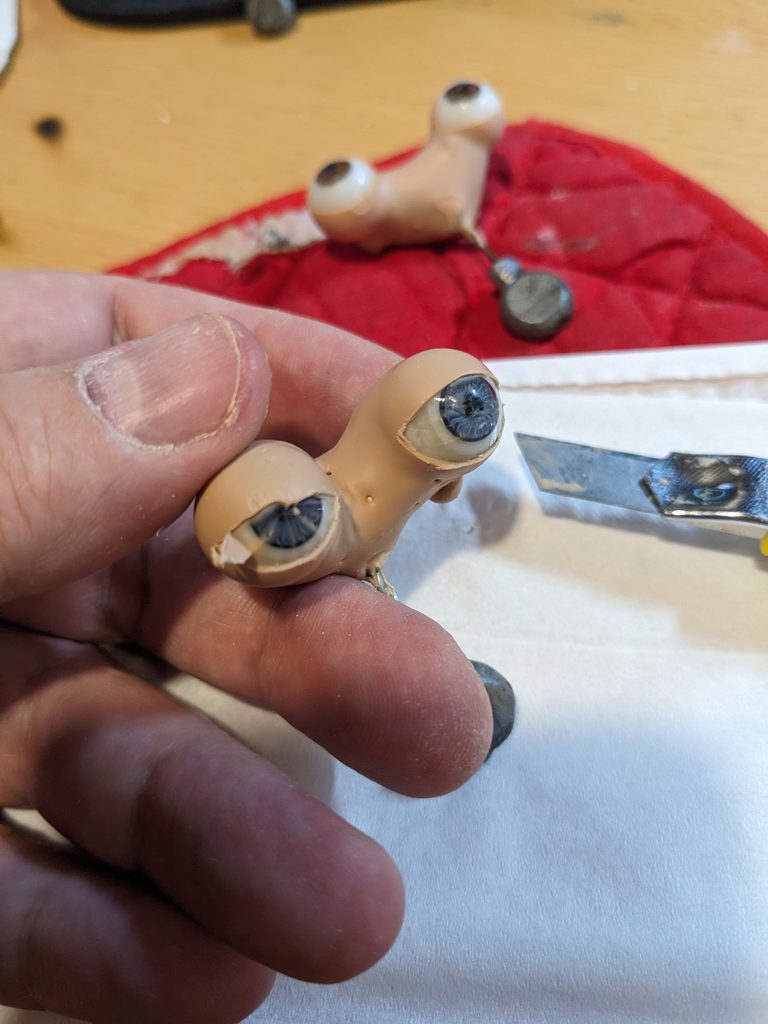
After cleaning and stabilizing the base structure, I decided to give the entire eye rocker a new wax coating. The coating mixture was made from wax and flesh-toned pigments.
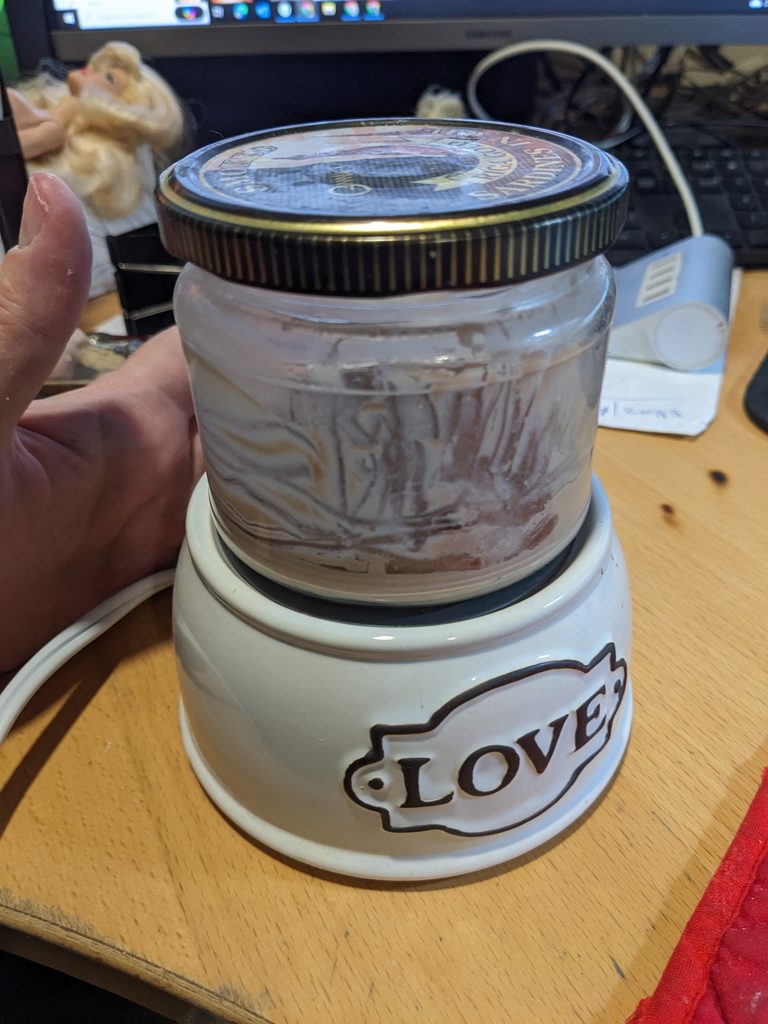
I melted the mixture on a small aromatherapy warmer in a wide-necked container. It was not the ideal tool for the job, but it worked well this time.
My first plan was to create the wax coating with the eye openings already formed. After several unsuccessful attempts, I abandoned that idea—and that turned out to be the right decision. Once the coating had set, a craft knife and a steady hand allowed me to cut the openings for the eyes precisely where they were needed.
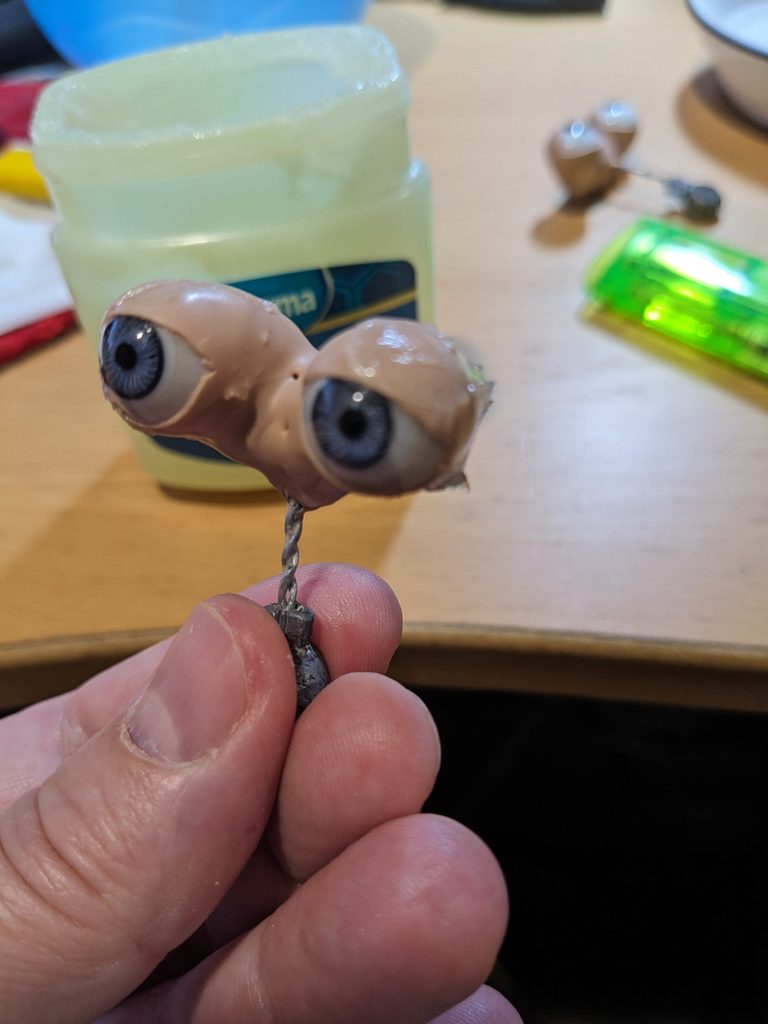
I applied petroleum jelly to the sides of the rocker as a lubricant and positioned it inside the doll’s head. From the front, I checked the placement and alignment of the glass eyes.
Once I was satisfied with their position, I secured the rocker temporarily with hot candle wax.
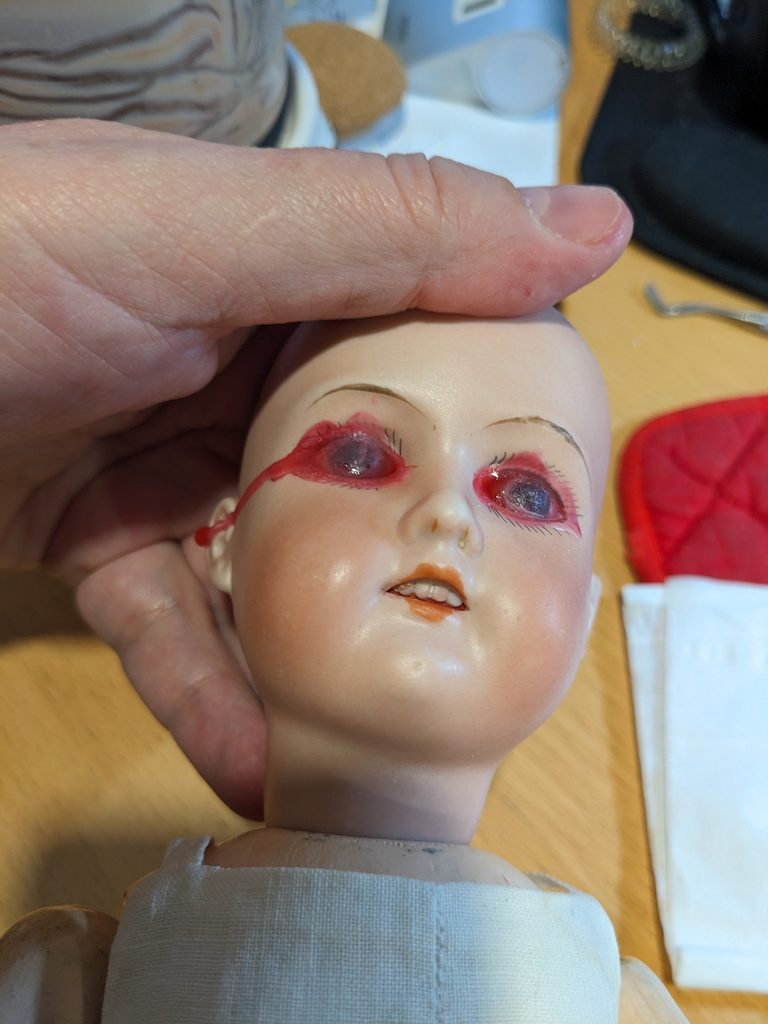
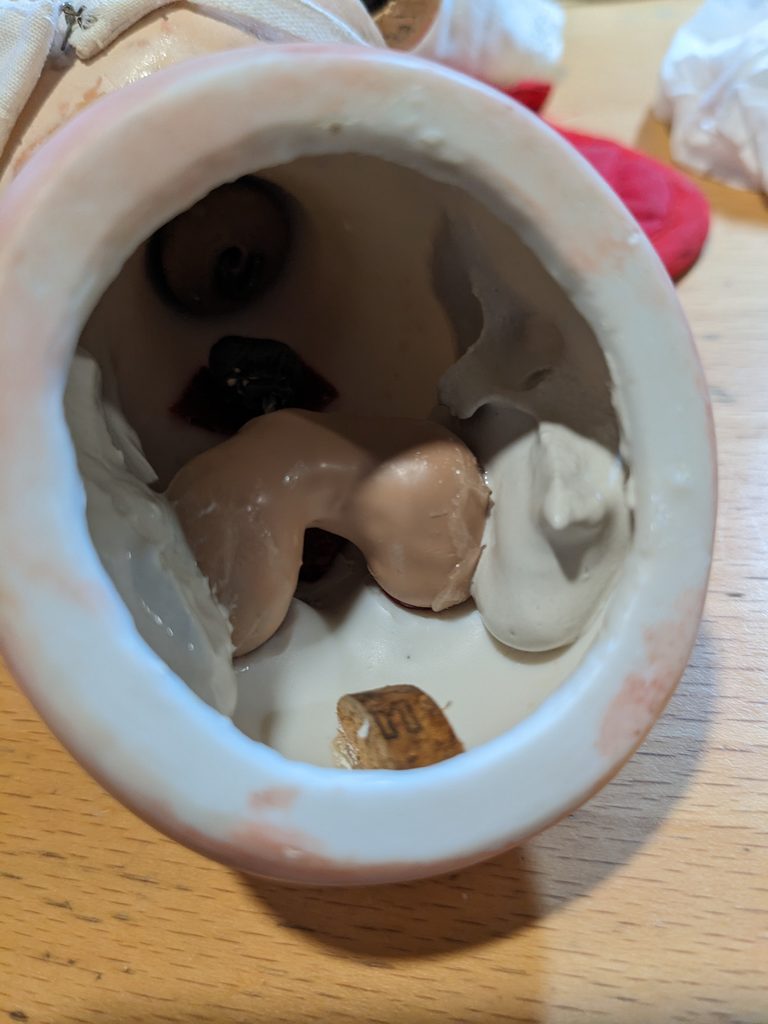
Next, I turned the doll upside down, with the opening at the back of the head facing upward, and applied a plaster mixture along both sides to anchor the rocker inside the head.
As the plaster began to set, I carefully moved the eye rocker inside the head. Because the sides had been lubricated, the rocker could move without breaking the plaster supports. This was an important step: the rocker needed to be firmly mounted, while still being able to turn freely for the sleeping-eye mechanism.
Once the plaster had fully set, it was time to test the mechanism.
The eyes open. The eyes close. The sleeping-eye mechanism works again.
The restoration was complete.
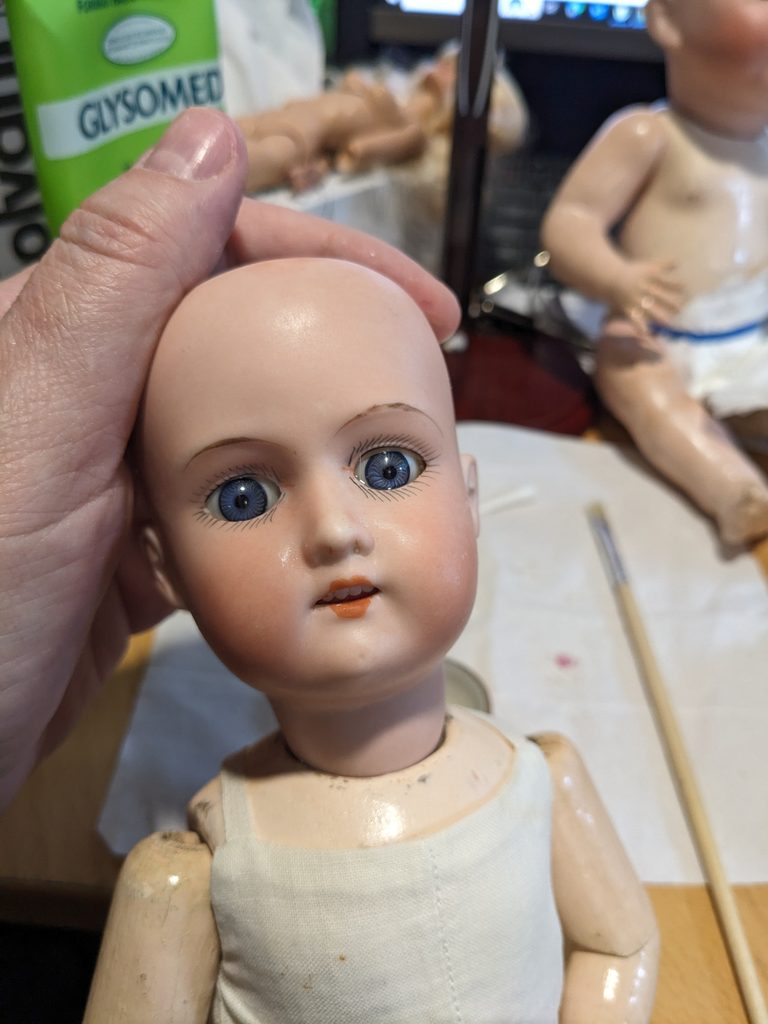
In the end, the original eye rocker was preserved, its base was stabilized, the protective wax coating was restored, and the mechanism was returned to the doll’s head without replacing it with a modern part. After the mounting material had fully set, the eyes moved freely again: they opened when the doll was held upright and closed when she was tilted or laid down. The most important part of this restoration is almost invisible from the outside, but it is precisely this hidden work that restored the doll’s original function, expression, and ability to be safely enjoyed for years to come.